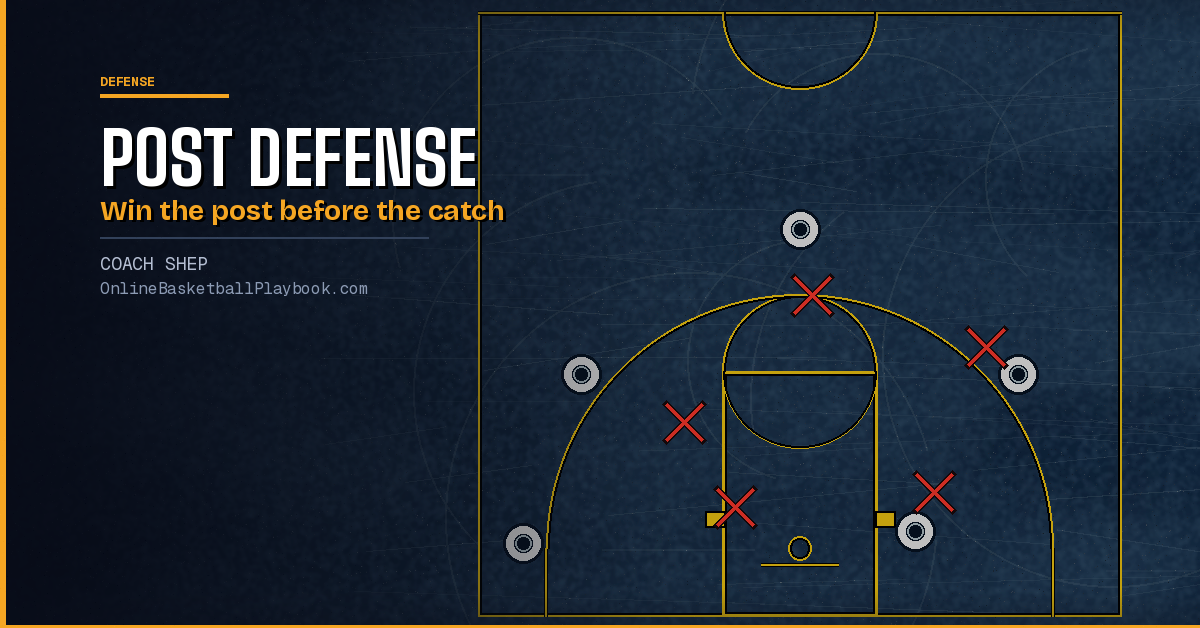
Post defense in basketball is how one defender guards a player with his back to the basket on or near the block, and how the other four back him up. The post defender can front, play three-quarter on the high side or the baseline side, or play behind. Teammates add lob help, pressure on the passer, digs and doubles. Coaches split on almost every choice, so this page lays out each version: winning the post before the catch, where to stand by ball spot, the front, the three-quarter, playing behind, changing sides, the lob, defending the catch, digs and doubles, post screens and the high post. The offensive side is on post play in basketball.
Win the Post Before the Catch
Beat him to the spot. One version plays post defense before the entry pass is thrown: beat him to the block, force him off his spot, and front or face-guard a good scorer. It splits the post into low, medium and high areas and says to beat the post to the spot rather than out-muscle him there.
Keep the catch out of a box. Pack line programs tape a box on the floor and allow no catch inside it, and the size differs by version:
- A step outside the lane and a step up from the second free-throw lane mark, with no two-foot catch inside
- About 1.5 feet off the lane up to the second hash mark
- A box three feet around the block
- A 3-foot rectangle starting 1 foot outside each block and running through the lane
- No post catcher gets two feet into the paint
No feed from the top. Several pack line versions ban the post entry from the top of the key, and others call it "no gut passes." The pack line itself is on how to coach the pack line defense.
Where to Stand by Ball Spot
Most versions key the post position to the ball's spot, above or below the wing. With the ball on the wing, three-quarter on the high side is the most common answer:

| Ball spot | Versions |
|---|---|
| Top of the key | Full front. On the line and up the line, but not so high that the lob opens. Three-quarter front from the help side. Deny from off the man. Chest to chest on the high shoulder. |
| Wing | Three-quarter on the high side. Half or three-quarter from the baseline side. Full front. Side front. Dead front when the post is one pass away. Always half front, stepping through on the front side. |
| Below the wing or in the corner | Three-quarter or half front on the baseline side, to help on baseline drives. Full front. Low side on the baseline. Cross the post's face to three-quarter from the bottom. |
| A switch onto the post | Stand directly in front of him. |
One version stays above the free-throw line on the high side and changes between fronting and playing behind as the ball moves. Another stays closer to the ball-basket line than to the post and moves among half, three-quarter and full front by ball position. Positions for the other four defenders are on basketball defense positions.
Front, Three-Quarter or Behind
The default is the biggest split in post defense:
| Version | Rule |
|---|---|
| Three-quarter high side as the base | The pack line's answer (Dick Bennett), and Tom Izzo's. One version plays three-quarter "at worst." |
| Half or three-quarter front | Two versions call it the best general method. |
| Front first | Fronting gets high priority in practice. Jerry Tarkanian said most teams play behind the post and his teams always fronted. |
| Dead front by ball spot | Dead front with the ball on the wing, or when the post is one pass away, or at and below the wing |
| Never full front | Bennett, because of offensive rebounds. Hubie Brown plays a forearm in the chest with the outside hand up so the defender can still jump. |
| Front only on triggers | A mismatch, the ball in the corner, a great player, the inside-out game or a low-angle feed. Or a dominant scorer, or a much bigger post. |
| Front as a called intensity | One color call means half front and another means full front. |
| Behind, with a plan | Rated best for a much taller defender, and one of three answers in a pack line scout |
The perimeter makes the front work. One pack line version says wing defenders who deny the baseline are what make a full or three-quarter front workable. Another ties its no-baseline rule to bigs who play three-quarter. On the other side, one coach has his wing defender play down and in with a foot on the elbow, helping on the post instead of denying the ball, because he expects few skip passes.
Fronting and Three-Quarter Technique
The front. The techniques differ:
- Sit on the thigh. Sit on the post's thigh, one arm high in the passing lane and one low against the leg, back foot about 12 inches behind the post's foot so he cannot seal for a reversal. Against a wing entry, lock the rear foot around the post's rear foot with the outside hand up.
- Sit on the quad, arms off. Front by sitting on the post's quad, not with the arms.
- Butt contact. Butt contact, hands up, feet active.
- Slip-slide. Grab the bottom hip and pull through to the baseline side.

The three-quarter arm. The three-quarter uses an arm, and the arm differs too. The pack line arm bar pushes the catch out of the box. Another version puts the outside arm out in the lane and the inside arm in the post's back. Izzo's is a forearm in the kidney with a snap of the head when the post moves. One version uses the weak-side arm as the arm bar and the ball-side hand to take the pass. One grading scale calls arm across with a foot behind "50" and arm and shoulder across "75." Another keys the contact to the ball: the baseline shoulder below the wing and chest to chest on the high shoulder above it. Arm-bar rules differ by level: NFHS does not allow an extended arm bar on a post, and the NCAA men's book allows one arm bar in the post area. Details are on the basketball fouls list.
Behind. One version fronts or plays on the line and up the line, sits on the post's legs, and if the front is lost plays behind while jumping side to side so the post has to guess, feet always moving. Another, with the ball sitting at the top of the key, plays three-quarter to behind and keeps his bottom foot above the post's top foot. Others push the post off the block with a locked arm bar and the legs.
Changing Sides
The defender changes sides on the flight of the ball, and the path differs:
- Go under. Slide under and around the post, never over, to reach the baseline-side front, then step under again to get above him when the ball goes back to the top of the key.
- Go in front. Step in front of the post when moving from the top side to the bottom side, or cross his face to three-quarter from the bottom.
- Peel. In the pack line, when the ball crosses to the opposite wing, hit the post with the arm bar and peel back to three-quarter.

One version names four methods: slip front, X-step, go behind and face. It says read the passer, move while the ball is in the air and release pressure first.
Get the next coaching guide in your inbox
One email when a new guide or diagram set goes up. Free.
The Lob and the Flash
A full front invites the lob, so every front needs a lob answer:
- Split-line help. The weak-side low defender sits on the split line to take the lob.
- Lob double. The opposite low defender doubles the lobbed post and the opposite wing drops to the block. In one version the low help-side defender doubles and takes a charge if he can.
- Full face. The post defender defends the lob with both hands high while the low help-side defender takes a charge or doubles.
Meet the flash. One version butt-fronts a flash from block to block with high hands and early contact, holds it until the cutter is outside the lane, then goes behind. Another meets the flash with a cocked arm, and another arm-bars the cutter from the help side, then fronts from the baseline once he reaches the block. The pack line's 5-on-2 post drill denies every flash. Flash and cutter rules for every player are on how to defend cutters.
After the Catch
Pop back and wall up. The pack line answer is to slide behind on the flight of the entry, hands high and feet down, so the post catches with a defender between him and the basket. Another version steps back and resets ball, defender, basket before defending the move. Another pokes from behind on the catch.

Which way to send him.
- Force baseline. Make the post go baseline.
- Take baseline away. Do not give up the drop step baseline, and force him middle into the double.
- Off his strong side. Steer the ball away from the post's preferred side, step back to take away the hook step, and jam him when he turns to face.
The wall-up and charge choice near the rim is on taking a charge.
Digs and Doubles
Crowd, dig or choke. Short of a double, the two nearest perimeter defenders sink halfway between ball and man with active hands when the post is not a major threat or the shooters are dangerous. One version attacks with two hands once the post puts the ball down, with hard digs off a non-shooter and short digs off a shooter.
Decide the plan before the game. Bennett's pack line offers two plans: double every post, or double only the best one or two. Other versions pick by scout, or double only a post who cannot be stopped one on one, after denying the entry first.
| Who comes | Version | Stated cost or rule |
|---|---|---|
| The other big | On the air time of the entry, the most common pack line double | One version rejects it: a smart post dishes to the open big for a layup. |
| The low man | The low help-side defender | A passing post beats this rotation. |
| The opposite wing | Traps from the lane the instant the ball enters | The skip is answered with an X-cut. |
| The top defender | Rick Pitino doubles down with the top defender, never the wing | The ball-side wing face-guards the return pass, the opposite wing takes the next pass out of the post, and the double takes away the inside pivot with high hands. |
| The passer's defender | The double off the feeder | Only against teams that cannot shoot the three |
| The defender on the weakest shooter | Doubles off the weakest shooter | Stop if that player starts making shots. |

When the double goes. Some send it on the flight of the entry, some on the catch, and some wait until the post puts the ball on the floor. One release rule keeps the trap on until the ball is passed out or dribbled out of the scoring area. The pack line's big-to-big double is drawn on the pack line page, and trap angles in general are on trapping in basketball.
Rotate behind it. Deny the easy pass back out, cover the rim and the top of the key, and get ready for the skip. One version sends the low man to the rim and sinks the top defender to the elbow. Another shrinks the shell toward the post and spreads it back out to rebound when the ball comes out. The rotations are on how to coach defensive rotations.
Post Screens and the High Post
Post screens get opposite switch rules:
- Step under, stay low, switch high. The screened defender steps under toward the baseline before the screen, stays with a low cutter and switches on a high cutter, and the screener's defender calls "screen" every time.
- The reverse read. On a base or cross screen, switch if the cutter goes low and do not switch if he goes high.
- Contact switch. Switch every lateral post screen with contact.
- No switch. Force the post high and wide so the trailing defender can recover to a three-quarter or front, because switching a big onto a small hands the screener a post-up.
The high post is guarded differently from the block. One version drops to arm's length between the post and the basket and jams him when he turns to face, pushing him to his weak-hand corner. Others arm-bar a flash to the high post, arm-front the elbows rather than dead front them, or treat the high post like a perimeter player. Zone post rules are on the 2-3 zone and tandem 2-3 zone pages.
Teaching It and Staying Legal
Stay legal. One low-foul version denies the entry, then defends with the chest, elbows up where officials can see them, and feet on the floor so a shot fake does not lift the defender. Another shows officials the hands on the wall up. Standing behind a post instead of establishing position, and setting the stance after the catch, are listed as careless fouls.
Teach it in layers. One ten-session plan puts on-ball, closeout and shell work first, post isolation in sessions 5 and 6, and the high post and high-low work in sessions 7 to 10. A drill plan from the same program then adds team doubles and closes with a post cut throat. Another prescribes post and perimeter drills for at least 10 minutes, three nights a week. A low-post power drill starts with a defender who allows the drop step but contests the shot, rotates the offense to defense each rep, then goes live with any move. More post drills are on man-to-man defense practice drills.
Questions Coaches Ask About Post Defense
What is the best way to defend the post in basketball?
Coaches split. Three-quarter on the high side is the pack line default, some teams front first, and others play behind with a plan. Most key the choice to where the ball is.
Should you front the post?
Some teams front everything, some front only on triggers such as a mismatch or the ball in the corner, and some never full front because of offensive rebounds. Every front needs lob help from the weak side.
What is three-quarter post defense?
The defender plays on one side of the post, usually the high side, with an arm or forearm across to take away the entry pass.
How do you double team the post?
Decide before the game. The double can come from the other big, the low man, the opposite wing, the top defender, the passer's defender or the man on the weakest shooter, and the rest of the defense rotates behind it.
How do you defend a post player who is taller?
Beat him to his spot before the catch, front him when he is much bigger, and plan the double. Playing behind is rated best when the defender is the much taller one.
Want every diagram on the site?
OBP Pro members get the full diagram files for every guide on the site, ready for a practice binder or a scouting report. $9 a month. Or draw your own version free in the play drawer.
See what OBP Pro includesMore Coaching Guides From This Batch
- Tandem 2-3 Zone: Rules, Rotations and the Tandem Front
- Zone Defense Drills: Slides, Closeouts, Traps and Rebounding
- How to Defend Cutters in Basketball: Every Cut, Every Rule
- Taking a Charge in Basketball: Technique, Falls and Drills
Back to Building Up Man-to-Man Defense and every Defense page.
Keep Building
Related breakdowns
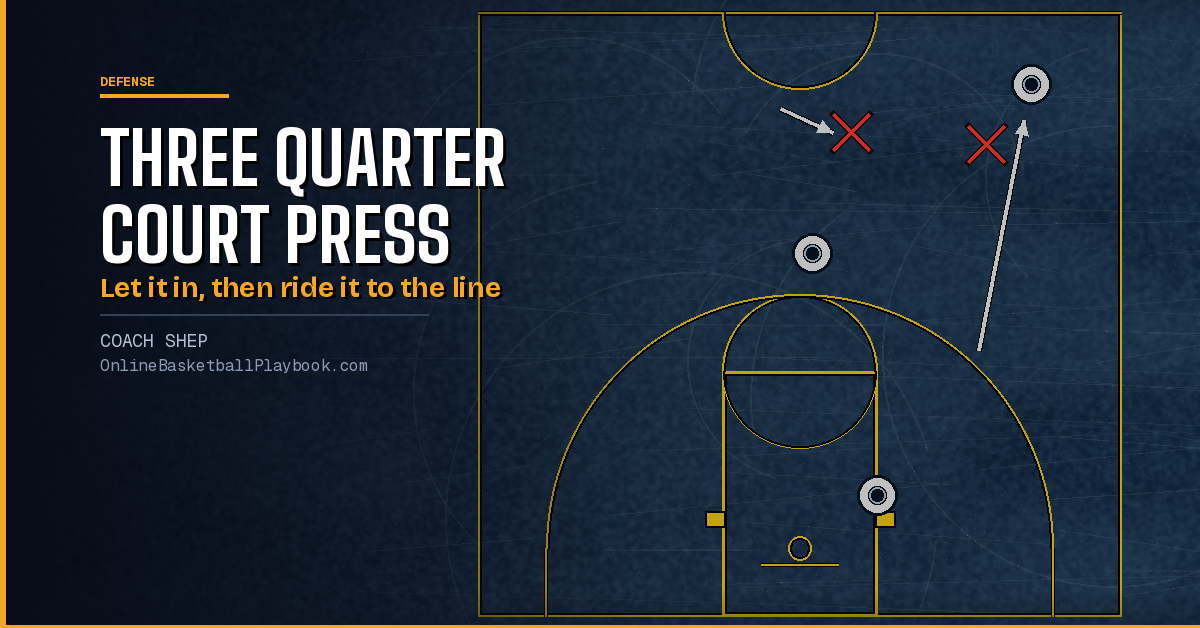
Three Quarter Court Press: Pickup, Traps and Rotations
Three quarter court press explained: where the pickup line sits, the 2-2-1 and 1-2-2 versions, trapping near half court, the rotation behind it and the exits.
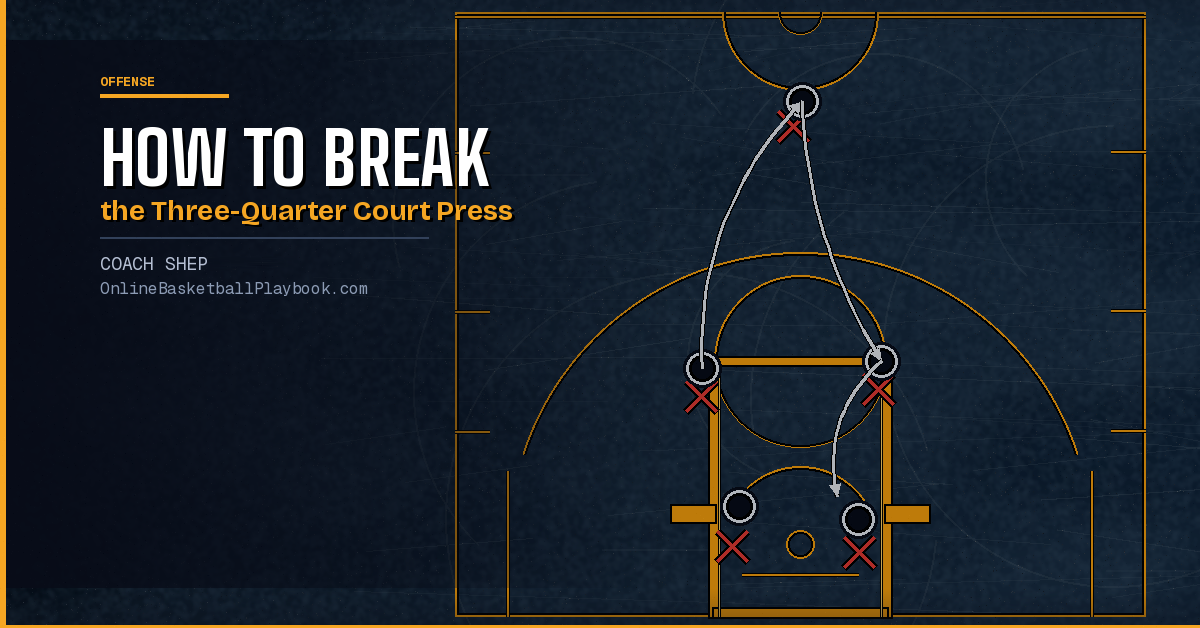
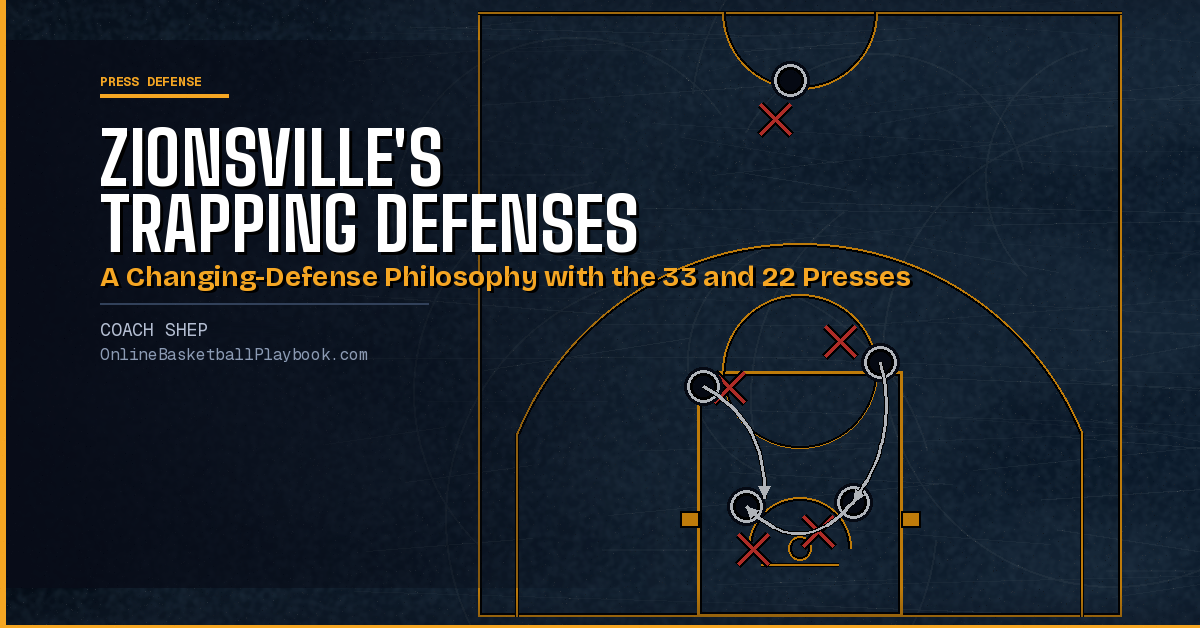
Changing Defenses in Basketball: Three-Quarter and Half-Court Traps
A changing defense taxes an opponent's prep time: a three-quarter 1-3-1 trap, a half-court trap, and a Run & Jump variant that ends in deny-everywhere.