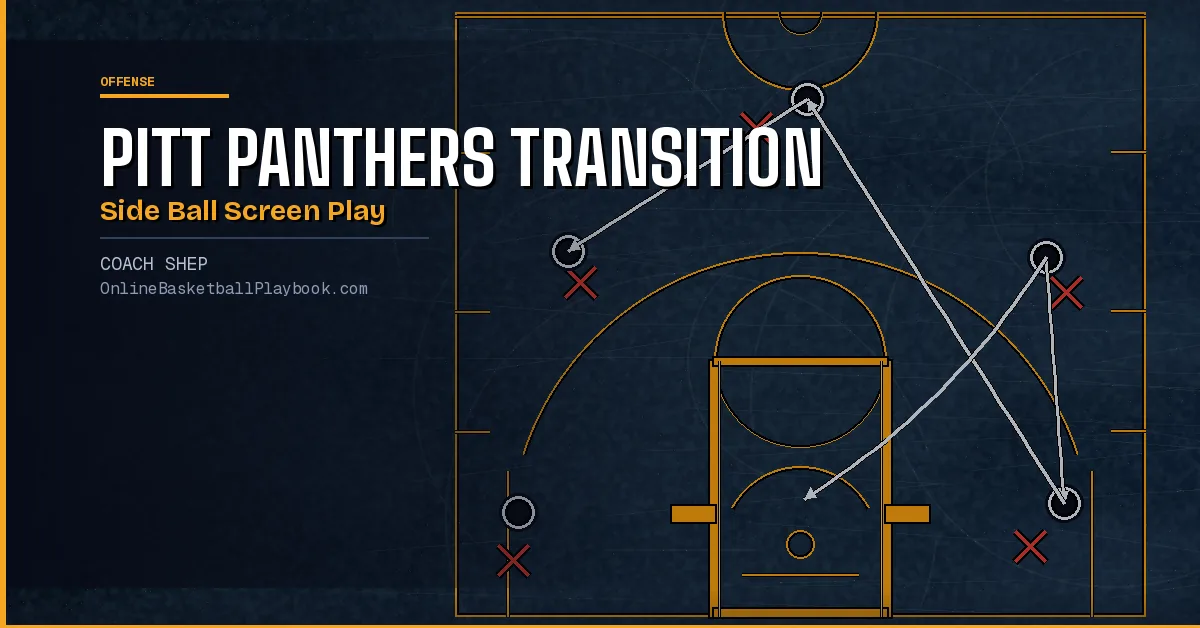
Pitt runs a side ball screen off transition to catch defenders scrambling back. The timing (screen fires before the defense is set) is the whole point. Here is how the play works and how to teach it.
Play Overview and Purpose
The Pitt Panthers transition side ball screen is a quick-hitter that lives at the intersection of pace and structure. Head coach Jeff Capel's staff has long favored actions that exploit the scramble period, the three to four seconds after a made basket or defensive rebound when the opposing five are still finding their assignments. A side ball screen fired during that window is a fundamentally different problem for the defense than the same action in a settled half-court set.
What makes this play worth studying is not just the screen itself. It is the intentional layering: Pitt uses transition ball movement to get the screener sprinting to the side of the floor early, so that when the ball-handler pushes across half court, the screen is already waiting. The defense has to guard an in-rhythm two-man game before they have communicated their coverage call.
The play generates three primary threats: a pull-up or drive for the ball-handler off the screen, a roll or pop opportunity for the screener, and an open corner three for a spot-up shooter on the ball side. Any one of those three can produce a good shot. When you also have weakside fill players lifting into gaps, you are looking at a five-player action dressed up as a two-man game.
From a strategic standpoint, this is the kind of play that rewards athletic, decision-making guards. The ball-handler coming off a side screen at speed has less margin for error than a guard coming off a traditional top-of-the-key ball screen. The angle is tighter and the lane opens and closes faster. Pitt recruits for guards who can make that read, and the play is built around that skill set.
Transition Setup and Personnel
The play begins with the outlet. After a made basket or a defensive board, the point guard receives the ball at or near the sideline and pushes up the court in controlled transition, not a full sprint, but a firm, purposeful push that signals to teammates the play is on.
The screener, typically a wing or a versatile forward who can handle the ball-screen action, sprints the near lane and peels to the ball side at the three-point arc level, positioning himself for the side screen. He arrives at the screening spot just as the point guard crosses half court.
The two weakside players fill opposite, one in the far corner and one at the weakside wing or elbow extended. The fifth player, often the center, trails the play and sets up in the short roll area or at the nail for weakside help defense to respect. His presence keeps the help defenders from loading up toward the side ball screen action.
Personnel requirements for Pitt's version:
- Point guard: must be able to turn the corner off a side screen at pace and make a pull-up or dump-off decision in one dribble.
- Screener: a 6-5 to 6-8 versatile wing who can set a legal screen and roll to the rim or pop to the three-point line depending on coverage.
- Corner shooter: a reliable catch-and-shoot player who lifts automatically when the ball-handler attacks.
- Weakside fill: a player who can space away and handle a skip pass for a reset or a rhythm three.
Capel has run this with different personnel combinations over the years, but the structural requirement stays constant: the screener must get to his spot before the ball-handler arrives. If the screener is late, the screen is set against a locked-in defense and loses the timing advantage that makes the play work.
The Side Ball Screen Action
The screen fires on the wing or slot, not at the top of the key. This is the defining structural choice. A side ball screen gives the ball-handler a downhill angle toward the middle of the lane rather than a lateral drive toward the baseline. That angle produces layups and floaters, higher-value shots than pull-ups from the elbow.
The screener sets a flat, East-West screen. This is not incidental because a horizontal screen surface gives the ball-handler maximum room to come off, widens the gap between the on-ball defender and any hedger, and makes it harder for an ice coverage to funnel the ball-handler to the baseline. Brad Stevens identified the East-West angle as the single most important physical teaching point for screeners, and Pitt's film shows their screeners coached to this same standard.
The ball-handler reads the screen angle and comes off at the level of the screen, not higher, not lower. Coming off higher tips the angle away from the rim. Coming off lower surrenders the baseline to the on-ball defender. At the level of the screen, the ball-handler's first dribble lands in the paint area, and the defense has to choose: hedge and concede the roller, or contain and give up the pull-up.
The timing of the screen relative to transition is the play's primary weapon. When the screener sets the action before the defense is in a settled drop or hedge position, there is no coverage call in place. Individual defenders react on instinct, and instinct-level reactions create defensive mismatches that a read-and-react ball-handler can exploit.
Ball-Handler Reads Off the Screen
Pitt's guard is trained to enter the screen with a read already in progress. By the time he feels the screener's body, he should know which of three primary options he is executing.
Turn the Corner
When the on-ball defender goes over the top of the screen and the big sags into the lane, the ball-handler turns the corner and attacks the rim. This is the baseline read, no gimmick, just a downhill drive. The pull-up or floater is available if the rim protector steps up; the dump to the rolling screener is available if he stays put.
Hesitate and Go
When the coverage is late to react, common in transition situations, the ball-handler uses a change of pace off the screen. He slows coming off, freezes the defender who is still finding his footing, then accelerates once the defender commits to a direction. The hesitate-and-go off the side screen in transition is a devastating read because the defense is already a half-step slow.
Split the Hedge
When the defense sends a hard hedge from the big, the ball-handler fires the dribble back toward the screener's trailing hip, splitting the gap between the hedging big and the trailing on-ball defender. Both defenders are displaced; the lane is open. This is the split move, and Brad Stevens' coaching cue is exact: "fire the dribble back to the screener's butt." The lane-level commitment is non-negotiable. A split attempt from above the foul line is just a turnover waiting to happen.
Reject the Screen
When the defense shades hard toward the screen and the on-ball defender fights to get under it early, the ball-handler rejects the screen entirely, changes direction and attacks the opposite side. The screener reads the rejection and loops behind the ball-handler to the weakside wing, giving the guard a kick-out option if the help collapses.
Screener Reads by Coverage
The screener in this play is not a prop. He has a decision tree of his own, and his read happens simultaneously with the ball-handler's read, not after the ball-handler has already committed.
Roll to the Rim
Against a show or soft hedge, the screener's default is an aggressive roll to the basket. He pivots on the inside foot and sprints, no pausing, no drifting. The roll man must commit. A lazy roll gives the weakside help defender time to recover. A hard roll forces a rotation that opens corner shooters.
Pop to the Three-Point Line
Against a switch or a sagging drop, the screener pops to the three-point line. If the screener is a credible shooting threat, which Pitt often ensures by design, the switch coverage makes the pop a near-automatic three-point look. The switch counter requires no additional play call; the screener's pop IS the switch counter.
Short Roll and Hold
Against certain show-and-recover coverages, the screener rolls to the mid-range area and holds, creating a triangle with the ball-handler and the corner shooter. From the short roll, he can feed a cutter, drive to the rim himself, or kick to a shooter. This read is higher-skill and more often seen at the college level than the high school level, but it is worth installing for teams with a positionless four or five.
Early Slip
When the screener reads the defender showing a high hedge position before contact, he slips to the basket before the screen is fully set. The slip fires on the defender's stance, not after the coverage arrives. This is the fastest-resolving read in the action. It beats the hedge completely if the timing is right. Pitt's coaching staff drills this as a pre-read, not a post-read.
Install the screener's reads in the same drill series as the ball-handler reads. Run a 2-on-0 name-the-coverage drill where the coach calls out a coverage type before the screen fires and both players execute their matching reads simultaneously. Guards and screeners who have only practiced this in 2-on-2 scrimmage situations take far longer to develop reliable reads than those who have named each scenario hundreds of times in isolation first.
Spacing Responsibilities for the Other Three
The side ball screen is a two-man action on paper. In practice, the other three players determine whether it produces a good shot or a dead possession. Their spacing decisions either create or destroy the driving lanes and skip-pass options that make the action dangerous.
Ball-Side Corner: Lift on Cue
The ball-side corner player lifts into the vacated spot automatically when the ball-handler drives off the screen. This is not a read. It is a rule. The corner lift guarantees a replacement shooter behind every drive. Without it, the ball-handler drives into a packed lane with nowhere to kick. With it, the defense must make an impossible choice: collapse on the drive or respect the shooter lifting into open space.
This corner-lift principle is a non-negotiable spacing rule in the Florida Spread system, and Pitt applies it in the same way. Coaches should teach it as a reflex: "Ball-handler goes off the screen, corner lifts. Every time. No decision needed."
Weakside Wing: Hold Position and Space
The weakside wing player holds his position on the opposite side of the floor. He is the skip-pass target if the drive is stopped and the defense has collapsed. His job is to stay wide, stay ready, and not drift toward the action. Weakside drift is one of the most common spacing errors in ball-screen offenses. Players instinctively move toward the ball, which destroys the skip-pass lane.
Trailing Big: Nail or Short-Roll Area
The fifth player, typically a center or power forward trailing the transition, sets up at the nail (the middle of the free-throw line) or in the short-roll zone. His presence serves a specific purpose: it prevents weakside help defenders from loading toward the ball-screen action. If no one occupies the weak-side post area, help defenders can flow freely to the ball without consequence. The trailing big keeps those defenders honest and creates the possibility of a late-entry dump-down pass if the lane is open after the kick-back.
Counters When the Defense Adjusts
No play runs clean forever. Once a defense has scouted the side ball screen and installed a coverage call, Pitt's coaching staff goes to the counter menu. These counters are not separate plays. They are reads built into the same action.
Against the Blitz
A hard blitz on the side ball screen is the most aggressive defensive answer. Two defenders converge on the ball-handler at the screen. The counter is straightforward: get the ball out of the two-on-one situation immediately. Throw back to the corner, and the corner player slices to the rim. The blitz always creates a numbers advantage somewhere else on the floor; the ball-handler's job is to find it fast, not fight through two defenders.
Against the Ice
Ice coverage funnels the ball-handler to the baseline by having the on-ball defender get below the screen before the action fires. The counter is to reject the screen entirely, use the baseline drive, and hit the screener looping to the weakside wing. Alternatively, the screener can slip opposite, anticipating the ice call, and the ball-handler dumps to him on the weak side before the defense can rotate.
Re-Screen
When the first screen is disrupted (the screener's defender fights the action, the coverage takes away the primary read, or the ball-handler cannot use the screen cleanly), the screener immediately re-sets at a better angle and sets a second screen. The re-screen forces the defense to adjust twice, with no recovery interval between adjustments. The Timberwolves' "2 Man Sting" rule makes re-screening a default habit: after the first screen, the screener does not stand. He turns and re-screens. This zero-cost habit produces a genuine second-read payoff.
DHO Entry into the Ball Screen
Pitt occasionally fires this same side ball screen action off a dribble hand-off (DHO) entry. The DHO collapses one defender early and puts a second defender in motion before the screen fires. A defense in transition cannot set a drop or show coverage when the screen arrives on moving feet. The DHO-triggered ball screen is a small variation that produces a meaningfully different defensive problem without requiring a separate play call.
- Screen angle: screener sets East-West (flat, horizontal), not North-South. Drill this as a physical habit. Correct it every rep.
- Ball-handler level: come off the screen at the level of the screen, first dribble landing in the paint, not above the arc, not at the baseline.
- Corner lift rule: ball-side corner lifts the instant the ball-handler drives. No read, no decision. It fires automatically every time.
- Screener pre-read slip: read the defender's height before setting contact; if he is showing a high hedge stance, slip to the basket before the screen is set.
- Blitz counter: Ball out of the two-on-one fast. Throw-back to the corner, corner player slices. Do not fight through two defenders.
- Re-screen default: if the first screen is disrupted, screener turns and re-sets immediately. Standing after a blown-up screen kills the action.
- Weakside spacing: weakside wing holds position, no drift toward the ball. He is the skip-pass target. Moving collapses the skip lane.
Want more basketball coaching strategies, drills, and tools?
Join the Online Basketball Playbook newsletter →
Draw this play free in the play drawer →
Membership: the full library, playbook packs, and Pro drawing tools →
Keep Building
Related breakdowns
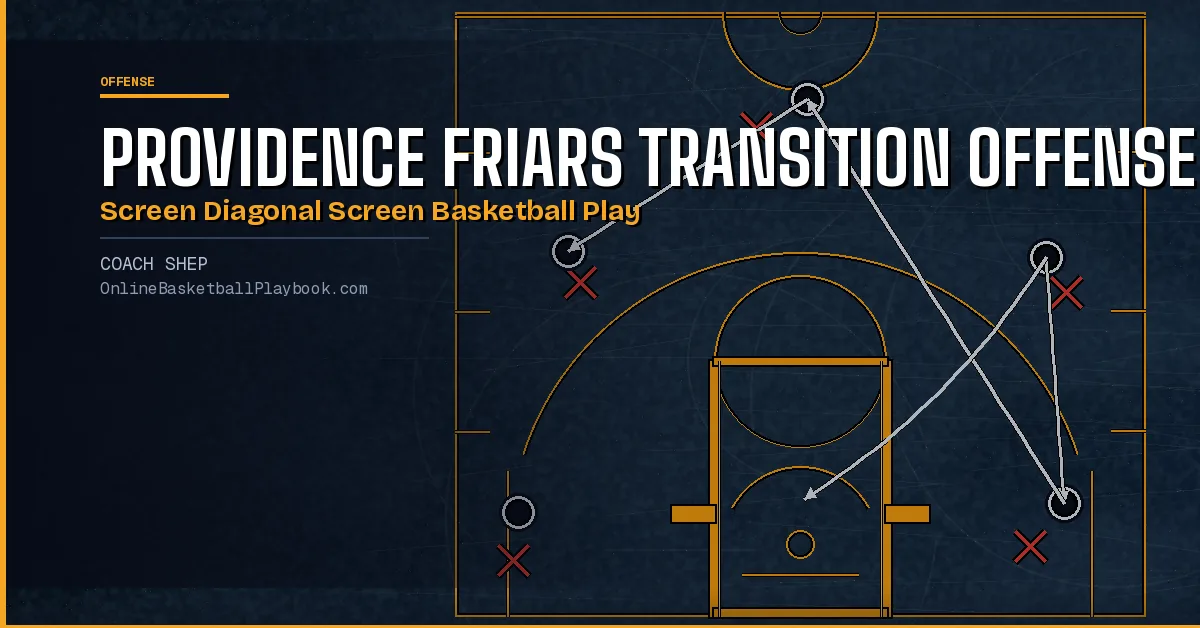
Providence Friars: Transition Offense Back Screen Diagonal Screen Play
Providence Friars: Transition Offense Back Screen Diagonal Screen Play
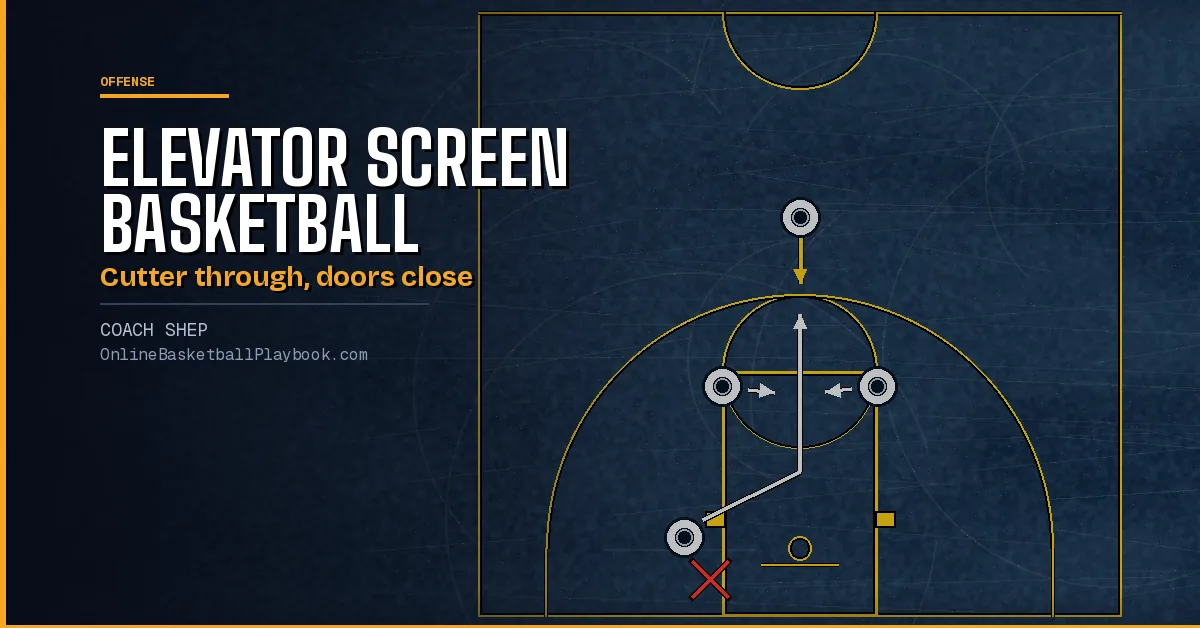
Elevator Screen Basketball: How It Works, Plays and Counters
Elevator screen basketball explained: how two screeners close on a cutter, the plays that use it, how to time it legally, and the counters when the defense reads it.
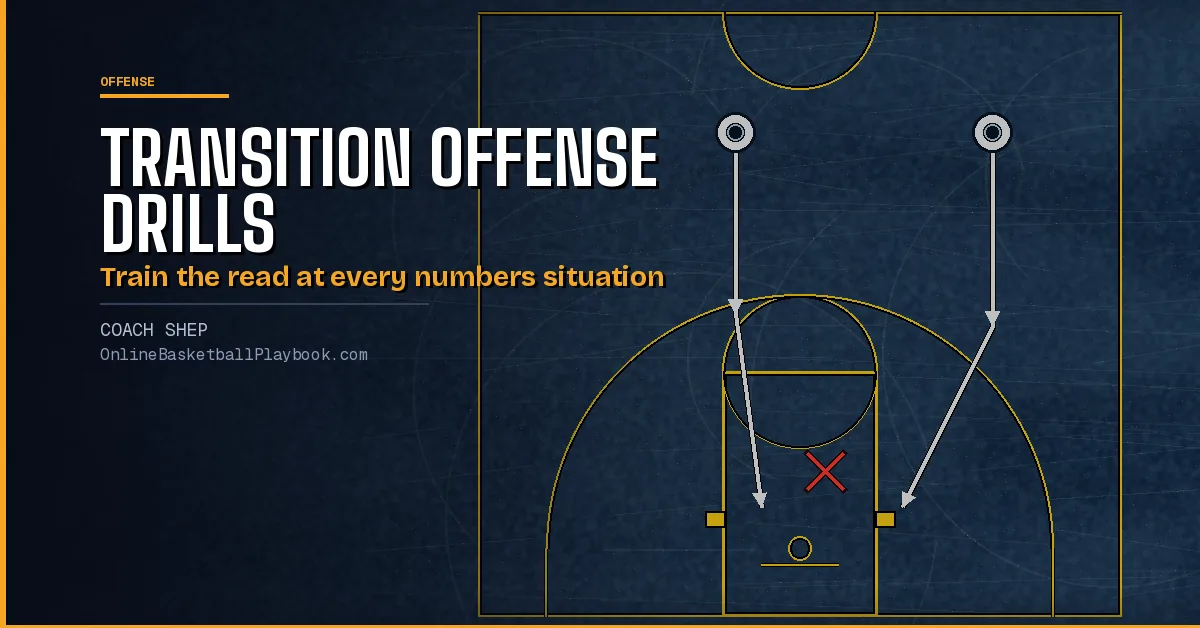
Transition Offense Drills: Outlet, 2-on-1 and Live Ladder
Transition offense drills that train a rule for every numbers situation: the outlet, lane filling, 2-on-1, 3-on-2, the 2-on-1 to 5-on-5 ladder and the numbered break