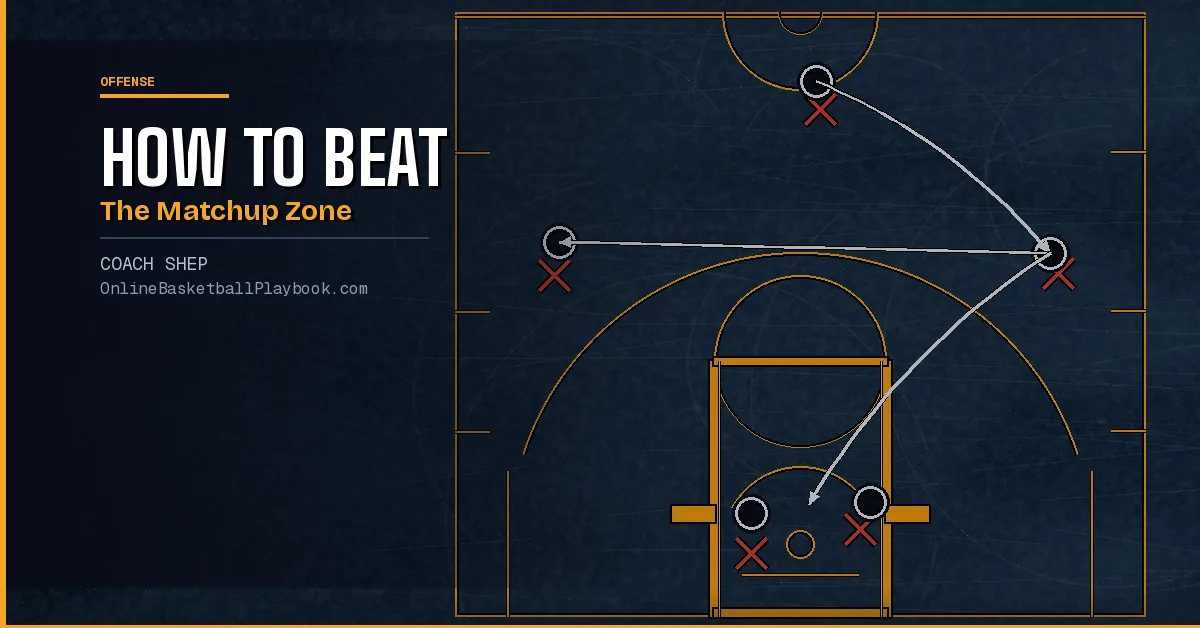
The matchup zone looks like a zone but plays like man. Beating it requires you to stress the handoff seams, force continuous movement, and make defenders communicate until one of them breaks.
What Makes the Matchup Zone Different
Before you can attack a matchup zone, you have to recognize it. Most coaches and players identify a defense in the first two seconds of a possession. They see a 1-2-2 alignment and immediately run their zone offense. That is exactly what the matchup defense wants. The entire design of the matchup zone is built around that misread.
A matchup zone starts in a zone alignment (typically a 1-2-2 or 2-3 shell), but the moment an offensive player enters a defender's area, that defender matches up to him like it's man-to-man. Defenders do not cover spots. They cover people. The zone structure provides a safety net, but the pressure is man pressure. As one coaching text puts it, the key rule is that no offensive player is unguarded at any point during a possession.
The implication for your offense is significant. If you run your zone sets against a matchup, you'll be using overloads, corner fills, and skip passes, all designed to stress gaps that don't exist in this defense. The "gaps" in a matchup zone are the handoff seams, and those close quickly with good communication. Your zone offense won't find them. Your man offense might, but only if you're actually reading the defense rather than running a scripted set.
The second disguise tool, sometimes called the "Scarecrow" look, flips this: the defense starts in a man stance and drops into zone rotations on a signal. Your team sets up in their man attack (screens, cuts, pick-and-roll), and suddenly faces zone rotations they didn't prepare for. Recognizing which version you're facing mid-possession is a skill your players have to train explicitly, not just understand conceptually.
Spread the Floor to Four Corners
The foundational principle for attacking any matchup zone is maximum spacing. Put four players at the four corners of the offense (two wings near the three-point line and two corners or slots), with one player operating inside. This is not a revolutionary idea; it is the same principle that stresses any zone. But the reason it specifically hurts the matchup zone is tied to the defense's primary strength: zone spacing with man pressure.
In the matchup zone, all four off-ball defenders are coached to keep a foot in the paint. They play zone spacing (clustered toward the ball-side) while applying man-level pressure when an offensive player enters their area. When you condense your offense, you make that clustering free. Defenders can sag toward the lane without giving up anything on the perimeter.
When you spread to four corners, each of those four perimeter defenders must now cover real distance. The wing on the weak side cannot sag two steps toward the paint without leaving a legitimate three-point shooter open. The corner defender on the ball side cannot pinch inside without surrendering an uncontested corner three. The matchup's compact help structure gets stretched, and the handoff seams (the moments when defenders pass off cutters) become wider and more exposed.
Spacing also slows down the defense's "Home" reset call. When a coverage breaks down, a well-coached matchup zone sends everyone back to base 1-2-2 alignment and re-reads the offense. If your offense is spread, that reset takes longer and leaves a player briefly unguarded as defenders sprint to their spots. A quick ball reversal during a reset is one of the cleanest ways to get an open look against this defense.
Attack the Seams with Hard Diagonal Cuts
The single most reliable way to break down a matchup zone is a hard diagonal cut through the seam before the handoff is complete. This is not a soft curl or a casual cut. It is a direct, purposeful line driven through the gap between two defenders at the moment one is handing off responsibility to the other.
Here is why timing matters so much. The matchup zone's cutter-handoff system relies on two verbal calls: "kick-down" when the cutter goes in front of the handoff, and "kick-back" when the cutter goes behind. Defenders must vocalize these calls on every cutter, every possession. When a cutter attacks the seam before the call is made (before the receiving defender has committed), neither defender is fully on the cutter. The ball-handler finds an open player in the lane, or the cutter catches and scores before the defense recovers.
The cut that works best in practice is a diagonal cut from a wing or corner toward the ball-side block. The cutter takes one step away, getting the wing defender to open up, then hard-cuts back through the gap between the wing defender and the low post defender. If the call "kick-down" comes too late, the cutter gets the ball in the lane with a step on the defender receiving the handoff. If the call "kick-back" comes too late, the wing defender gets screened by the cutter's path and loses him entirely.
The teaching point for your players: the cut must be decisive. A tentative read-and-react cutter gives defenders enough time to communicate and execute the handoff cleanly. A cutter who commits immediately (one hard step away and then full speed to the seam) doesn't give them that time. Train the cut in isolation before you put it into a live five-on-five setting. Players who understand why the timing matters will cut with more purpose.
In practice, film two or three possessions of your team attacking the matchup zone with diagonal cuts and count how many times the cut happens before the defense vocalizes a kick-down or kick-back call. If it's less than half, your cutters are giving the defense too much time to react. Push them to cut earlier and faster.
Use Ball Screens to Force Handoff Errors
Continuous ball screening is the second major weapon against a matchup zone. The reason is mechanical: the matchup zone's answer to a ball screen is that the on-ball defender goes over the screen and stays with his assignment, while the screener is "kicked down" to the screener's defender. This is functionally a switch. The defense handles one ball screen fairly cleanly. It handles three or four in sequence with much more difficulty.
The stress accumulates with each successive screen because the verbal communication required for each handoff must be accurate and immediate. One miscommunication (one "kick-down" called too late, one defender who hesitates at the switch point) creates an open shot or a drive to the rim. The matchup zone's architecture depends on defenders who can communicate at game speed under physical pressure. Ball screens put that communication under the most stress possible.
The pick-and-roll is the primary action to use here. Set a ball screen at the top of the key, reject or use it, and immediately set another on the other side. If your screener is a roll man, the zone defender closing out from the paint is now forced to choose between the roller and the handler after the switch. A screen-roll to a short-roll area, followed immediately by another ball screen on the other side, can force two or three communication events in three seconds. Faster than most defenses can process them.
If your opponent runs the matchup zone's "Home" reset call (sending everyone back to base alignment when they break down), use the ball screen immediately after you see the reset. The defense is caught mid-rotation, and the on-ball defender hasn't fully reestablished his position on the handler. That is the moment the ball screen has the highest chance of creating a coverage breakdown.
Patient Ball Movement Until the Rotation Breaks
Against a matchup zone that is communicating well, patience is your primary asset. The handoff system is not perfect. Over the course of a possession (four passes, five cuts, a couple of ball reversals), the odds that every defender communicates accurately on every cutter event go down. Patient ball movement is how you find the possession where communication fails.
The specific ball movement pattern that stresses the matchup zone most is a skip pass from one wing to the opposite wing or corner, immediately followed by a drive toward the basket or a quick post entry. The skip pass moves the ball faster than defenders can shift their zone spacing. The follow-up action (a drive or a post catch) happens while the weak-side defenders are still completing their rotation. If the matching-up communication on the catch side is even a half-second slow, the result is a mismatch, a lane drive, or an open look in the short corner.
Ball reversal through the high post is another reliable option. Enter the ball to a high-post player at the elbow, reverse it to the opposite wing, and immediately look for the cutter off the entry. The high-post entry forces the matchup's help defenders to collapse slightly, which opens the seam on the back side of the reversal. When the ball gets reversed quickly, the back-side wing defender is often mid-rotation, not yet fully matched up to the receiver.
The key teaching point is this: do not rush. A matchup zone that is communicating well will not give up easy looks on the first or second pass. It will give them up on the fourth or fifth pass, after it has made three or four consecutive handoffs and one defender is a step behind. Coach your players to read the possession for that moment rather than forcing early action.
Post Entry and Lob Threats
Matchup zones front the post aggressively. The defender on the low post side keeps a foot in the paint and fronts the post to prevent the ball entry, knowing that the help-side foot in the paint covers the lob. This is one of the matchup zone's strengths, but it also creates a specific vulnerability you can exploit with the right spacing and timing.
The front-the-post rule means the post defender's back is to the ball-side help. If you move the ball to the high post and your low-post player pins the fronting defender, the lob from the elbow to the low block over the fronting defender is available if the help-side rotation is even slightly slow. A matchup zone that has been forced to make multiple handoffs in the possession (because of the cuts and ball screens you've run earlier) may not have its help-side defender in perfect position when the lob look comes.
The second option off the post front is the flash to the high post. If the ball is on the wing and the low-post defender is fronting hard, your post player flashes to the elbow. The defender must follow or lose the match-up. If he follows, the low block opens for a cutter from the weak-side corner. If he doesn't follow, the flash catch at the elbow gives your post player a face-up situation with a step on his defender.
Use these post actions later in the shot clock, after you've moved the ball several times and forced the defense to communicate through multiple cutter events. A post entry on the first pass of the possession gives the matchup zone exactly what it wants, a ball entry it can front before the offense has stressed the handoff system at all. Make the defense work first, then attack the post.
- Spread to four corners first. Always start with maximum spacing, four players at the perimeter corners, one inside. This forces each matchup defender to cover real distance and slows the "Home" reset rotation when a breakdown occurs.
- Cut before the call is made. A hard diagonal cut through the seam must happen before the defense vocalizes "kick-down" or "kick-back." The earlier your cutter commits, the less time defenders have to complete a clean handoff.
- Run back-to-back ball screens. One ball screen the matchup handles. Three in sequence wears down the communication. Use continuous pick-and-roll to force multiple handoff decisions in a short time window. Eventually one fails.
- Be patient on ball movement. Skip passes from wing to wing, followed by an immediate drive or post entry, are more effective late in the shot clock than on the first pass. Let the defense communicate through three or four events before looking for the breakdown.
- Attack the "Home" reset. When the defense sends everyone back to base alignment after a breakdown, move the ball immediately. Defenders are mid-rotation and the on-ball defender hasn't reset his position. That gap is the quickest open look the matchup zone will give you.
Want more basketball coaching strategies and drills?
Join the Online Basketball Playbook newsletter →
Draw this play free in the play drawer →
Membership: the full library, playbook packs, and Pro drawing tools →
Keep Building
Related breakdowns
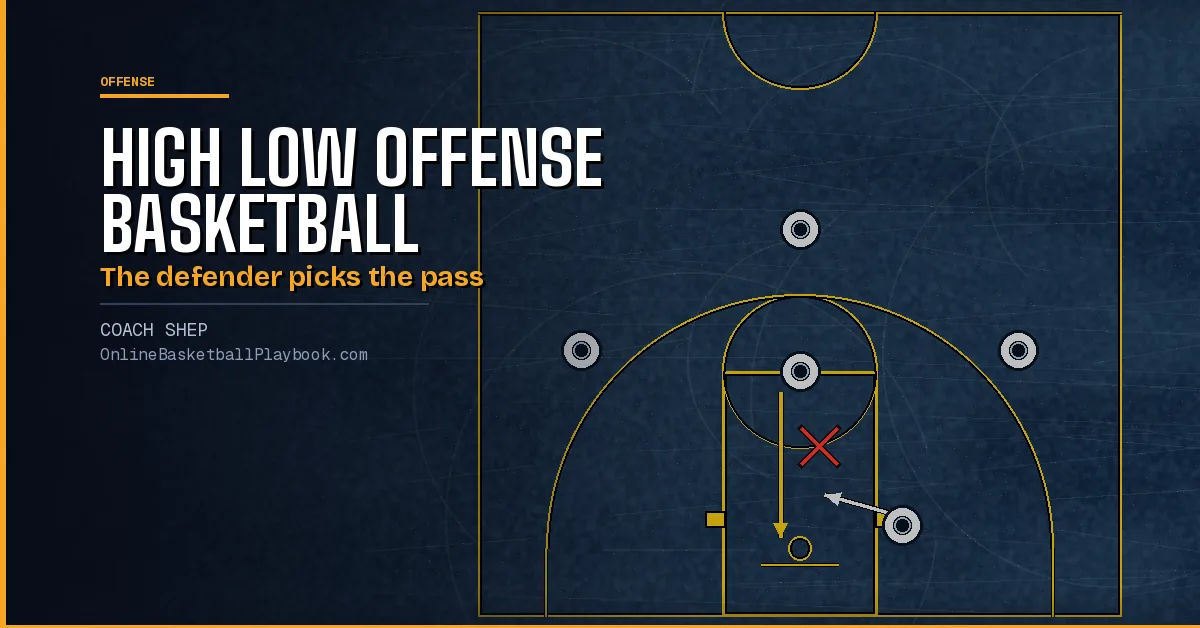
High Low Offense Basketball: Reads, Counters and Zone Rules
High low offense basketball explained: the two-post shell, the lob and bounce reads, answers to a front, down-screen reads, 1-4 low sets and the hi-lo against zones.
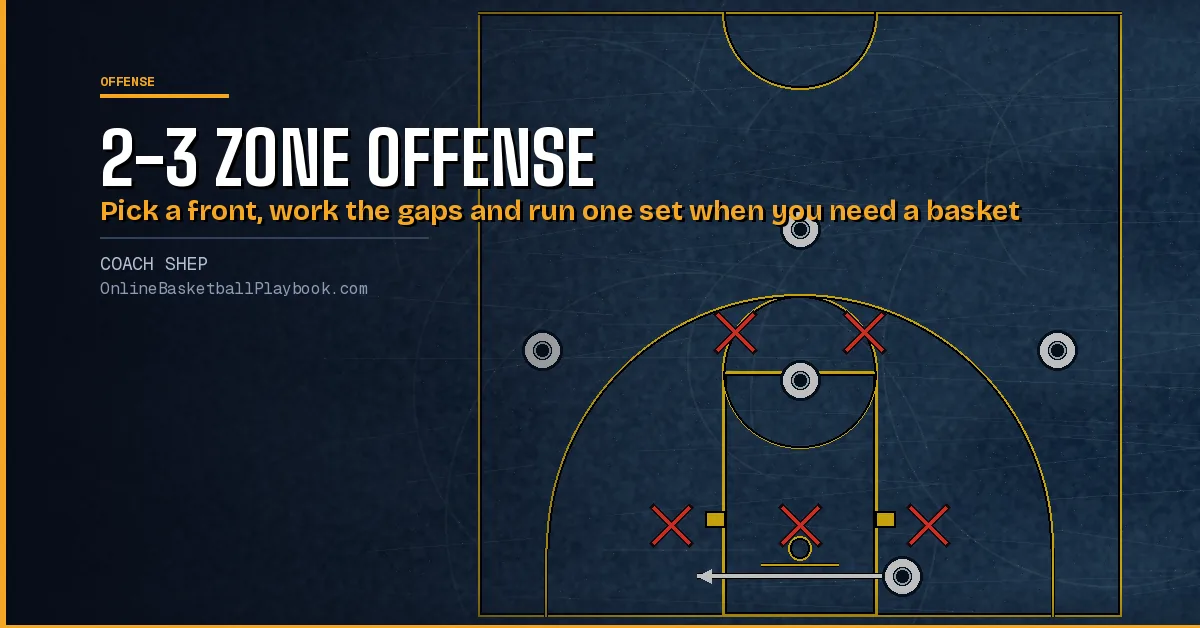
2-3 Zone Offense: Sets, Plays and Continuities to Run
2-3 zone offense with the fronts coaches start from, the continuities they run, quick-hitter plays for a basket, how to choose and where coaches disagree.
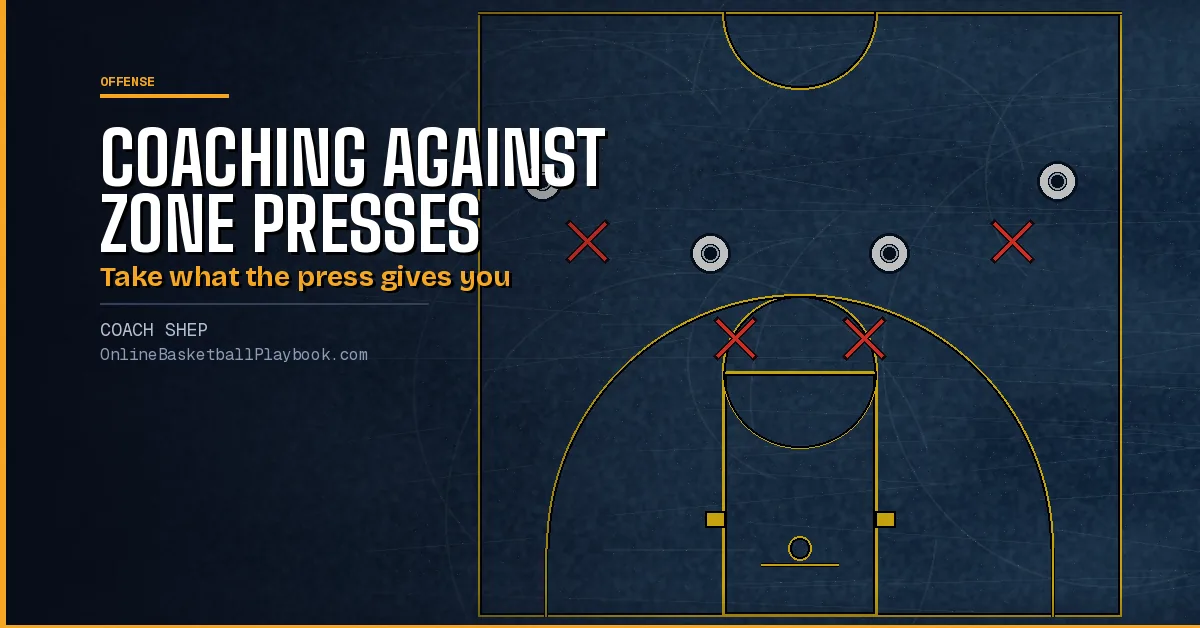
Strategies for Coaching Against Zone Press Defenses
How to coach against zone press defenses: what the 1-2-1-1, 2-2-1, 2-1-2 and 1-3-1 take away, the spacing that beats them, how to break the trap and the drills.