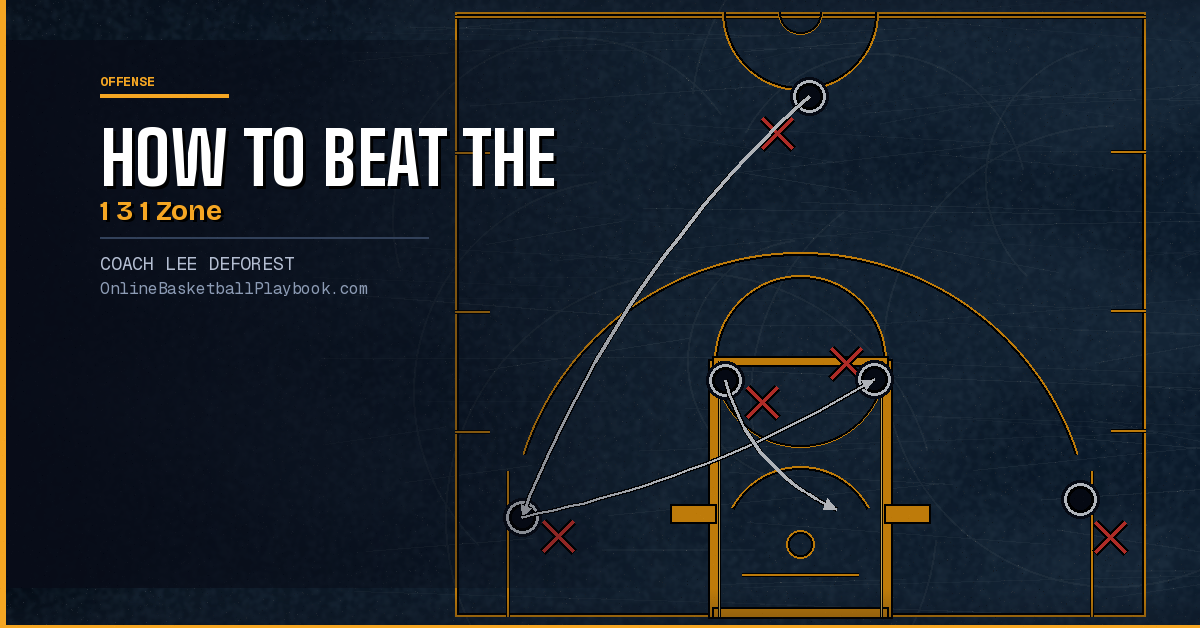

The 1-3-1 zone is the most aggressive trap defense in basketball. One pass kills it every time — the corner-to-elbow skip. This guide shows exactly how to find it, set it up, and build an entire offense around it.
Understanding How the 1-3-1 Wants to Trap You
Before you can attack the 1-3-1 zone effectively, you need to understand what it is actually trying to do to your offense. The defense is built around a simple premise: funnel the ball into the corners, trap hard, and force a rushed or blind pass out of trouble. The four-layer structure — one at the point, three across the middle, one sweeping the baseline — is designed to deny guard-to-guard reversal at the top and force the ball into the corners where two defenders converge on the handler simultaneously.
The point defender (X1) is the denial hub. His entire job is to prevent the ball from reversing easily across the top of the key. If your offense tries to reverse the ball guard-to-guard the way it would against a man or a 2-3 zone, X1 cuts off that lane immediately, and the two wing defenders collapse behind him. This is why many teams look completely lost against the 1-3-1 in the first few minutes — their standard reversal pattern simply does not work.
Once the ball enters the corner, the trap arrives fast. The ball-side wing and the baseline defender converge with arms up and legs closing the dribble escape. Two other perimeter defenders sprint into the nearest passing lanes — not staying at their zones, but actively jumping passing windows. The middle roamer (X4) positions himself to deny the first skip outlet at the strong-side elbow.
That elbow coverage is the single most important detail in the whole defense. Every defender in the trap scheme has one priority question: "Who is at the elbow right now?" The corner-to-elbow skip is the zone's highest-danger pass, and every rotation is designed around denying it. When you understand that, you understand the attack — make that pass happen before the defense can close it.
The Corner-to-Elbow Skip: The One Pass That Wins
The corner-to-elbow skip pass is the most dangerous pass in the 1-3-1, and the defense knows it. That is exactly why you should be drilling it every day in practice. When the ball enters the corner and the trap comes, all five defenders rotate. The two trappers are on the ball. Three others are scrambling to cover passing lanes. In that scramble, someone is late — and it is usually the middle defender trying to reach the elbow in time.
The skip pass does not need to be a full-court lob. It is a quick, crisp pass from the corner to a player positioned at the elbow or just above the free-throw line. If your player catches that ball before X4 or the rotating wing can recover, the defense is running and scrambling behind you. One more pass to the strong-side block or a quick pull-up jumper from the elbow produces a clean look.
To make this pass reliably, your corner player needs to be a confident passer under pressure — not a scorer who holds the ball. The moment he catches in the corner and the trap comes, his eyes should already be on the elbow. One pump fake to freeze the trappers, then a direct skip. Two dribbles instead of one gives the defense time to recover.
The elbow player must be a shooter. The 1-3-1 will adjust its rotation to slow down this pass once you hit it two or three times. When that happens, the elbow player becomes a passer: catch, face up, skip to the weak-side wing, who is now completely alone because the middle defender overcommitted to stop the elbow shot. One ball movement later, you have an open three or a drive from the weak side.
The corner-to-elbow skip after a corner trap is the most dangerous pass in the 1-3-1 — every defender on the floor must know which player covers that elbow when the ball is in the corner.
— one-three-one-zone, Basketball Vault
Spacing Your Offense to Stress Every Defender
The 1-3-1 is built for a team that crowds itself on one side or allows defenders to cheat toward the ball without consequences. Spacing is the structural antidote. Wide spacing stretches all five defenders across the full width of the floor and eliminates the rotation help that makes the traps effective.
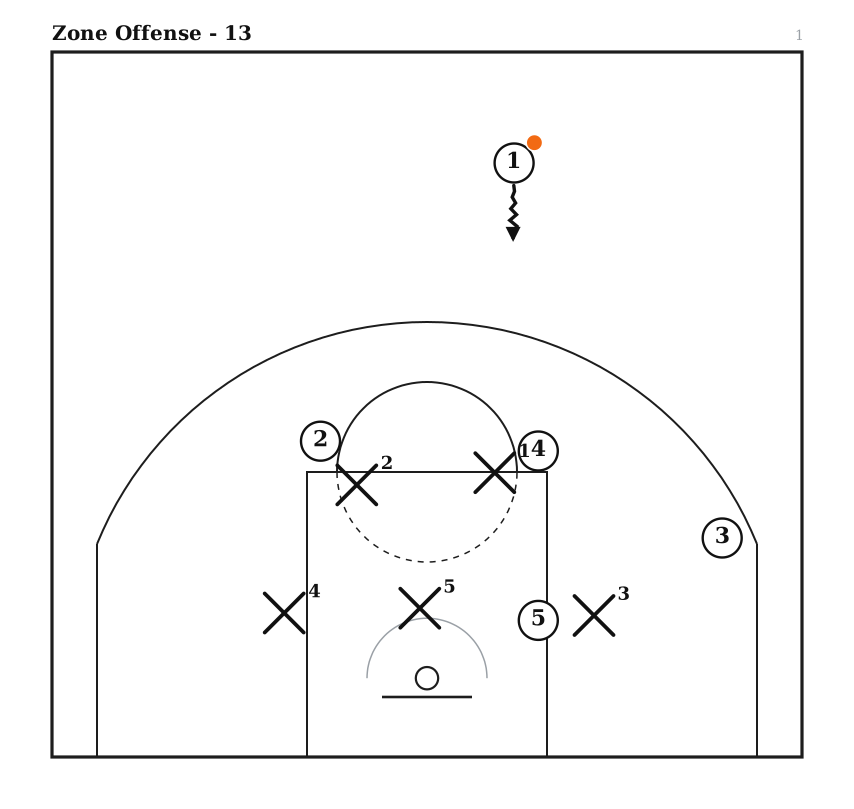
The standard offensive formation that attacks this zone places one player at the high post (at or above the free-throw line), two short corners (deep in the corners on each side), and a wing or guard at the top with the ball. This formation forces X4, the middle roamer who is the zone's engine, to choose a direction every single possession. He cannot cover the high post and the corner simultaneously. He cannot help on the baseline defender and protect the elbow at the same time.
Corner spacing specifically punishes the 1-3-1's rebounding weakness. This defense spreads five defenders across the perimeter — when a shot goes up, no one is in good rebounding position. Two offensive players stationed wide in the corners can crash the glass from the short-corner position and collect offensive rebounds against a defense that is chasing ball movement rather than boxing out.
The spacing rule is simple: no two offensive players should ever be close enough that one defensive player can guard both of them. If your point guard and your wing are both near the top of the key, X1 can deny both. Spread them so that helping on one leaves the other completely open. Do this across all five positions simultaneously, and the defense runs out of bodies.
High-Post Entries and the Flash Cut
The high post is the 1-3-1's deliberate giveaway. The defense consciously invites the offense to pass into the area just below the free-throw line because it believes that is a low-value catch — a mid-range pull-up or a contested post-up against X4. The defense is right that the catch alone is not dangerous. The flash cut makes it dangerous.
The flash cut works as follows: your guard enters the ball to the high post, then immediately cuts hard to the elbow or the wing. The moment the high-post player catches, he reads the defense. X4, who normally roams, had to cheat out to contest the entry pass. That pull creates an open lane to the basket or a clear skip to the opposite corner. The baseline defender (X5) is caught watching the ball — he cannot sprint corner-to-corner while the ball is already at the high post.
This entry sequence is especially effective against teams that run a slow, methodical 1-3-1. Faster 1-3-1 schemes rotate X4 before the catch; slower ones recover after. If you face a team whose middle defender is slow off the ground, the high-post entry followed by a quick drop pass to the cutting guard is a layup every time. Run it twice in a row early in the game and you establish that the defense has to respect it — then the skip pass from the corner opens up because X4 is now hesitating.
One coaching note: your high-post player does not need to score from that position. His value is as a passer, a screener on the zone, and a decision-maker under pressure. If you put a player there who needs the ball to score, he will take the contested mid-range jumper every time. Put a playmaking forward or a point guard in disguise at the high post, and the zone cannot stop the second or third pass.
Overloading One Side to Break the Baseline Defender
The baseline defender (X5) is the zone's most vulnerable player. His job is to cover the entire baseline — corner to corner — with every possession. He must be vocal, quick, and able to read the floor. When he is good, the back line of the 1-3-1 holds. When he is exposed, the whole back line collapses.
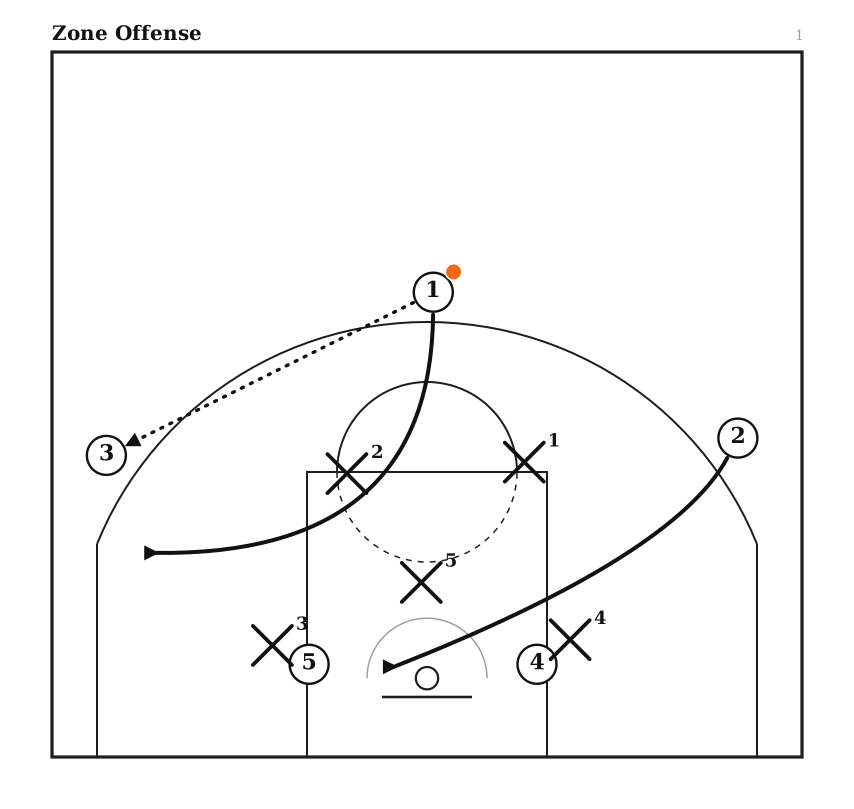
The overload attack puts two offensive players in the same corner — one in the deep corner, one at the short corner or block — plus one player at the wing on the same side. This collapses the ball-side wing defender and X5 simultaneously. Three offensive players, two defenders. Someone is open. When X5 commits to the deep corner, the player at the short corner is free. When the wing defender drops to help, the wing attacker gets an uncontested catch. When the high-post player enters the ball and the overload side has three players, the defense cannot rotate fast enough to cover everyone.
X5 must never "cheat" to one corner. The moment he tips his weight or his eyes to one side, a patient ball-mover hits the opposite corner before he can recover. This is why ball reversal against the overload is so effective: get X5 moving, then reverse quickly and attack the side he just left. One sharp cross-court pass should beat him every time if your players move the ball before he resets.
Against a physically limited X5 — a smaller guard who lacks lateral speed — overloading early and often is the fastest way to score. Drive the ball-side wing toward the baseline, draw X5 to help, and kick to the open corner three. Do this two or three times and the coach either pulls X5 or adjusts the whole rotation scheme. Either way, you have forced a change that opens something else.
Adjustments, Patience, and What to Do When They Change
The 1-3-1 is a high-variance defense. It generates steals and deflections, but it also gives up open looks when it breaks down. Patience is the offensive weapon the defense cannot take from you. Teams that rush out of traps throw blind reversals, which is exactly what the defense is designed to create. Teams that hold the ball for one extra beat — long enough to read the rotation — find the open man every time.
When the defense adjusts to stop the corner-to-elbow skip, two counters appear. First, the weak-side wing becomes the target: the elbow player catches, the defense collapses on him, and he swings it weak-side before the rotation can close. Second, dribble penetration from the elbow forces the remaining defenders to help, which opens the corner three or the baseline cut. The defense cannot guard the elbow player aggressively and also stop the pass — one of those two things opens every time.
If the team runs a full-court 1-3-1 press in addition to the half-court zone, the offensive answer is a simple push pass to a wing sprinting the sideline. The press version looks identical to the half-court version at the start — same formation, same denial at the point. The difference is where you handle the ball when you feel the trap. Against the press, push the ball ahead quickly before the trap fully sets. Against the half-court zone, slow down and find the gap.
Some coaches run a "Loose" 1-3-1 against poor-shooting teams — the whole defense drops to twenty feet and concedes the perimeter to bait long-range attempts and chase offensive rebounds. If you face a loose setup, the answer is simple: shoot the open threes. A loose 1-3-1 is an invitation to shoot, not a reason to pass. Take it.
A tight 1-3-1 extends to thirty feet or more, with X1 pressuring the ball well beyond the arc. Against this version, use ball screens at the top to free your ball-handler from pressure and attack the wing before the trap can set. Two dribbles to the wing before the trap arrives = no trap. The defense needs a stationary ball to organize its rotation — movement and ball screens disrupt the whole scheme before it forms.
Drill the corner-to-elbow skip from the offensive perspective first in practice, so your players feel exactly where they need to be after a trap arrives. When your own team knows how to beat it, they also know why it works — and that understanding makes every other zone-offense concept click faster during a timeout adjustment.
- Corner spacing: Station players deep in both corners every possession — X5 cannot cover both sides, and the offensive rebounding position punishes the zone's spread alignment after every shot.
- High-post playmaker: Put your best passer at the high post, not your best scorer. The value is in the second and third pass, not the mid-range pull-up the defense is willing to concede.
- Skip before the trap fully sets: Your corner player needs to read the trap coming and release the skip with one pump fake — two dribbles after the trap lands gives the middle defender time to recover to the elbow.
- Overload to expose X5: Two players in the same corner — one deep, one short — forces both wing and baseline defenders into a two-on-one conflict. Reverse the ball quickly when X5 commits and attack the vacated side immediately.
- Ball screens against tight pressure: When the 1-3-1 extends to thirty feet, a ball screen at the point frees the handler before the trap fully organizes. Motion disrupts the rotation before it forms.
Want more basketball coaching strategies and drills?
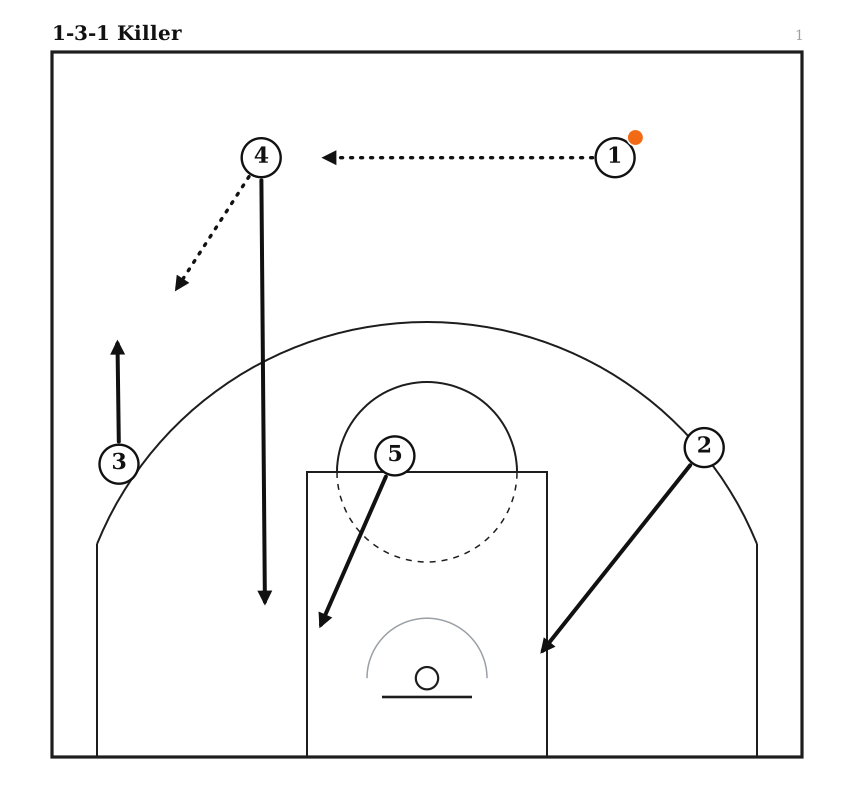
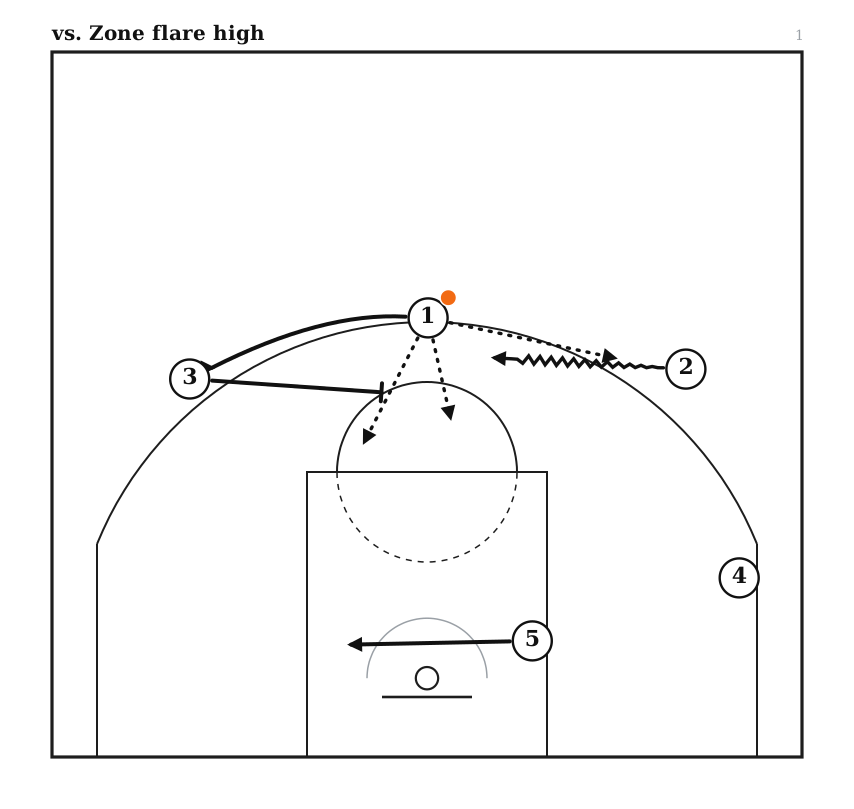
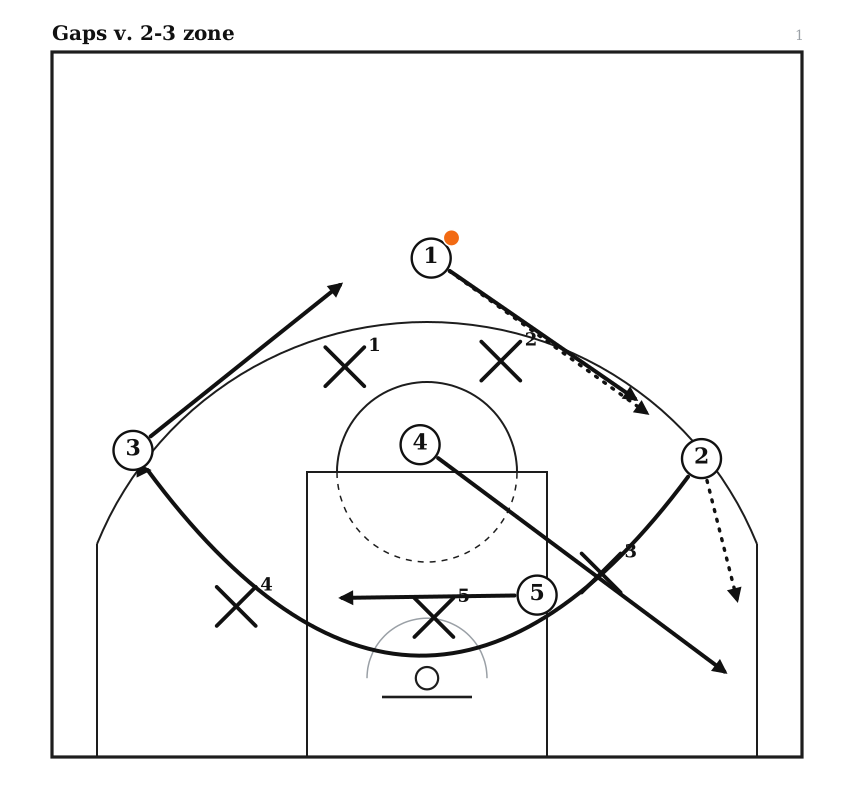
See it drawn up
Related diagrams
Keep Building
Related breakdowns
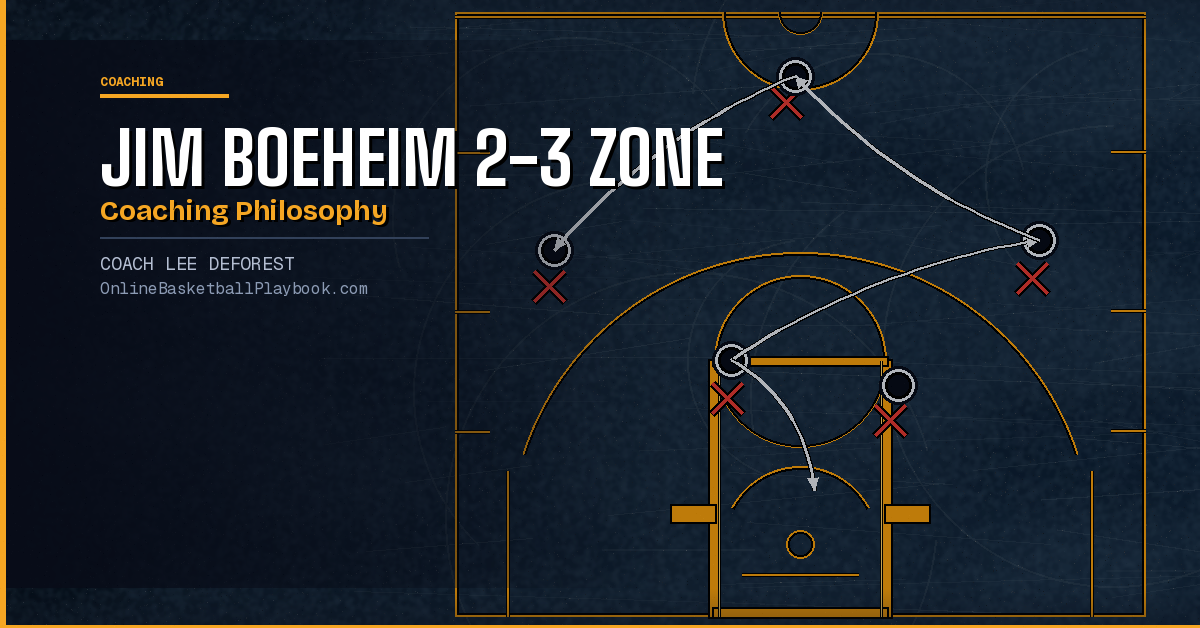
Jim Boeheim 2-3 Zone System and Coaching Philosophy
Jim Boeheim 2-3 Zone System and Coaching Philosophy
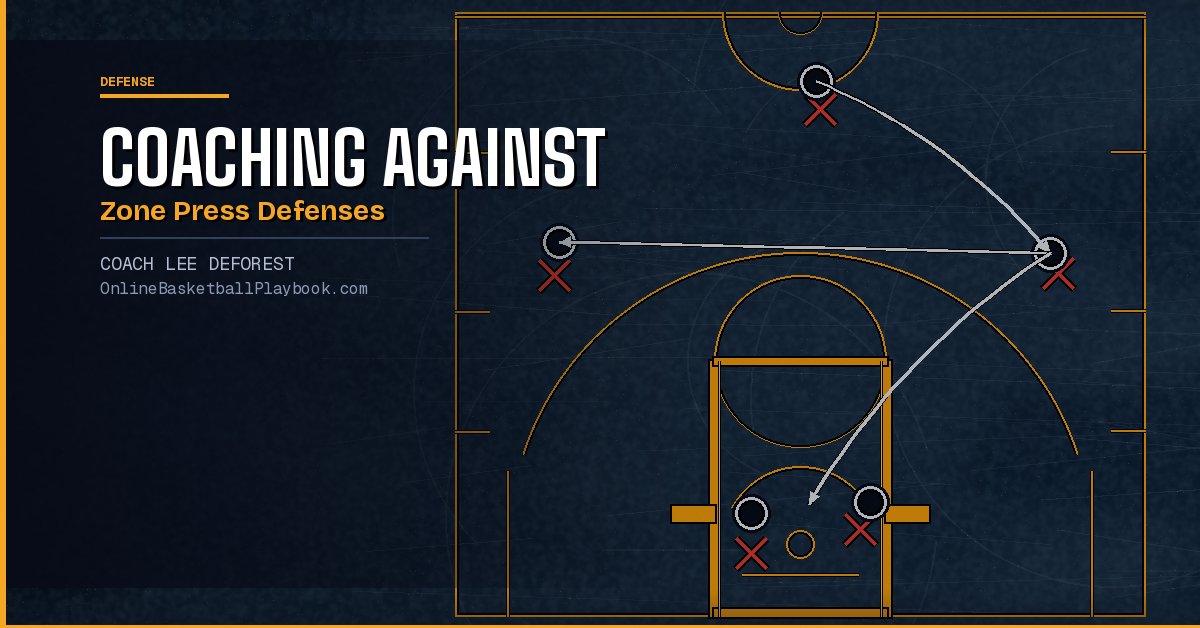
Strategies for Coaching Against Zone Press Defenses
Strategies for Coaching Against Zone Press Defenses