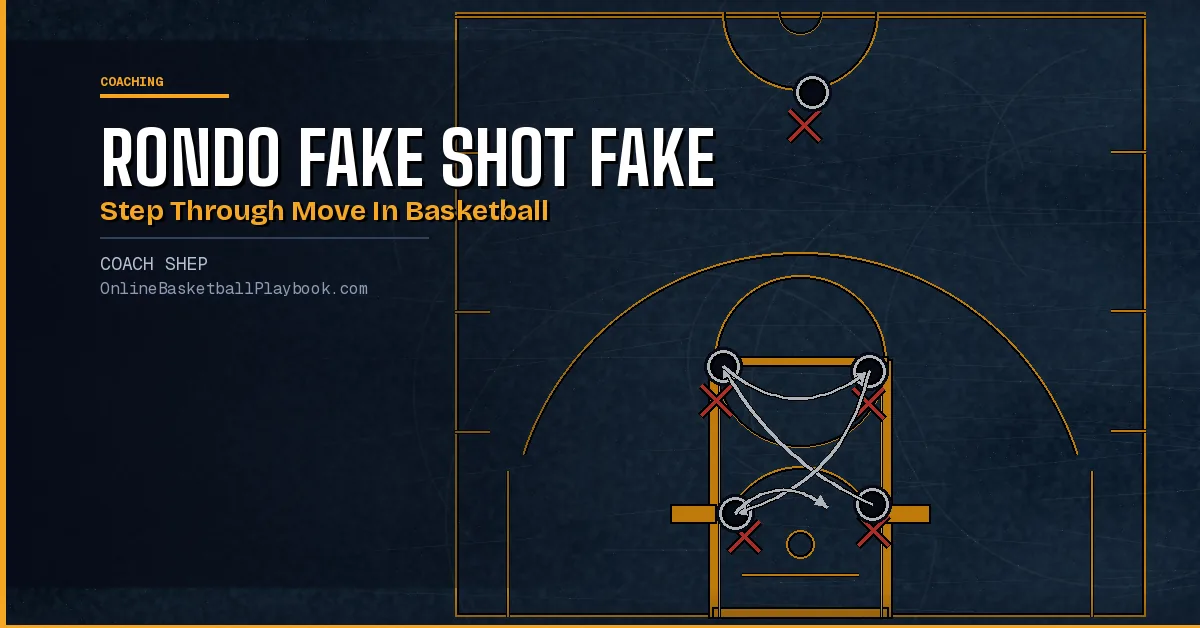
The Rondo fake shot fake step-through is a two-action read that freezes closing defenders and creates a clean path to the basket. Learn the footwork, timing, and reads that make it work.
What the Move Is and Why It Works
Rajon Rondo made this sequence famous because he rarely beat defenders with athleticism alone. He beat them with reads. The fake shot fake step-through, sometimes called the shot-pump step-through, combines two deception layers in rapid sequence: a pump fake that pulls the closeout defender off their feet, followed immediately by a step-through that bypasses their outstretched arm and lands a high-percentage finish at the rim.
The move lives in a specific moment: you have the ball on the perimeter, a dribble or two off the catch, and a defender sprinting at you from help position or scrambling back on a closeout. That desperation in the defender is what makes the move available. A defender who is already moving toward you is one who cannot change direction fast enough to stay between you and the basket if you give them a false picture, the shot fake, and then immediately step through before they recover.
What separates this move from a simple shot fake is the second deceptive beat. A plain pump fake freezes the defender and you drive around them. The Rondo version adds a fake step, a brief weight shift in one direction, immediately after the pump, which resets the defender's momentum a second time before the actual step-through happens. Two freezes, not one. That second hesitation is the difference between the defender recovering to contest and the defender watching you finish.
This is not a move built on speed. It is built on timing, reading, and the discipline to hold the pump long enough to actually get the defender in the air. Players who rush it rush past the point where the defense has committed, and the move collapses. Slow is smooth, smooth is lethal.
Step-by-Step Footwork Breakdown
Understanding the precise footwork sequence is what separates players who look like they're doing the move from players who actually score with it. Work through each piece before putting it together at full speed.
Step 1: Catch or Pick Up the Dribble in a Strong Triple-Threat Stance
Your feet should be shoulder-width apart, knees bent, ball held at chest or hip level on the shooting side. You need to be in a position that genuinely threatens a shot. If the defender does not believe you can shoot from where you are, the pump fake does nothing. That means the stance has to be convincing before the ball even moves.
Step 2: Execute the Pump Fake with Full Commitment
Bring the ball up through the full shooting motion: ball above the forehead, shooting elbow up, eyes on the basket. The key is to make it look indistinguishable from your real shot. A half-hearted lift of the ball gets ignored. Go all the way through the motion, pause for one beat at the top so the defender has time to leave the floor, then bring the ball back down with control.
Step 3: Add the Fake Step
As the ball comes down from the pump, take a short jab step in one direction, typically toward your strong hand. This is the second fake. Its job is to shift the defender's weight and angle of recovery. They just jumped on the pump; now they are trying to get their feet under them and cut you off. The jab step tells them which direction to shade. Then you go the other way.
Step 4: Step Through with the Inside Foot
As the defender's weight shifts to cover your jab direction, plant and swing the inside foot, the foot closest to the basket, in a long, low step that gets your body fully past the defender's hips. The goal is to put your shoulder past theirs. Once your shoulder is past their hip, they cannot block the shot without fouling. Drop your center of gravity on the step-through so you stay balanced under contact.
Step 5: Finish Strong
After the step-through, gather and go up with the ball protected on the high side, away from the trailing defender. Use a Euro step finish, a reverse layup, or a power-stop two-foot jump depending on how much space you created and where the help defense is. The move gets you past the primary defender. Reading the second defender on the finish is a separate skill worth drilling in its own right.
Reading the Defender to Trigger the Move
The move only works when the defender gives you the right invitation. Part of mastering it is learning to recognize that invitation in real time so you do not waste the fake on a stationary or disciplined defender.
The primary trigger is a defender who is moving toward you. Closeout defenders, scrambling help defenders, and opponents caught ball-watching before sprinting back. These are all targets. A defender who is already moving cannot stop and change direction as fast as one who is set. When you see feet moving in your direction, set your feet and get into triple-threat as if the shot is coming.
The secondary trigger is a defender who has a tendency to jump on shot fakes. This is scouting information you pick up in the first few minutes of a game. If a defender bites on your first or second pump fake in early possessions, file that away. The Rondo step-through becomes your go-to counter for that opponent all game.
The move is NOT available when the defender is set in a low, balanced stance with feet shoulder-width apart and has not committed to any direction. Against that read, the pump fake often gets ignored. A patient, disciplined closeout defender takes away this move. Your counter in that situation is a simple drive, a skip pass to the open corner, or a pull-up at the free throw line before they can close the gap.
Common Errors and How to Fix Them
Most players who struggle with this move make one of four repeating mistakes. Each has a direct mechanical fix.
Rushing the Pump Fake
Players bring the ball up and immediately bring it back down before the defender has time to react. The fake is only as effective as the time you hold it at the top. Hold the ball above the forehead for a full count, one Mississippi, before returning it. Yes, you will feel vulnerable holding the ball up there. That feeling is correct. Hold it anyway. The defender needs to see it and decide to jump before the move works.
Skipping the Fake Step
Going straight from the pump into the step-through without the intermediate jab skips the second deceptive beat. That is the move as a one-fake drive, not as the Rondo sequence. Add the jab step consciously in every slow-motion rep of the drill. Over time it will become automatic, but early in learning it has to be deliberate.
The Step-Through Too High
Players who step through while staying upright give the recovering defender time to recover and get a hand up. The step-through should be long and low, almost a lunge, so your body mass moves past the defender's hips quickly. Think of driving your shoulder through the gap, not stepping politely around them.
Losing Balance on Contact
Defenders who are too late to block the move will often grab, bump, or body-check on the way through. If you are on one foot or high when contact arrives, you fall. The fix is to keep the step-through foot wide, outside your hip, so your base stays wide enough to absorb the contact and still get the shot up. Two-foot finishes are safer than one-foot finishes when you expect contact.
Drills to Build the Move in Practice
The move has to be built in parts before it can be executed at game speed. Here are the progressions that develop each component.
Stationary Pump-and-Hold Reps
Stand at the wing or elbow without a defender. Catch a pass or pick up a dribble, get into triple-threat, and pump fake, holding the ball at the top for a full count, then bring it down. No step-through yet. Just training the hold. Do 20 reps per side until the pause at the top feels natural. This is also where you train the pump fake mechanics: ball above the head, elbow up, eyes at the rim.
Partner Pump Fake Reaction Drill
Add a partner who stands two feet away and tries to stay on the ground when the offensive player pump fakes. The goal for the ball-handler is to get the partner in the air. The goal for the defender is to stay disciplined. This drill trains the ball-handler to make the fake convincing and trains the defender to recognize and resist shot fakes, and both players improve. Switch roles every 10 reps.
Slow-Motion Full Sequence Against a Chair
Use a chair or a pad held by a manager to mark the defender's position. Walk through the full sequence at 30% speed: catch, pump, hold, jab step, step-through past the chair, finish. The chair does not move, so you focus entirely on your footwork and the path of the step-through. Repeat 15 times before going to a live defender. The goal is making every mechanical step automatic before competition speed enters the drill.
Live 1-on-1 Closeout Drill
The defender starts under the basket. Passer feeds the ball to the wing. Defender sprints to close out. Ball-handler's only available move is the Rondo sequence, no straight drives, no pull-ups. This forces the ball-handler to read the closeout and execute the sequence at full speed under real defensive pressure. Run it from both wings and from the top of the key. Score it: ball-handler gets one point for a made shot, defender gets one point for a stop or a steal. First to five wins.
When you add the 1-on-1 closeout drill to practice, give the ball-handler permission to fail the first ten reps without correction. You want them rushing it, skipping the jab step, losing balance. Those early failures are diagnostic information. Only after you have seen their natural error pattern should you stop practice and deliver the one mechanical fix that addresses their specific mistake. Trying to correct everything at once teaches nothing.
When and Where on the Floor to Use It
Context determines whether a move is available. The Rondo fake shot fake step-through has a specific geography and game-situation map.
The best locations are the mid-range areas where you have a realistic shooting threat: both wings between the three-point line and the elbow, and the area just above the free throw line. These are spots where defenders respect your shot and will close out hard. The shot threat is what makes the pump fake worth anything. If you are standing on the wing and your defender knows you never shoot from there, they will not bite on the fake.
The move is most available in two specific game situations. First, on the drive-and-kick when the ball rotates back to you on the wing and the closeout defender is arriving at full sprint. Second, on any defensive breakdown where a help defender is scrambling back to you after the primary action happened somewhere else on the floor. Both situations give you a moving, off-balance defender, the raw material the move requires.
Avoid the move in transition defense when a defender is getting back and already has their hips toward the basket. In that situation your pump fake pulls you into traffic behind their retreat rather than freezing them in front of you. The step-through in transition usually ends with a charge or a contested floater. Take the simpler read instead.
The move also sets up beautifully as a counter for defenders who start jumping on your pump fakes in drive situations. If they know you drive and they have started loading up early to contest, a single pump fake before the step-through is often enough to get them in the air and open a clear lane. Good defenders adjust; good offensive players adjust faster.
- Hold the pump at the top for one full count: The most common mistake is releasing the ball back before the defender has time to leave the floor. Discipline yourself to feel the pause.
- Add the jab step every single rep: It is the second freeze that separates the Rondo sequence from a basic shot-fake drive. Skip it and you lose half the move's effectiveness against disciplined defenders.
- Step-through long and low: Your shoulder needs to clear the defender's hips before you gather for the finish. A short or upright step-through leaves the defender's arm in your shot lane and invites a block.
- Read the second defender before you go up: The first defender is beaten by the step-through, but help-side rotation usually sends a second body. Decide Euro step, reverse, or power stop before your gather foot hits the floor.
- Train it from both wings and the elbow: The step-through direction and foot sequence change depending on which side of the basket you finish, and game situations will not always give you your preferred angle.
Want more basketball coaching strategies and drills?
Join the Online Basketball Playbook newsletter →
Draw this play free in the play drawer →
Membership: the full library, playbook packs, and Pro drawing tools →
Keep Building
Related breakdowns
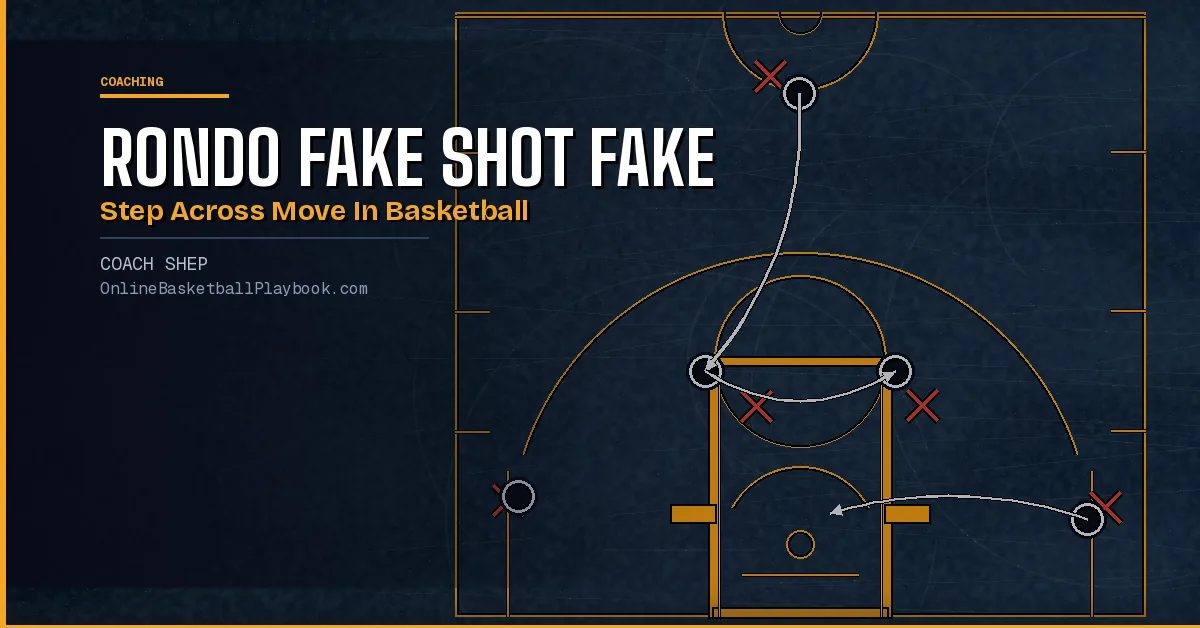
How to Do a Rondo Fake Shot Fake Step Across Move in Basketball
How to Do a Rondo Fake Shot Fake Step Across Move in Basketball
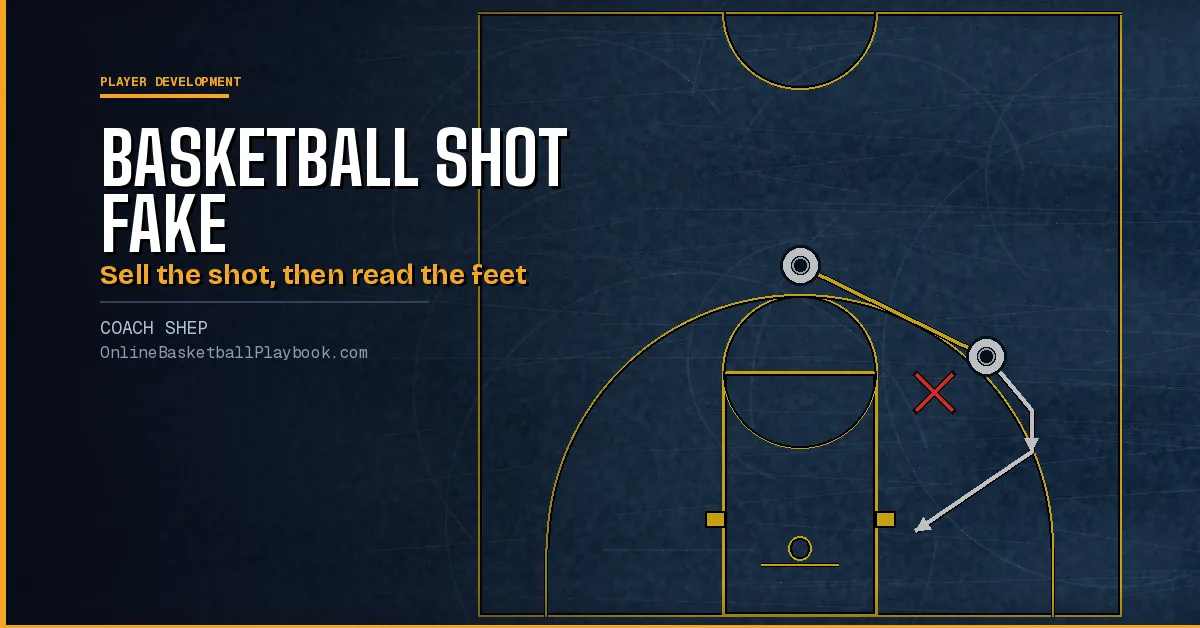
Basketball Shot Fake (Pump Fake): How to Do It and Teach It
The basketball shot fake, also called the pump fake, works when it looks like the real shot. The mechanics, the pivot foot footwork, the read and the drills.
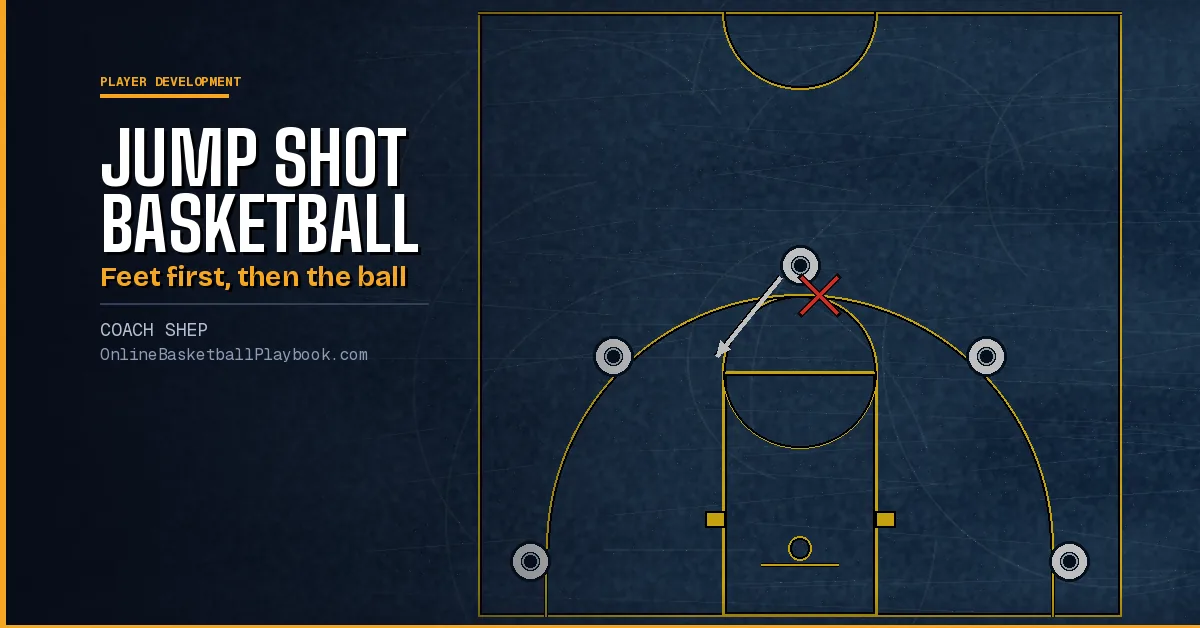
Jump Shot Basketball: Footwork, Release and the Step-Back Jumper
The jump shot in basketball from the feet up: catch footwork, the lift and release, shooting off the catch or the dribble, the step-back jumper and fixing a miss.