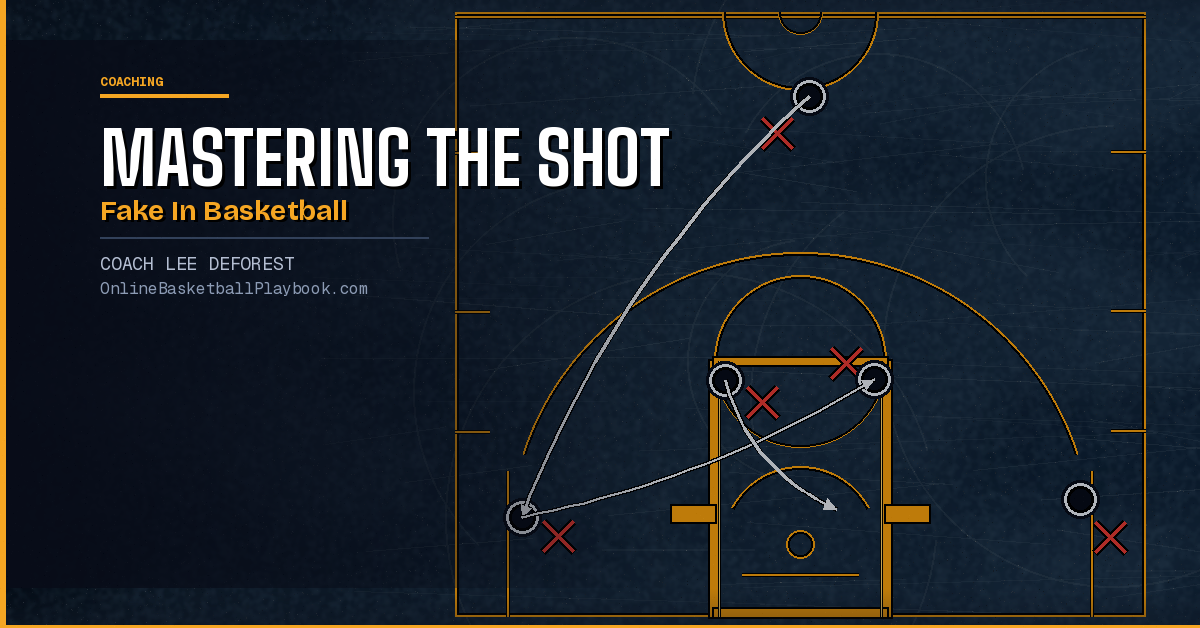

The shot fake is one of the most underused skills in basketball. When executed correctly, it freezes defenders, draws fouls, and creates high-percentage looks — without a single dribble required.
What Makes a Shot Fake Work
A shot fake only works if the defender believes it. That sounds simple, but most players sabotage their own fakes before they even attempt them. The defender is reading one thing: your shooting motion. If your fake does not look exactly like your real shot, they will not bite.
The key principle is commitment. Every effective shot fake begins with a player who has already proven they can and will shoot. A player who never shoots from a particular spot — or who shoots with poor form — has no leverage over a defender. The fake is only as dangerous as the shot behind it.
This is why shooting development and shot-fake proficiency are inseparable. Coaches who build real shooting range on their players are also building the threat that makes the fake deadly. Rick Pitino tracked that his Louisville teams shot 22% on challenged attempts versus the NBA baseline of 42%. That gap exists because players take poor shots or do not develop the form that actually scares defenders into leaving their feet. A shot fake by a non-shooter is just theater. A shot fake by a known shooter is a weapon.
The second factor is pace. The fake must match the player's real shooting tempo. If a player normally catches and fires in one beat, the fake needs to replicate that same pre-shot rhythm — the dip, the lift, the head snap toward the rim. Rush the fake and it looks incomplete. Slow it down and the defender reads it as a hesitation move, not a shot.
Footwork: The Foundation Before the Fake
Before the fake itself, footwork determines everything. A player who catches the ball off-balance, with feet out of position, cannot execute a convincing shot fake because they are not in a position to actually shoot. Defenders know this. If your feet are wrong on the catch, they stay put.
Jay Wright at Villanova drilled one principle relentlessly: on all V-cuts and screen catches, plant the inside foot first. The sequence is "1-2, lift, follow through" — and players had to say it aloud during technique work until it was automatic. That footwork discipline is not just about making the shot. It is about being in a position that the defender must respect, which is what creates the shot-fake opportunity in the first place.
John Beilein at Michigan went further, stating that footwork is more important than any offense a team runs. The reasoning holds directly for shot fakes: the same inside-foot plant that sets up a clean shooting stance is the same position that makes a shot fake believable. You cannot fake what you cannot actually do from that spot.
For triple-threat positioning specifically, players need to land in a balanced stance with knees flexed, weight centered, and the ball in shooting position — not held low against the hip. When the ball is already up and the feet are set, the defender has to honor the shot. That is when the fake becomes an option. When the ball is low and the feet are staggered, the defender simply watches and waits.
How to Execute the Shot Fake Step by Step
A well-executed shot fake has four distinct phases: the set, the lift, the sell, and the go. Each phase must be deliberate.
Phase 1: The Set
Catch the ball in shooting position with feet already set. Do not bring the ball down after the catch. If you receive a pass and immediately drop the ball to your hip, you have already telegraphed that you are not shooting. Catch it up, with the shooting hand under the ball and the guide hand on the side — the same "pizza waiter" position that good shooters use on every shot.
Phase 2: The Lift
Begin the upward shooting motion. Raise the ball from the set position toward the release point, exactly as you would on a real shot. The lift must go high enough that the defender cannot distinguish it from your actual shooting motion. A fake that peaks at chest height when your real shot releases from above your head is easily read. The lift must travel the same arc and reach the same approximate height as a real shot attempt.
Phase 3: The Sell
The sell happens in the final details: the head snaps toward the rim, the eyes look through the basket, and the shooting elbow extends toward the target. Many players lift the ball but forget to move their eyes. Defenders track your gaze as much as the ball. Lock your eyes on the rim during the fake, and you engage the defender's instinct to contest a real shot. Stay flat-eyed and they stay flat-footed.
Phase 4: The Go
The moment the defender's feet leave the floor, the fake has worked. Do not hesitate. Rip through immediately — a dribble baseline, a one-dribble pull-up, a drive into the paint, or a pass to a collapsing defender's zone. The read must be pre-decided. Players who execute a good fake but then stand and survey the floor waste the advantage they just created. Know your move before the ball arrives.
Reading the Defender's Response
Not every defender bites a shot fake. Experienced defenders, help-side defenders, and defenders who know you do not shoot from that spot will stay grounded. Reading the response determines what happens next.
There are three common defender reactions and a correct answer for each.
The first reaction is the full bite — both feet leave the floor. This is the foul-drawing opportunity. Drive straight into the airborne defender's body, absorb the contact, and finish or draw the foul. Do not fade away from contact in this situation. Step into it. The referee is watching the defender's feet, and two off the floor with contact is a foul every time.
The second reaction is the partial bite — the defender rises onto their toes or shifts their weight forward without going airborne. This is the one-dribble pull-up opportunity. A single dribble to the side creates enough separation to get a clean mid-range look. The pull-up off one dribble is what Rumjahn and Kelbick called a "lost art" in player development — a player who can hit the 12-to-15-foot pull-up after one dribble is as valuable as a pure three-point shooter, and the shot fake is the setup.
The third reaction is no reaction — the defender stays disciplined. This is the passing read. If the fake does not move the primary defender, check whether the threat of the fake pulled a help defender out of position. Shot fakes in the mid-post and elbow frequently trigger help rotations that open cutters or corner shooters. A quick skip pass after a no-result fake can be more valuable than the drive that did not materialize.
A player who takes one or two dribbles and pulls up around the free-throw line is as valuable as a pure three-point shooter — the pull-up and hesitation are lost arts in the modern game.
— Rumjahn / Kelbick, Basketball Vault
Drills to Build an Automatic Shot Fake
Shot fake skill deteriorates without deliberate practice because players default to their comfort moves under pressure. The following drills isolate each component and make the full sequence automatic.
Ball-Fake Partner Drill (Form Before Speed)
Two players face each other six feet apart. The offensive player catches a pass, executes a full shot fake — complete with the lift, elbow extension, and eye contact with the rim — then holds the landing position for two seconds before returning the ball. The defensive partner calls out whether the fake was convincing. This drill builds the habit of completing the fake rather than abbreviating it under real-game tempo pressure.
Fake and Drive (Decision at Game Speed)
A player sets up at the elbow or wing with a live defender. The coach designates before each rep whether the defender must bite or must stay. The offensive player executes the shot fake, reads the response, and attacks accordingly: drive on the bite, pull-up on the partial, pass back on the no-movement. Running this at game speed forces the player to pre-decide the read rather than improvise after the fake.
Series 5 Progressions (Billeter Method)
Tom Billeter's Series 5 — drawn from the POWER Clinic coaching bank — links the shot fake directly to scoring progressions: jab-step into the fake, curl-and-fake, wing fake into a baseline drive, and fake into a flare cut. The critical rule from Billeter's system: never miss the same way twice, and add a bad pass so the reps mirror what actually happens in games. The shot fake does not live in isolation. It lives inside sequences that begin with footwork and end with a decision under contest.
Competitive Fake-and-Finish (Scored Reps)
The Basketball Vault's core shooting principle translates directly here: make every rep competitive — against the clock, an opponent, or yourself. Run a five-minute series where every made basket off a shot fake (drive, pull-up, or foul shots) scores a point, and the player with the most points at the end of the window wins. Scored reps create pressure that reveals whether the shot fake is truly automatic or whether it collapses when something is actually at stake.
Common Mistakes and How to Fix Them
Shot fake breakdowns follow predictable patterns. Most have a mechanical root cause that can be diagnosed and corrected the same way Dr. Hal Wissel's shooting error framework works — identify the cause before prescribing the fix.
Mistake: The fake is too short
Players lift the ball only halfway up and expect defenders to bite. The correction is simple: the fake must reach the same height as a real shot attempt. Run form-fake repetitions where the ball rises to full shooting position — above the forehead, with the elbow extending toward the rim — before the player consciously decides not to release. The target is making the fake indistinguishable from the real thing through the first 80% of the motion.
Mistake: Eyes stay down during the fake
This is the most common tell. A player whose eyes do not lock on the rim signals to the defender that a shot is not actually coming. The fix is to make explicit eye-contact with the back of the rim part of every fake repetition in practice, the same way the "Sight–Set–Shoot" rhythm protocol trains shooters to establish a target before releasing. No target eyes, no convincing fake.
Mistake: The player does not go after a good fake
Some players execute a textbook fake, see the defender in the air, and then stand and wait instead of driving. This is a decision-making failure, not a technique failure. The fix is drilling pre-reads: before the catch, the player decides which move they will use if the fake works. The "Fake and Drive" drill described above specifically trains this. When the decision is made before the catch, the execution after the fake becomes automatic.
Mistake: Faking from a non-shooting spot
A shot fake from a spot where a player never shoots fools no one. Defenders know who shoots from where. If a player only shoots threes from the corners, a shot fake at the elbow carries no threat. The solution is expanding the shooting range to match where the player actually wants to create shot-fake opportunities. This means practicing and making shots from those spots in every workout — not just running the fake drill in isolation.
Mistake: Taking the bad shot when the fake does not work
When a defender does not bite, some players feel committed to the move and force the shot anyway. Pitino's practice rule applies directly: if the shot would be challenged, restart the action. A shot fake that does not produce an advantage is simply a part of the offensive sequence, not the final read. Reset, pass, or reset the action — do not force the shot because the fake was already attempted.
Teach the shot fake as a scoring action with specific entry points — catch at the elbow, catch off a pin-down, catch in the mid-post — not as a general "move." Players need to know exactly which spots and situations call for it, and they need to have made real shots from those spots in practice so the threat is genuine when the game begins.
- Form before the fake: players must be able to make the shot from that spot in practice before you drill the fake — the threat earns the defender's respect.
- Inside foot first, every catch: correct footwork on the catch puts the player in a real shooting stance, which is what forces the defender to honor the threat.
- Eyes to the rim during the lift: no eye contact with the target during the fake is the #1 tell — make it a non-negotiable coaching cue every rep.
- Pre-decide the move: before the catch, the player commits to the attack option they will use if the fake works — drive, pull-up, or pass — so there is no hesitation after the defender bites.
- Score the drill reps: competitive, counted practice is the only way to know if the skill transfers; make every fake-and-finish session have a winner and a recorded result.
Want more basketball coaching strategies and drills?
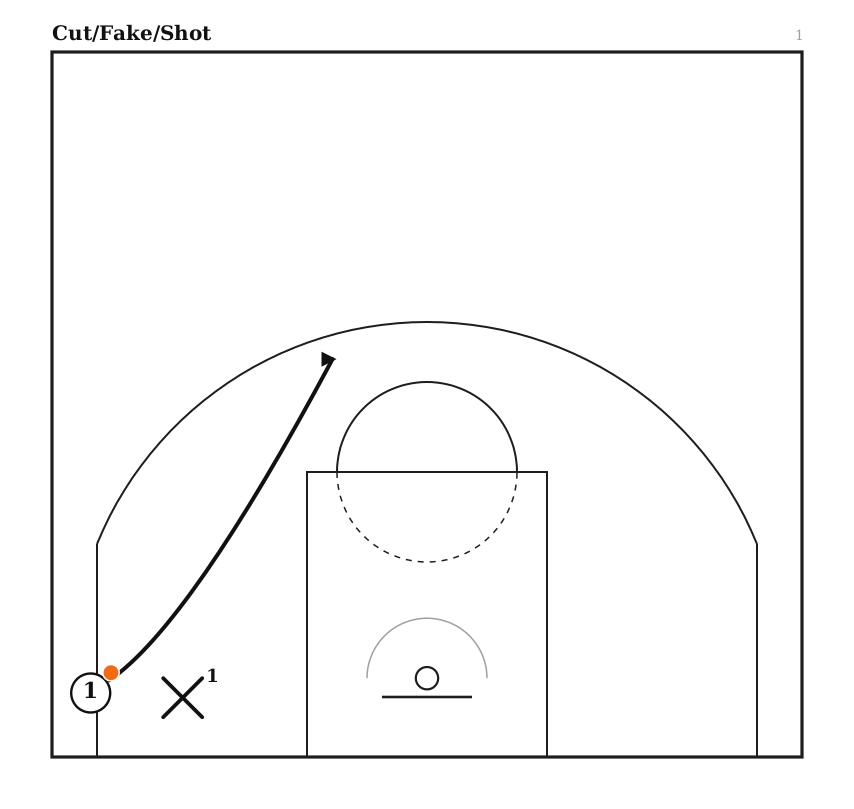
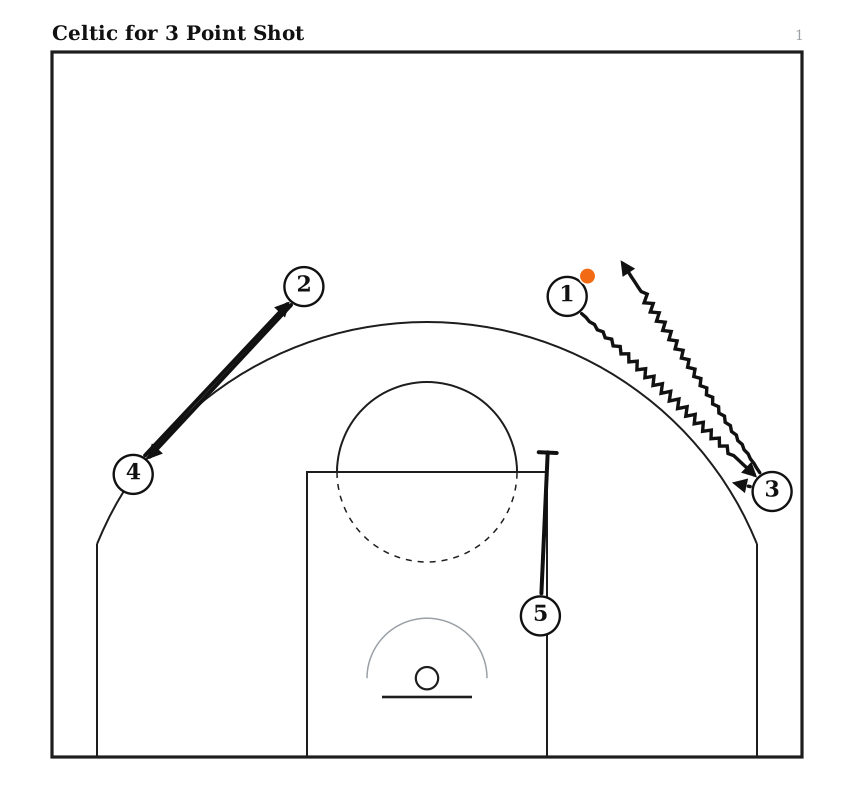
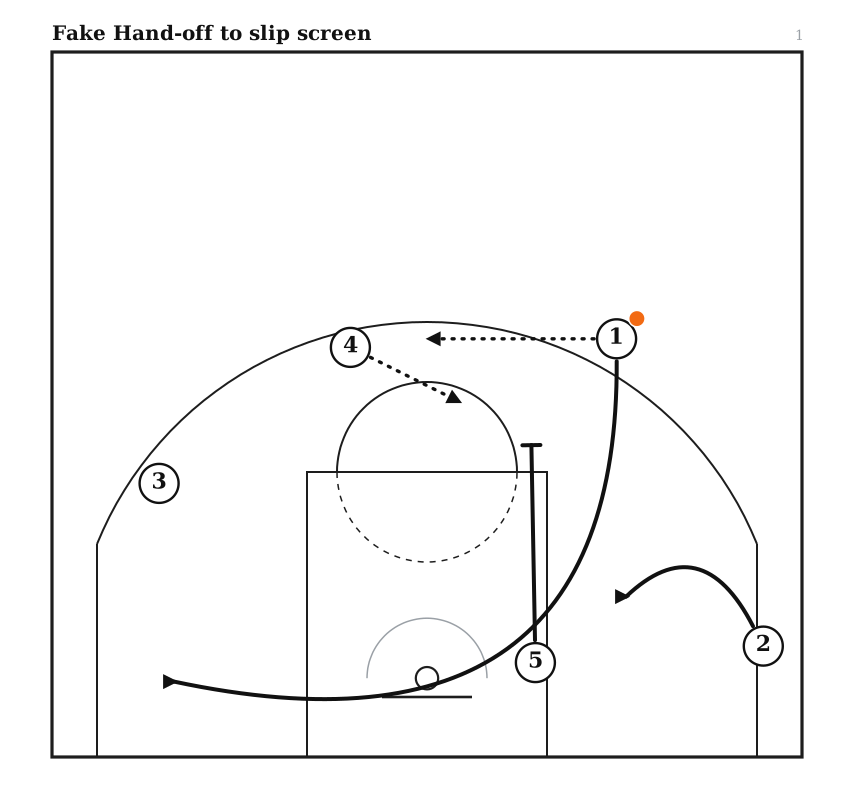
See it drawn up
Related diagrams
Keep Building
Related breakdowns
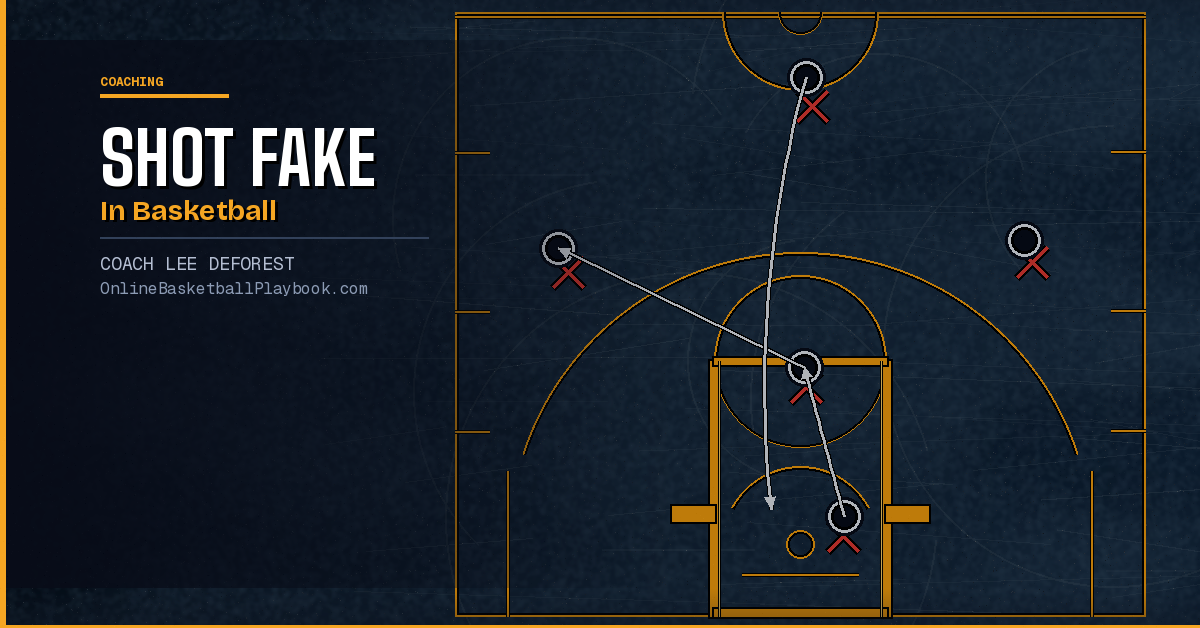
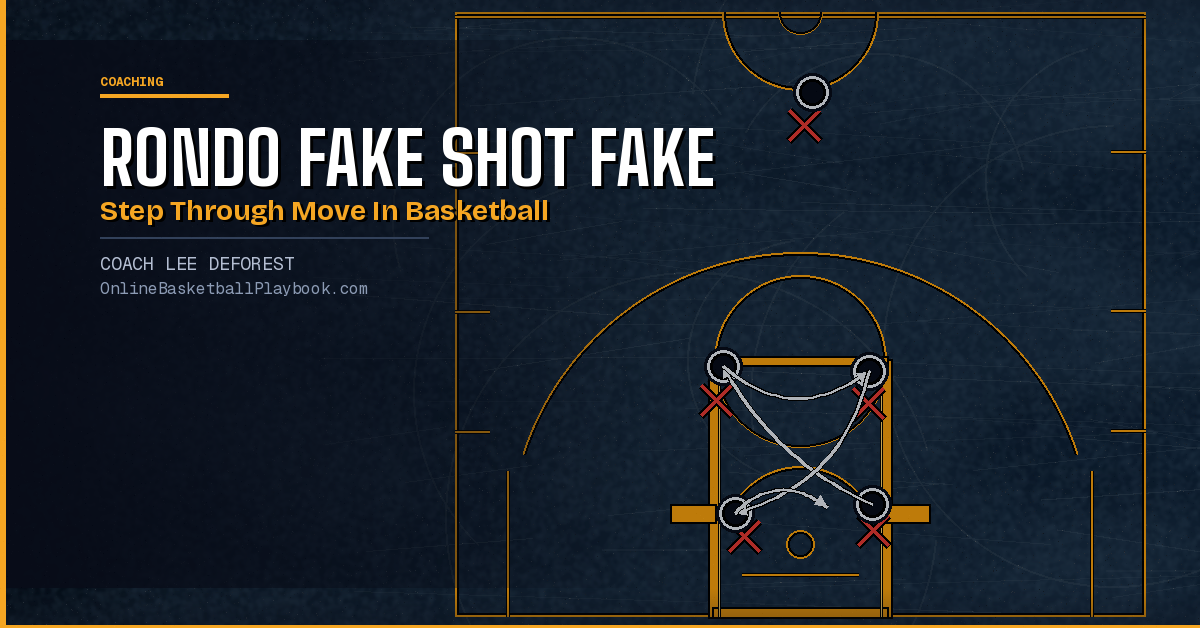
How to Do a Rondo Fake Shot Fake Step Through Move in Basketball
How to Do a Rondo Fake Shot Fake Step Through Move in Basketball
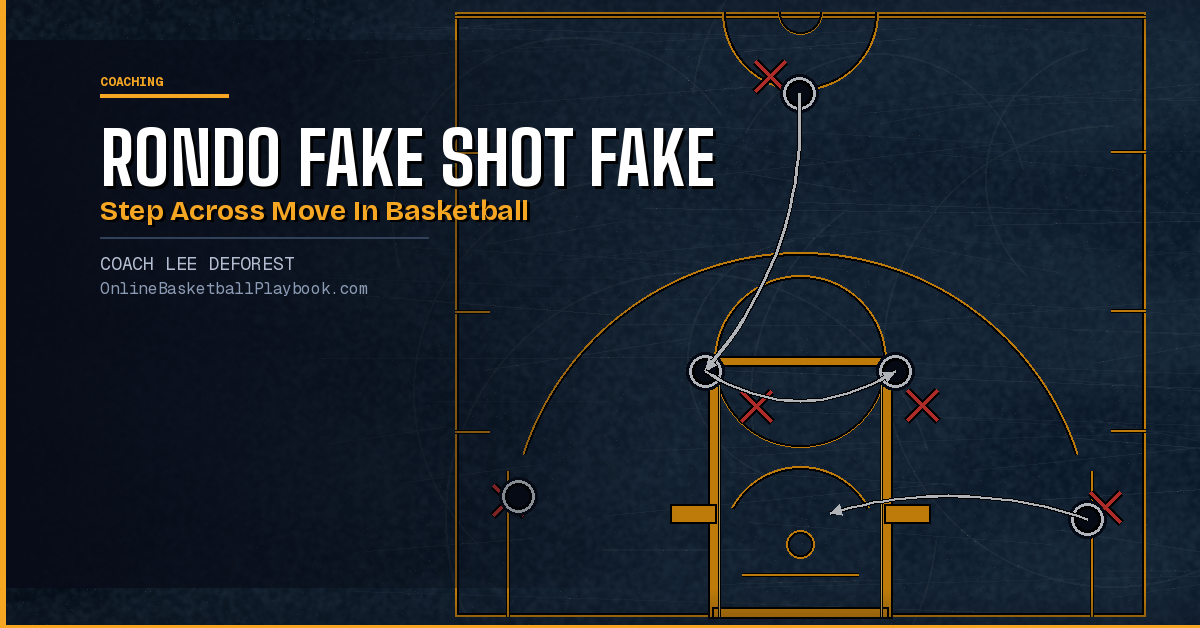
How to Do a Rondo Fake Shot Fake Step Across Move in Basketball
How to Do a Rondo Fake Shot Fake Step Across Move in Basketball