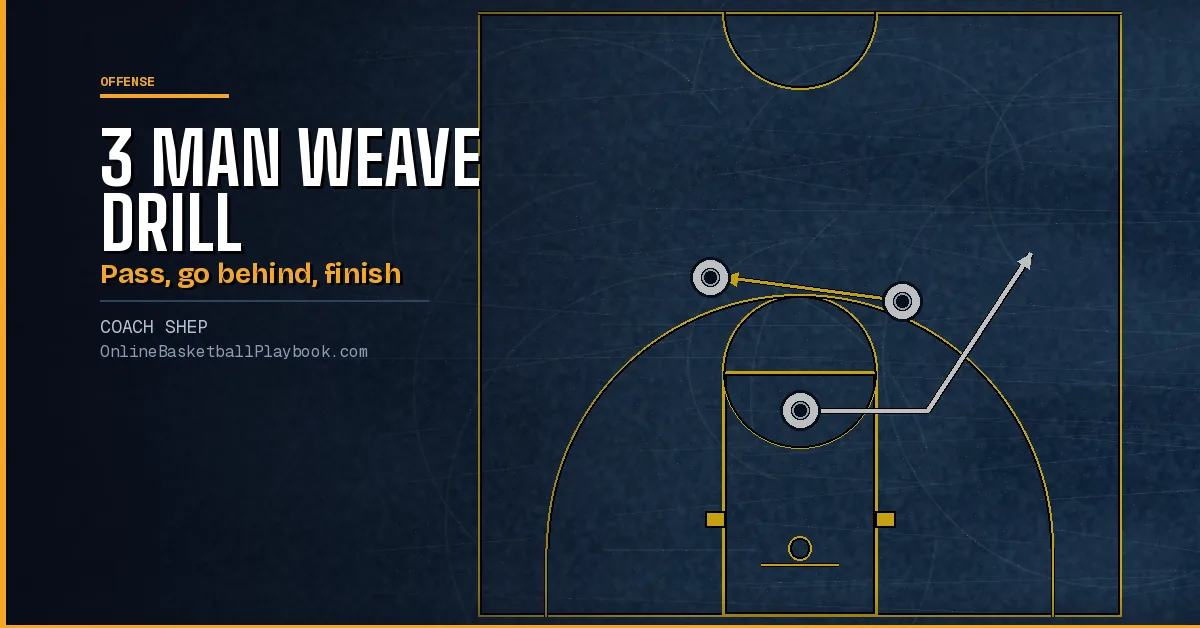
The 3 man weave is a full-court drill for three players and one ball. They pass to each other without a dribble, cut behind the player they passed to, and finish with a layup at the far basket. Coaches use it to warm up the body and to build passing, catching, communication and finishing on the move. This guide covers the setup, the rules, the finish, the variations and what the 3 man weave does and does not teach.
The 3 Man Weave at a Glance
| Question | Answer |
|---|---|
| Players | Three per group, at least three in total |
| Equipment | One ball per group and a basket at each end. A second ball speeds up the group changes |
| Dribbling | None, except one bounce to finish the layup |
| Core rule | After you pass, you cut behind the player you passed to |
| Ends with | A layup, then a second weave back to the first basket |
3 Man Weave Drill: Setup and Rules

Form three even lines on the baseline. The middle player starts with the ball. He calls go or slaps the ball and passes to a wing. Then he cuts behind that wing. The ball moves to the other wing, that passer cuts behind, and the pattern repeats up the floor.
- No dribbling. Passes stay crisp.
- Receivers move toward the ball and show a target.
- Players stay wide and cut behind the person they passed to.
- The passer calls the receiver's name and the number of the pass. The receiver yells "ball."
- The next group starts as the group ahead finishes with a layup.
The Pass and Go Behind Pattern

The pattern is one action repeated. Catch, pass, cut behind. Each player handles the ball several times and cuts several times on every trip. Coaches split on the pass type. Some ask for chest passes throughout. Others make the last pass to the shooter a bounce pass. Pick one and keep it the same for every group.
High school teams often start by requiring five passes before the layup. Then they tighten it to three passes, which forces full sprint speed.
The Finish and the Return Trip

The last pass sets up a layup, and the shooter takes one bounce to finish. After the made layup the same group weaves back down to the first basket for a second layup. Then they file into the ends of the lines so the next group can go. Run the drill continuously with a make count or a limit on dropped passes to keep it competitive.
Get the next coaching guide in your inbox
One email when a new guide or diagram set goes up. Free.
Variations and Scoring
- Scored weave. Give points for made layups and take away points for misses, bad passes and fumbles. A stopwatch ranks each group of three for bonus points.
- Made-in-a-row target. Set a target equal to the roster count and restart at zero on any error.
- Three-point option. After the layup the trailer and the original passer fan out to the wings and catch a pass from a manager or an assistant on the baseline. Each trip is worth up to five points, one for the layup and two for each three. Run it in two-minute timed sets against a team target.
- Called finishes. The coach calls one of three finishes at the end of the trip.
- Weave into a screen read. Run a pass-and-cut weave into a live screen read against defenders.
- Half-court weave. Start at the half-court line with two more players on the baseline. After the layup the shooters catch passes at the elbows and shoot mid-range jumpers while the baseline players close out, call "ball" and "shot," then box out and rebound.

Five man weave. Five players run the traditional weave and finish with a layup. On the way back the shooter and the passer who made the assist become the two defenders. The other three attack them in a 3-on-2. The drill can then turn into a 2-on-1 with the last ball handler as the lone defender going the other way. It adds a fast switch from offense to defense and it teaches players to sprint back after a score.
What the Weave Does Not Teach
The 3 man weave is a warm-up tool. The wide-open chest passes and the cut behind the passer almost never happen on a real fast break, where passing lanes and layups are rarely that open. Use it to warm up the body and the mind, and to reinforce passing and catching. Rely on live, game-like drills to build passing, finishing and transition offense.
Pair it with live work, such as a 3-on-2 or 2-on-1 break. See Fast Break Basketball Drills, Drills to Teach Transition Offense and Basketball Fast Break Offense.
Coaching Points
- Stay wide and cut behind the player you passed to.
- Require the calls. Names, pass numbers and "ball" keep everyone talking.
- Use the drill early in practice to warm up and to keep group changes quick.
- Stop it and run sprints if the group is not at full speed. Fewer reps at game intensity beat more reps at a jog.
- Tired reps are where correct execution is trained, so hold the standard late in the drill.
Questions Coaches Ask About the 3 Man Weave
What is the 3 man weave drill?
A full-court drill where three players pass without dribbling, cut behind the player they passed to, and finish with a layup.
What is the main rule of the 3 man weave?
After you pass, cut behind the player you passed to. The players stay wide and there is no dribbling.
How do you score the 3 man weave?
Give points for made layups and take away points for misses, bad passes and fumbles. A stopwatch adds bonus points for the fastest groups.
Is the 3 man weave a good drill?
It is a good warm-up for passing, catching, communication and finishing. It does not look like a real fast break, so pair it with live drills.
What is a 5 man weave?
Five players run the weave and finish. On the way back the shooter and passer defend a 3-on-2 against the other three.
All offense pages sit under the Offense hub and Fast Break Basketball. Related pages are Basketball Passing Drills, Basketball Warm-Up Drills and How to Run the Fast Break.
Want the printable playbook packs?
OBP Pro members get the premium playbook packs: the zone attack, out of bounds and practice plan PDFs, plus each new pack as it is finished. The membership page lists what is in each one. Or draw your own version free in PlayDraw.
See what OBP Pro includesMore Offense Guides
Back to Fast Break Basketball and every Offense page.
Keep Building
Related breakdowns
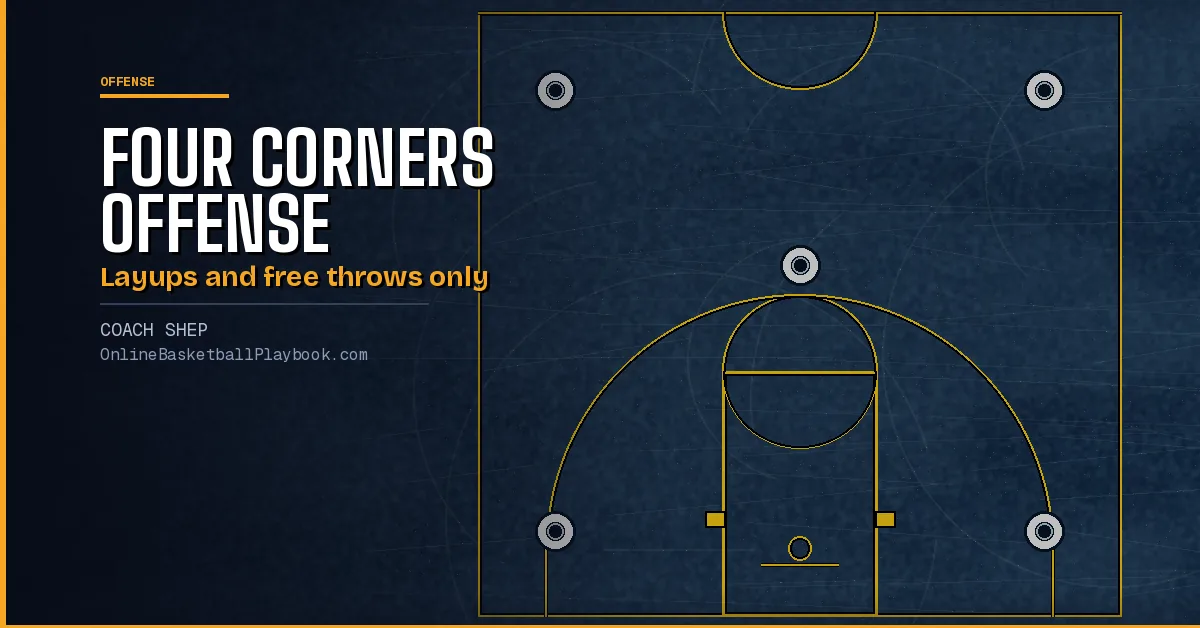
Four Corners Offense Basketball: Roles, Rules and Versions
Four corners offense basketball: the set, the chaser, the corner and post rules, three versions, when to run it, the shots it hunts and shot clock limits by level.
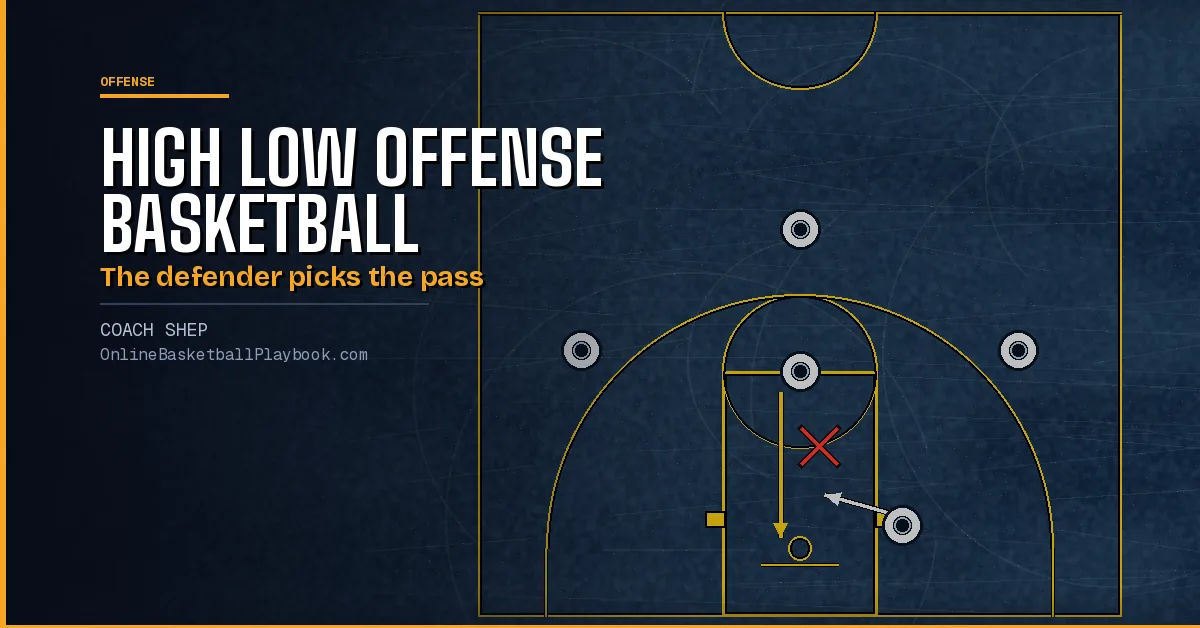
High Low Offense Basketball: Reads, Counters and Zone Rules
High low offense basketball explained: the two-post shell, the lob and bounce reads, answers to a front, down-screen reads, 1-4 low sets and the hi-lo against zones.
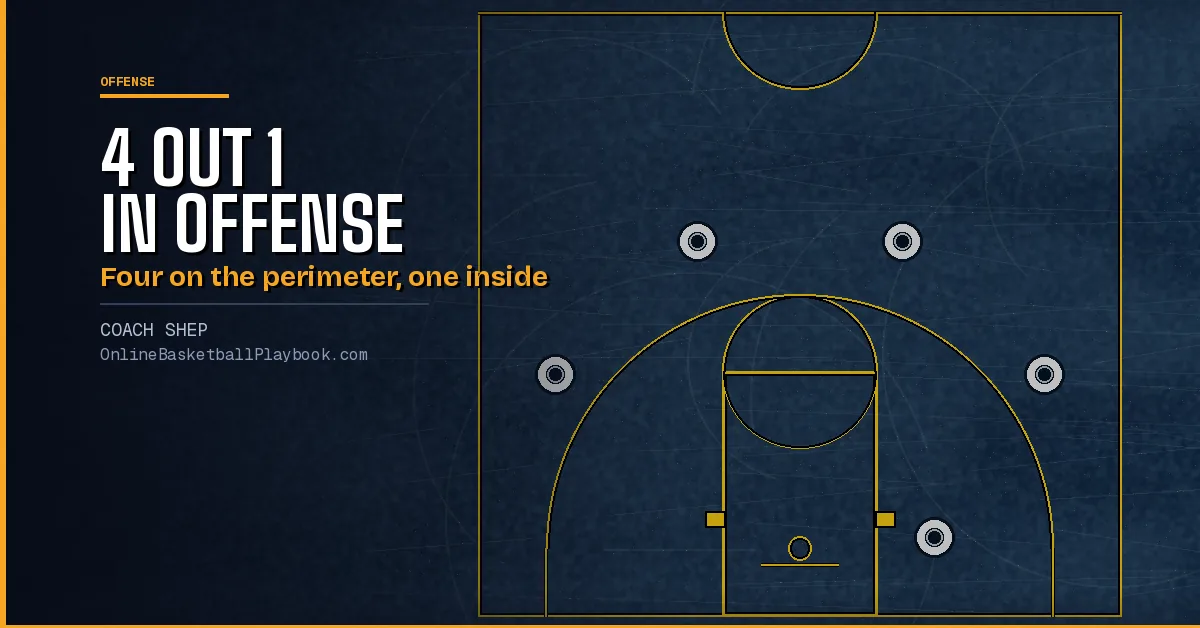
4 Out 1 In Motion Offense: Rules, Spacing and Sets
How to run the 4 out 1 in motion offense: spacing, the six rules, what the post does, pass-cut-fill, screens, quick hitters, zone adjustments and how to install it.