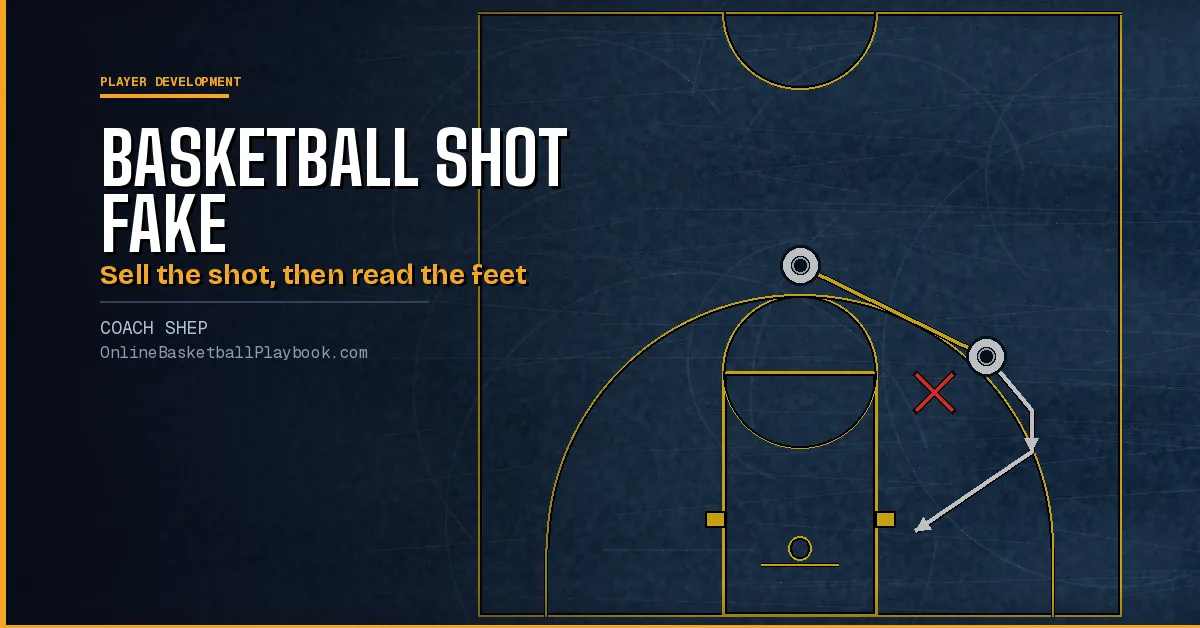
The basketball shot fake is a fake shot meant to make a defender jump or straighten up so the ball handler can drive, pull up or pass. It works on defenders who jump or lunge at the first sign of a shot. It is the same move whether coaches call it a shot fake or a pump fake.
This guide covers how to sell the fake, the pivot foot and what the feet do after it, how to read the defender, the mistakes to fix and the drills that put the fake inside a real game read.
The Basketball Shot Fake at a Glance
| Piece | What the coach asks for |
|---|---|
| Start | The ball loads to the same spot as a real shot |
| Motion | The ball rises toward the forehead with the eyes on the rim, then stops |
| Posture | Hips stay down and the feet stay quiet |
| Threat | The defense must believe this player can shoot |
| After | Read the defender. Jumped, drive. Held his ground, pass |
| Test | The player can shoot the ball right after the fake |
What Is a Pump Fake in Basketball?
A pump fake is the shot fake under a different name. A standard basketball glossary lists pump fake as a name for the shot fake, a move that shows a shot so the defender jumps or straightens up and the ball handler gets room to drive. The load, raise and stop steps below are the pump fake. The same word turns up at the rim and in the post.
- At the rim. A driver pump fakes to get a shot blocker off his feet.
- In the post. The up-and-under starts like a turnaround jump shot, pump fakes the defender up and steps by him for the layup.
Two terms sit close by and are different moves.
- Pass fake. Also called a ball fake, it moves the defender one way to open a passing lane the other way.
- Jab step. A short step at the defender with the free foot.
- Keep the shot fake apart from the jab. A shot fake is the start of the shot, stopped, and not a jab fake. A series that jabs and shot fakes at the same time is shown in the footwork section.
The jab on its own is on jab step basketball. Know which fake you are teaching before you teach it.
How to Sell the Fake
The fake works because it looks like a shot, and that starts on the catch. Catch in a shot-ready position with the hands up, stepping or hopping into the catch with the eyes already on the rim. Then teach it in three short steps and require every step every time.
- Load. Bring the ball to the same starting position as a real shot.
- Raise. Bring the ball up toward the forehead with the eyes on the basket, in a real shooting motion. The face and eyes sell the fake as much as the ball does.
- Stop. Cut the motion short as the ball reaches forehead height. The player stays balanced enough to explode into the next move.
Use real shooting footwork. Knees bent, back straight and feet quiet. If a player dips the ball on the catch or steps back after the fake, the fake stops looking like his shot and the defender reads it. Good shooting form and a good shot fake are the same skill, so start with Basketball Shooting Form and catch and shoot before adding the fake.
A fake also has to be earned. A defender only jumps at the fake of a player he believes will shoot. A shot fake from a non-shooter is not respected, so the drive that should follow never opens. A player who is not yet a threat should work on his shot before he leans on the fake.
Sell the shot first, and the defender does the rest.

Shot Fake Footwork: The Pivot Foot and the First Step
Never follow the fake with a false step. The first step goes at the defender, shoulder to hip, which takes him out of the play once he bites. A rushed or wasted step gives him time to recover. After the dribble is used, the shot fake is one of the dead-ball moves left, along with pivots and step-throughs.
The pivot foot is the planted foot. Two rules choose which foot it is, and they part ways at the right elbow.
- Pivot by the shooting hand. For a right-handed player's jab, shot fake and go, the left foot is the pivot he learns first. The right foot jabs, and the same right foot takes the go step, because a different foot moving mid-move is a travel.
- Catch and shoot by the shooting hand. The foot on the shooting-hand side extends and the opposite foot is the pivot, and from there he has two finishes, a pull-up jump shot or a drive all the way to the basket.
- Pivot by the catch. In the elbow series the pivot is the foot that lands first on the catch. The player tosses the ball to the left elbow, catches it with his back to the basket on a one-two stop that lands on the inside (left) foot, and front turns on that foot toward the middle to face the basket. That left foot is now the pivot.
- Jab while you fake. He jabs with the right foot while he shot fakes, showing the ball high, in triple threat and a threat to shoot first.
- Work four finishes. The elbow series works four finishes off the same catch and fake, each drilled on its own. Two of them start with a read of the defender.
The diagrams below are drawn left foot pivot (right-handed player) at the left elbow, where both rules agree, so the left foot is the pivot in every panel and the right foot takes every step. Because systems pick the pivot differently, write the job next to the name: the pivot is the planted foot, and the rule says which foot that is.

- Straight drive. One right-hand dribble aimed at the middle of the free-throw line, then a hop behind the ball, the pickup in front of the shooting knee and the shot.
- Crossover drive. The right foot crosses over to the outside and a long dribble with the left hand heads toward a 45-degree angle with the backboard before the jump shot.
- Step-back. In the elbow series a retreat step gets a step-back instead of the shot. Step back away from him with the jab-step foot and dribble back with the strong hand. Exaggerate the follow-through so the head and shoulders do not lean back.
- Step-through. If the defender's hand is up on the jab side, step through with the jab-step foot past his lead foot, head and shoulders under his arm. If his hand is up on the far side, cross over and step through with the same foot. Protect the ball with the head and shoulders and keep it away from his reach as you shoot the jump shot.

In the elbow series, everything flips at the right elbow. The right foot lands first on the catch and becomes the pivot, and the left foot jabs. The hand rule starts a right-handed player on the left foot on both sides of the floor. The standard in the elbow series is ten makes in a row from each elbow. The pull-up work that follows the fake has its own cues.
- Pull-up cue. Jump straight up and down, hold the follow-through and stay in the shot without drifting.
- Two ways to the pull-up. Step directly into the shot, or take one dribble and then land 1-2 into the pull-up. Teach both as a deliberate progression.
- Both hands. Work the fake into a pull-up to the right and to the left.
Neither rule is a ceiling. A player at a high level has to fake, jab and go off either foot as the pivot, so teach both feet.
- Learn the first pivot. A right-handed player learns the left foot as the pivot first, and a left-handed player learns the right foot first.
- Inside pivot on the move. When a player comes open for a shot on the move, the quickest footwork is the inside pivot: moving to his right, he pivots on the left foot, and moving to his left, on the right foot.
- 1-2 step standing still. When he is standing still, a right-handed player steps into the shot left then right, a 1-2 step.
The full pivot rules and drills are on pivot basketball footwork.
A jab, an opposite jab or a shot fake before a sweep or rip-through in a straight line also sets the defender up. See Basketball Triple Threat Position, pivot footwork and Hesitation Pull-Up Shot.
Rep both feet until the footwork is automatic.
Stay Low
The most common flaw is a player who rises out of his stance as the ball rises. His hips go up with the ball and his first step dies. Teach the fake from an athletic position where the hips stay down and the shoulders and ball do the selling.
Two corrections make it physical.
- Hand on the shoulders. The coach places light pressure on the player's shoulders as the ball rises. The player has to keep his hips down to sell the fake.
- Touch the floor. After the fake, the player touches the floor with his off hand on the first dribble toward the rim. That forces a low first step. Or the coach stands with arms out wide, slightly below shoulder height, and the player must go under the arms with his shoulder at the coach's hip.
Hips down, and let the shoulders and the ball do the selling.
Read the Defender
The fake is only half the move. The other half is a read of what the defender did, and it decides what happens next. Every shot fake rep should end with a decision.
| What the defender does | What the shooter does |
|---|---|
| Jumps or lunges | Attack the basket to score or pass, or dribble to create space for a three or a mid-range shot |
| Takes any retreat step | Shoot right away off the fake |
| Holds his ground | Reverse the ball or pass to an open teammate. Do not force a bad shot |
The same read works on a drive. A driver can drive, shot fake and let the help show itself. If the help arrives late, the driver does not force the shot and passes out instead.
A shooter can use more than one fake. A shooter may set no limit on consecutive fakes, since a second fake can unbalance the defender again before the read. A player who freezes after a fake, even when the defender clearly did not bite, is stalling the offense. Passing out is a good result.

The defender has a read too. A flying closeout is what a shot fake and drive beats. A two-word cue for the defender is back, then attack. Back means a quick two-footed drop step that gives a cushion against a jab or fake. Attack means closing out again with both hands up when the ball handler resets. See Basketball Closeout Technique for the defender's side.
Let the defender's feet make the decision for you.
Shot Fakes Near the Rim
The same idea works when a driver reaches the paint and a shot blocker is waiting. A checklist for a guard who reaches the paint is to get powerful with a jump stop, be purposeful, peek at the rim and then fake. A pump fake makes a shot blocker leave his feet.
- Rondo fake. For a bigger defender on the driver's hip. Drive, plant the pivot foot, fake a reverse layup toward the basket and let the defender fly by. Then pivot all the way around on that foot and finish with a jump hook, a floater or a layup. Do not drag the pivot foot or it becomes a travel.
- Step-through counter. If the defender still does not bite, bring the other foot around, fake again and step through past him to finish.
- Step-across counter. Pivot all the way around, shot fake, then step across and jump off both feet together to finish. Shield the ball on the step.
- Up-and-under. Post players fake to get the defender in the air, pivot, dip under and take one bounce.
In the post, a show and go is a quick show of the ball that lifts the defender an inch or two, then a go before he recovers. It is the undersized post's answer to a taller defender who only has to rise onto his toes.
Teach the base Rondo fake before either counter, because both counters assume the fake and full pivot already work. More finishing work is on Basketball Finishing Moves, Finishing at the Rim and Basketball Pivot Footwork.
Nail the base fake and the counters follow.
Get the next coaching guide in your inbox
One email when a new guide or diagram set goes up. Free.
Shot Fake Drills
The fake belongs inside a read, so most reps need a live closeout or a made-shot standard. Start with the catch-and-shoot fake before the pivot-based Rondo family.
Closeout shooting drill. Three players use one ball and one basket.
- Feed and close out. The passer feeds the shooter and closes out with a hand up to contest, with no attempt to block.
- One fake, one dribble. The shooter may use one shot fake and one quick sideways dribble, then shoots. State the one fake and one dribble rule to the players so the drill does not turn into standing catch-and-shoot.
- Keep the foot back. The closer keeps the baseline foot back.
- Follow and rotate. The shooter follows his shot, rebounds, passes to the next shooter and closes out on him.

Closeout decision drill. Ettore Messina pairs the players about three meters apart, the defender with the ball.
- Pass and close out. The defender passes and closes out.
- One dribble to choose. The offense gets one dribble to choose a shot, a drive and shot, or a drive, shot fake and drive, by how far away the defender is and how fast he recovers.
- Five reps each. Each player stays in for five reps so he thinks about the choice, not the make.
- Change the closeout. Over the five reps the defender may change how he closes out, giving one side to drive or faking the recovery to allow the outside shot.
Five-spot shot fake drill. The shooter works five spots. At each one he shot fakes, takes one dribble and pulls up, right and then left. He must make two in each direction before he moves on. This drills both hands.

Partner progression. Run four stages on the same spot rotation. Catch and shoot, then shot fake, then fake and drive, then live defense. Score it with a penalty for a miss.
Shot, fake-shot test. After the fake, the player must be able to shoot the ball right away. If he cannot shoot cleanly, the footwork or the balance in the fake is wrong. This is a quick check that needs no equipment.
More reps are on Basketball Shooting Drills and Finishing and Footwork Drills.
Put the fake inside a read every time, never a standing rep.
Common Mistakes
- Rising out of the stance. The hips go up with the ball and the first step dies. Fix it with the shoulder-pressure drill above.
- Dipping the ball on the catch. The fake stops matching the real shot.
- Stepping back after the fake. The space the fake created is gone.
- Carrying the fake so long the drive is delayed. Fake, read and go.
- Dragging the pivot foot. That is a travel on any fake near the rim.
- Faking with no threat behind it. A non-shooter's fake is ignored.
Fix the one that shows up most, then check the rest.
Choices on the Shot Fake
Coaches split on how big the fake is, how many fakes to use and what comes after.
How big the fake is.
- Raise to the forehead and stop. The pump fake takes the ball to the forehead.
- Six to eight inches. Raise the ball six to eight inches at game speed.
- The first three to five inches. A breakdown drill calls the fake the first three to five inches of the normal shot.
- An inch or two in the post. The show and go only has to lift the defender an inch or two.
How many fakes.
- No cap. Put no cap on consecutive fakes so the defender can be unbalanced and the shooter can regain comfort before the read.
- One fake, one dribble. A closeout drill allows one fake and one dribble.
What comes after the fake.
- Drive to the basket.
- Dribble to create space for a pull-up.
The read of the defender should decide what comes after, and the drills above let players practice both. Pick the size and the count that match your players and say them out loud.
Coach Cheatsheet
- Load, raise to the forehead with the eyes on the rim, then stop.
- Keep the hips down. Hand pressure on the shoulders shows who rises.
- Read the feet. Jumped, attack. Retreated, shoot. Held, pass.
- First step at the defender, shoulder to hip, with no false step.
- Use the shot, fake-shot test to check the balance.
- Build the fake into live closeout reps, not standing reps.
- Teach it to shooters first. A fake nobody respects gets nothing.
Questions Coaches Ask About the Basketball Shot Fake
What is a shot fake in basketball?
It is a fake shot that makes a defender jump or straighten up so the ball handler can drive, pull up or pass. It is also called a pump fake.
What is a pump fake in basketball?
A pump fake is a fake shot. The player loads the ball like a real shot, raises it toward the forehead with the eyes on the rim, then stops and reads the defender. If he jumps, attack. If he retreats, shoot or step back. If he holds, pass.
Pump fake vs shot fake: is there a difference?
No. A standard basketball glossary lists pump fake as a name for the shot fake. A pass fake, or ball fake, is the different move. It fakes a pass to open a passing lane.
Which foot is the pivot on a shot fake?
It depends on the rule you teach and the player. A right-handed player starts with the left foot as the pivot, and the right foot jabs and goes. A left-handed player starts with the right foot.
In the elbow series the pivot is the foot that lands first on the catch, so at the right elbow it is the right foot. Good players learn to fake off either foot, and on the move the inside pivot is the quickest way into the shot.
How do you do a shot fake?
Load the ball to the same spot as a real shot, raise it toward the forehead with the eyes on the rim, then stop. Keep the hips down and the feet quiet, then read what the defender does.
What should a player do after a shot fake?
Read the defender. If he jumps or lunges, attack the basket or dribble to create space for a shot. If he takes a retreat step, shoot. If he holds his ground, pass to an open teammate.
Why does my shot fake not work?
The usual causes are a fake that does not look like the real shot, hips that rise with the ball, and a shooter the defense does not respect. Fix the mechanics and build the shot.
How do you coach a shot fake?
Teach the mechanics first, then put the fake inside live closeout reps that end with a decision. Use a made-shot standard so players keep reading the defender.
All skill pages sit under the Player Development hub. Related guides include Basketball Player Development, Guard Skill Development Drills and Basketball Shot Selection, and the defender's side is on Closeout and Recover.
Want the printable playbook packs?
OBP Pro members get the premium playbook packs: the zone attack, out of bounds and practice plan PDFs, plus each new pack as it is finished. The membership page lists what is in each one. Or draw your own version free in PlayDraw.
See what OBP Pro includesMore Coaching Guides
- Basketball Player Development: Workouts and Skill Progressions
- Motion Offense: Spacing, Rules, Actions and How to Install It
- Man-to-Man Defense: Stance, Positioning, Help and Drills
- Full Court Press Defense: Types, Rules and How to Install It
Back to Basketball Finishing Moves and every Player Development page.
Keep Building
Related breakdowns
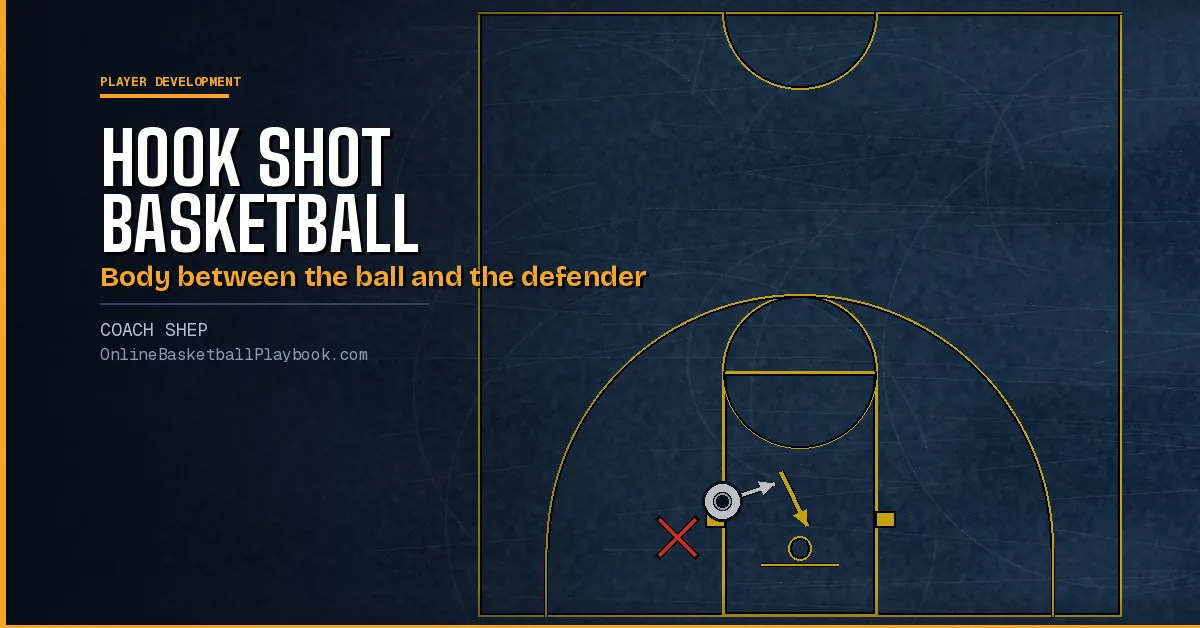
Hook Shot Basketball: How to Do It and How to Teach It
Hook shot basketball for post players and coaches: the classic hook, sky hook and jump hook, the footwork steps, when to use it, the pivot foot rules and drills.
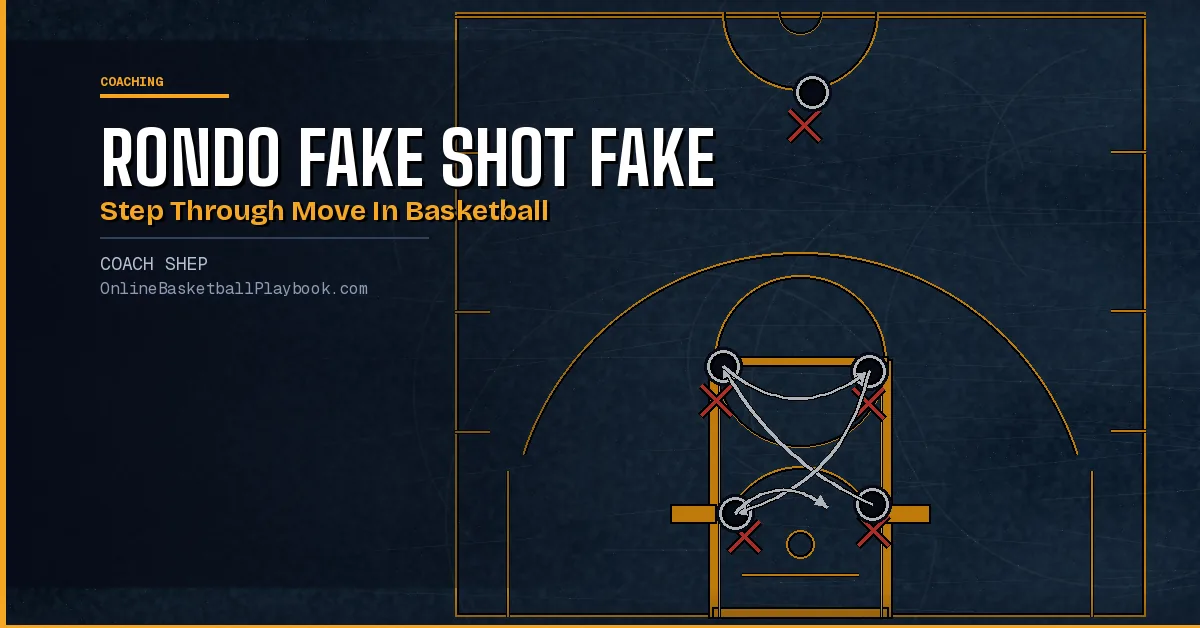
How to Do a Rondo Fake Shot Fake Step Through Move in Basketball
How to Do a Rondo Fake Shot Fake Step Through Move in Basketball
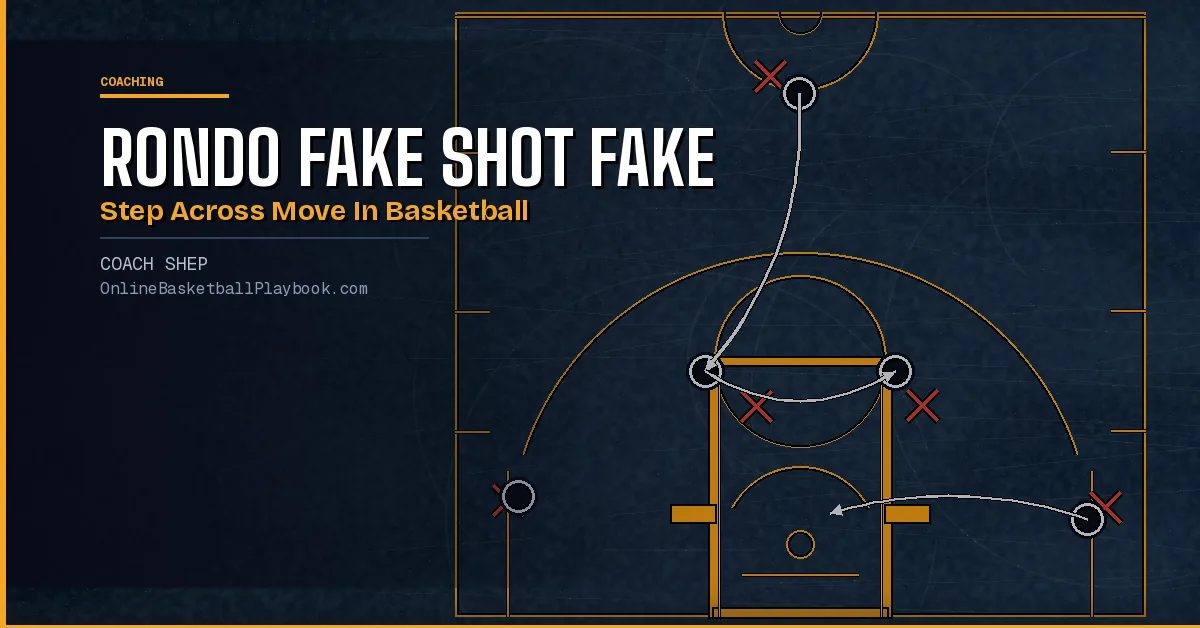
How to Do a Rondo Fake Shot Fake Step Across Move in Basketball
How to Do a Rondo Fake Shot Fake Step Across Move in Basketball