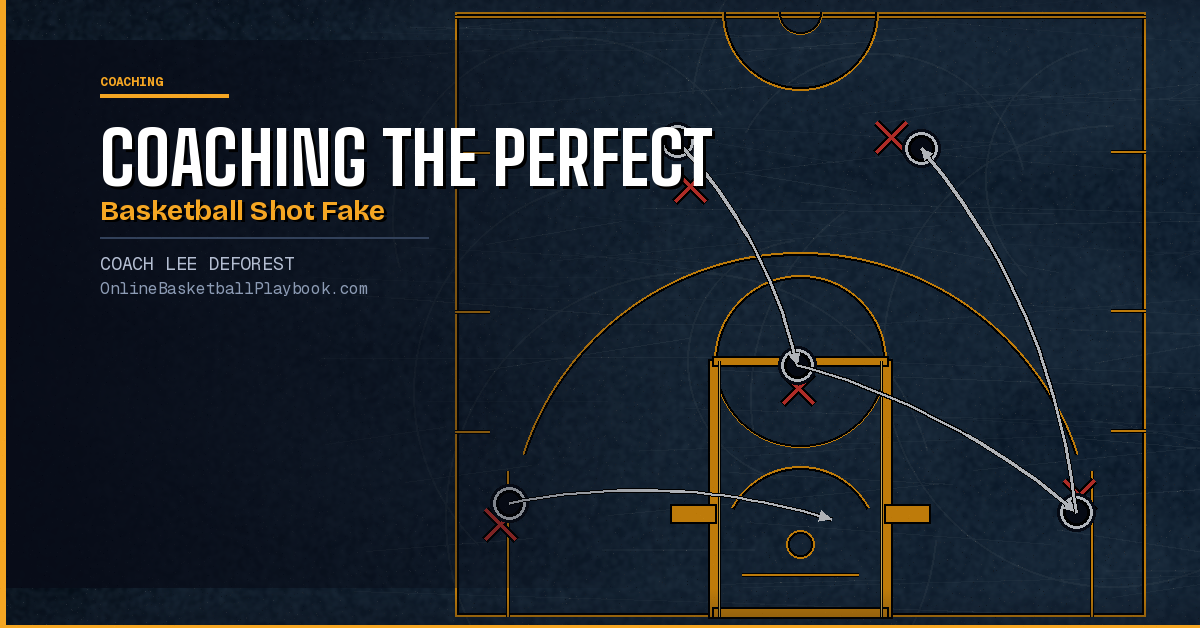

The shot fake is one of basketball's most undercoached skills. When executed correctly, it freezes defenders, draws fouls, and creates high-percentage looks. Here is exactly how to teach it.
Why the Shot Fake Works
The shot fake exploits one of the most deeply trained reflexes in basketball defense: close out and contest every shot attempt. Defenders spend thousands of reps charging at the ball whenever a shooter rises. A well-executed shot fake turns that training against them. The defender flies by, the offense has an open driving lane, and the shot-fake user picks up an easy layup or a drawn foul.
But here is the part coaches rarely explain: the fake only works if the defender genuinely believes a shot is coming. That means the ball must go up, the knees must bend, and the head must track the target. A half-hearted lift of the ball fools nobody. Defenders at every level learn to read a fake's authenticity fast, especially once they have been burned by a real shot a few times from the same offensive player.
This is why the shot fake and shooting ability are directly connected. Rick Pitino's data from his years at Louisville showed that contested shots went in at roughly 22% — far below the NBA baseline of around 42%. Players who are known threats to shoot change how defenders close out. A defender who respects your jumper will leave his feet on a convincing fake. A defender who knows you don't shoot will just stand there. The shot fake is therefore a byproduct of shooting reputation, and building that reputation starts in practice with competitive, game-speed shot attempts.
The Four Mechanics of a Convincing Fake
Teaching the shot fake is really teaching four physical habits that must occur together. Miss one and the defender stays planted.
1. Ball Lift
The ball must rise to shooting position. The hands go to the set-point — above the shoulder, in front of the face — just as they would on a real jump shot. Stopping the ball at hip height is not a shot fake. It is a pump fake, which is a different tool for a different situation. The shot fake is about getting the ball where the defender expects it to be before you take a real jump shot.
2. Eye Contact With the Rim
The shooter's head and eyes must track toward the basket. Defenders read a shooter's eyes. A player who lifts the ball but looks at the floor or looks at the defender telegraphs the fake immediately. The eye-to-rim line sells the shot. Practice this in front of a mirror or on video so players can actually see what their eyes are doing during the fake.
3. The Knee Dip
A real jump shot begins with a knee dip — the legs load before the player rises. The shot fake should include at least a partial version of this loading action. If the legs don't bend at all, the defender sees a player with no momentum to shoot and recognizes the fake. The dip does not have to be deep, but it has to be visible enough that the defender can't discount it.
4. Controlled Pivot Foot
This is the mechanic that separates a good shot fake from a great one. The pivot foot must stay planted. If it lifts, the player has gathered to shoot and is now in a jump. A real drive off the fake requires staying grounded so the foot can push laterally once the defender commits. Many players leave their feet on the fake — which defeats the purpose entirely and often draws a charge.
Train game shots, game spots, game speed — mix block shooting to groove form with movement shooting off the catch, off the pull-up, and moving to new spots.
— Shooting Development, Basketball Vault
Footwork: The Part Most Coaches Miss
Most coaches teach the shot fake as an upper-body skill and then wonder why their players can't convert after the defender bites. The reason is almost always footwork.
After a convincing shot fake, the offensive player has about half a second before the defender recovers. That window is only useful if the player already knows where they are going. There are two clean options:
Drive Right or Left Into the Lane
The player fakes, feels the defender rise, and immediately takes one hard dribble toward the basket. The inside foot — the foot closest to the direction of the drive — should push first. Jay Wright at Villanova and John Beilein at Michigan both independently teach the inside foot principle as a foundational rule, not a system-specific technique. "Step with your inside foot" is a universal truth of offensive footwork. After a shot fake, that same foot initiates the drive and prevents the offensive player from spinning out of control or going sideways into traffic.
Step-Through to the Basket
If the defender's momentum carries them too far forward, the offensive player can step through — bringing the non-pivot foot past the defender and going directly to the rim. This is legal as long as the pivot foot stays down until after the step-through foot plants. The step-through is especially effective in the post, where defenders will lunge hard at any ball movement. Teach post players to read the defender's momentum: if they come over the top, drive; if they fly by, step through.
Progressions for Teaching the Shot Fake
The shot fake is not a skill to teach in one session. Build it in layers over several practices so players develop both the mechanics and the read that tells them when to use it.
Stage 1: Stationary Ball-Handling with a Mirror
Start with no defense. Players work in front of a mirror or a phone camera propped against a cone. They practice the ball lift to shooting position, check that the eyes go to the rim, feel the knee dip, and confirm the pivot foot stays planted. Thirty seconds of focused reps here builds the muscle memory that carries into live situations. This is the same logic behind Jay Wright's "Set Lift" drill, which opens every Villanova practice before a single competitive rep is taken.
Stage 2: Stationary vs. Passive Defense
Add a defender who stands two feet away with hands raised. They do not contest the fake — they just create the visual of a body in front of the offensive player. The offensive player runs the fake and drives past the stationary defender. The point is to make the player comfortable executing the mechanics with a body nearby. Many players unconsciously rush the fake when someone is in front of them; this stage slows them down.
Stage 3: Closeout Situations
Now the defender closes out at full speed from the three-point line. The offensive player catches, shot fakes, reads the momentum of the closeout, and attacks. The defender's job is to be realistic but not to simply foul — this is a teaching rep, not a competition. Players should rotate through both roles quickly so they understand the read from both sides of the ball.
Stage 4: Live 1-on-1 with Accountability
Full competitive 1-on-1 from the wing. The player earns a point for converting off a shot fake, and the defender earns a point for not leaving their feet. Keep score. Competitive reps are the engine of skill consolidation. As Jay Hernandez's philosophy emphasizes, a shooting or offensive workout should have a winner — "the most dangerous person is the one who is continually improving."
Introduce the shot fake only after a player has established credibility as a shooter. Players who are not shooting threats will find that defenders simply ignore the fake entirely, reinforcing bad habits. Build the jumper first, then layer in the fake as the reputation to shoot starts to precede them.
Drills That Build the Habit
Skill is built through repetition that mimics the game. The following drills isolate and compound the shot fake under increasing pressure.
Two-Shot-Fake Closeout Drill
Set up at four spots around the arc. A passer stands at the top. The offensive player catches, executes a shot fake, holds until the defender is committed, fakes a second time if the defender recovers, then attacks or shoots. The two-fake variation trains patience — most players rush to drive after the first fake and miss the opportunity to get the defender in foul trouble with a second pump.
Drive-and-Kick Series
The offensive player catches on the wing, shot fakes, drives, and kicks to a shooter on the opposite wing as the help defense collapses. This connects the shot fake to team offense. One player's successful fake creates a two-on-one situation on the opposite side. Run this with three players: the driver, the shooter, and the shooter's defender who must decide to help or stay.
Pitino's Restart Rule Applied to Shot Fakes
In practice, any time a player takes a shot that would have been challenged — meaning a defender was within arm's reach and did not leave their feet — the play is blown dead and the possession restarts. This trains players to use the fake proactively rather than just shooting into a contest. The shot fake becomes the default response to a closing-out defender rather than a special move pulled out occasionally.
Jab Step Into Shot Fake
From triple-threat position, the player jabs, reads the defender, and then executes a shot fake on the return of the jab. The combination — jab to freeze lateral movement, then fake to freeze vertical movement — creates multiple layers of hesitation that give the offense significant advantages. The Billeter Series 5 progressions from the 2009 POWER Clinic use a ball-fake-drive sequence exactly like this, building it as a formal series rather than an improvised move.
Common Mistakes and How to Fix Them
Every player who learns the shot fake makes predictable errors. Knowing what to look for speeds up the correction process.
Lifting Both Feet Off the Ground
The most common mistake at every level. The player fakes and jumps, meaning they are now airborne with the ball and have to shoot, pass, or take a travel violation. The correction is simple but requires repetition: slow the drill down, say "pivot foot stays down" before every rep, and have the player look at their own feet in the mirror until the habit is locked in. Once a player consistently lifts both feet during a fake, add a consequence in the drill — a turnover counted against them every time the pivot foot rises.
Ball Staying at Hip Level
A hip-level fake only works on the most undisciplined defenders. Coaching cue: "Get it to your face." The ball should reach at least chin height on the fake. Use the same mechanics framework Dr. Hal Wissel applies in his shooting diagnostics — work backward from what the defender is reading. If the defender isn't reacting, the ball isn't high enough. Confirm by running the drill on video and watching where the ball stops during the fake.
Rushing the Drive
Players get the defender in the air and immediately panic — they rush the drive and run into the recovering defender instead of letting the defender fly by. The cue here is "wait for the peak." The defender's momentum is still rising when the fake connects. The offensive player should feel the defender get airborne and then wait one beat before pushing into the lane. That pause is the difference between an easy layup and a collision at the rim.
No Plan After the Fake
Players fake without knowing where they are going. The drive goes sideways, the ball gets picked off, or the player dribbles into a crowd. Require players to verbalize their decision before each rep in closed drills: "I'm faking and going right." This pre-decision habit moves into games as a read that happens in the half-second before the catch — the player arrives ready to act, not reactive.
- Ball to face on every fake: the ball must reach at least chin height — a hip-level fake does not register as a real shot threat and will be ignored by any defender with experience.
- Eyes to the rim, always: defenders read the shooter's head first; if the eyes are looking at the floor or at the defender, the fake is revealed before the ball even moves.
- Pivot foot stays planted: lifting both feet kills the play — the player is now airborne with no place to go except a forced shot or a travel violation.
- Pre-decide the direction: know the drive direction before the catch so the push-off foot is already loaded; hesitation after the fake costs the half-second advantage the fake created.
- Wait for the peak: the defender's body is still rising when they leave the floor — drive only after feeling the momentum commit, not the instant the feet leave the ground.
Want more basketball coaching strategies and drills?
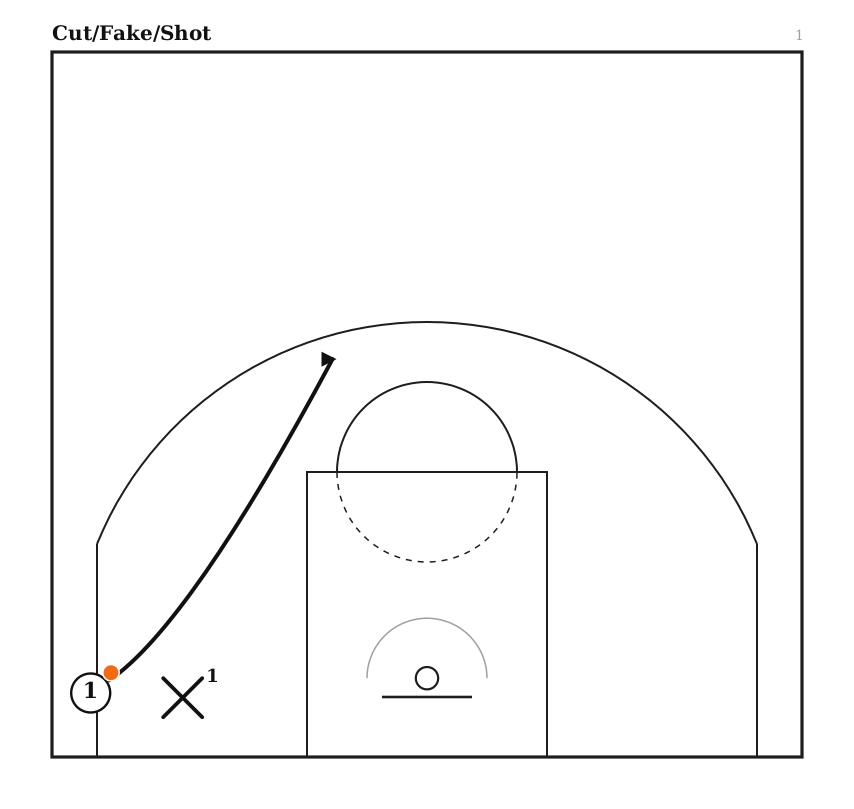
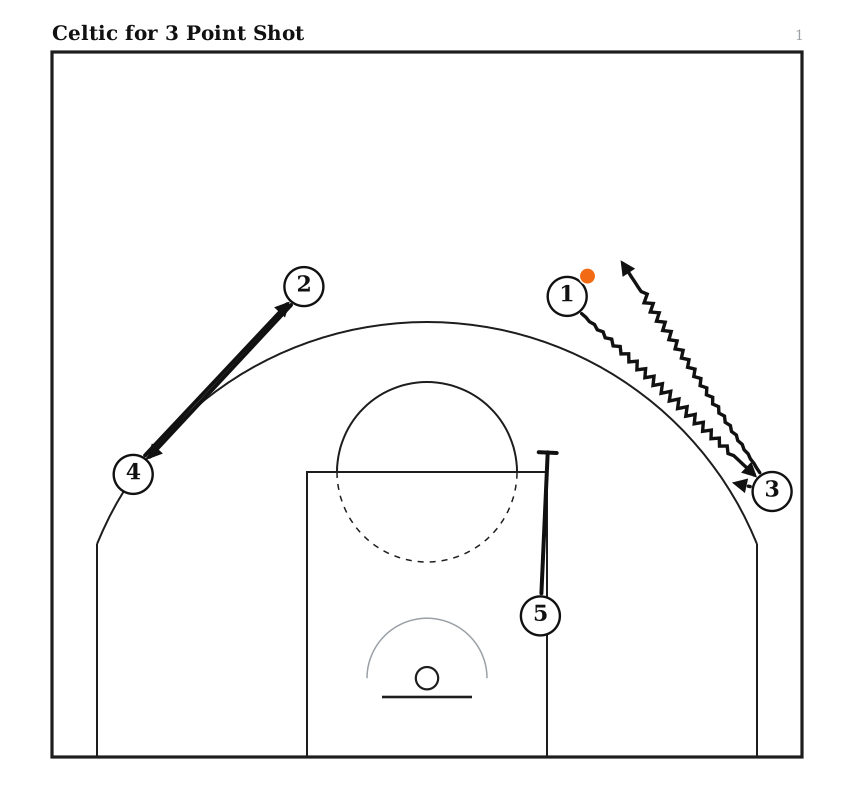
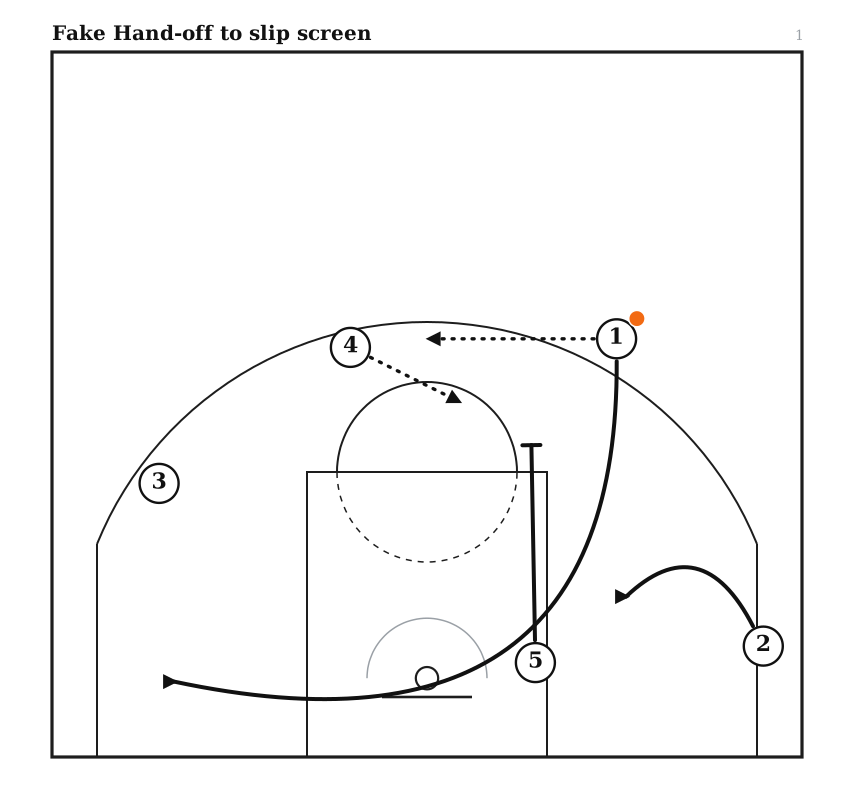
See it drawn up
Related diagrams
Keep Building
Related breakdowns
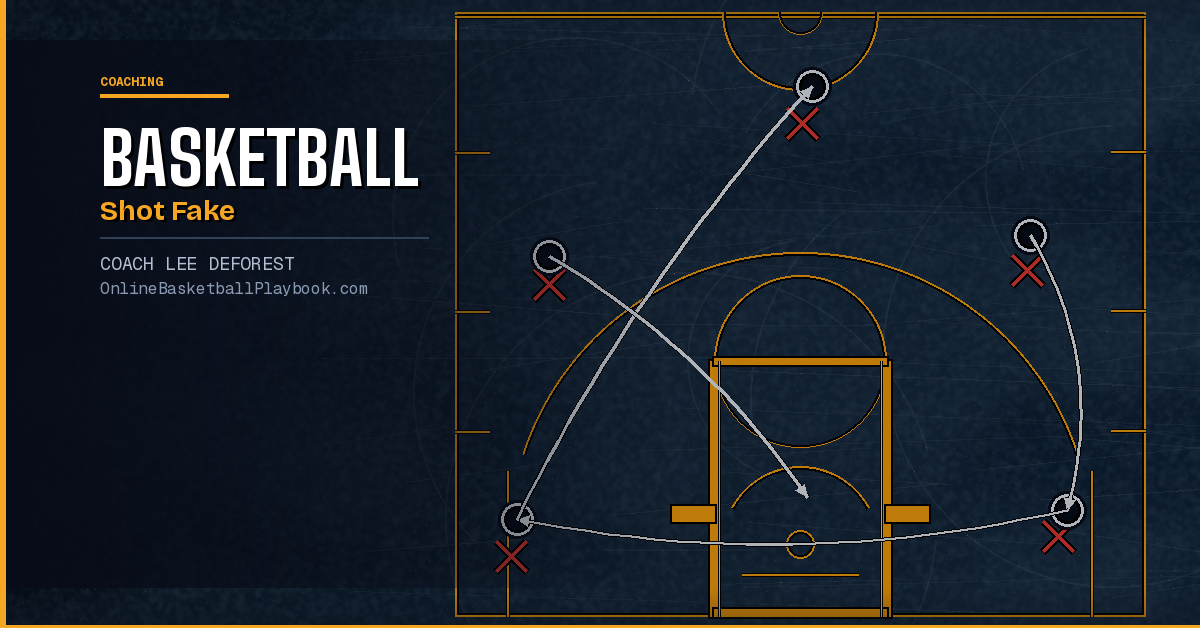
Basketball Shot Fake: How to Coach the Perfect Shot Fake
Basketball Shot Fake: How to Coach the Perfect Shot Fake
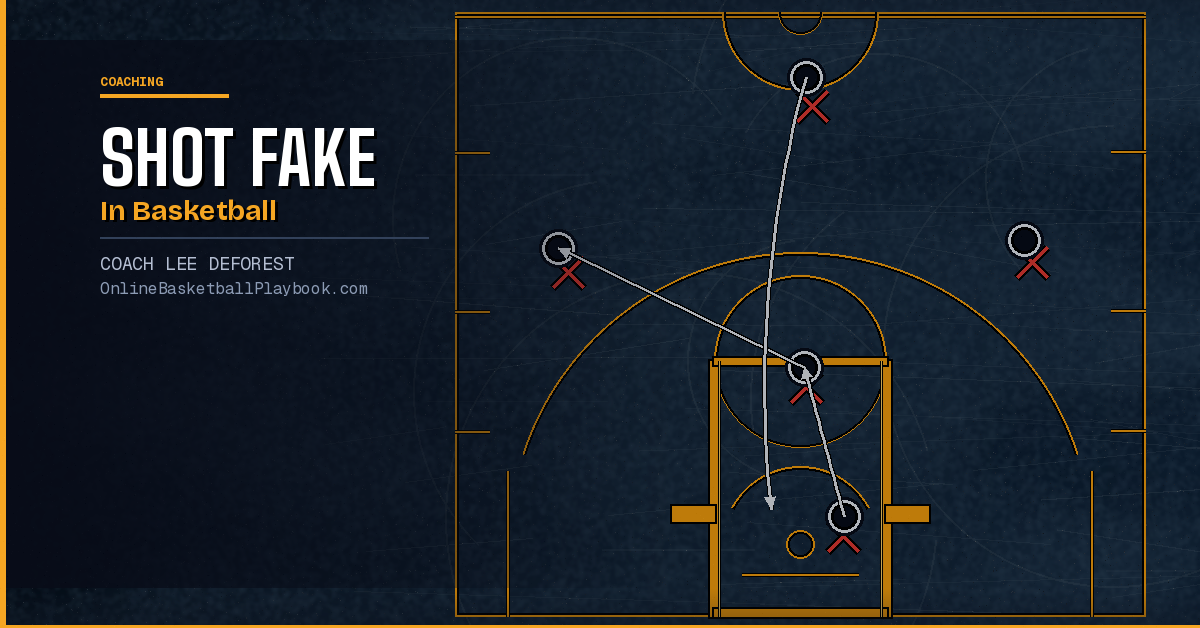
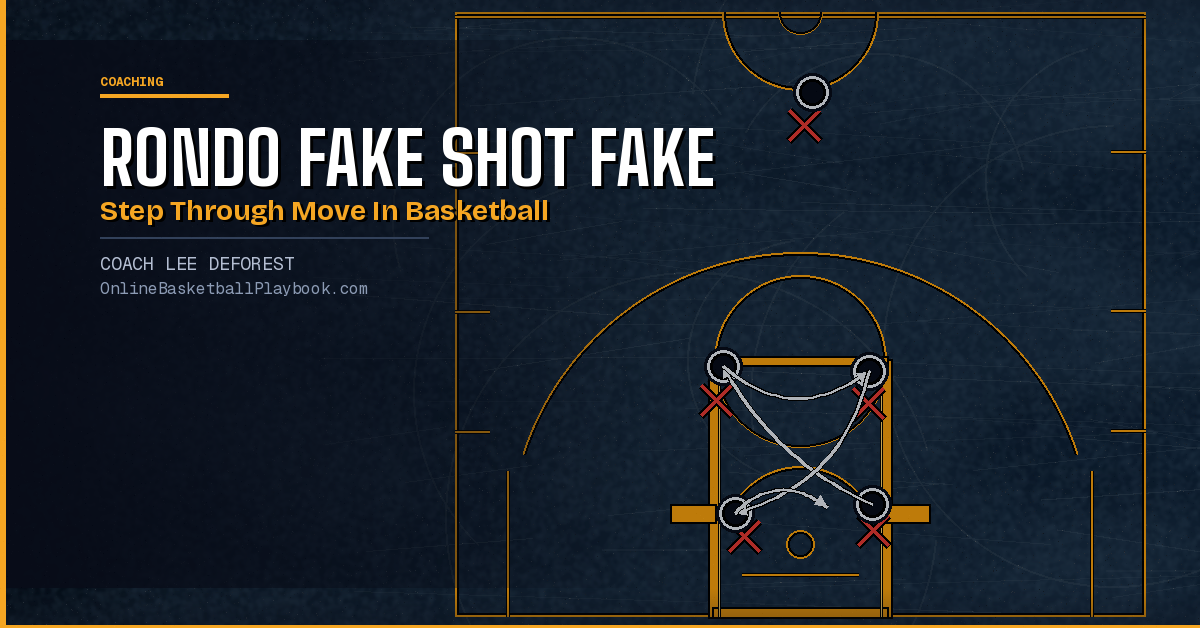
How to Do a Rondo Fake Shot Fake Step Through Move in Basketball
How to Do a Rondo Fake Shot Fake Step Through Move in Basketball