
Read and React is a rules-based motion offense in which players learn a small set of layered principles rather than a stack of memorized plays. Each layer teaches a rule that governs what to do based on what the defense shows — overplayed, sagged off, denied, or fronted — so the offense is built on recognition and reaction instead of a diagrammed sequence of cuts and passes.
The Core Philosophy: Rules, Not Plays
The layers stack progressively. Layer 1 installs the foundational spacing and cutting rules that apply no matter where a player starts on the floor. Once players have those automatic, Layer 2 introduces a screening action off the same read. Later layers add post entries and ball-side actions. Coaches only add a new layer once the previous one is second nature, which keeps the offense simple for players even as it becomes more sophisticated for the defense to guard.
Key point: Because the rules are the same regardless of which of the five spots a player occupies, there are no fixed positions to memorize — any player can fill any spot and the reads stay identical.
Layer 1: The Foundational Rules
Layer 1 is built around a simple read: if you're overplayed or denied, backdoor cut to the basket. If your defender sags off or fails to deny, you flash or relocate to maintain spacing and stay available for a pass. These two reads — cut when denied, fill space when open — are taught before anything else, because they establish the floor balance and cutting habits that every later layer depends on.
Coaches typically drill Layer 1 with no dribbling and no screens at all, forcing players to pass, cut, and fill spots purely off the defender's positioning. This isolates the read so players build the habit of reacting to the defense rather than executing a memorized path. Only after players consistently make the correct read — cutting hard on a deny, replacing a cutter's spot, keeping proper spacing — does a coach introduce anything more complex.
Practice time on Layer 1 is not wasted time. Every action added later is layered on top of these same habits, so a team that rushes past Layer 1 tends to look disorganized once screening or entries are added, because the underlying spacing and cutting instincts were never fully installed.
How Additional Layers Add Actions
Once Layer 1 is automatic, coaches introduce Layer 2, which typically adds a screening rule on the same side of the floor — a player who doesn't get the ball may screen away or down for a teammate instead of simply relocating. This gives the offense a second option off the identical initial read, so the defense now has to guard both the backdoor cut and a screening action from the same alignment.
Later layers build in ball-side and post entry rules — how to enter the ball to a post player, how perimeter players react once the post catches it, and how to counter a defense that starts fronting or doubling the post. Each new layer is introduced as an "if this, then that" addition to the existing rule set, not a replacement for it, so players are never asked to unlearn a habit — only to add a new option to the same read.
This progressive structure is why the system can look completely different from one team to the next. A team that has only installed Layer 1 plays a simple cutting offense; a team that has installed four or five layers is running post entries, multiple screening actions, and perimeter counters, all growing out of the same original read.
Why It's Popular for Limited Practice Time
Read and React has become a go-to system for programs with limited practice time, high roster turnover, or multiple teams to prepare, because the rules transfer regardless of personnel. A coach doesn't have to install a new playbook for a new group of players every season — the same layered rules apply to whoever is on the floor, and a new player can be plugged into any of the five spots without learning a role-specific script.
This also makes it attractive for programs running the same system across multiple levels — freshman, JV, and varsity, for example — since a player moving up a level has already internalized the rules and only needs to learn additional layers, not a new offense from scratch. For youth and school programs where players rotate in and out of the program constantly, that continuity is a significant practical advantage over installing a new play-based system every year.
How It Compares to a Fully-Scripted Motion Offense
A fully-scripted motion offense typically defines specific cuts, screens, and entries in a set sequence, which makes it easier to scout and drill to precision but harder to adapt when the defense takes away the first option. Read and React trades some of that precision for adaptability — because the offense is generated by reads rather than a script, it's inherently more improvisational and harder for an opposing coach to scout, since the exact sequence of actions depends on how the defense plays each possession.
The tradeoff is predictability on your own bench. A scripted motion offense gives a coach a clear expectation of what should happen on a given call, while Read and React requires trusting that players will make the correct read in real time. Teams that have fully absorbed the rules tend to play with more fluidity and less hesitation than scripted systems allow, but teams still learning the layers can look unstructured by comparison.
Strengths and Weaknesses
The greatest strength of Read and React is what it teaches independent of wins and losses: basketball IQ, spacing, and the habit of reacting to the defense rather than to a play call. Players who learn the system well tend to understand off-ball movement and floor balance at a deeper level than players drilled only on set plays, and that understanding tends to carry over to other systems later in a player's career.
The primary weakness is the learning curve. Because the offense depends on players correctly reading the defense in real time, a team that hasn't fully absorbed a layer can look chaotic — cutters colliding, spacing collapsing, or players hesitating because they aren't sure which rule applies. This is less a flaw in the system than a reflection of how much repetition the rules require before they become automatic, which is why coaches are cautioned against adding layers too quickly.
Key point: Most of the "Read and React looks disorganized" complaints trace back to a team skipping ahead in the layers before Layer 1 was fully automatic — not a flaw in the system itself.
Practical Installation Advice for Coaches
Install one layer at a time, and don't move to the next layer until players make the current layer's read correctly without hesitation. Drill Layer 1 in isolation — no dribbling, no screens — so the cutting and spacing reads are unmistakable before anything else is layered on top.
Expect the offense to look imperfect during installation. Because players are learning to react rather than to execute a memorized script, early reps will include wrong reads and awkward spacing; that's a normal part of teaching a rules-based system, not a sign to abandon it. Use small-sided drills (2-on-2, 3-on-3) to isolate a single layer's read before putting it into a full 5-on-5 setting, and only introduce a new layer once the previous one holds up under full defensive pressure.
Coaches should also resist the urge to add layers just because a game is close or a team is struggling — adding complexity under pressure tends to break down the very reads that were supposed to make the offense reliable in the first place.
- Read and React is rules-based, not play-based — teach layers, not plays.
- Layer 1: if overplayed/denied, cut backdoor; if open, fill space and maintain spacing.
- Add a new layer only after the current layer is automatic under defensive pressure.
- Later layers add screening actions and post/ball-side entries on top of the same original read.
- Great for teams with limited practice time or roster turnover — rules transfer to any personnel.
- Expect early reps to look unpolished; that reflects the learning curve, not a flawed system.
Get free play diagrams, drills, and coaching guides delivered to your inbox.
Keep Building
Related breakdowns
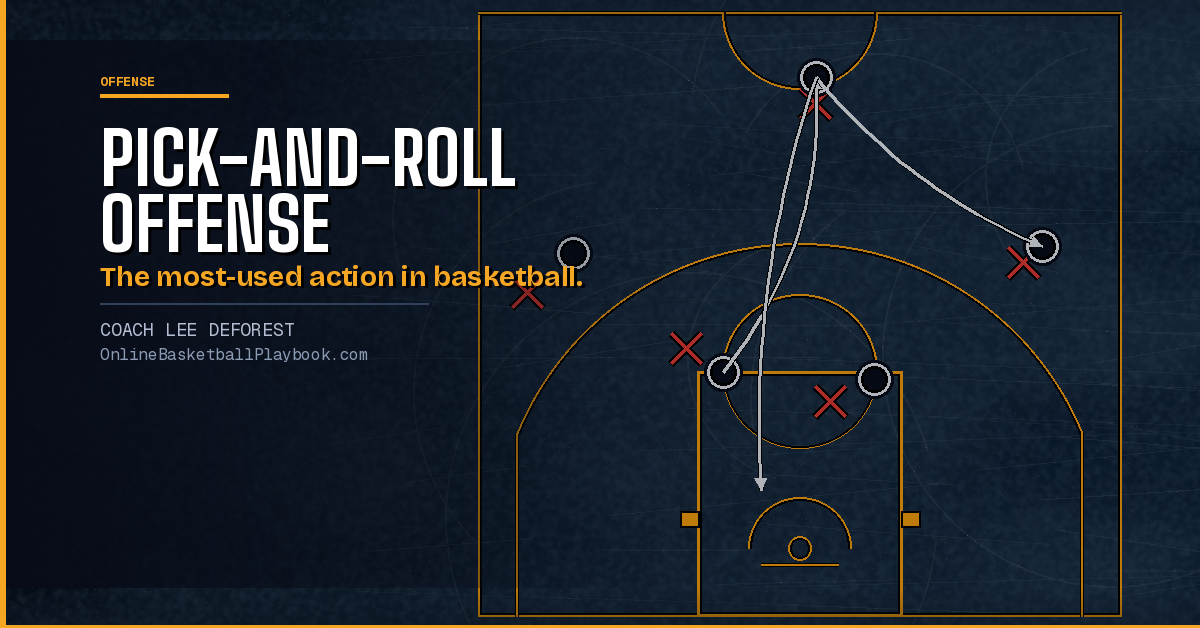
How to Coach Pick-and-Roll Offense (Complete Guide)
The most-run action in the game — what it is, how to space it, every read for the ball handler and screener, how the defense guards it, and how you teach all of it.
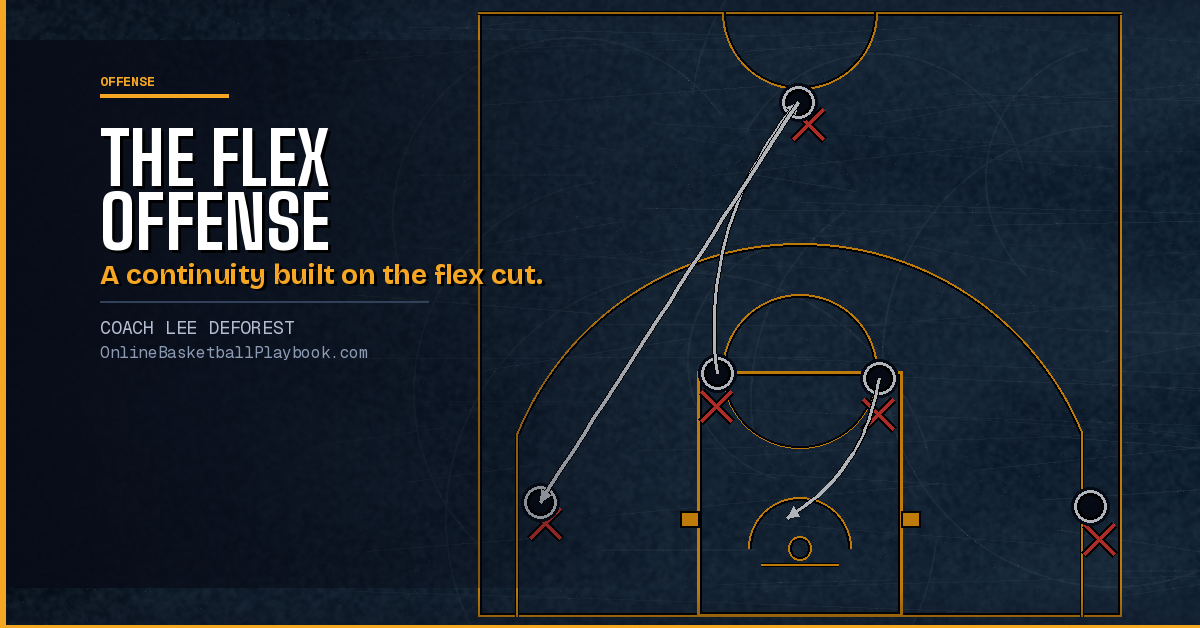
How to Coach the Flex Offense (Complete Guide)
The continuity that never dies — what makes it go, where it's vulnerable, and how to teach it from day one to game night.

Triangle Offense: Complete Coaching Guide
The triangle offense is a read-based system built around a sideline triangle of post, wing, and corner. Here's the base alignment, the core reads, and the tradeoffs of installing it.