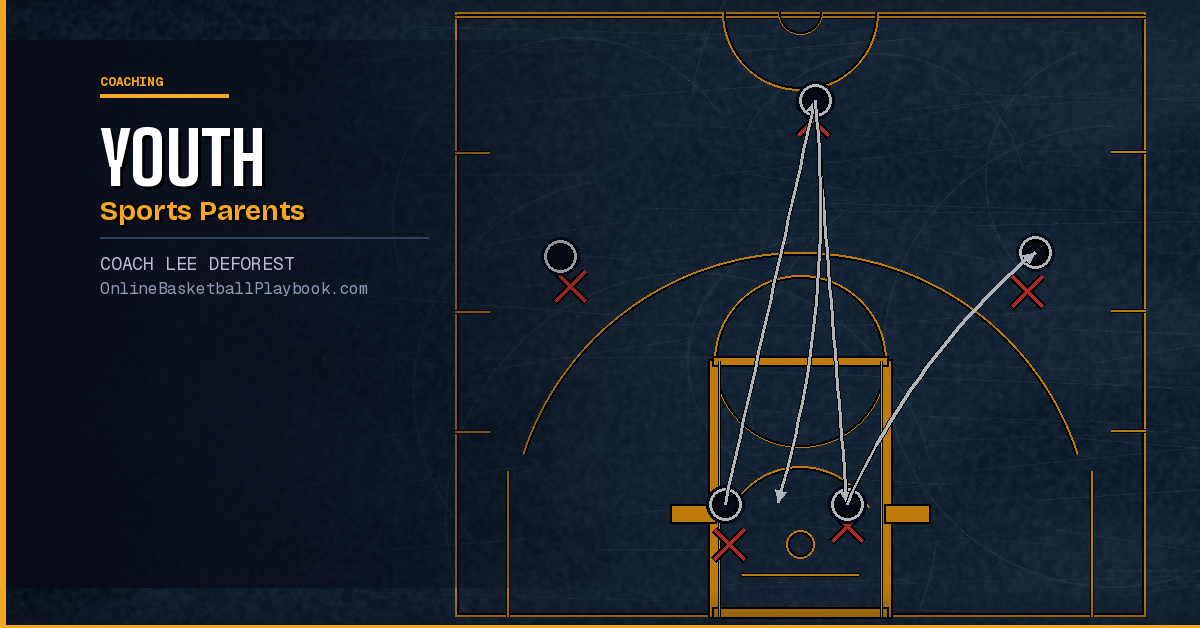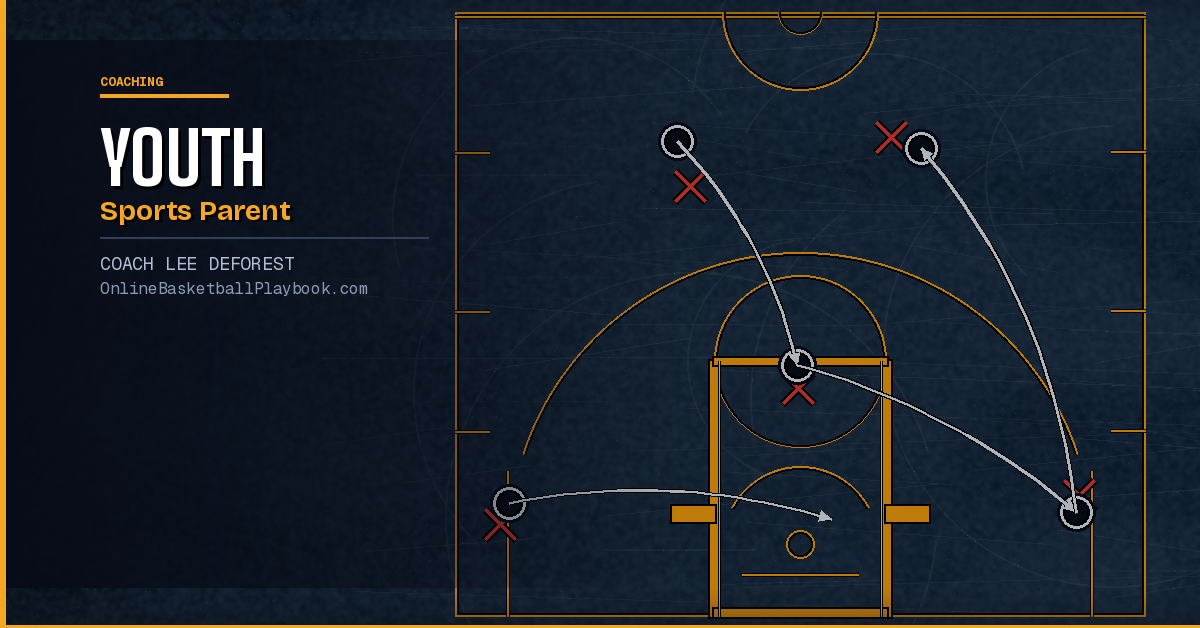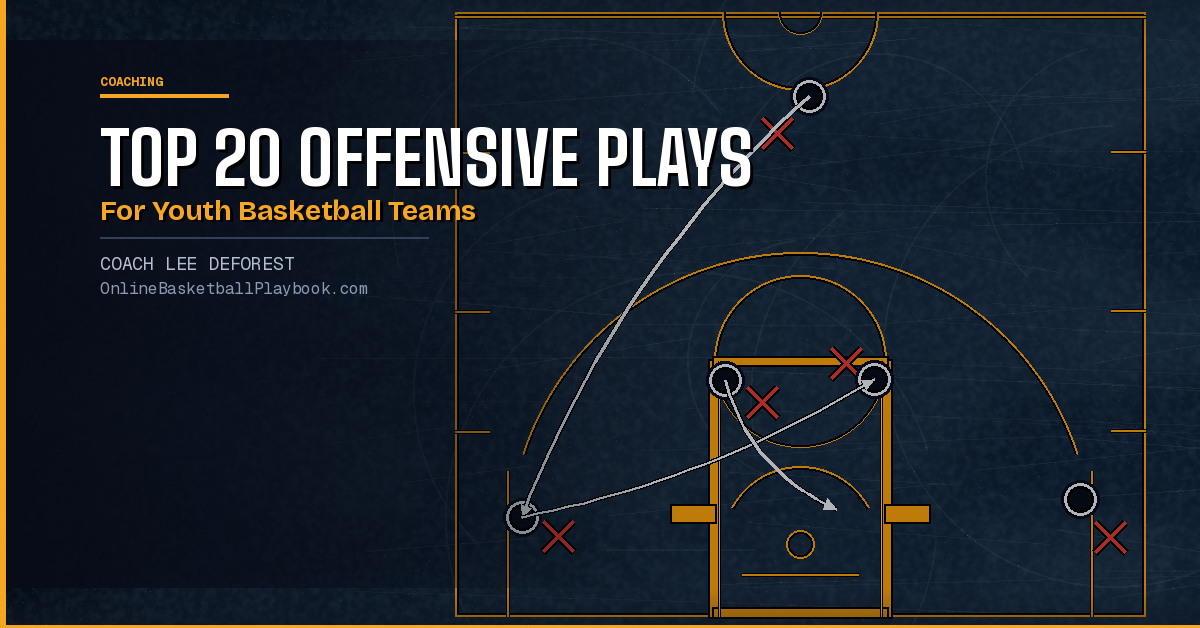

Young players don't need 40 plays — they need 5 they own and 15 more to grow into. Here are 20 offensive sets built for youth teams, organized from the simplest to runs that challenge developing players.
Why Simplicity Wins at the Youth Level
Youth basketball coaches make one consistent mistake: they install too many plays. A team that runs two plays with confidence will outscore a team running eight plays with confusion every single time. The research behind youth player development is clear — young players process one task at a time, and the two-choice decision model (shoot or pass? cut left or right?) is their cognitive ceiling in a live game situation.
That principle should drive your entire offensive system. Pick plays your players can recall under pressure, execute from muscle memory, and adjust when the defense takes something away. The 20 plays in this guide are built for that standard. The first five are so simple your team can install them in one practice. The last five ask for reads and spacing awareness — skills that emerge as the season progresses.
Before you diagram anything, ask yourself two questions: Does every player know where to start? Does every player have a job on every possession? If the answer to either is no, the play is too complicated for where your team is right now. Start earlier in this list.
The primary goal is to make basketball so enjoyable that, given a choice of activities, the child chooses to play.
— Youth Coaching Fundamentals, Basketball Vault
Plays 1–5: The Foundation Tier
These five sets require no reads, minimal dribbling, and clear spacing. Install them in the first two weeks of the season. Run them until your players stop thinking about the play and start playing basketball within it.
Play 1: 5-Out Pass-and-Cut
Every player starts on the perimeter in a five-out alignment. The ball handler passes to any wing, then cuts hard to the basket. If the cutter is open, the ball goes inside. If not, the cutter clears to the weak-side corner and the next player makes the same read. This play teaches two fundamentals simultaneously: spacing and cutting with purpose. There is no dribble required unless a player catches on the move. Run it until every player has cut to the basket at least twice and understands why spacing the floor creates the lane.
Play 2: Elbow Entry
The point guard enters the ball to the elbow (free throw line extended). The wing on the ball side screens away for the opposite wing. The player at the elbow can attack, hit the cutter coming off the screen, or swing the ball to the top for a reset. This is your first introduction to off-ball screening. Keep it to two reads: attack or find the cutter. Don't add a third option until both of those are automatic.
Play 3: Dribble-Drive Kick
The point guard attacks the paint off the dribble. The two wings and two posts space to the corners and weak-side block. When the guard enters the lane, every player holds their spot. If a helper collapses, the guard kicks to the open corner. No cuts, no confusion — everyone stays put until the ball kicks out. Teaches drive-and-kick without requiring complex reads.
Play 4: Box Set — Corner Pop
Players line up in a box: two on the blocks, two on the elbows. The point guard hits the high elbow and the opposite low-block player pops to the corner. High elbow passes to corner for a shot or drives baseline. Simple two-pass sequence, easy to remember. Works well as a set play out of a timeout when your team needs a clean look.
Play 5: Inbound — Stack
Two players stack near the ball-side elbow. On the inbound count, the top player cuts to the corner, the bottom player cuts to the basket. The inbounder hits whichever player is open. Teaches timing and sequencing with very low cognitive load. Stack cuts — one to the basket, one to the corner — are the same motion used in more complex sets later, so this play compounds on itself.
Plays 6–10: Motion and Movement
These five plays introduce movement patterns that repeat across every level of basketball: the give-and-go, the skip pass, the back-cut, and the dribble hand-off. Once your players own the foundation tier, these plays extend it by adding one read at a time.
Play 6: Give-and-Go Series
Point guard passes to the wing and cuts immediately to the basket. Wing holds for one count, then either feeds the cutter or swings the ball. The give-and-go is the most fundamental two-player action in all of basketball. Running it as a set play teaches timing — the cut must be sharp and immediate, not lazy. Young players who wait after the pass never get the return. The timing lesson here transfers to every other action they will ever run.
Play 7: Weak-Side Back-Cut
The weak-side wing watches the ball handler's dribble. When the ball handler attacks the lane, the weak-side wing takes one step toward the ball, then cuts hard to the basket. If the defense collapses on the drive, the back-cut is open. This play builds court awareness — players have to watch the ball and their defender at the same time. Introduce it only after your players can comfortably run plays 1 through 5.
Play 8: Skip Pass Wing Attack
Ball starts at the top. Left wing makes a hard cut baseline and clears to the corner. Right wing holds. Ball handler skip passes to the right wing for an attack opportunity from the wing. The skip pass forces the defense to close out and creates driving lanes. Your players need to be comfortable throwing a two-handed overhead skip before this works — practice the pass in warmups until it's reliable.
Play 9: Dribble Hand-Off (DHO)
Point guard dribbles toward the wing. Wing times the approach and takes the hand-off, reading whether to attack off the catch or swing the ball. Guard continues to the basket or sets a basket screen after the hand-off. The DHO is one of the most versatile actions at every level. At youth, it teaches two things: reading when to attack and using a teammate's momentum to get separation.
Play 10: Pin-Down Catch-and-Shoot
Post player sets a down-screen for a wing coming from the corner. Wing times the screen, curls or pops depending on the defender, and catches ready to shoot. Post rolls to the ball. This is your first play requiring a real two-player read: the wing must read whether to curl (defender on their back) or pop (defender cheats over). Take time to teach this read in practice before running it in a game.
When teaching any new play, walk through it at half speed before running it live. Young players need to see the spacing and timing once or twice without defensive pressure before they can execute it in a real game situation. Speed up only when the structure is clean.
Plays 11–15: Ball Screen and Read Sets
Ball screens are where youth basketball gets complicated fast. These five plays introduce pick-and-roll concepts but keep the reads manageable. The rule: teach one ball-screen read per play. Never ask a youth player to make three consecutive reads off the same action in a game — they will either freeze or take the wrong option every time.
Play 11: Basic Pick-and-Roll — Pop
Center sets a ball screen at the wing for the point guard. Guard uses the screen and attacks the lane. Center pops to the three-point line immediately after screening. Guard reads whether to finish, draw and kick to the popping big, or swing the ball. For youth teams with a big who can shoot, this play opens the paint and gives you a clean three-point look in one action.
Play 12: Basic Pick-and-Roll — Roll
Same setup as Play 11, but the center rolls to the basket instead of popping. Guard attacks, reads the defense, and either finishes or drops the ball to the rolling center for a short finish at the rim. Teach the roll action and the pop action separately before combining them — let the center read which one to do based on how the defense reacts to the ball screen.
Play 13: Side Ball Screen — Corner Kick
Side ball screen on the wing. Guard attacks. Weak-side wing spaces to the opposite corner. When the defense collapses on the ball screen, guard kicks to the corner shooter. The corner player must be set and ready to shoot before the ball arrives. This is a three-player read chain: screener, guard, corner. Keep corners spaced and teach the corner player to communicate ("ready") before the screen is set.
Play 14: Horns Set
Two players set up at the elbows, two wings in corners. Point guard passes to one elbow player who has the option to drive, pass to the weak-side elbow for a pick-and-pop, or swing to the corner. Horns is a flexible multiple-action set used at every level from middle school to the NBA. At youth, simplify it to two reads: drive or pass to the opposite elbow. Add complexity only after the base action is automatic.
Play 15: Middle Ball Screen — Drive-and-Kick
Ball screen set at the top of the key. Guard uses it, attacks the middle, and kicks to either wing based on which side the defense collapses. Wings are spaced at the three-point line. This play teaches guards to see the whole floor off the ball screen — not just the roll man, but the open wing on the weak side. Middle ball screens create the widest driving lane in the offense.
Plays 16–20: Advanced Sets for Developing Teams
These five plays are for teams that have played together long enough to understand spacing, cutting, and basic two-player reads. They are not appropriate for beginners. If your players are still confused about where to start on your foundation sets, stay there. These plays earn their complexity only when the fundamentals beneath them are solid.
Play 16: Zipper Cut Entry
A wing cuts up the lane line (the "zipper cut") from the low block to the elbow. Ball handler enters to the zipper cutter at the elbow. Elbow player reads: attack, dump to the low-block player behind them, or swing to the weak side. The zipper creates a read at the elbow rather than on the wing, which pulls the defense into the paint and opens corner shooters.
Play 17: Spain Pick-and-Roll (Simplified)
Ball screen at the wing. As the guard attacks off the screen, a weak-side player sets a back-screen on the ball-screen defender (the player guarding the screener). Screener rolls to the basket. This is the simplified version of the Spain action. It requires two players reading each other simultaneously. Walk through the timing — the back-screen must land at the same moment the guard turns the corner.
Play 18: Floppy Action
Two players stack on the block. Both cut to opposite wings off double screens set at the elbows. Ball handler reads which cutter is open and enters the ball for a catch-and-shoot. Floppy teaches reading off-ball screens as a cutter — curling for a layup if the defender trails, popping if the defender cheats over, or flaring if the defender goes under the screen. Three reads, but the cutter makes only one based on the defense.
Play 19: High-Low Entry
Ball enters to the high post (elbow). Low-post player seals their defender and calls for the pass inside. High post reads the seal and delivers a bounce pass to the low-post player for a short finish. If the low post is denied, high post attacks and low post relocates to the block. This is your primary inside-out action for teams with a post player who can catch and finish. Demands good timing and a post seal the defender can't front.
Play 20: Blob (Baseline Out-of-Bounds) — Curl Series
On a baseline inbound, two players set a staggered double-screen in the lane. The primary cutter uses the double screen and reads: curl to the basket (defender trails), pop to the corner (defender fights over), or back-cut (defender cheats the screen). The inbounder makes one read and delivers the ball. This set gives you a high-percentage look on every baseline inbound in the half-court — which adds up over an entire season.
How to Teach Plays So Players Actually Run Them
The most detailed play diagram in the world is worth nothing if your players can't recall it in a game. Youth players learn plays through repetition with variation — the same action in different drill vehicles, not five new drills every practice. When you introduce a new set, do this:
First, walk it through at half speed with no defense. Every player understands where they start, where they go, and what they look for. Ask questions: "What do you do if the defender takes away your cut?" Make them think out loud before the defense arrives.
Second, run it at game speed against a passive defense — a defense that stands in position but does not contest hard. Players get comfortable with timing without having to fight for their spot.
Third, run it against live defense in a 5-on-5 setting. Don't overcorrect every mistake. Let them play and intervene only when the structural mistake (wrong spacing, missed cut, forgotten assignment) repeats.
The Canada Basketball LTAD framework recommends a 4:1 practice-to-game ratio for ages 9–12 specifically because live reps compound over time. Your plays get better not from more diagrams but from more reps under real game conditions. Track which plays your team runs well, which they abandon under pressure, and build your offensive identity around the ones they own — not the ones they have memorized from a whiteboard.
A final principle that holds at every level: the play is not the offense. The offense is spacing, cutting, passing on time, and attacking when the defense gives you something. The 20 plays in this guide are vehicles for those habits. When the habits are strong, your players will make the right play inside any set you call — including ones you haven't diagrammed yet.
- Start with 5-Out Pass-and-Cut — teaches spacing and cutting in one action; run it for two full weeks before adding anything else.
- Limit your team to 5 live plays at any time — rotate in new sets as old ones become automatic, not before.
- Walk before you run — every new play gets a half-speed walkthrough, then passive defense, then live defense before it goes into the game plan.
- Track what your players actually run under pressure — that is your real offense; build your primary sets from those actions, not the whiteboard list.
- End every practice with a quick rep of your two primary plays — finishing on a clean execution locks the movement pattern into memory before the next session.
Want more basketball coaching strategies and drills?
See it drawn up
Related diagrams
Keep Building
Related breakdowns
Strength Training for Youth Basketball Players
Strength Training for Youth Basketball Players