
Every shooter goes cold. The shots that fell easily last week suddenly clank off the rim. Here is how coaches diagnose the real cause and restore a player's stroke before the slump costs games.
Why Shooting Slumps Happen
Most coaches reach for a mental explanation when a shooter goes cold — confidence, nerves, pressure. That instinct is understandable, but it skips the most common cause: mechanics. A player who made shots last month has almost certainly developed a small flaw in their release, their footwork, or their set-point. The mind follows the body. When the ball starts going in again, the confidence returns on its own.
Dr. Hal Wissel, one of the most widely cited shooting experts in the coaching world, built his entire diagnostic framework around this principle. Every missed pattern has a mechanical source. The coach's job is to identify that source before prescribing a fix. Giving a player a generic cue — "bend your knees," "follow through" — without first understanding why the ball is missing rarely solves anything. It layers more information on top of a broken foundation.
The other common driver of slumps is shot selection creep. A player starts taking slightly longer looks, slightly more contested attempts, and slightly earlier releases under fatigue. Over time the percentage drops and the player loses trust in the shot. Rick Pitino documented this precisely at Louisville: his team shot 22% on challenged shots, compared to an NBA baseline of roughly 42%. His practice rule was simple — if the shot would be challenged, pass it back and restart the action. No exceptions. That discipline, enforced in practice, protects shooters from the low-percentage habits that quietly erode a stroke.
The Diagnostic Framework: Error First, Cure Second
When a player is in a slump, the first thing to do is watch the ball, not the player. Specifically, watch what the ball does after it leaves the hand. That trajectory tells you almost everything about what broke down at the release point.
Here is how to read the most common miss patterns:
Short shots almost always come from a release point that is too low. The player is letting the ball leave their hand before the arm fully extends. The fix is a high-extension finish: hold the follow-through with the arm fully extended and the fingers pointing down at the rim until the ball lands. Do not let the elbow drop early.
Shots that miss wide right or wide left consistently are often caused by the guide hand. When the off-hand thumb pushes across the ball at the release, it sends the shot sideways. A one-handed form shot drill — shooting without the guide hand making contact — isolates this immediately and shows the player whether their shooting hand is truly tracking the target.
Flat arc, or line drives, come from a flat wrist at release and an elbow that is not finishing above eye level. A useful correction: have the player pick a spot on the gym ceiling above the front of the rim and aim their arc there. Players who typically shoot line drives gain four to six inches of arc with this cue alone, and make percentage goes up quickly.
Front spin or hard bricks off the backboard or front of the rim indicate that the wrist is not fully flexing through the ball. The fingers are leaving the ball at the same time instead of the index finger being the last contact point. Exaggerate the wrist snap in form shot work until the hand finishes palm-down with fingers hanging toward the floor.
Inconsistent timing — the player feels like they are shooting at different moments in the jump — points to a rushed release. The ball is leaving the hand before the natural rise of the jump peaks. Teach a three-beat rhythm: sight the target, pause at the set-point above the shooting shoulder, then release on the way up. Three distinct beats, not one blurred motion.
Work backward through this list when diagnosing a slump. Check arc angle first, then hand position, then elbow alignment, then balance and foot. The root cause is almost never what the player believes it is.
Form Fixes That Rebuild Confidence Fast
Once the mechanical cause is identified, the fastest path back is form work without the pressure of a rim. Jay Wright at Villanova opened every practice with Set Lifts and the Bradley Drill — elbow under the ball, lift and follow-through, no rim contact, five shots each side. These are the first two drills in every practice at a program that has won multiple national championships. The principle is the same at every level: form before volume.
For younger players, the "pizza waiter" cue works consistently. The hand is under the ball the way a waiter holds a pizza tray — palm up, ball balanced on the finger pads, not the palm. Add the "cookie jar" follow-through: reach up and dip the fingers into an imaginary cookie jar above the rim. These two cues reset the most common youth shooting errors in a single session.
The one-handed form shot sequence is the best slump-buster at any level. Start close — three to five feet from the basket — and shoot with the shooting hand only. This removes the guide hand entirely and forces the player to feel whether their mechanics are actually creating backspin and a true arc. Progress from there to a wall target drill, then to a full two-handed shot at the same short distance, then step back gradually as the feel returns.
Jay Hernandez's approach reinforces this: open every workout with "Quarters," a short-range one-handed form shot series. Only after the feel is established does the workout move to distance and competition. Even elite players run this same warm-up. The difference between a slumping player and a sharp shooter is often nothing more than skipping this step for two weeks.
Make every rep competitive — against the clock, an opponent, or yourself. A shooting workout should have a winner. The most dangerous person is the one who is continually improving.
— Shooting Development, Basketball Vault
How Practice Design Prevents Slumps
The best way to help a player out of a slump is to design practice so slumps form more slowly. Most shooting reps in practice are passive — players stand in lines, catch the ball, and fire without any game-like pressure. Those reps build volume but they do not build the mechanics that hold up under game conditions.
The correction is to score everything and make every rep competitive. Shaka Smart's Texas shooting culture is one of the clearest examples: approximately 18 named drills, each with a team record posted and visible, from the 3-Minute drill (record: 157) to the Evans drill (record: 219). Players are not just shooting — they are chasing a number that someone else set, which means every rep carries real stakes. The "can't shoot the same spot twice" rule forces movement between every attempt, so players are never training a spot-up catch that does not exist in their offense.
Tom Billeter's Purdue Drill puts the scored-rep idea in its simplest form: make four threes in one minute with a rebounder and passer, sprinting baseline to half-court between shots. A player who finishes below four makes runs for each point they fell short. The consequence is calibrated, the goal is explicit, and every player knows exactly where they stand. That kind of accountability keeps mechanics sharp because players feel the feedback immediately.
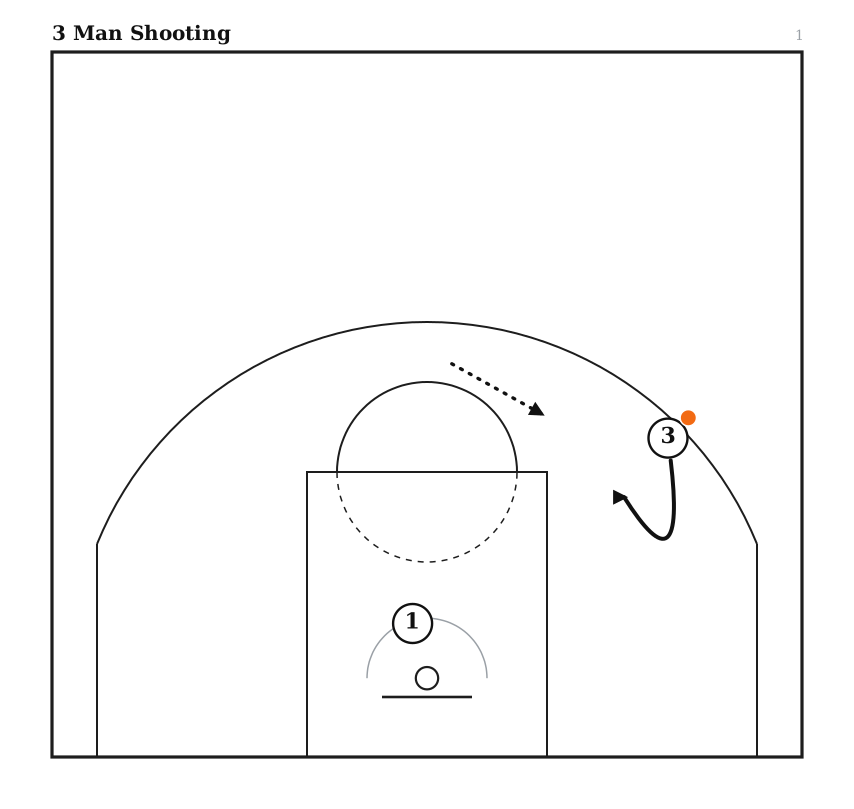
Wright's standard at Villanova is equally specific: three-man two-ball shooting, each player gets ten shots, the goal is six makes in 30 seconds. All three players run if the group fails. Beilein at Michigan set the bar even higher — seven out of ten in 30 seconds coming off a down screen and flare screen sequence, with a half-court sprint for failure. These are not abstract goals. They are numbers on a whiteboard that players know every day of the season.
Building a Shooting Culture That Keeps Players Sharp
A record board is one of the most underused tools in player development. Put a board in your gym with three or four named drills and a slot for each team's record. Let players sign their marks. Post the numbers where everyone can see them. The cost is a whiteboard and a marker. The effect is that shooting becomes a culture instead of a chore — players come in early, stay late, and challenge each other's records without being told to.
Hernandez documents this in detail: drills like Streak, Star, Around the Horn, the M Drill, and the Burner all have names, rules, and records. When a record falls, the player signs it. That record belongs to them until someone else beats it. This structure changes how players experience a shooting miss. It is no longer a failure — it is data. They know the record is 22 makes in two minutes. They made 17. They have a specific target for tomorrow.
The pull-up jumper deserves explicit attention in any shooting culture. Rumjahn and Kelbick call it a lost art, and they are right. A player who can take one or two dribbles and pull up around the free throw line is as valuable as a pure three-point shooter, but most practice designs do not train it deliberately. Add one scored pull-up drill per session — a spot, a time limit, a make target — and players begin to trust the shot in games.
Free throws must be shot tired. Bake them into the workout after a live 1-on-1 game or a conditioning set. Shoot them on a count, track the percentages, and hold players accountable to the numbers. A free throw shot fresh at the start of practice does almost nothing to prepare a player for the free throws that decide games in the fourth quarter.
Before the next shooting workout, put a make target and a time limit on every drill — even a simple spot-up series. Without a number to beat, players drift into mindless reps that do not build the mechanics that hold up when a game is on the line. Three words change everything: "beat the record."
When the Slump Is Not Mechanical
Most slumps are mechanical. But not all of them. After the mechanical causes have been ruled out and the form work has been done, if the ball still is not going in, the conversation shifts. A player who is managing outside stress — family pressure, academic trouble, a relationship ending — will often carry that weight onto the court in ways that look like a shooting problem but are not.
The coach's job here is not to be a therapist. It is to create the conditions where the player can tell you what is going on. That means shorter, private conversations after practice. It means noticing patterns — missed practices, late arrivals, withdrawn behavior in the locker room. It means asking a direct question: "What's going on outside the gym?"
Once the player knows you see them as a whole person rather than a statistic on your shot chart, they often give you the information you need. And frequently, the solution is simply reducing pressure. Take the player out of the starting lineup temporarily. Design their shooting reps to be shorter-range and higher-percentage for a week. Let them find the feel again before putting the weight of a game back on them.
Jay Wright's coaching culture at Villanova offers a useful principle here: "Sloppy drills create bad habits." The same logic applies to a player whose confidence is fragile. Bad reps under high pressure are actively harmful, not neutral. Run fewer drills with full discipline and real confidence rather than more reps that compound the problem. A slumping player who makes 18 of 20 form shots in a controlled, low-stakes setting is rebuilding a real foundation. A slumping player who fires through a full shoot-around and makes 40% is often getting worse.
The path out of a slump is the same path that built the shot in the first place: form first, then competition, then volume. Every good shooter learned this sequence once. The coach's job during a slump is to take the player back to the beginning of that sequence and let them rebuild the feel one rep at a time.
- Diagnose before prescribing: watch the ball's trajectory after release — short, wide, flat, or late each points to a different mechanical cause before you say a single word to the player.
- Start every slump fix with one-handed form shots: three to five feet from the basket, no guide hand, shooting hand only — until backspin and arc are clean and consistent.
- Score every drill with a target and a record: post results on a board, let players sign their marks, and run at least one pull-up drill per session with a specific make count and time limit.
- Shoot free throws tired and counted: schedule them after conditioning or live 1-on-1 games, never only fresh, so the mechanics train under the fatigue that actually shows up in games.
- Ask the human question last: if form work and competitive reps do not break the slump in a week, have a short private conversation — outside stress frequently looks exactly like a mechanical shooting problem and requires a completely different fix.
Want more basketball coaching strategies and drills?
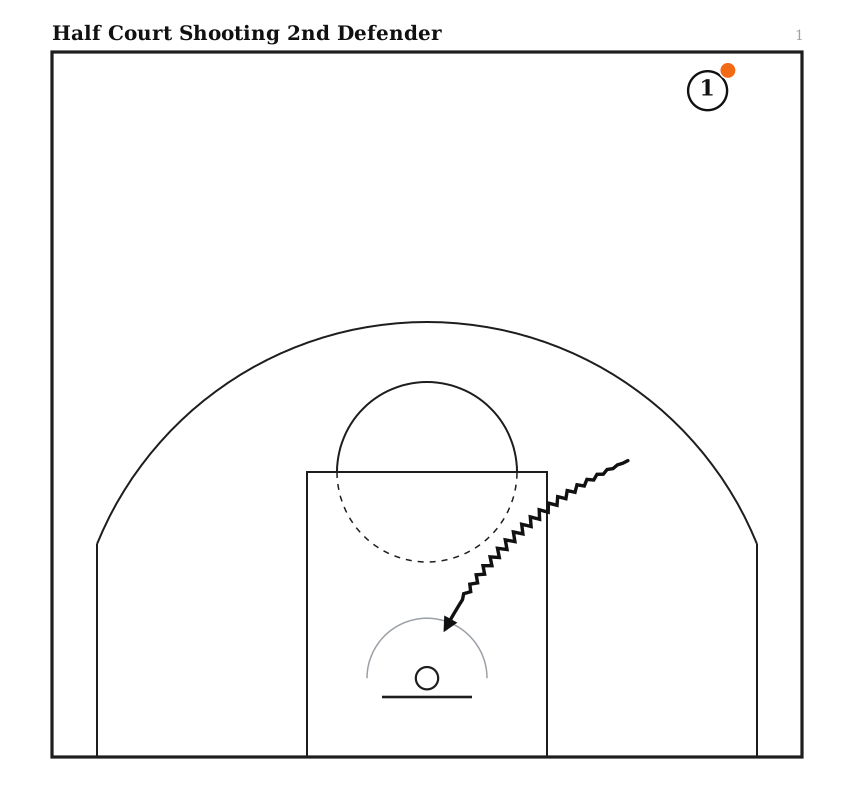
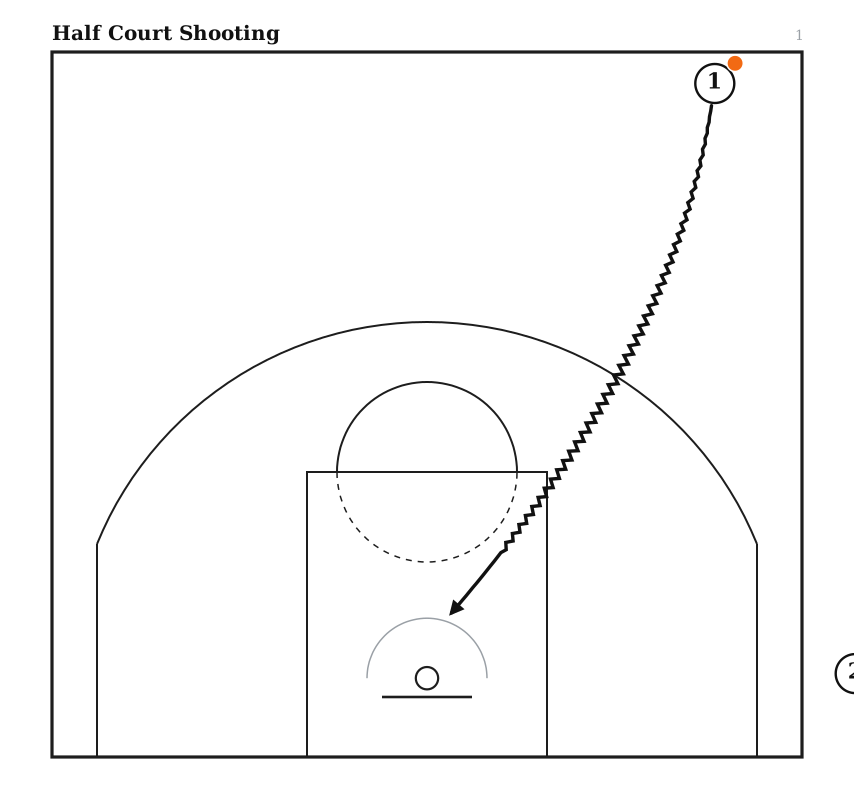
See it drawn up
Related diagrams
Keep Building
Related breakdowns