

ISO — short for isolation — is a half-court offensive action where four teammates clear out and one player is left to attack their defender one-on-one. No screens. No pick-and-roll. Just your best player, their defender, and a cleared-out half-court. It is one of the oldest and most reliable actions in basketball.
What ISO Means
ISO is short for isolation. The term describes both the action and the intent: the offense isolates one player by removing all other offensive players from the immediate area, creating a pure one-on-one situation with no off-ball movement to distract or help the defense.
When a commentator says a team is "running iso," it means the offense has made a deliberate choice to put the ball in one player's hands and clear the floor so that player can work. It is a distinct action — not just any one-on-one situation that emerges from a broken play.
ISO is most associated with elite ball handlers, wing players with strong first steps, and post scorers who can exploit mismatches. But any player can run an ISO if they have an advantage on their defender.
Why Teams Run ISO
Teams run ISO for several reasons, and the timing matters as much as the action itself:
- Mismatch exploitation. If a switch leaves a slow big on a quick guard, or a small guard on a post player, ISO immediately attacks that mismatch before the defense can fix it.
- Late shot clock. With 5 seconds left and no play developing, ISO gives the ball handler space and time to create something instead of forcing a rushed team play.
- End-of-quarter or end-of-game situations. In crunch time, teams want their best player with the ball in space, not running a complex action that might break down.
- Momentum shift. After a run of turnovers or bad possessions, a clean one-on-one action simplifies the game and lets an individual player take over.
- Foul trouble for a key defender. If the opposing team's best defender has three fouls, ISO draws them into foul danger in a context where they have to guard you.
How ISO Works Step by Step
A basic ISO looks like this:
- Ball handler calls for the clear. Usually with a verbal call ("iso") or a hand signal — pointing down and sweeping the arm to move teammates away.
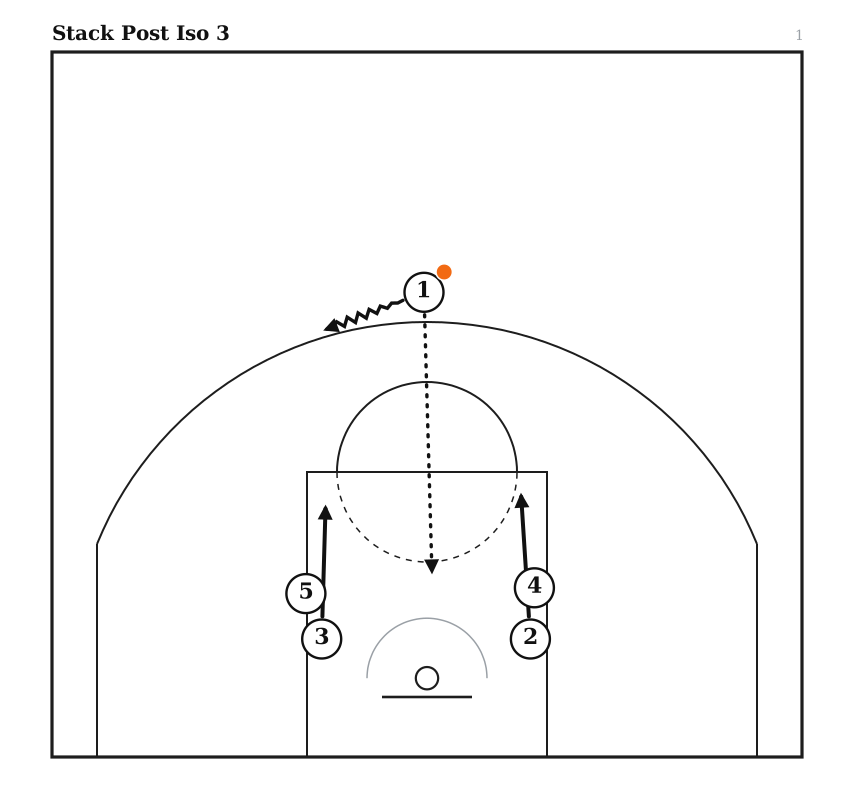
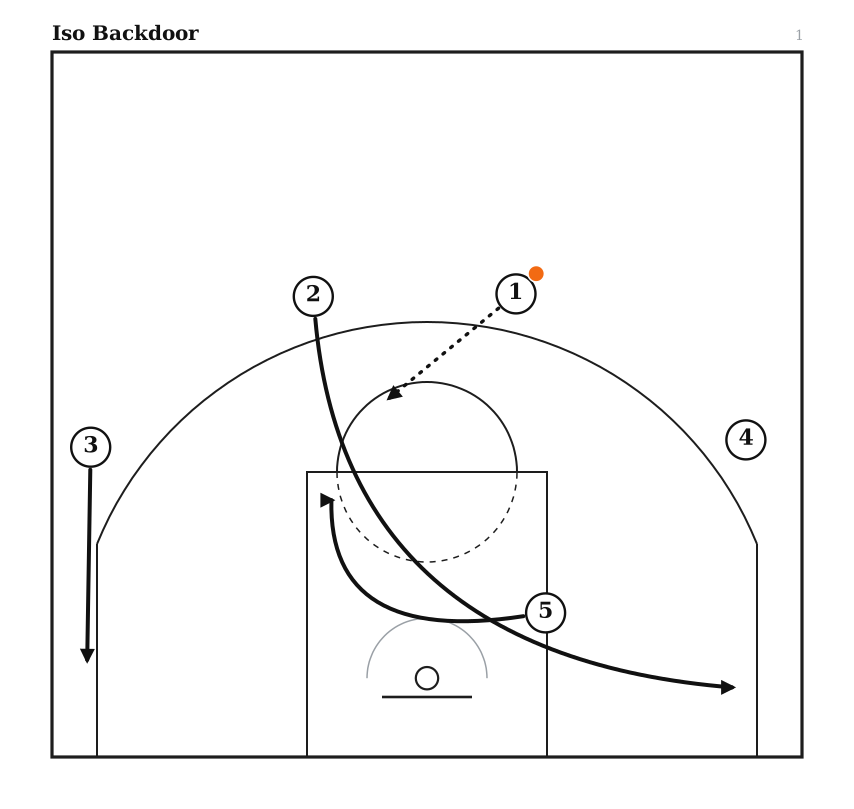
- Four teammates clear to the strong-side corners, opposite wing, and opposite corner. They get far enough away that their defenders cannot help without leaving an open shooter.
- Ball handler sizes up the defender. Using jab steps, shot fakes, and change of pace to probe for a gap before attacking.
- Ball handler attacks. Drive to the basket, pull-up jumper, step-back three, or post-up move — whatever move the defender's positioning gives up.
- Teammates stay spaced. They do not drift toward the ball. If the defense collapses on a drive, they are already in position to catch kick-out passes for open threes.
ISO is not about raw talent — it is about reading the defender's weaknesses. A ball handler who attacks the same direction every time gives the defense one thing to take away. The best ISO scorers read the defender's stance (overplaying one direction = attack the other) and vary their moves so the defense cannot cheat.
Where ISO Happens on the Court
ISO can be run from virtually any position, but certain spots are more common:
- Wing (elbow extended): The most common ISO spot — gives the ball handler room to drive baseline or middle, with teammates in the corners and opposite wing.
- Top of the key: Gives access to both sides of the floor. Common for guards who like to attack either direction.
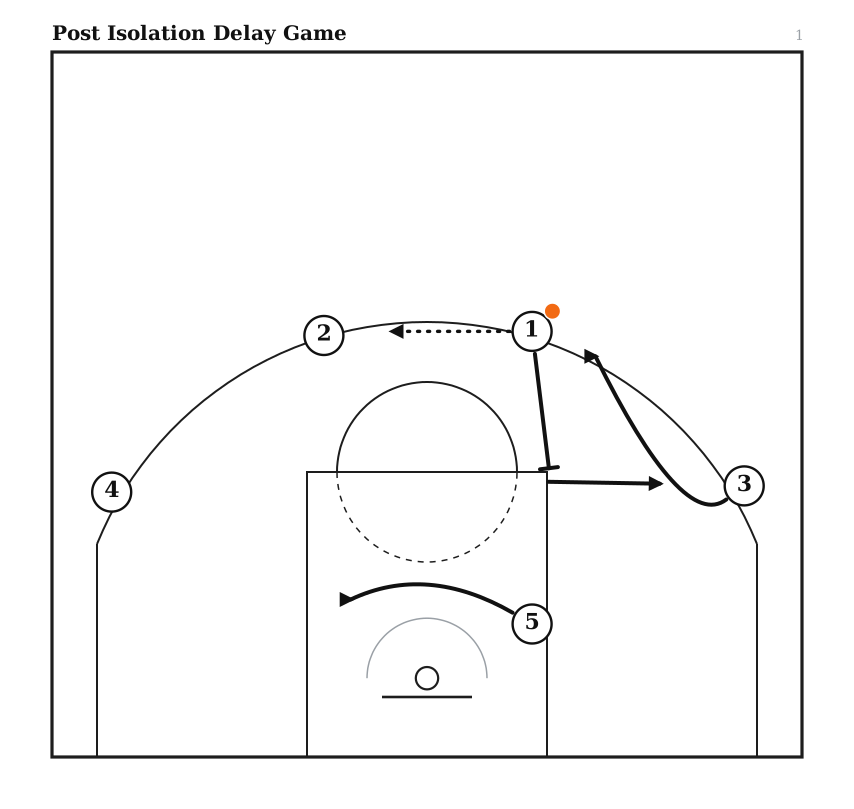
- Post (block or mid-post): A post player receives the ball on the block with teammates cleared to perimeter spots. The post player works against their defender with back-to-basket moves.
- Short corner / elbow: Less common, but used against zone defenses or to attack a specific defensive gap.
ISO vs. Pick-and-Roll: When to Use Each
ISO and the pick-and-roll (PNR) are the two most common half-court actions in basketball, and they are frequently confused. The difference:
- ISO: No screener. The ball handler attacks their defender directly. Success depends entirely on one player's ability to beat their man. Works best when the offensive player has a clear individual advantage.
- Pick-and-roll: A screener actively helps the ball handler by blocking their defender. Creates two-on-two problems — the defense must decide how to guard both the ball handler and the rolling screener. Works better when the ball handler does not have an obvious individual advantage, but the team can create a coverage problem.
The best offenses use both: ISO when the mismatch appears, PNR to manufacture mismatches that don't exist yet.
Defending ISO: The Four Options
When the ball handler calls for an ISO, the defense has four basic choices:
- Stay in front and accept the contest. The assigned defender guards without help. Requires a defender who can stay in front of the ball handler laterally. Best used when the individual match-up favors the defense.
- Double-team (trap). Send a second defender to trap the ball handler immediately. Forces a pass out to a teammate who may be open. Risk: the pass must be slow or off-balance for it to work — a quick kick-out leaves an open shooter.
- Hedge or "show" from a weak-side big. A help defender steps up to cut off the driving lane without fully committing to a trap. The primary defender fights over the top. Risk: the ball handler can pull up for a mid-range shot if the helper steps too far.
- Switch onto the ball handler. Requires a better-matched defender to take over the assignment. Most common when the original match-up was a mismatch.
Coaching ISO: When It Helps and When It Hurts
ISO is the right call in specific situations — and the wrong call when used as a substitute for a real offense:
- Good use: Late shot clock with no play available. Known mismatch on the floor. Star player in rhythm and clearly the best option. End-of-game situations.
- Bad use: Early in the shot clock when multiple good actions are available. Running ISO for a player who doesn't have an advantage. Using ISO as the primary offense because it's the easiest call — this leads to low-efficiency possessions and takes the ball out of the hands of the other four players.
- Teach the clearout. ISO only works if teammates actually clear. Players who drift toward the ball or set unnecessary screens collapse the driving lane. Spacing discipline makes ISO effective.
- Read the defense first. Before calling ISO, identify what the defender is giving up. A defender sitting back invites the pull-up. A defender cheating the drive invites a shot fake and drive. The read comes before the attack.
- ISO is not a bail-out. At the youth and high school level, ISO is sometimes called as a bailout when a play breaks down or players don't know what to do. Teams that call ISO out of confusion rather than strategy burn shot-clock time and produce low-quality shots. Teach it as an intentional choice, not a default.
Get free play diagrams, drills, and coaching guides delivered to your inbox.
See it drawn up
Related diagrams
Keep Building
Related breakdowns
Basketball Fitness: What You Need to Know as a Basketball Player
Basketball Fitness: What You Need to Know as a Basketball Player
Basketball Offseason Development: What You Need to Know as a Player
Basketball Offseason Development: What You Need to Know as a Player
What I Have Learned Over the Years Coaching Basketball
What I Have Learned Over the Years Coaching Basketball