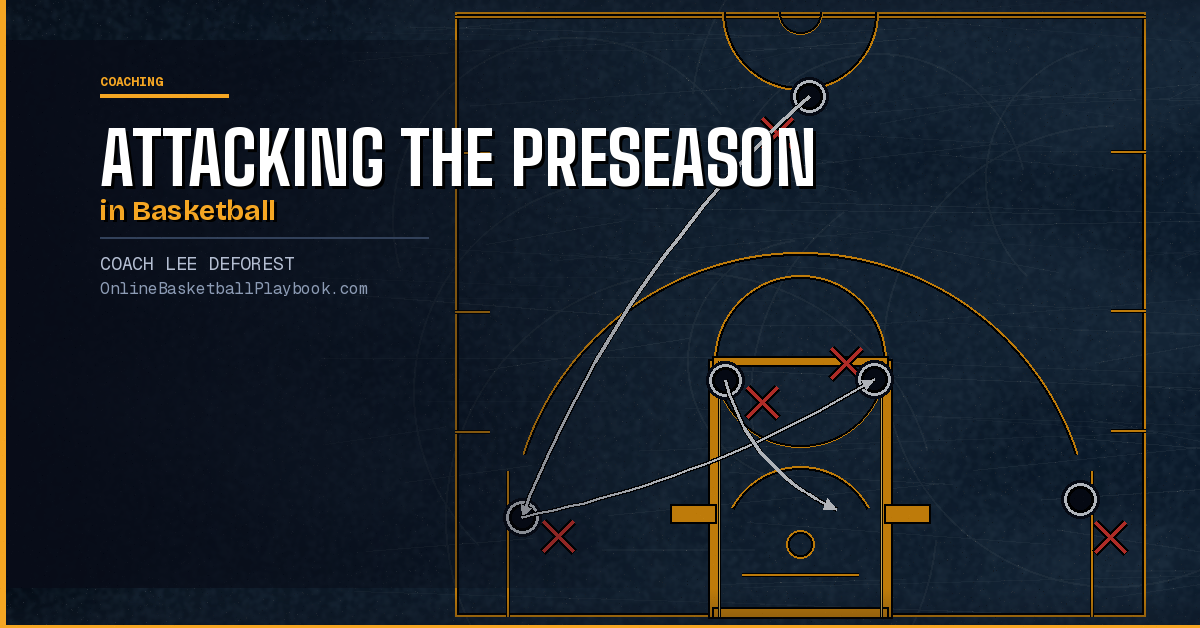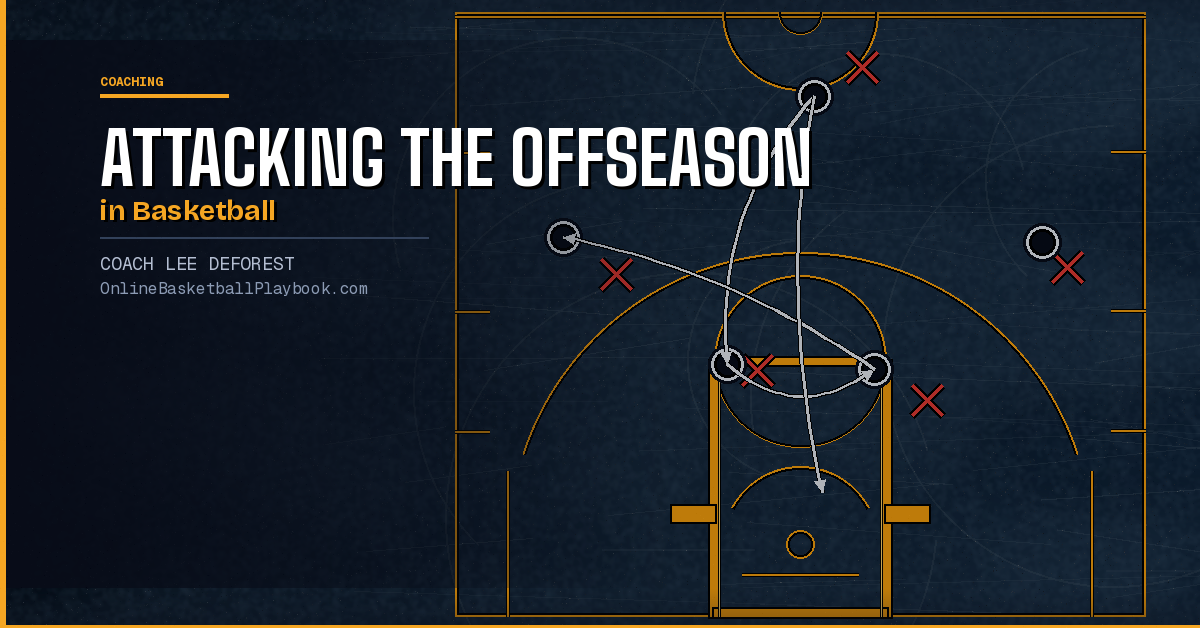

The offseason is not downtime — it is the only window where you can out-prepare every opponent on next year's schedule before they ever see you. Use it deliberately or surrender the edge.
The Attack Mindset: Why Most Teams Waste the Offseason
Most basketball programs treat the offseason as a recovery period — a time to step back, let players rest indefinitely, and slowly ease into preparation sometime in August. The elite programs treat it as the most competitive window of the entire year. The difference between those two approaches shows up in November, when one team is sharp and the other is still finding itself.
Attacking the offseason means bringing the same intentionality you bring to game week to every day between the final buzzer and the first fall practice. It means players working on documented weaknesses, coaches refining systems, and the entire program moving forward with direction rather than drifting.
The first step is honesty. Pull up your season film and ask the same question about every loss: was the outcome a personnel problem, a system problem, or an execution problem? That distinction drives everything else. A personnel problem means your recruiting priorities shift. A system problem means you redesign something before August. An execution problem means your individual development plan goes deeper on fundamentals. Most teams mix all three categories into one vague resolution to "get better," which is why most teams stay about the same.
Attack mode means specific problems get specific solutions. Write them down before the end of your exit meetings. Make your offseason blueprint in the first two weeks after the season, while the film is fresh and the losses are still stinging. That pain is a coaching tool — use it.
Setting Skill Development Priorities That Actually Stick
Every player has ten things they want to improve. The coach's job is to narrow that list to two or three things that will produce the most measurable return by opening day. Skill development without prioritization produces players who are marginally better at everything and significantly better at nothing.
The framework that works: identify each player's most frequent action in your system and the biggest gap between their current ability at that action and what the system demands. A point guard who runs your pick-and-roll offense but cannot make the pocket pass is a system liability regardless of how well he shoots pull-up jumpers. Fix the pocket pass first. Everything else waits.
Position-specific priorities worth building an offseason plan around:
Guards: Ball-handling under pressure is the first priority for most guards who play in motion-based or dribble-drive systems. Add live 1-on-1 reps daily — not cone dribbling, but full-speed decisions against a defender. Shot-creation off the bounce is the second priority, specifically the pull-up off two dribbles from the mid-range, which opens the entire drive game. Finishing at the rim with contact is the third: most guards who struggle to get to the line are losing the battle at the rim, not at the free-throw stripe.
Wings: The catch-and-shoot three is the single most valuable wing skill in any spread offense. Develop it with a specific footprint: one-two step with proper load, consistent release point, and the discipline to be set before catching. Pair it with closeout attack reads — because a wing who can shoot forces closeouts, and a wing who can attack closeouts scores 12 points a night from only five or six possessions.
Bigs: The skill that transforms average bigs into system-changers is the short roll read. A big who catches a pocket pass in the short roll area and can immediately read whether to finish, keep, or kick is worth twice the offensive possessions of a big who can only catch a lob. Develop that read with 3-on-3 reps, not just isolation post work.
Track progress every two weeks with a simple test: can the player execute the priority skill at game speed against live resistance? If not, the drill environment is not translating. Adjust the drill before adjusting the evaluation.
Installing Your System Before the First Practice
The biggest waste of preseason practice time is teaching concepts that could have been installed in June. Walk-throughs, film study, and concept introductions all belong in the offseason. By the time your first fall practice arrives, every returner should be able to draw your base offense on a whiteboard from memory, name the reads in your primary actions, and understand the logic of your defensive coverage scheme.
This is not about over-coaching in the summer. It is about front-loading the cognitive load so your preseason practices can be devoted entirely to execution at game speed, conditioning, and competition — the things you cannot replicate on a whiteboard or in a film session.
Offseason system installation works in three phases. Phase one is concept delivery: share your system's foundational principles in short, digestible formats — a five-minute video breakdown, a one-page concept card per action, a group film session. Make the logic clear before the footwork. Players learn faster when they understand why before they learn how.
Phase two is walk-through reps. Run your base actions at 50 percent speed in open gym, pausing to reinforce reads and correct alignment. No competition yet — this is pattern recognition development. Ten minutes of structured walk-through per session, twice a week, will embed your system more deeply than any preseason camp session.
Phase three is competitive application. By mid-August, players should be running your actions at game speed in 3-on-3 and 4-on-4 formats, making the reads live. The coach's job shifts from teaching to reinforcing: point out correct reads immediately, correct wrong ones quickly, and let the competition validate what was installed.
Teaching Zone Offense in the Offseason
One of the most overlooked offseason investments is zone offense. Most teams see a zone defense three to five times per season, often from opponents who deploy it specifically to disrupt tempo and force poor decisions. Teams that have not drilled zone principles respond with confusion, rushed shots, and turnovers. Teams that have drilled zone offense respond with patience and a structured attack plan.
The foundation is principle-first teaching, not set-first teaching. Before installing any zone set, players need to understand why zone offense works differently from man offense. A zone guards areas, not players. That means the offense's job is to find the gaps between defenders, force one defender to guard two threats simultaneously, and move the ball faster than the zone can shift. Every specific zone action in your playbook is simply an application of these principles.
The two spots to teach kids are the short corner and the high post — when both are occupied simultaneously against a 2-3 zone, one defender must guard two threats at once, and the zone has no clean answer.
— Attacking Zone Defense, Basketball Vault
The four universal zone-attack principles that every player on your roster should be able to recite before the season starts:
Skip passes beat zone rotations. The ball travels faster than any defender can shift across the floor. When your team reverses the ball with a skip, the zone's weak-side coverage breaks down. Rep the skip pass until it is a reflex, not a decision.
Ball must touch the paint. The best zone shots come after a paint touch — a high-post catch, a short-corner entry, or a baseline cutter catching inside the lane. Do not let your players launch perimeter attempts before the defense has been forced to make a choice inside. Patience creates gaps.
Dribble penetration collapses and forces rotations. One hard dribble into a zone gap forces the defense to rotate. The kick pass after that rotation is the highest-value pass in zone offense. Bob Knight's instruction applies exactly here: dribble against a zone every time you catch on the perimeter — the dribble disrupts zone more than any pass from the perimeter.
Never hold the ball in the zone's comfort area. Sitting on the perimeter away from the seams gives the zone time to recover and reset. The offense must keep the ball moving through gaps and across the paint. Ball reversal and skip passes are not secondary options — they are the engine of zone offense.
The offseason is the right time to introduce your zone package because you have enough repetition time to build real fluency. Install one continuity action, one quick-hitter, and one baseline out-of-bounds play against zone. Rep each one enough that your players can execute cold, without a huddle, the first time they see a zone go up in November.
Structuring Individual Offseason Workouts
Individual skill development is where offseasons are won or lost at the player level. But most individual workouts are poorly designed — they are high-volume, low-quality repetition sessions that build comfort rather than competency. Changing that requires a different design philosophy.
Effective individual workouts have three characteristics: they are short, they are competitive, and they are built around the player's primary system actions rather than generic skills. A 45-minute focused workout beats a two-hour gym marathon every time, because quality of attention degrades after the first hour in most high school and college players.
The 45-minute individual workout structure:
Minutes 0-10: Warm-up and ball-handling. Not cone dribbling — decision dribbling. Set up a defender or use a chair as a marker and rep moves that replicate game reads. Crossover into a pull-up. Between-the-legs into a drive. Behind-the-back into a pass to a target. Every rep has a finish that matches a game situation.
Minutes 10-25: Primary skill block. This is the core of the workout. The skill matches the priority identified from film review. A wing working on catch-and-shoot gets 150 made shots from three specific spots that match his most frequent shot locations in the team's offense. A big working on short-roll reads gets 20 live reps from a two-man game against a defender. Quality, location, and resistance matter more than volume.
Minutes 25-40: Competitive application. One-on-one, two-on-one, or 2-on-2 reps that force the player to apply the skill they just developed in a live decision environment. This is the transfer phase — the place where a skill becomes a habit rather than an isolated technique. No stopping to coach during these reps. Let mistakes happen and correct them in the debrief.
Minutes 40-45: Debrief and documentation. Player and coach review three questions: What worked? What broke down? What gets repped tomorrow? Write the answers. The player who tracks their own development builds self-awareness that compounds across an entire offseason.
Volume benchmarks for an offseason training block: two to three individual workout sessions per week, paired with one or two team open-gym sessions. More than that produces diminishing returns without adequate recovery. The best athletes in your program are also playing pickup basketball, working with position coaches, and managing other sport demands in the summer. Respect that reality and build a schedule they will actually keep.
Using the Offseason to Build Culture and Leadership
Skill development gets most of the offseason attention, but culture building is the investment with the longest return. The teams that compete hardest in February are the ones that built the tightest relationships in June and July. That is not an accident — it is a decision coaches make deliberately.
Offseason culture building starts with identifying who your leaders are going to be before the season starts. Do not wait until the first fall practice to decide who sets the standard. Name your leadership group in the summer. Give them explicit responsibilities: setting the workout schedule, holding teammates accountable to attendance, running the debrief after open gym. Leaders who lead in the offseason lead instinctively in January when the games matter most.
Team film sessions in the summer serve double duty — they develop IQ and they build collective identity. Watching film together, arguing about reads, and laughing about blown assignments creates the shared language that makes a team function under pressure. Schedule one film session every two weeks in the offseason. Keep it under an hour, focus on one concept, and let players drive the discussion. The coach asks questions more than he answers them.
Service projects and team events outside the gym are not soft add-ons — they are relationship accelerators. Teams that have shared experiences beyond basketball trust each other more in close games. Build at least two or three non-basketball events into your offseason calendar. It takes two hours of planning and it pays off in November when your team communicates on defense the way only teams who actually like each other do.
Returning players who take ownership of recruiting incoming freshmen into the program's culture before the season starts are performing one of the most valuable leadership functions possible. Brief your returners on what the program expects and ask them to live it publicly in open gym. The culture that freshmen absorb in their first two weeks of summer workouts will shape their entire tenure in the program.
The offseason is also where coaches do their most important self-development work. Watch film of programs running systems similar to yours. Attend a coaching clinic or workshop if the budget allows. Read the best coaching books available. The ideas you pick up between April and August will show up in October in ways your players cannot always trace but always feel.
Build your offseason calendar in the first week after your season ends — when the losses are fresh and the memory of what broke down is clearest. Map out your skill priorities, your system installation phases, your individual workout schedule, and your culture events all at once, then share the plan with your players before school lets out. A program that communicates its offseason expectations clearly will always outwork a program that improvises its summer, because commitment follows clarity.
- Identify each player's two primary development priorities within 48 hours of exit meetings — use film, not gut feeling, to make the call and document it so workouts have a measurable target.
- Install your zone offense principles before your zone sets — players who understand the short-corner and high-post logic will self-correct live; players who only know the play will freeze when it breaks down.
- Use the skip pass and the dribble penetration kick as the two zone-offense reps you drill most in open gym — these two actions cover 80 percent of what beats any zone your team will face.
- Structure every individual workout at 45 minutes max with a clear primary skill block, live competitive application reps, and a written debrief — volume without quality builds comfort, not competency.
- Name your leadership group and assign them explicit responsibilities before the first open gym — leaders who lead in June lead by instinct in February when the games are on the line.
- Schedule at least one team film session every two weeks throughout the summer, focused on one concept per session and driven by player discussion — collective IQ and team identity build at the same time.
Want more basketball coaching strategies, drills, and tools?
Keep Building
Related breakdowns
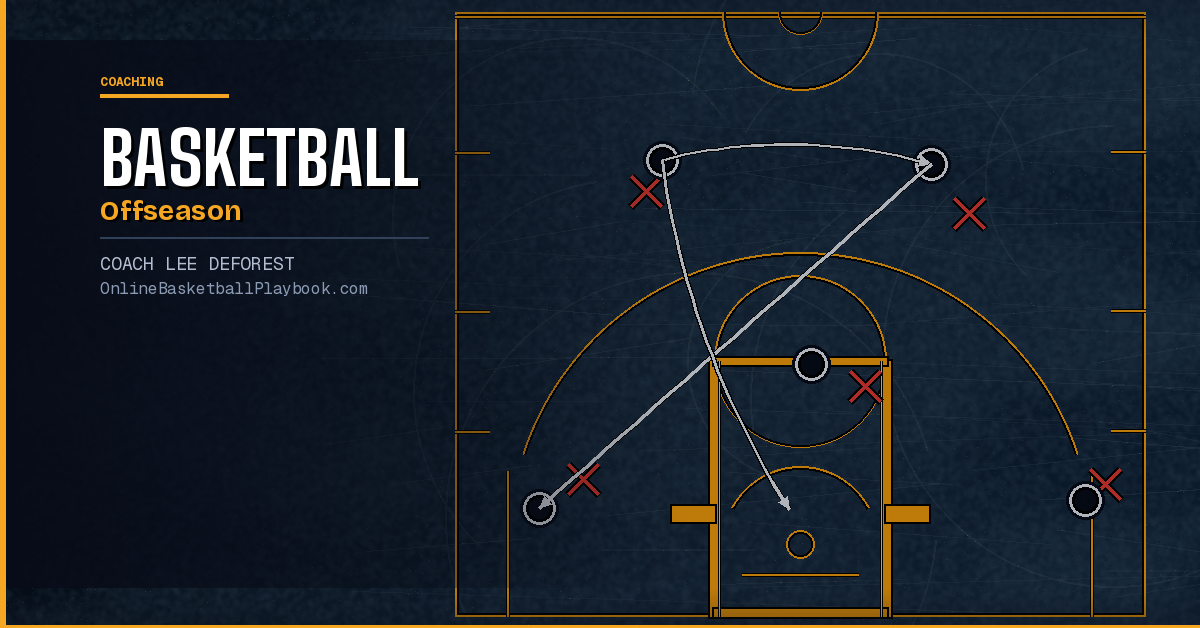
Basketball Offseason Development: What You Need to Know as a Player
Basketball Offseason Development: What You Need to Know as a Player
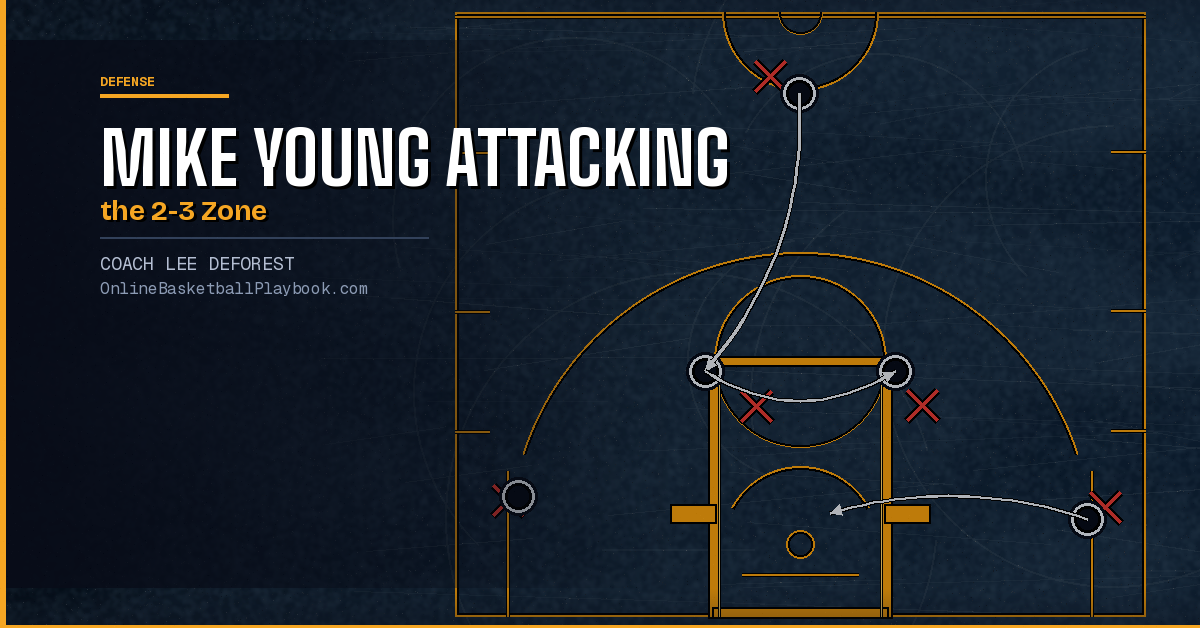
Mike Young Attacking the 2-3 Zone in Basketball
Mike Young Attacking the 2-3 Zone in Basketball