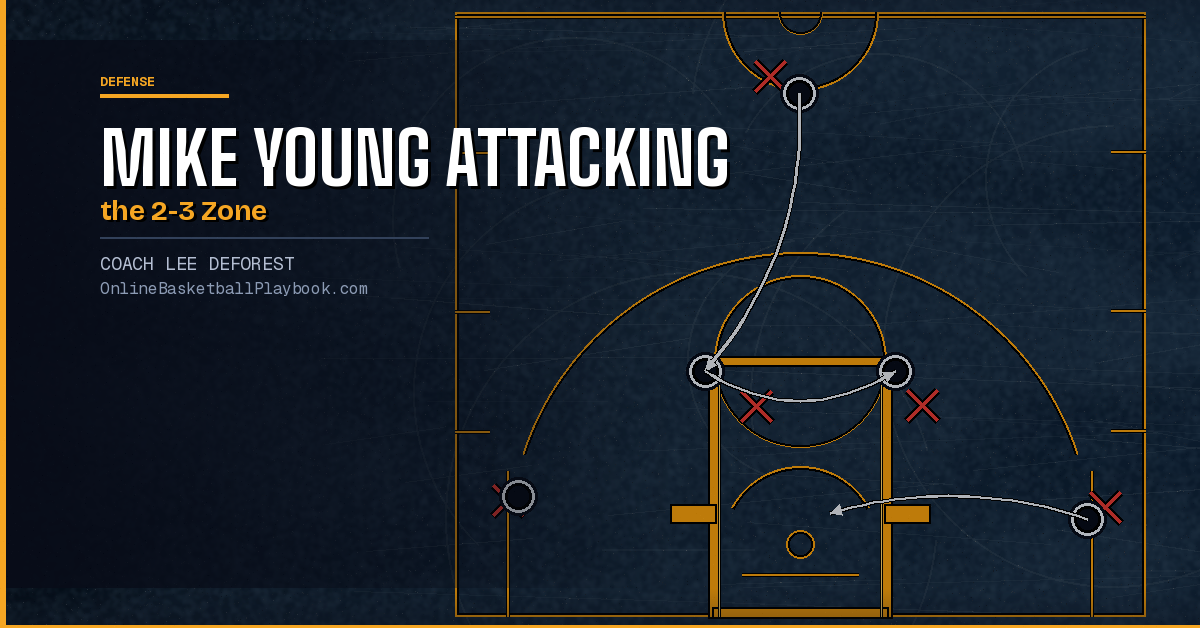

Mike Young's offense is built to punish the 2-3 zone. His system targets every soft spot — the high post, the corners, the short corner — with actions that force the defense into impossible choices from the first possession.
Why the 2-3 Zone Breaks Down Against Good Offenses
The 2-3 zone is the most common zone defense in basketball for one simple reason: it protects the paint and the rim better than any other alignment. Two guards up top, three across the baseline — the structure is designed to wall off a dominant interior player and clog driving lanes. Opponents who try to go straight at the basket usually come away frustrated.
But that protective strength is bought at a steep cost. The 2-3 concedes three specific areas that a well-organized offense can attack systematically: the corners, the high post at the elbow, and the short corner along the baseline. Mike Young's offensive system — developed during his years as an assistant under Tony Bennett at Virginia and then as head coach at Virginia Tech — is organized around exploiting exactly these three zones of vulnerability.
Understanding why these areas are soft requires understanding the geometry of the defense. The two top guards can't cover the wings and the high post simultaneously. The three back defenders can't cover both corners and the paint without leaving the short corner exposed. Every rotation that closes one gap opens another. Young's players are taught to read those rotations in real time and find the open man in the gap the defense just vacated.
The 2-3 also has a communication problem. Unlike man defense, where each defender has a single assignment, zone defenders must constantly identify who covers what based on where the ball is. Ball reversal and skip passes — two tools Young uses repeatedly — force rapid reassignments. When that communication breaks down for even half a second, one of the three soft spots is open for a catch-and-shoot attempt or an entry into the post.
Young's system doesn't try to overpower the 2-3. It out-thinks it. His players use patient ball movement, deliberate spacing, and well-timed cuts to stretch the defense until something has to give.
The High-Post Flash: Splitting the Defense in One Pass
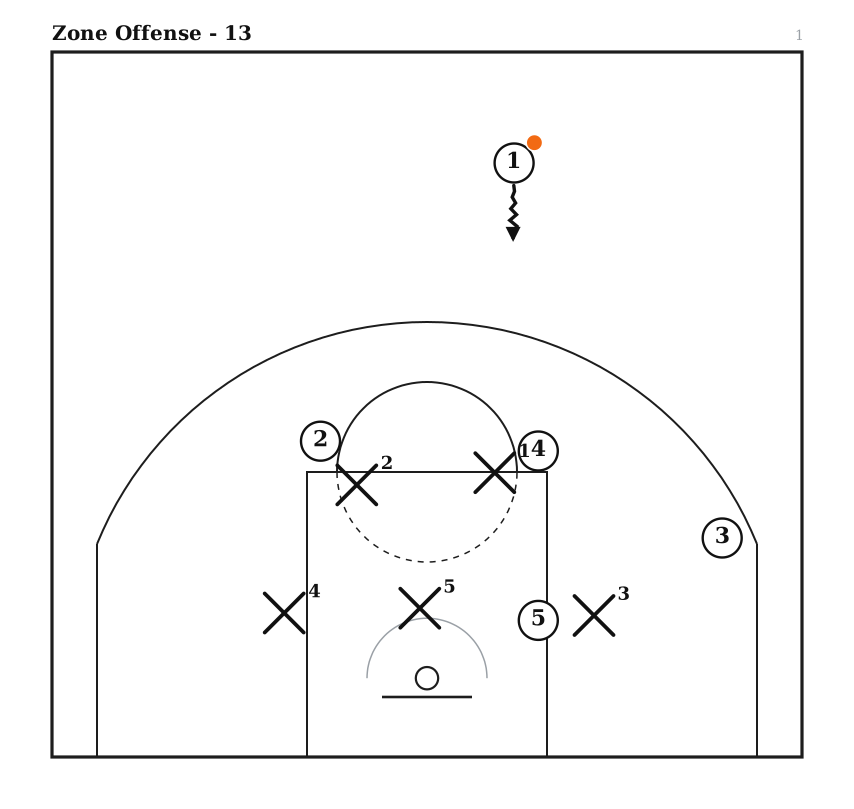
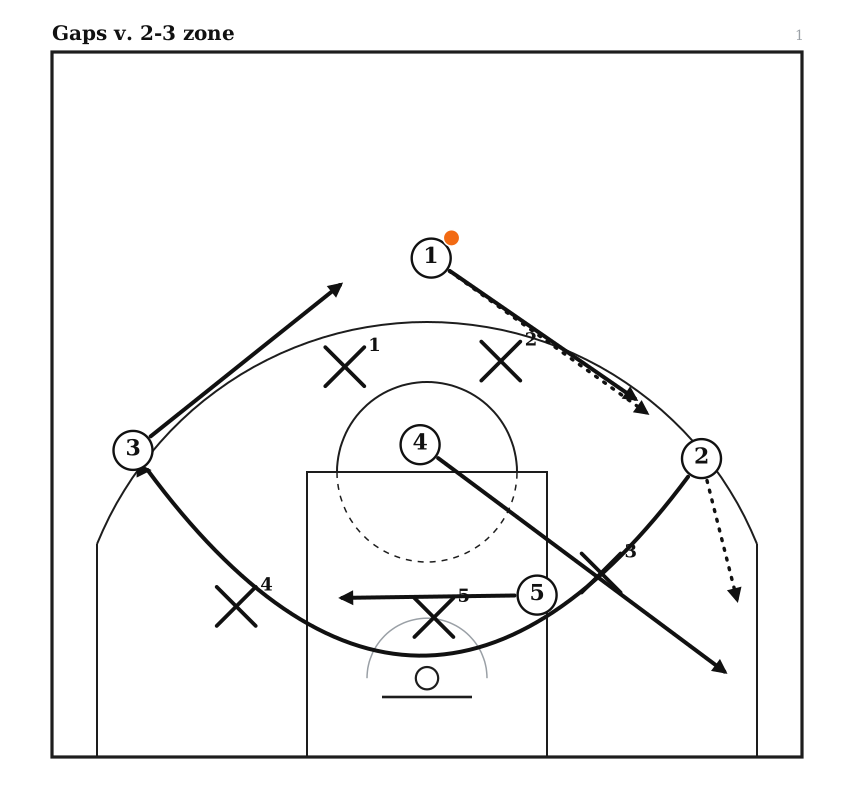
Ask any experienced zone coach where the 2-3 is most vulnerable, and the answer will almost always be the elbow — the high-post area at the free-throw line extended. A single pass to a player who catches cleanly in this area puts the entire defense in a scramble. The two top guards are beaten; the three back defenders are now in a 3-on-4 situation against a passer who can see everything.
Mike Young uses the high-post flash as a foundational action. He wants a skilled passer — often a stretch four or a guard with vision — to catch the ball at the high post while two shooters are spotted in the corners and a cutter is reading the baseline. When the defense sends one of its back defenders up to contest the high post, a corner becomes open. When no one comes, the high-post player has a free mid-range look or a direct driving lane.
The key detail in executing this action is timing. The flash has to happen before the top guards can recover. If the player drifts into the high post slowly, the guard will step up and deny the entry pass. Young emphasizes getting to the spot on the catch, not after the pass is already in the air. Players train this footwork in pre-practice repetitions until the timing is automatic.
Once the ball enters the high post, Young's corner shooters are instructed not to cut unless the defense collapses hard. Their job is to stand in their spots and be threats. The 2-3 cannot rotate to help on a high-post catch without giving up a corner three. Young understands this geometry and coaches his players to trust it — catch in the corner, feet set, ready to shoot the moment the ball comes.
The high-post flash also creates a secondary benefit that compounds over time during a game. Every time the defense has to account for the elbow entry, the top guards start cheating toward the middle. That gap creates easier skip passes to the weak-side wing later in shot-clock situations. Young uses the threat of the high post to open the skip; he uses the skip threat to soften the defense on high-post entries. Both actions reinforce each other throughout a game.
Corner Spacing and the Overload Skip
The 2-3 zone gives up the corners by design. The two wing defenders (the third and fourth spots in the alignment) are positioned at the free-throw line extended — not at the baseline — specifically to contest corner shots without having to sprint six feet. When a wing defender is caught even one step inside that position, a corner catch becomes an open three.
Young's spacing philosophy takes direct aim at this vulnerability. He wants shooters in both corners at all times when the ball is on the perimeter. This forces the wings to make a constant choice: stay home and risk a corner three, or sag off and allow easier high-post or mid-range opportunities. There is no good answer for the defense when the corner players are genuine threats.
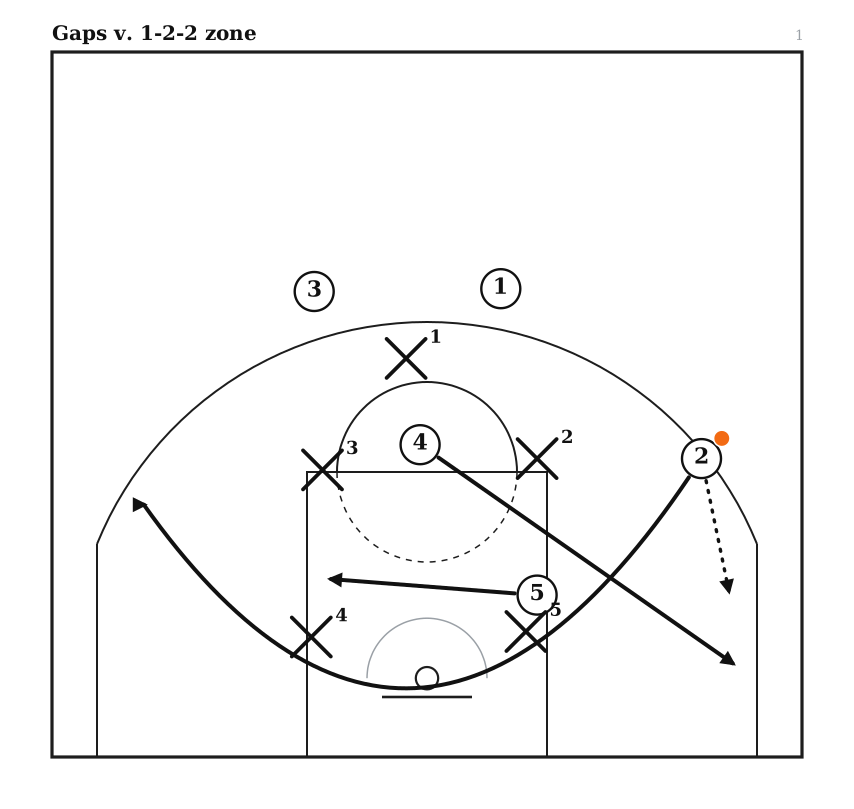
The overload skip is Young's primary tool for turning corner spacing into a concrete scoring action. The concept is straightforward: overload one side of the floor — three offensive players against two defenders — then skip the ball to an isolated shooter on the weak side who has just one wing defender rotating from the free-throw line extended. That closeout, covering fifteen feet in one second, is among the most difficult defensive assignments in basketball.
Executing the overload skip correctly requires two things that Young emphasizes relentlessly in practice. First, the skip pass itself must be crisp and well-timed — a slow or lofted pass gives the wing defender time to recover. Second, the receiver must be ready to catch and fire without an extra dribble. Any hesitation allows the closeout to arrive on time. Young's players drill catch-and-shoot out of the skip position hundreds of times, building the muscle memory to shoot on the catch automatically.
The corner spacing also creates advantages for ball-handlers driving off the dribble. When the corner players are credible shooters, the back line of the 2-3 cannot sag toward the paint to help. That keeps driving lanes open longer and puts real pressure on the center of the zone — the back-line defender who is supposed to anchor the entire defense.
The Short Corner: Where the 2-3 Has No Answer
The short corner — the area along the baseline between the block and the corner, roughly twelve to fifteen feet from the basket — is the most overlooked soft spot in the 2-3 zone. It falls between the responsibilities of the wing defender and the center. Neither owns it cleanly, which means a player who catches there has a decision window before help arrives.
Young uses deliberate short-corner actions to create what he calls "decision overload" for the back line of the zone. When the ball enters the short corner, one of two things will happen: either the center steps out to contest, which opens the paint for a backdoor cutter, or the center stays home, which gives the short-corner player an open mid-range jumper or a driving angle that isn't blocked.
The short-corner action typically begins from a post entry or a baseline drive that kicks to the corner. Young's players are coached to read where the center is positioned before making the entry. If the center is close to the paint, the short corner is open immediately. If the center has stepped toward the corner, the back-door cut off the baseline is the read.
What makes the short corner particularly effective for Young's system is that it compounds the high-post action. A defense focused on denying the high-post flash tends to leave the back-line center anchored toward the elbow. That shift opens the short corner and the baseline. Young cycles through both threats during a game, watching which one the defense is leaving, and calling the action that hits the open spot.
The personnel requirement for short-corner actions is a versatile forward or guard who can catch on the move, make quick decisions, and finish from the mid-range. Young has consistently recruited players with this profile specifically because the short corner is such a reliable source of quality looks against zone teams.
Ball Reversal and Wing Bump Exploitation
Ball reversal — moving the ball from one side of the floor to the other in two or three passes — is one of the oldest tools for attacking zone defense. The 2-3 must shift its entire alignment on reversal, and if even one defender is half a step slow, a shot opportunity opens. Young's system uses deliberate, high-tempo reversal to wear down the zone's communication and create those half-step breakdowns.
The wing bump is the specific defensive technique that strong 2-3 teams use to handle skip passes and reversals. When a skip pass travels from one wing to the other, the receiving wing defender is supposed to stunt with the outside foot and outside hand high — a technique designed to deter the driving lane and still cover any follow skip to the corner. It is an excellent technique when executed correctly.
Young exploits the wing bump by training his players to attack immediately after the stunt. The wing bump is a split-second commitment by the defender — outside foot planted, outside hand up. In that moment, the driving lane baseline actually opens behind the defender's weight. A player who catches on the wing and immediately attacks the baseline before the bump fully recovers can get to the nail or the short corner in two dribbles.
This is an advanced read, and Young builds it gradually. Early in a season, his players simply learn to reverse the ball and find the corner three off the skip. As the season develops and players read defenses more fluently, he adds the secondary read: if the wing defender overcommits to the bump, drive baseline.
Young also uses the reversal to set up the overload on the next possession. After two or three reversal-and-skip sequences where his players simply shoot the corner three, the defense begins to anticipate the skip. That anticipation is exactly when Young calls the short-corner action or the high-post flash — using the corner threat he has established to open the interior reads he wants.
Attack Before the Zone Sets: Early Offense Principles
Mike Young is explicit about one principle above all others when facing a 2-3 zone: attack it before it sets. A 2-3 zone in transition — with the back line still scrambling to their baseline positions — is dramatically easier to score against than a fully organized, set zone. Young's teams push the pace off both makes and misses specifically to get the ball across half-court before the three baseline defenders are in their spots.
Early offense against the zone starts with the outlet pass. Young's players are drilled to make a quick, accurate outlet after a defensive rebound and push immediately. The point guard's job is to make a decision at the arc before the zone is set: if there is a clear lane to the rim, take it. If the two top guards are back but the bottom three are still sprinting, attack the high post immediately off a one-pass set. If all five are back, reset into the half-court zone attack.
The push also creates a secondary benefit. Zone defenses that must repeatedly sprint back into position become fatigued. The physical and mental cost of setting the zone after a fast outlet pass — every single time down the floor — begins to accumulate by the third quarter. Young's teams are specifically conditioned to maintain pace for forty minutes, knowing that their conditioning is an offensive tool against zone teams who prefer a slower half-court game.
When the defense does beat the outlet and gets set, Young's transition offense flows directly into his zone sets without a separate call. Players know their zone-attack spots and move into them automatically. This continuity — no pause, no obvious reset — keeps the defense from getting a breath and re-calibrating between sequences.
Putting It All Together in Practice
A common mistake coaches make when preparing zone-attack material is treating each action as separate: "Today we do high-post flash. Tomorrow we do corner spacing." Young's approach is the opposite. He teaches his zone attack as a read progression — a set of connected decisions that players make in real time based on what the defense gives them.
The progression starts with the most fundamental read: is the high post open or denied? If the top guards are cheating toward the elbows, the skip pass to the corner is the first option. If the guards are spread and the elbow is open, the high-post flash is the first option. Players make this read before the first pass of every possession against zone.
Once that first decision is made, the next read is automatic. High-post catch → find the corner, find the backdoor, or shoot the mid-range. Corner catch off the skip → shoot if the closeout is late, drive baseline if the wing bumps hard, skip again if the defense scrambles. Short-corner catch → read the center's position, shoot or find the backdoor cutter.
Young runs 5-on-5 zone attack daily in the pre-season, using teaching stoppages to reinforce the correct reads. He is not teaching plays — he is teaching decision patterns. The goal is that every player on the floor can identify the open spot against a 2-3 zone without a set call, without a signal from the bench, and without hesitation.
Scrimmage against zone is complemented by daily 3-on-0 and 4-on-0 zone-attack walkthroughs where players narrate their reads aloud as they execute. This verbal reinforcement builds the decision-making vocabulary that players need in game situations when there is no time to think consciously. The corner skip, the high-post flash, the short-corner drive — these become pattern responses, not calculated decisions.
Young also schedules regular practice against aggressive zone variants — Tandem 2-3 alignments, zone-to-man conversions, and 2-3 with trapping elements — so his players are not surprised by anything they see in a game. A team that has faced the most aggressive version of the 2-3 in practice handles the standard version with calm confidence. That composure, more than any specific set or action, is the ultimate product of Young's zone-attack system.
The elbow and the high-post area is the 2-3 zone's most exploitable soft spot: a guard-to-high-post entry can split the entire defense in one pass, leaving four defenders scrambling against a passer who can see every corner and every cutter simultaneously.
— Two-Three Zone Concept, Basketball Vault
Run your zone-attack reads in 4-on-0 walkthroughs every day with players narrating their decisions aloud. When a player can say "top guards are split, high post is open, I flash to the elbow" before the pass arrives, that decision is fast enough to work in a real game against any 2-3 zone you will face.
- Flash the high post before the entry pass: get to the elbow on the catch, not after — a slow flash gives the top guard time to recover and deny the entry altogether.
- Put shooters in both corners every time: the 2-3 wing defenders cannot close out from the free-throw line extended to the corner and protect the paint at the same time — make them prove they can do both.
- Attack the short corner to create paint touches: when the center steps to the short corner to contest, the backdoor lane opens — read the center's position before making the entry pass, every time.
- Push the outlet immediately off every rebound: a fully set 2-3 is far harder to attack than a scrambling one — getting the ball over half-court before the back line is in position creates the easiest scoring opportunities of the game.
- Use the overload skip to build corner-three frequency: once the defense starts anticipating the skip and cheating toward the corner, the interior reads — high post, short corner, backdoor — open up for the rest of the game.
- Teach reads as a connected progression, not isolated plays: players who understand the decision chain (high post vs. corner vs. short corner) can attack any 2-3 variant without a set call from the bench.
Want more basketball coaching strategies, drills, and tools?
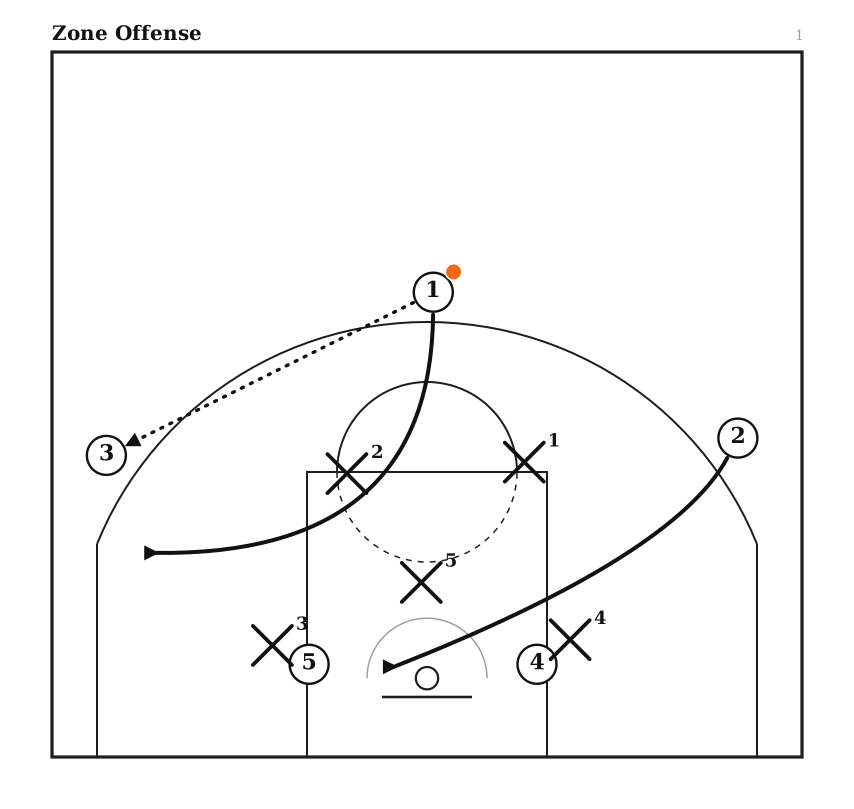
See it drawn up
Related diagrams
Keep Building
Related breakdowns
Mike Jarvis on 40 Years in the Game of Basketball
Mike Jarvis on 40 Years in the Game of Basketball