
Guards win games when their decisions are faster than the defense. These drills build exactly that — shooting off the catch, finishing through contact, reading live defenders, and making the right play under pressure.
Footwork: The Foundation Before Everything Else
Most coaches jump straight to shooting. The guards who develop fastest, though, start with footwork — because a guard whose feet aren't ready can't make the shot even when they're open. Krause, Meyer, and Meyer's individual skill framework builds every perimeter drill on one core principle: the hop-from-basket-side-foot quick stop. Master that footwork pattern and every catch-and-shoot rep, every dribble pickup, every pull-up becomes consistent instead of improvised.
The daily warm-up sequence — called the Field-Goal Progression — runs in this order:
- Slams — form shooting from the paint, reinforcing the upward release
- TV Shooting — lying on your back, shooting straight up, building arc muscle memory
- Form shots — from 4–6 feet, one hand, perfect mechanics only
- Hays Footwork Drill — elbow-to-elbow self-pass with a hop stop, simulating a catch-and-shoot footwork pattern from every angle
- Shots from pass — a partner or machine feeds while the guard practices stepping into the shot
- Shots from dribble — pull-ups and step-backs off one or two dribbles
The Hays drill is especially underused at the high school level. Repeating that elbow-to-elbow self-pass with the correct hop footwork — not a two-step gather, not a traveling-risk shuffle — trains the exact movement pattern a guard needs when catching off a screen or a swing pass. Run it at every position on the arc before adding a ball or a defender.
One non-negotiable across all guard footwork work: form precedes speed. A coach who lets a guard get to speed before the footwork is correct is just automating bad habits at higher velocity.
Guard Shooting Drills That Build Real Game Reps
The best guard shooting drills share one trait — they replicate the conditions of a game shot, not just the shape of one. That means game spots, game footwork, game speed, and ideally a score attached so players compete rather than coast.
Olympic Shooting
The guard starts in the corner and works around five or six spots on the arc — catch, set feet, shoot. The rule: lock and load, meaning feet are squared and the hands are in shooting position before the ball arrives. Guards who catch and then set their feet are a half-second late in games. This drill burns in the ready-before-the-catch habit at every spot.
Five-Spot Shooting
Similar structure to Olympic, but adds a scoring target — make 3 in a row at a spot before advancing. The competitive pressure changes the drill. Guards feel the difference between coasting through reps and actually needing to make consecutive shots. Add a time cap of 6–8 minutes and the conditioning element arrives naturally.
Pairs / In-and-Out Shooting
Two guards, one ball. One shoots, one rebounds and outlets. Continuous movement — all shot types from all spots. The "Beat the Star" variation adds a competitive layer: the pair tries to beat a target score in 90 seconds. This drill does double duty — it builds shot volume and forces guards to move without the ball between shots, which mirrors actual game movement.
3-Guy-2-Ball / 4-Guy-3-Ball (Oats / Alabama)
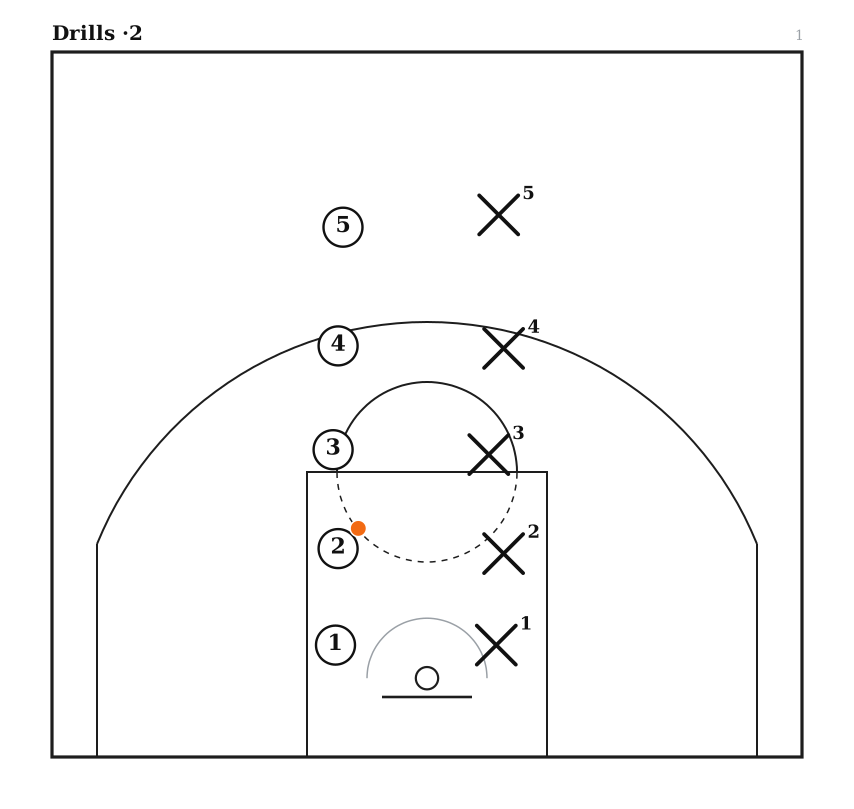
Multiple guards working simultaneously, shot at game speed, behind the three-point line or the NBA arc. The catch happens in a ready position — the ball is coming fast, and the guard must be squared before it arrives. Add one-dribble pull-up variations as a second look. This drill is scored: made threes count up, and anyone who holds the ball or catches flat-footed costs the group reps. Alabama runs it timed, and players keep score themselves.
Two-on-One Shooting (Oats)
One guard shoots; a second guard contests the second shot. The shooter must attack off the miss — no watching, no waiting. This drill trains two guards at once and builds the competitive mindset that winning teams need: every offensive possession continues until a make or a live stop, not a casual miss.
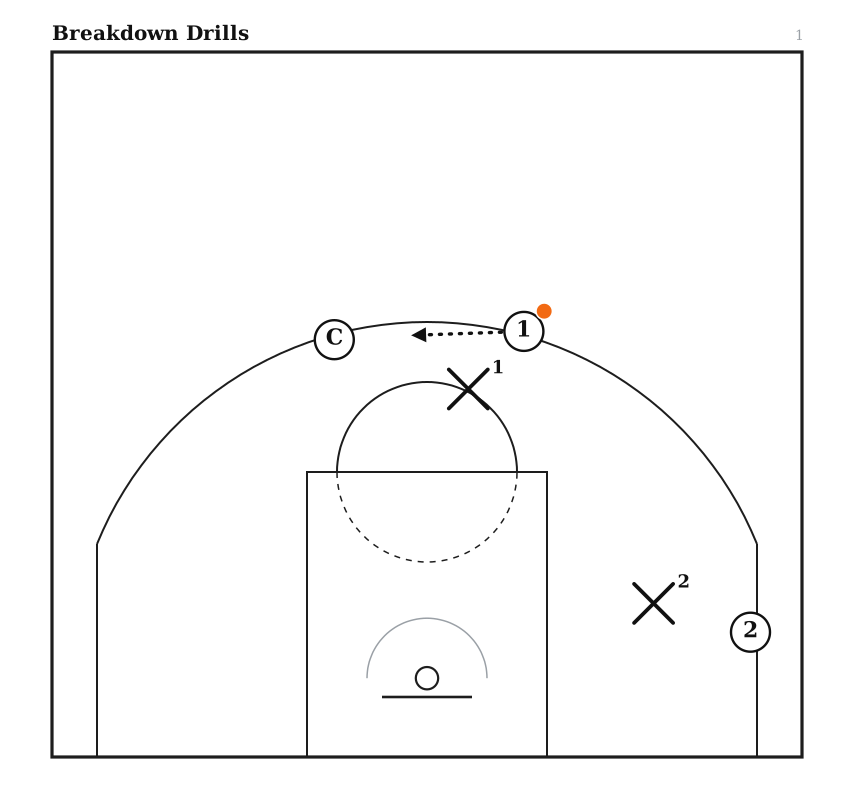
Each drill enforces a single decision or skill, not the whole offense — isolate one read per drill, constrain to coach the diet, and progress to whole only after the parts are owned.
— Offensive Breakdown Drills, Basketball Vault
Finishing Drills: Both Hands, Both Sides
A guard who can only finish with their strong hand on the right side is half a guard. Defenders know it. Help defenders shade hard because the left-hand finish — or the reverse — isn't real. The drills in this section fix that by building both-sided finishing at game speed, under fatigue, through contact.
Layup Progression Shooting
This drill starts without a ball. The guard runs the footwork pattern — two steps, plant, push — on each side before a ball is introduced. Then: carry (walk-through with ball), one-line dribble-in from three feet, two-line from further out, dribble-chase pairs (guard chases a rolling ball and finishes), and finally timed team layups with four passers. The no-ball start is where most coaches lose patience. Don't skip it — the footwork pattern trains faster without the ball's cognitive load.
X-Layups
Two guards start at opposite blocks. They cross paths at the lane line, receive a pass, and finish on the opposite side. The crossing forces both hands and both sides in rapid succession. Run it at full speed — any guard who doesn't sprint the baseline between reps isn't simulating real game conditions. Add a score: 20 makes in 90 seconds as a team.
Crack Back
The guard sprints to a touch point (baseline, elbow, or arc depending on the drill variation) and then cracks back toward the basket. The passer leads the guard to the inside shoulder on the cut back. The finish can be a layup, a power move, or a pull-up depending on where the imaginary defender sits. This drill trains the crack back cut — one of the most practical cuts in motion offense — and finishes with a live decision rather than a predetermined shot.
Chase Drill
The guard catches a ball thrown ahead of them on the full court and must finish through a contest (a coach, a pad, or a trailing teammate) or do pushups. The rule is simple: if you don't finish through contact, there's a consequence. Coaches who skip the consequence watch guards ease up at the rim. The consequence is what makes the drill competitive.
Decision Drills: Teaching Reads, Not Routes
The difference between a guard who knows the play and a guard who reads the game is built in practice. Drills that install routes produce guards who hesitate the moment a defender takes away the first option. Drills that install reads produce guards who find the open man automatically. Here is how to build the second kind.
1-on-1 Decision Reads (Hanlen Framework)
Start with one defender and one clean read — getting open off a cut, veering off a ball screen, or attacking a downed screen. Once the guard owns that read against one defender, add the second defender who changes what the read should be. The progression matters: the second defender doesn't just make the drill harder, the second defender changes the correct decision. Guards who skip to two defenders before owning the single-read end up forcing the first option regardless of what the defense gives.
Two-on-One Advantage Reads
A guard and a teammate run a corner stunt, a short roll read, or a trailer action against a single defender. The drill isn't about scoring — it's about the guard finding the advantage and attacking it before the defense can recover. Drew Hanlen's 38-drill bank supplies a complete ladder of these reads: corner stunts, post digs, baseline help rotations, and DHO reads at the arc. Each drill starts with an engineered advantage and requires the guard to identify and attack it in real time.
Guided Defense (Sarama)
The coach controls the defender's starting position — ball on the defender's outside hip gives a baseline drive, inside hip gives a middle drive. The defender must hi-5 the coach to release, which controls the size of the advantage. Run each scenario three times in a row so the guard experiences the read as trail, cut-off, and neutral before the defense changes. This "repetition without repetition" builds pattern recognition faster than any amount of repeated 5-on-5 scrimmage.
No Paint / Paint Game Constraint Drills
In No Paint, driving into the lane earns a turnover. In the Paint Game, a score only counts if it came from inside the paint. Both constraints force guards to find specific looks — spot-up threes and skip passes in No Paint, drive-and-kick completions and finishes in Paint Game. Constraint drills are one of the cleanest tools in basketball coaching: the constraint does the coaching without the coach stopping play every possession.
Ball-Handling and Penetration Drills
Guards who can't handle pressure can't operate the offense. These drills build the ball security and change-of-direction ability guards need to create off the dribble consistently.
12-Second Drill
The guard handles the ball — combination dribbles, change of direction, between the legs, behind the back — for 12 seconds against a pressing defender (or a coach with a pad). The rule: no travels, no loses. The 12 seconds are timed and scored. A clean 12 seconds earns a point; a turnover costs one. Run for five rounds. Short enough to keep intensity high, scored enough to keep guards honest.
Dribble-Weave vs. Human-Cone Coaches
Guards weave through coaches acting as stationary defenders — holding pads, sliding into angles, varying their positioning. Unlike cone drills, human cones can shift and surprise. Guards must change pace and change direction in response to a real body rather than an orange marker. The drill doesn't need full-speed defense to be effective; the unpredictability of a moving human obstacle is enough to train real adjustment.
Partner Penetrate and Pitch
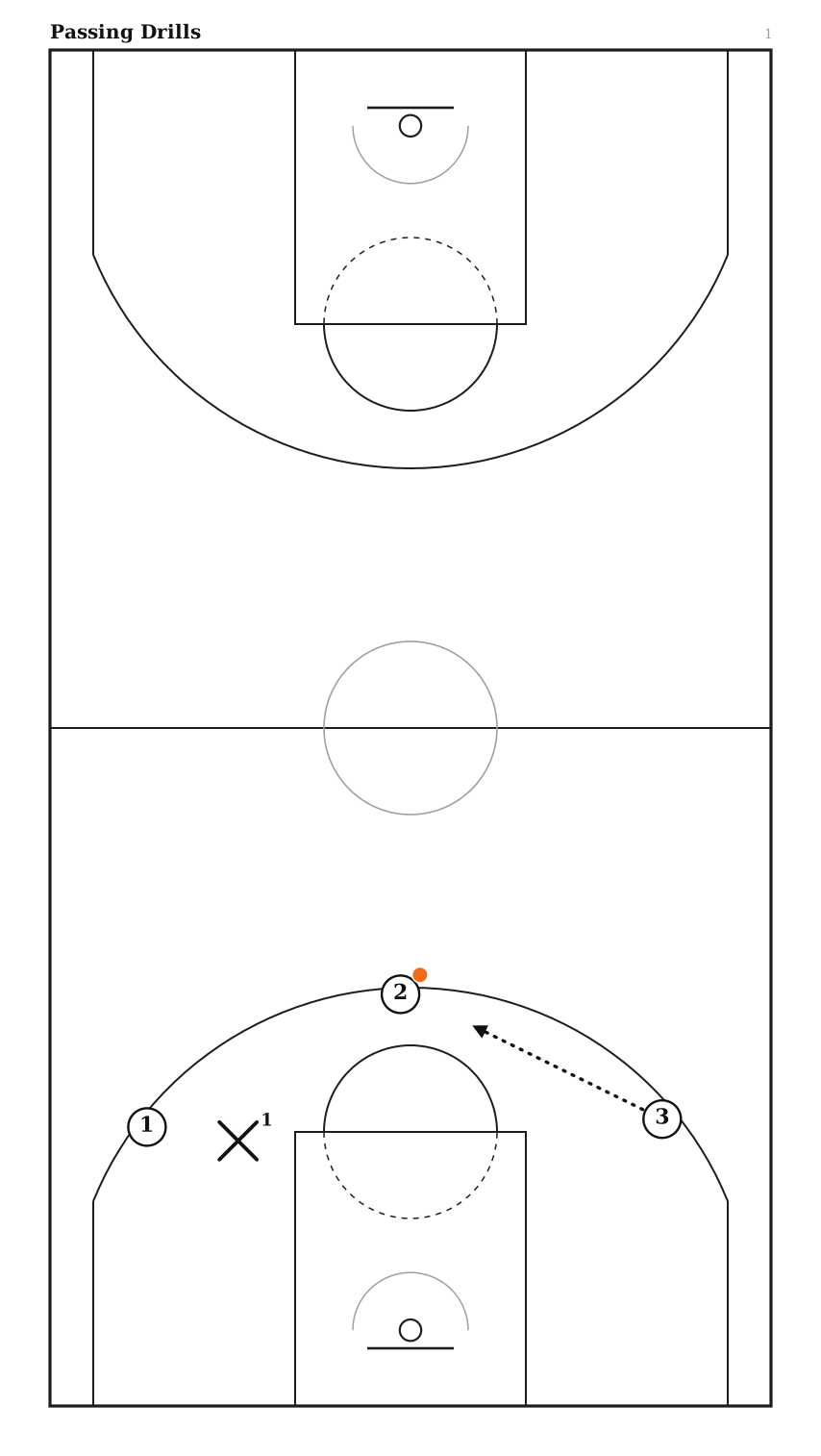
Two guards, 20–25 feet apart. One drives live — one dribble, attack the angle — and pitches to the partner at the guard-forward release angle or the baseline release angle. The partner catches in a ready position and shoots immediately. This drill builds the drive-and-kick chain that any motion offense depends on. Run it from both sides and from multiple starting angles on the arc.
Outside Moves Using a Spin Pass
The guard uses an underhand self-pass — tossed slightly forward and to the side — to simulate receiving a pass on the move. From that rolling-ball catch, the guard practices every perimeter move in sequence: catch-and-shoot, catch-and-drive, pull-up, shot fake plus drive. Solo reps with no defender build the physical pattern before any live pressure is added. This drill is high volume, low friction, and can be run by a single guard without a passer.
When you introduce ball-handling drills to your guards, resist running them in lines — standing-still handle reps don't transfer to games nearly as well as the same handles done while moving, reacting to a defender, or finishing with a shot. A guard who can cross over beautifully standing still but loses the ball under a press hasn't truly developed the handle. Move from stationary reps to space-and-finish reps as quickly as good form allows.
Two-Man Drills With a Read Built In
Two-man drills are the backbone of guard development — they give both players meaningful work at the same time, they include a real decision, and they build chemistry between backcourt partners. The best ones are designed so that the decision changes the correct action, not just the degree of execution.
Circle Drill (Hubie Brown)
Guard 1 rebounds a make, outlets to Guard 2 at the arc, and curls to attack the junction — the spot where the guard-forward lane meets the lane line. Guard 1 jump-stops and delivers a bounce pass. Guard 2 cuts to the basket for a layup. Add a defender on the passer and the drill immediately becomes a decision: does Guard 1 pass to the cutter, or does the defender take that away and Guard 1 must keep the ball? Hubie's rule applies: every drill ends with a make — not a missed assignment, not a reset, a made shot.
Screen-and-Roll Pairs (Livsey)
One guard sets the screen; the other guard comes off and reads — shoot off the screen, attack the hedge, or skip to the roller. The screener rolls immediately on contact, reading whether to go to the rim or pop to the arc. Rotate after every pair of reps. The drill builds both the ball-handler read and the roll-man timing simultaneously, which 5-on-5 rarely isolates cleanly enough for either guard to master the skill on their own.
Pairs Shooting with Make-It-Take-It (Hubie Brown)
Eight game spots around the arc. The guard catches in a ready stance — already in shooting position before the ball arrives — shoots, and if they miss, they rebound and finish. If they make it, they keep the ball for the next spot. The competitive wrinkle: guards track their own make streaks. Longest streak in the session is posted. A guard who gets to seven in a row is replicating the same pressure as late-game shot-making, one drill at a time.
Putting It All Together: How to Structure Guard Workouts
The principle behind the best guard development programs is the same: install skills in isolation before adding a defender, add the defender only after the skill is owned, then connect two or three actions so the guard must keep playing after the first option disappears.
A practical 45-minute guard breakdown session looks like this:
Minutes 1–10 — Footwork and Form (no live defense)
Field-Goal Progression: slams, TV shooting, form shots, Hays footwork drill. This is not optional warm-up — it is the skill install for the session. Guards who skip it are building every subsequent drill on shaky footwork.
Minutes 11–20 — Shooting at Game Speed
Olympic Shooting or Five-Spot to build catch-and-shoot reps. Swap in 3-Guy-2-Ball if you have enough guards. Score it. Guards who aren't competing aren't adapting. Run the Pairs drill if you only have two guards available — it keeps both moving constantly.
Minutes 21–30 — Finishing Drills
X-Layups for both-sided volume, then Crack Back for the decision-finish combination. Use the Chase Drill if there's a coaching staff member available to contest. No finishing drill should end without a made basket — Hubie Brown's rule is the right rule here too.
Minutes 31–40 — Decision and Read Drills
Start with 1-on-1 single reads (get open, attack the angle), then progress to 2-on-1 advantage reads. Use Guided Defense if you have a coach available to control the defender's position. Add a constraint drill — No Paint or Paint Game — to close the segment with live competitive reps.
Minutes 41–45 — Two-Man Finishing
Circle Drill or Screen-and-Roll Pairs. End the session with a made basket on the final rep — every drill, every day, ends with a make. It conditions the mind to finish rather than coast through the last possession.
The full Livsey simultaneous-shooting battery — Backpedal, Pepper, Long Elbow, Crack Back — is ideal as a pre-scrimmage shooting segment when you have 8–15 guards working at the same time. Every guard catches a pass, every guard shoots, no one stands in line. Run it for 5 minutes before any 5-on-5 segment and you double the shooting reps in a practice without adding time.
Finally: measure something every session. Make percentage by spot, consecutive makes, drive-and-kick completion rate, clean 12-Second Drill rounds — it does not matter which metric you choose as much as that you choose one. When guards see a score, they compete. When they compete in practice, they compete in games. The score makes the drill real.
- Footwork before shooting, every session: run the Hays Footwork Drill at every arc spot before your guards take a single live-game rep — the hop-from-basket-side-foot pattern is the foundation every catch-and-shoot depends on.
- Score every drill: track makes, consecutive makes, or drive-and-kick completions so guards compete rather than coast — unscored drills are conditioning, not skill development.
- Both hands, both sides, every session: run X-Layups or Layup Progression Shooting daily — a guard who only finishes right-handed is defending themselves by the time they reach varsity.
- One read per drill, then connect actions: install the single-read (get open, attack the angle) before adding the second defender that changes the decision — guards who skip to live 5-on-5 before owning the part-drill default to their first option regardless of coverage.
- End every drill with a make: never end a finishing drill, a two-man drill, or a shooting circuit on a miss — the final made basket conditions guards to finish possessions rather than drift through the last rep.
- Use constraints to coach without stopping play: No Paint, Paint Game, and mid-range-as-turnover rules shape shot diet and spacing decisions without a single blown whistle — the constraint does the coaching so you can watch and evaluate instead.
Want more basketball coaching strategies, drills, and tools?
See it drawn up
Related diagrams
Keep Building
Related breakdowns