Most full-court presses don't beat you with athleticism. They beat you with panic.
A press wins the moment your team speeds up, picks up the dribble, and throws the ball to a color that isn't theirs. So the fix isn't a dozen press breaks for a dozen presses. It's one alignment your players can run in their sleep, plus a handful of habits that hold up no matter what the defense throws at them.
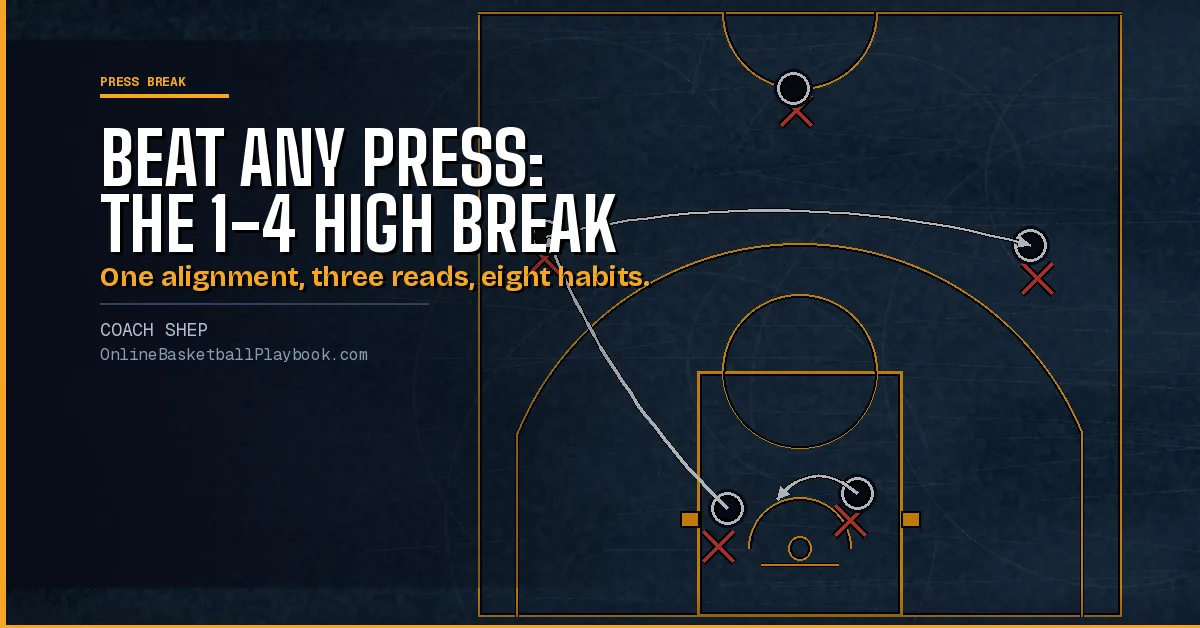
That alignment is the 1-4 high: four players spread across the floor level with the free-throw line, one inbounder. Here's why it travels against anything.
Why the 1-4 beats any press
- It reads the same against man and zone. There's no "is this man or zone?" call to blow on the baseline, so your players line up one way and play.
- Bringing everyone high pulls the defense's back-side help up the floor. No free safety sitting back to pick off the long pass.
- It makes slow bigs guard in space. A post who wants to hang back and trap now has to chase a cutter the length of the floor.
- Breaking a player from up high is harder to guard than parking him deep all game. A moving target beats a stationary one.
- It bends to your roster. Same skeleton, different reads, whatever your personnel.
Less is more. One alignment learned cold beats six you only half-know.
Three looks off one alignment
You don't change formations. You change what you do once the ball is in.
Against zone pressure
Space it sideline, middle, reverse. The trapped handler always keeps three honest outlets: up the sideline, back to the middle, or a reversal across the floor. Your fifth player fills the deep diagonal so there's always a long, safe release waiting.
Against man pressure
Screen. The 5 can screen for the 1 to spring the inbounds, or each receiver screens his own man. Against a switching team, screening your own defender is gold. After the switch your quick guard is matched on their slow post. Now go.
Against extreme denial or face-guarding
Walk all four receivers down to the baseline. It shortens every passing lane at once and lets your inbounder read the one defender playing centerfield.
Eight habits that win the press
Plays don't break presses. Habits do. Teach these until they're automatic:
- Screen and seal when you're denied.
- Screen your own man against switching teams.
- Run the baseline after made baskets. Don't stand and let them set the press while you wait.
- Space sideline-middle-reverse, the anti-trap law.
- Ball-fake the jumpy defender before you pass.
- Beat the trap with the pull-back dribble: turn your shoulders, chin to your top shoulder, big push-steps back, and teammates come back to the ball to shorten the pass.
- Play with your eyes up.
- Score early or late. Attack for a layup, never a rushed long three.
The pull-back dribble, with teammates coming back to the ball, is the most coachable anti-trap sequence you'll teach all year.
The mindset: score, don't survive
Here's the part most teams miss. The goal of press offense isn't to advance the ball. It's to score. A team that's happy just to cross half-court is exactly what a press is built to feed on. Being content to advance is what emboldens the trap.
Flip it. Attack the press looking for a layup first. If it's there, take it. Nothing deflates a pressing team faster than giving up an easy bucket off their own press. If it's not there, then flow into your half-court offense. Score early or late, but go in looking to score.
Teach the 1-4, drill the eight habits, and your team will stop coughing the ball up against pressure and start making teams pay for pressing you. I promise the panic goes away once they trust the alignment.
Keep Building
Related breakdowns
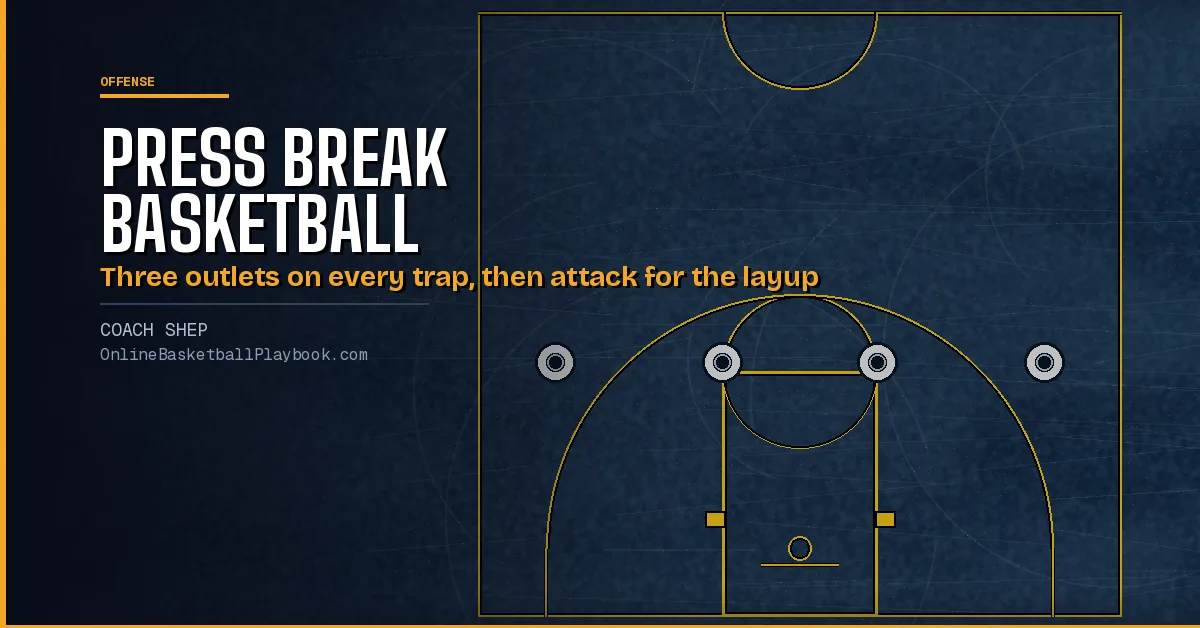
Press Break Basketball: Alignments, Reads and Drills
Press break basketball guide with the 1-4, 80-60-40 and 4-across alignments, reads against the 2-2-1, diamond and 2-1-2 press, and where coaches disagree.
More from Online Basketball Playbook
Basketball Pace & Tempo Strategy
After you beat the press, control the tempo so they can’t reset and press again.