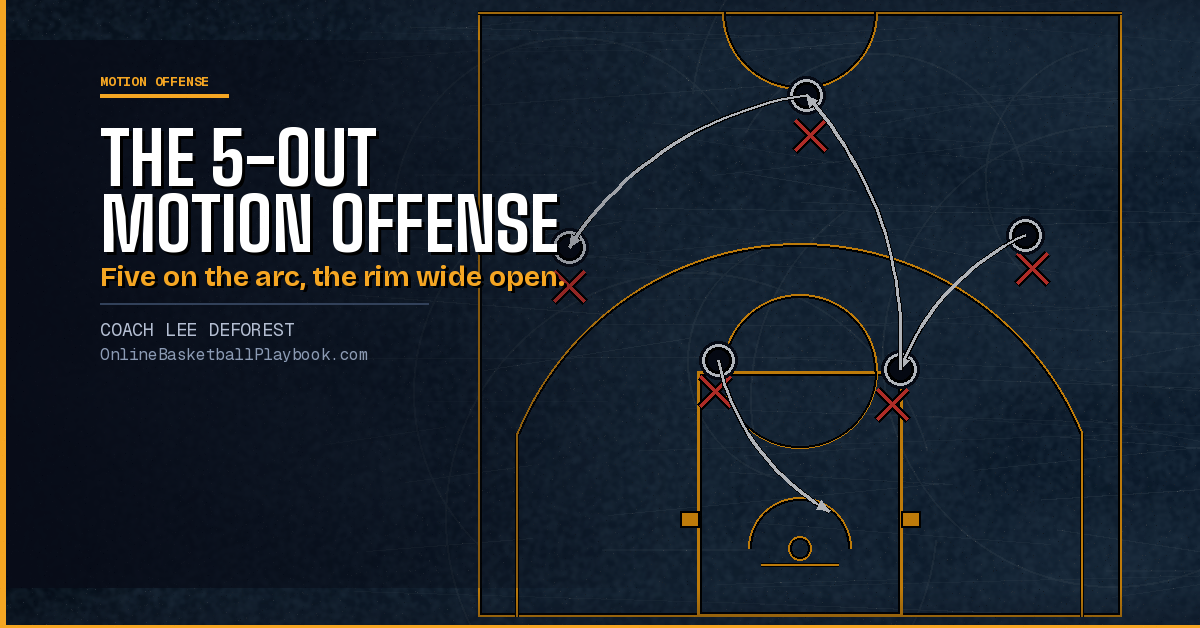
The 5-out motion offense does one thing better than almost any system you can run: it teaches your players to play basketball instead of run plays. There are no set calls to memorize, no rigid slots that break down when the wrong player subbed in. There are five spots, a handful of rules, and a read. The defense decides what the offense does, not the coach. That's a hard idea to trust the first time you install it — but once you see your players making decisions on their own, you'll understand why coaches like Harry Perretta built their whole program around it.
Picture this. You're on the road, your best player just picked up his third foul, and your backup point guard — a kid who has maybe played forty minutes all season — checks in. In a play-heavy system, that's a problem. In a 5-out motion offense, he walks onto the court and he knows exactly what to do: fill one of five spots, pass, and cut. The reads don't change because the lineup changed. The system holds even when the personnel doesn't. That is the most underrated thing about running motion with young players.
This guide covers everything: what the 5-out is and why it develops players, the spacing rules that make it work, the four core actions your players need to know, how to teach it layer by layer, the quick-hitters and specials you can bolt on once the base is built, the real weaknesses you need to plan around, and the drills that tie it all together. Take your time with the foundation. The system rewards patience.
What the 5-out motion offense actually is
Start here: all five players begin every possession spread outside the three-point arc. No one is posted up. The lane is empty on purpose. Two players occupy the corners, two are on the wings, one is at the top of the key — those are the five spots, and your players are responsible for keeping them filled throughout every possession.
This is a read-and-react offense, not a play-call system. When the player with the ball passes, something happens — he cuts, he sets a screen, or he changes the angle with the dribble. The receiver reads what happened and responds. The next pass triggers the next read. Harry Perretta, who built Villanova's women's program around this system for decades, called his version the "No Mistake" offense — not because players never make errors, but because the offense has no technical mistakes built into it. When everyone follows the reads, someone is always open somewhere.
The name of the game is spacing. Five players outside the arc pull shot-blockers, weak-side helpers, and rim protectors away from the basket. Every cutter goes into a completely open lane. That's not accidental — it's the entire architecture of the system.
Why it's the right offense for development
Run a motion offense and you're teaching the game. Run a play-call system and you're teaching your plays. Those are two very different things, and the difference compounds over time.
In the 5-out, every possession demands that players catch the ball with their head up, read a defender, decide to cut or screen, and then communicate. They learn spacing by feel — the first day a player instinctively slides out to fill a vacated spot, you'll know the concept landed. That habit of keeping five spots spread is something they'll carry their whole career.
- Players learn to read defense. Every action in the 5-out is a response to what the defender does — sag and you cut, overplay and you go backdoor. That's the most transferable skill in basketball.
- Everyone touches the ball. There's no isolation system where the ball sticks to one or two players. The pass-and-cut action cycles the ball to all five spots.
- It survives lineup changes. When a player fouls out or gets hurt, the next kid knows the reads. The offense doesn't require a point guard to initiate a specific set — anyone can start it from any spot.
- It scales up. Pat Summitt ran a version of this at Tennessee with elite players. The reads get deeper as your personnel gets better, but the base system is the same.
Pete Carril had a version of this — spread the floor, pass and cut, read your man. The principle is old, but it never gets old because defense can't change the reads. If the defender sags, you cut. If he chases, you back-cut. The defense is always wrong. That's why motion works at every level.
The spacing rules — these are non-negotiable
Spacing is not a suggestion in the 5-out. It's the whole system. Break the spacing rules and you've turned a motion offense into a traffic jam.
Rule 1: Fill all five spots, always
Every time a player cuts to the basket, someone fills his vacated spot. Every time a player drives, the two players nearest the drive shift to maintain spacing. The five spots must stay occupied — not because it looks organized on a whiteboard, but because an unoccupied spot is a defender who doesn't have to guard anyone, which means he's helping on your cutter.
Rule 2: Catch ready to attack
This one is harder to teach than it sounds. When a player catches the ball in the 5-out, he catches in a balanced, threat position — head up, eyes on the rim, knees slightly bent. Even if he's not a shooter. Especially if he's not a shooter. The moment a non-shooter catches and relaxes, his defender can cheat off him and help on everyone else. Make your non-shooters "fake it until they make it" — catch ready, look at the rim, make the defense respect them.
Rule 3: Dribble for a purpose
There's a simple rule from the coaches who've studied this system deeply: dribble to attack the rim on a straight line, dribble to improve a passing angle, or dribble to break a five-second count. That's it. Every other dribble collapses your spacing and stalls your motion. Aimless dribbling is the number-one thing that kills the 5-out in practice — kill it early.
Rule 4: No V-cuts as a default
This surprises coaches when they first hear it. V-cuts feel like good footwork — but when every fill becomes a V-cut, players are moving toward the ball before the space is created. The default fill in a 5-out is: cut to the basket first, then spread to the weak side. The V-cut is a weapon for a player who is genuinely threatening a backdoor — not a default move for everyone on every fill.
The four building-block actions
The 5-out runs on four actions. Get comfortable with all four before you ever call a play. These are the reads that create shots.
1. Pass and basket cut
This is the foundation. Player passes and immediately cuts hard to the basket off his defender's hip — not the screener's screen, just a straight cut to the rim. If the defender doesn't follow, it's a layup. If the defender follows, the cutter clears through and fills the weak-side spot. The receiver reads the cutter: if the cut is open, feed it. If not, the ball reverses and the motion continues. This is the first action you install and the last one you'll stop drilling.
2. Fill reads — straight cut, back-cut
When a player fills a vacated spot, the fill is not automatic. If his defender gives space, he fills straight to the spot. If his defender is overplaying him or cheating toward the ball, he back-cuts to the basket instead. One rule: when denied, go backdoor. Don't try to shake free with jab steps or V-cuts — read the defense and respond directly. The backdoor against an overplaying defender is one of the most efficient shots in basketball.
3. Dribble-at (dribble hand-off)
When the ball-handler dribbles directly at a teammate who is standing in a spot, that teammate has one job: come off the dribble-at looking to score. The ball-handler essentially hands the ball off while in motion — and the option to keep it (the "keep" action) gives the defense a second thing to worry about. This action is especially useful when the defense starts cheating on pass-and-cut reads, because it puts the ball in motion from a different angle.
4. Ball screens and the slip
Once your team runs pass-and-cut and dribble-at cleanly, you can layer in ball screens. The screener sets a screen on the ball-handler's defender and the ball-handler attacks off it. The critical rule: the screener can slip the screen at any moment and cut to the rim — unless the cutter is curling or going backdoor. That exception matters because a curling cutter needs the screen to still be there. Outside of those two cases, the screener should always feel licensed to slip and go, especially when his defender jumps out to help.
The cut read off any screen is simple: curl if your defender trails the screen, fade to the corner if he goes over, reject back the way you came if he cheats under. Name these three reads — Curl, Fade, Reject — and your players have a complete decision tree for every screen they'll ever run off. Three words beats a playbook.
Teaching it in layers
The worst mistake you can make installing the 5-out is teaching everything at once. Build the system the way you build any skill — one piece at a time, verified before the next layer goes on.
Layer 1: Two-man — pass and cut
Two players, two spots, one ball. One passes and cuts. The other catches and decides: feed the cutter or hold and reverse? That's it. Run this as a 2-on-2 live rep so the reads happen against a real defender. Spend two full practices here before you add anything. When your players automatically cut every time they pass, you're ready for the next layer.
Layer 2: Three-man — add fill and back-cut
Add a third player and a third spot. Now when the cutter goes through, someone has to fill. Introduce the fill read: straight cut to fill if open, back-cut if denied. Run 3-on-3 live. Players start to see that the reads chain together — one cut creates a fill, which creates the next pass, which creates the next cut. The motion has a rhythm now.
Layer 3: Five-man 5-on-0 — build the spacing habits
All five players, no defense. Walk through every action: pass-and-cut, fill, back-cut, dribble-at. Put cones on the five spots. The point of this is not to run plays — it's to build the habit of maintaining spacing. Freeze the action, check the five spots. Is everyone where they should be? No? Fix it and run it again. Perretta's teams ran 5-on-0 progressions until spacing was automatic before they ever went live five-on-five.
Layer 4: Five-on-five live — let the reads happen
Now add defense and let the reads emerge. The first few possessions will feel choppy. That's fine. Resist the urge to call plays or override reads with coaching from the sideline. The players are learning to trust the system. What you're watching for: are they filling all five spots? Are they catching ready to attack? Are they reading the defender on fills?
Layer 5: Add the screen-away and dribble-at
Once five-on-five motion is clean, introduce the screen-away as a companion to pass-and-cut. Every pass is now a potential screen-away — the passer can cut or turn and screen for someone else. The receiver reads the same cut triangle: curl, fade, or reject. Add the dribble-at as a change-of-pace counter. Now the offense has everything it needs.
Specials and quick-hitters out of the 5-out
Here's something coaches miss: the 5-out alignment is not just a read-and-react system. It's also a platform for called sets. Because all five players are already spread outside the arc, you can call a set and run it from exactly the same formation — no substitutions, no formation changes, nothing that tells the defense something different is coming.
Gibson Pyper catalogued hundreds of plays that start from this exact look. A few that are immediately teachable:
- Ghost. The ball-handler attacks a ball screen, but the screener slips before contact. The screener cuts to the rim before any contact is made, the ball-handler attacks the space. It's a deception play — the defense prepares for a screen that never comes.
- Chicago. A pin-down screen on the wing, followed by a dribble hand-off. The pin-down creates separation, the DHO creates the touch. Great for getting a shooter a clean look in a set situation.
- Nash. A high ball-screen at the top of the key that reads pop or DHO — a point-guard-friendly set that gives the ball-handler two options based on what the defense gives.
- Side backdoor. When a wing is being heavily denied on the side, instead of calling a timeout or forcing the entry, run the backdoor directly. The wing reads the overplay, cuts, and the skip pass arrives. Install this as a called set so your players recognize the trigger.
- Flares. The corner shooter flares off a big's screen at the elbow. A clean look for a three when the defense is preoccupied with the drive.
The principle behind all of these is the same: one front, unlimited tags. Your players learn the five spots once. After that, the specials are just reads they already know, rearranged. A team can run the base 5-out motion all season and bolt on four or five specials for late-game situations without ever feeling like they're learning a second offense.
Start with two specials, not twenty. Pick the Ghost and the Side Backdoor — one ball-screen read and one denial counter. Master those two. Every other special your team learns will feel easier because the language is already there.
Where the 5-out struggles
The 5-out is a great system. It's not a perfect system. Be honest with your players — and yourself — about where it's soft.
Against length and athleticism
If the other team is bigger and longer than yours, the 5-out's basket cuts can get covered. Long-armed defenders can guard a pass-and-cut with just their length. You may need to add screening to manufacture separation that the cuts alone can't create.
When you need to kill clock
The 5-out's pass-and-cut rhythm generates shots quickly. That's usually a strength — but if you're up six with three minutes left, you want a deliberate possession, not a rhythm cut that ends with a fourteen-second possession. Have a half-court delay option ready. The Pistol motion — a looping DHO chain that you can run without urgency — is a natural answer that stays in the same five-out front.
Against a disciplined zone
A 5-out against a zone that refuses to be spread can be uncomfortable. Zone defenders don't follow cutters — they just wall off the lane. You'll need skip passes, high-post flashes, and ball reversal to displace the zone before cuts become available. The spacing is still good, but the reads shift. Prepare your players for this look specifically.
When your team won't shoot
The five-out's spacing only works if the defense respects all five players. If three of your starters won't shoot from outside the arc, the defense doesn't have to guard the corners — and now your spacing is gone. Non-shooters have to at least threaten the shot. That's what "catch ready to attack" is really about: making the defense commit before deciding not to shoot.
Drills to teach it
- One-man chute shooting. A cutter runs a pass-and-cut route — stays low on the cut so he can shoot immediately off the catch. The drill wires "stay low to shoot fast" into muscle memory. Repetitions matter here more than complexity.
- 2-on-2 pass, cut, and fill live. One passer, one cutter, one filler, one defender on the cutter. The passer feeds whoever gets open — the cutter or the filler on his back-cut. Forces real reads in a small space.
- 3-on-3 continuous motion. Three players, three spots, live defense. Ball moves until there's a shot or a turnover. No called sets. Just reads. Run five minutes of this before a game-prep five-on-five and your team will move the ball better in the next possession.
- Dribble-at decision. Ball-handler dribbles at the wing in a two-man drill. The wing reads: come off the DHO or back-cut if the defender jumps it. This teaches the keep-or-go decision that makes dribble-at dangerous instead of predictable.
- 5-on-0 spacing check. All five players, a coach rolling the ball in. Run the motion for two minutes, then freeze and count the spots. All five filled? Good. Someone collapsed to the lane? Stop and fix it before it becomes a habit.
The bottom line
The 5-out motion offense is the best teaching offense in the game. Not because it produces the most points against elite defenses — but because it teaches your players to read, think, fill, and cut as a group rather than wait for a play call. When you install it right, layer by layer, your team gets better at basketball itself — not just at your system. That's the investment that pays off the longest.
Start with pass-and-cut. Make the spacing automatic. Add fill reads, then the dribble-at, then ball screens, then a couple of specials. Take your time. The motion is patient. Your team will find the rhythm if you give them the space to.
Thanks for the work you put in — if I can help you think through anything here, don't hesitate to reach out.
See it drawn up
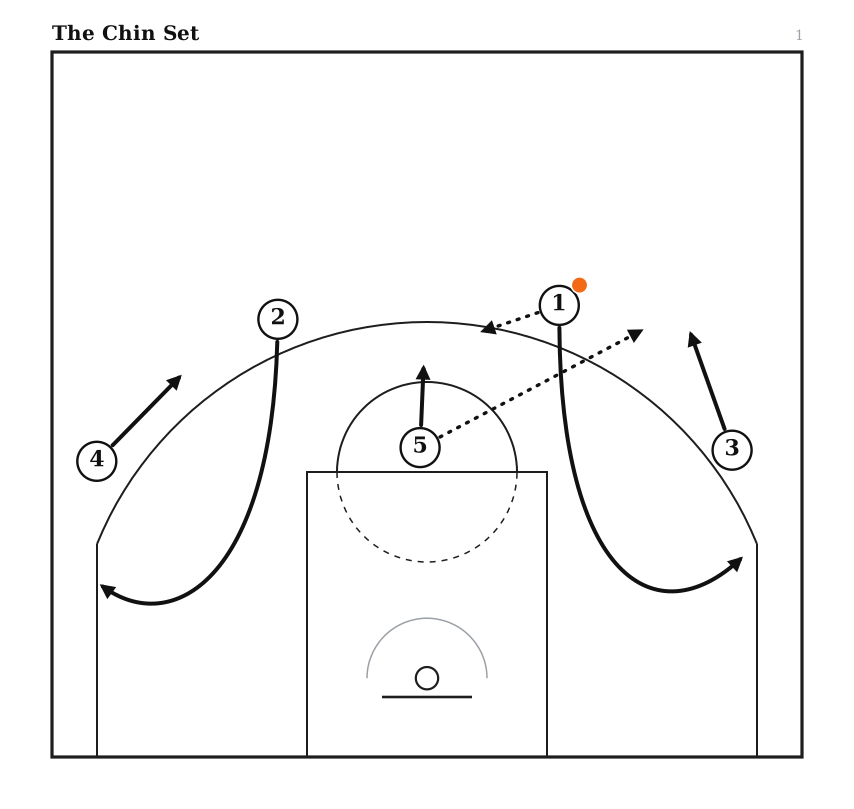
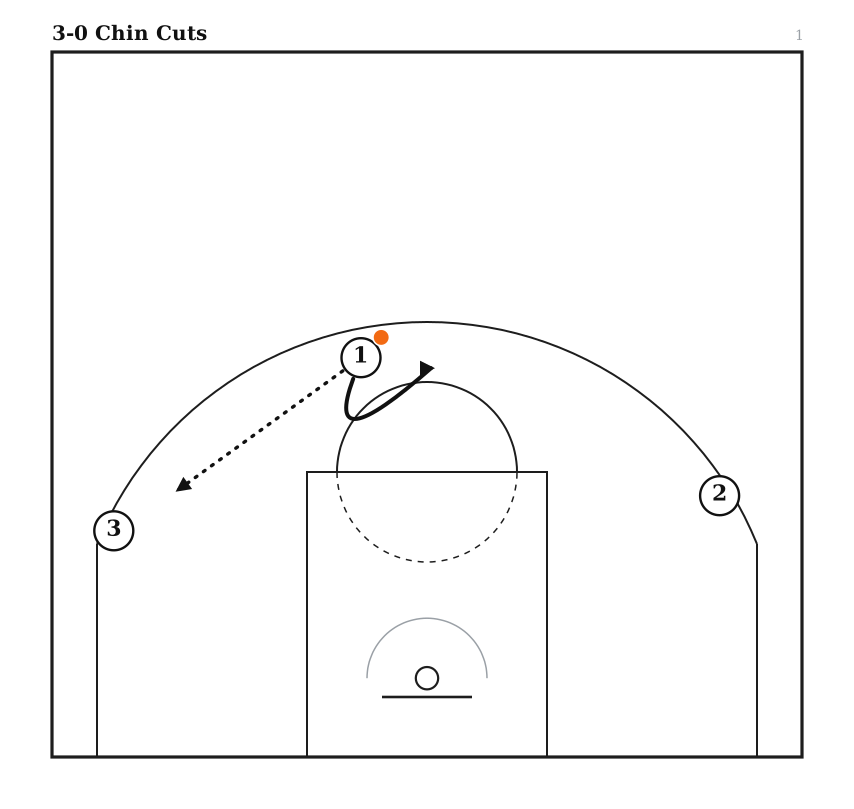
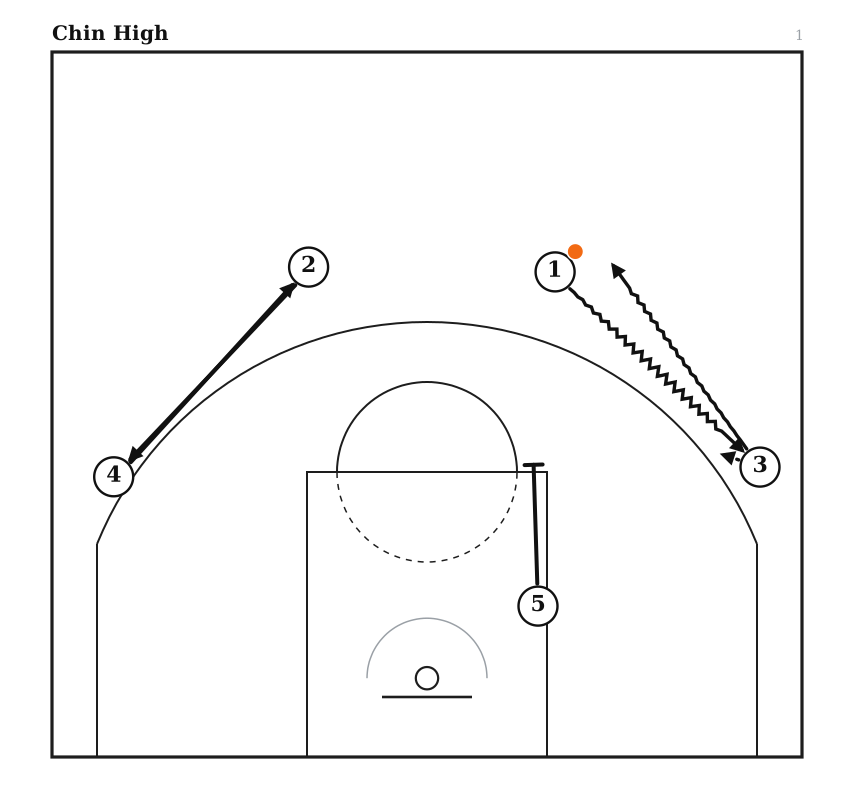
Related diagrams
Keep Building
Related breakdowns
How to Coach the Dribble-Drive Motion Offense (Complete Guide)
A spread, attack-the-paint system built on dribble penetration, wide spacing, and kick-out threes — and why it might be the best offense for a guard-heavy team.
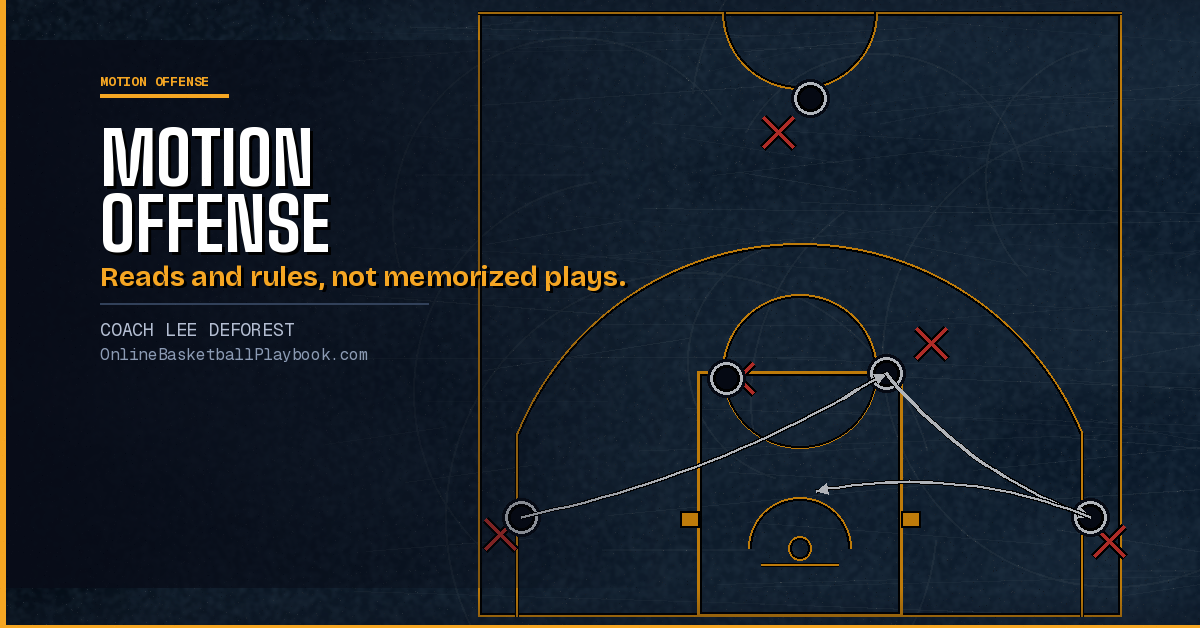
How to Coach a Motion Offense (Complete Guide)
Spacing, cutting, screening, reading the defense — how to build an offense built on rules, not memorized plays, that develops players and can't be scouted.
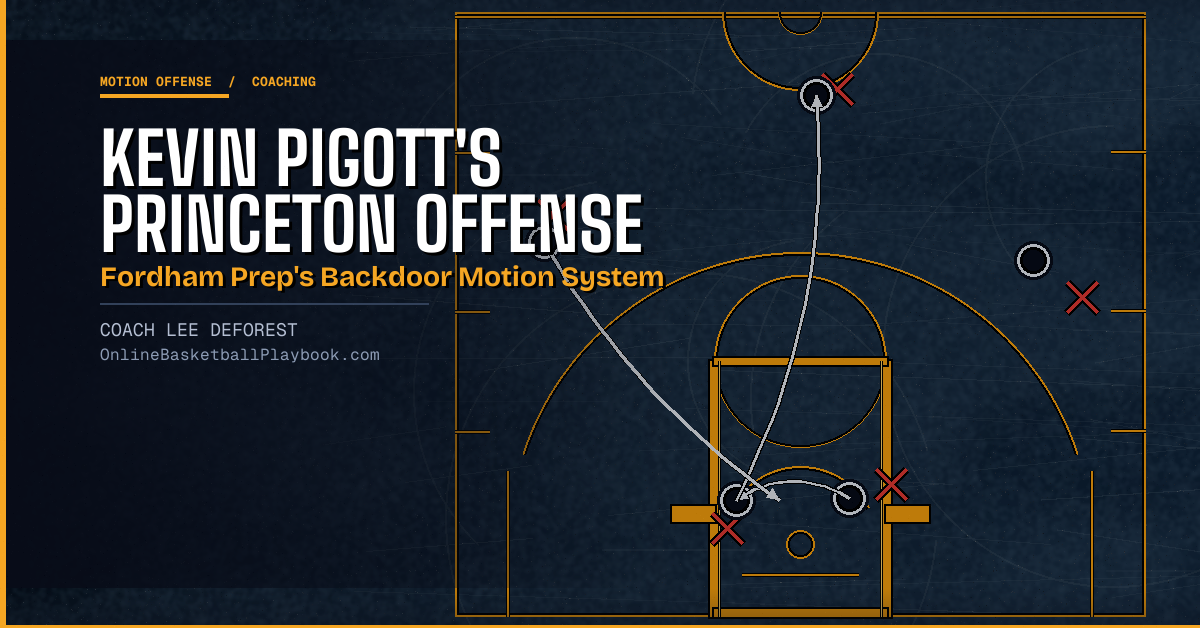
Kevin Pigott's Princeton Offense: Fordham Prep's Backdoor Motion System
Kevin Pigott's high-school Princeton Offense at Fordham Prep — a patient half-court motion system built on backdoor cuts, spacing, post reads, and named automatics that turn patience into easy layups.
More from Online Basketball Playbook
4-Out 1-In Offense
The hybrid that keeps a post threat while spreading the floor — complements the 5-out.
Drills to Teach the 5-Out Motion
Practice progressions that install the reads and spacing rules from day one.
How to Teach Basketball Decision-Making
5-out lives or dies by player decision-making — how to accelerate the learning curve.
Basketball Pace & Tempo Strategy
The 5-out runs faster when you control tempo — pairs with any pace philosophy.