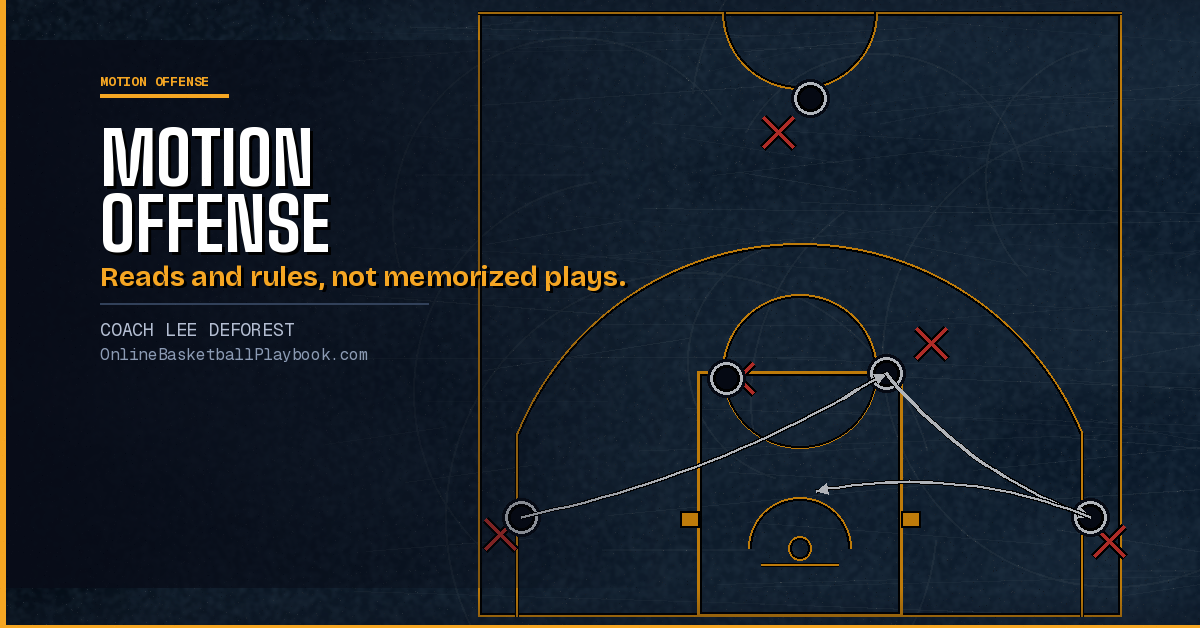
Here's the difference between a set-play offense and a motion offense: one teaches your players what to do; the other teaches them how to play. That distinction sounds simple. It isn't. And once you really understand it, it changes how you coach everything.
Motion offense isn't a specific play or even a specific set of plays. It's a rules-based system. Your players read the defense and make decisions off what the defense gives them — cut when they're open, screen when a teammate is guarded, fill the empty space, attack the closeout. Nobody calls a play. Nobody stands and watches. The offense just breathes, and the right action keeps presenting itself.
Picture this: you've got five kids on the floor who've run the same five plays all season. It's the third quarter, your starting point guard picks up his fourth foul and heads to the bench, and the backup walks on. Three of your five plays no longer exist — because they started with that point guard's specific read at the top. Two possessions later, your team is standing around looking at you for a call. You've seen this night. Every coach has.
Now picture a different team. When that backup walks on, he knows the rules. He knows to fill the empty spot. He knows to cut hard after a pass and fill the corner if the layup isn't there. He knows to screen the next person who needs one. The offense doesn't skip a beat. That's what you're building when you build a motion offense.
This guide covers everything: what motion offense actually is, why it beats running set plays for player development, the core rules and principles, the two main alignments, the four building-block actions, how to teach it in progressive layers, what it struggles with, and the drills that make it stick.
What motion offense is — and isn't
A motion offense is a read-and-react system governed by rules, not a sequence of scripted actions. Players move and decide based on what the defense does, not what a play sheet says happens next.
There is no "if this, then that" memorized sequence. There's no specific player designated to get the ball at a specific spot. What there is: spacing rules, cutting rules, filling rules, and reads off the defender. When everyone follows those rules together, good shots happen — constantly, out of different spots, in ways the defense has no clean answer for.
What motion offense is not: random. That's the biggest misconception coaches have before they install it. It's not "go freelance." Every action has a trigger and a purpose. A player cuts because the defense gave him that cut. A player screens because his teammate is denied and needs a way to get open. The structure is built into the rules, not the script.
Why motion beats set plays for player development
Keith Rumjahn, one of the most thorough motion offense educators I've come across, puts it plainly: motion "teaches kids how to play, not just how to run plays." That line should be on the wall of every gym that runs a youth or high school program.
Here's the specific problem with set plays. Your team looks great running them on Monday. They've got the actions memorized, the timing is clean, everything works. Then the first game happens. One sub comes in who doesn't know Play 3 the same way. The defense is in a different look than what you drilled against. Your best player gets a foul in the first quarter. And the whole thing falls apart — because plays are fragile. They depend on every piece being exactly right.
Rules are different. A player who understands the rules of motion offense doesn't forget them when the game speeds up. The same skills he uses in your system transfer to the next team he plays for. And the habits — reading a defender, cutting hard, moving without the ball — are the same habits that make him a complete player at the next level.
- Motion is hard to scout. When your offense runs off reads, there's nothing fixed for the other team to take away. You can't game-plan against something that doesn't have a set shape.
- It works against any defense. Zone, man, match-up, press — the principles of spacing, cutting, and reading still apply.
- Every player is involved. No one stands watching while one player runs a set play. Everyone is always making a decision.
- Substitutions don't break it. Any player who knows the rules can step in and the offense keeps moving.
If your offense only works with your five starters, you don't really have an offense. You have five plays and a problem for every game when someone gets in foul trouble. Teach rules. Then the sixth player and the seventh are just as dangerous as the first five.
The core principles — the rules motion runs on
Different coaches name these differently, but the foundation is the same across every motion system you'll encounter. These aren't suggestions. They're the non-negotiables.
Spacing is the whole thing
"Spacing is offense, offense is spacing." That's not a motivational phrase — it's literally how the offense creates shots. When your players are spread, the paint is empty. Help defenders are far from where they need to help. One pass and a cutter has a four-foot run to an open rim. Remove the spacing and all of that disappears. Help defense collapses, drivers hit bodies, cutters get picked up. Maintain spacing and every action is dangerous. Lose it and nothing works.
In the 5-out, you're spacing to five spots outside the three-point arc. In the 4-out-1-in, you're spacing four players to the perimeter and letting one post player occupy the paint. Either way, the job is the same: fill the right spots and stay in them unless you're cutting or screening.
Never pass and stand
After every pass, something must happen. Always. A player who passes and stands has made a mistake — not a personal choice, a team mistake. The options are: basket cut, set a screen, or come off a screen. Standing and watching is not one of the options. This is the hardest habit to build and the most important one. When your whole team owns it, you'll have continuous movement on every possession.
Catch ready to attack
The most open moment on every possession is the instant a player catches the ball. Defenders are moving to recover. Help is shifting. That window closes fast. Your players need to catch balanced, eyes on the rim, ready to shoot, drive, or pass — before they even think about their next move. Rumjahn borrowed this framing from Don Kelbick's work: even players who aren't shooters from a given spot should look like they are. Catch ready to attack, fake the shot if needed, then make a decision.
Read the defender, not the play
This is the mental shift that separates motion from everything else. On every cut, pass, and screen: the action follows what the defender does, not what the coach drew up. Defender sagging? Basket cut for the layup. Defender overplaying on the wing? Backdoor. Defender pressing tight through a screen? Back-cut backdoor. Take what the defense gives — that's the whole offensive philosophy, said in one sentence.
Move on the pass, not after it
This sounds like a small timing point. It isn't. Players who start their cut when the ball is in the air catch defenders flat-footed. Players who wait until the ball is caught give the defense time to recover. In a motion system, everyone moves while the ball is traveling — fill the open spot, start the cut, set the screen. Do it all a half-second earlier than feels natural and your timing goes from average to difficult to guard.
The two main alignments
5-out — all five players outside the arc
This is the purest version of motion offense. All five players start on or beyond the three-point line: one at the top (in line with the hoop), two on the wings at the free-throw line extended, two in the corners. The paint is empty.
That empty paint is not a weakness — it's the weapon. Cutters have a clear path. Drivers have no traffic. The threat of the backdoor keeps defenders honest. The threat of the basket cut brings help defenders out of the lane and creates open looks on the perimeter.
5-out works best when your personnel can all shoot or are threats to shoot from the outside. Even if they can't all knock down threes, the look alone changes how the defense guards them. You don't need five shooters. You need five players who can catch with their eyes on the rim and put pressure on the closeout.
Use 5-out when you're undersized or less athletic than the opponent — you're removing rim-protectors from the basket. It's also an excellent alignment for player development because every player handles the ball in similar positions and executes similar reads.
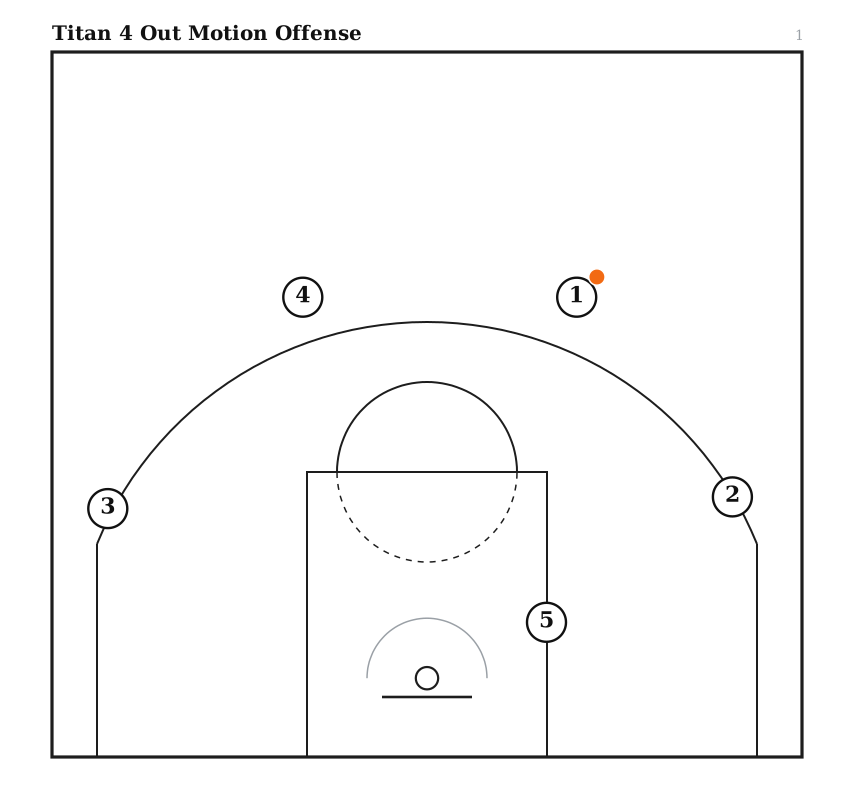
4-out 1-in — four perimeter, one post
You keep four players spread outside the arc and put one player in the post. Jay Wright ran a version of this at Villanova for years. The key piece is what Rumjahn calls the "slot big" — a forward or center who can play above the free-throw line, receive passes at the elbow, and shoot from 15 to 18 feet.
That slot big changes everything. By playing above the foul line, he pulls his defender out of the paint. This creates flare-screen opportunities for the guards and a cleaner path for post action when the low post player needs a look. When the ball goes into the post, the other big "rips" to the opposite block — creating a high-low read with two bodies in scoring position.
Use 4-out 1-in when you have a genuine post scorer who needs to touch the ball in the low post early and often. It also works well for teams with one versatile forward who can handle both the post and perimeter — that player is the engine of the offense.
The choice between 5-out and 4-out 1-in is a personnel decision, not a philosophy decision. If you have a post player who can only score in the paint, give him that floor space with 4-out 1-in. If your whole team is perimeter-capable, 5-out removes every rim protector from the basket. Match the alignment to your roster.
The four building-block actions
Every motion offense runs off the same handful of actions. Master these four and you have everything you need to run a complete system.
1. Pass and basket-cut
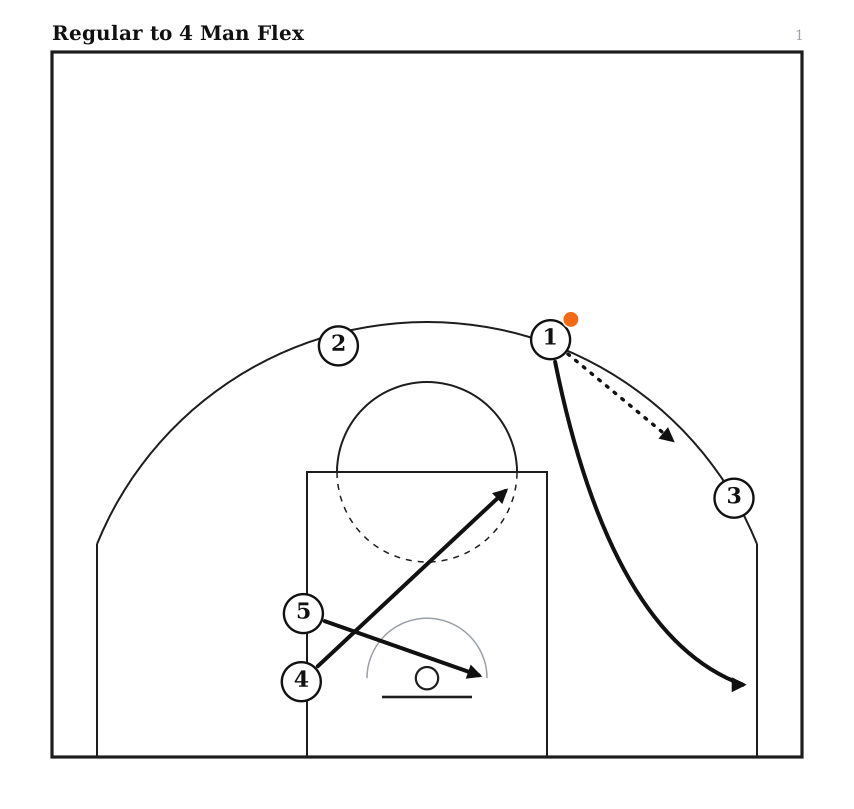
This is the foundation. Player passes to a teammate and cuts hard to the basket, looking for the return pass for a layup. If the pass isn't there — the defender recovered, the timing was off — the cutter cuts all the way through and fills the weak-side corner. Simple. Clean. Dangerous when it's done with pace and conviction.
The basket cut is the engine of the 5-out. It creates penetration to the rim without a dribble. It forces help defenders to make a decision. It empties the lane and creates back-side spacing for the skip pass. Teach it first. Drill it relentlessly. It's the base everything else is built on.
2. Fill the open spot
Whenever a player cuts to the basket, someone else fills the spot he left. This is what keeps the spacing intact through every action. Players don't wander — they read the movement and fill the vacancy. In the 5-out, you're always trying to keep all five perimeter spots occupied unless a player is in the middle of a cut or screen.
The rule for filling: cut to the basket first, then spread to the weak side to fill. Rumjahn is specific about this — don't default to a V-cut every time. V-cuts become robotic and collapse the spacing. Cut to the rim and fill from there. Save the V-cut for when you're genuinely threatening the backdoor before coming back out.
3. Screen away
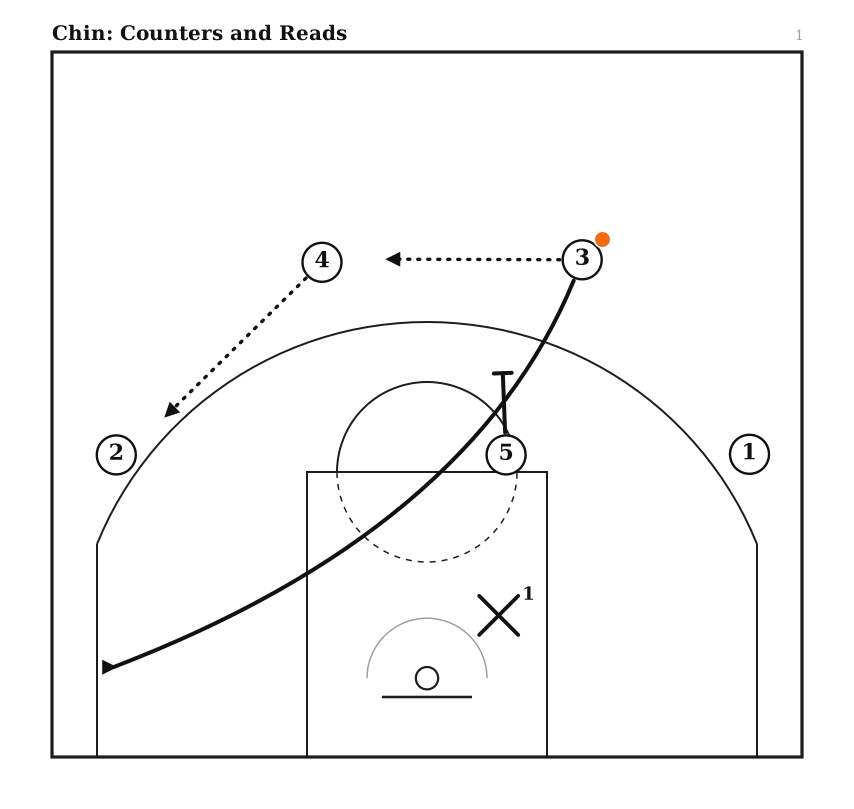
After a pass, instead of cutting to the basket, the passer can screen away — set an off-ball screen for a player on the opposite side of the floor. The teammate uses the screen, the screener reads his defender, and the offense creates a two-man advantage in the opposite corner. The key reads off the screen: straight cut over the top if the defender trails, backdoor if the defender chases hard, flare if the defender cheats under.
Add screen-away only after your team owns the pass-and-cut rhythm. It's the next layer, not the first one. When players understand why they're cutting before they learn to screen, the screens look right and create real problems instead of just being choreography.
4. Dribble-at / dribble hand-off
When a ball handler dribbles at a teammate — directly at them, not past them — the teammate has a decision: take the hand-off and attack, or back-cut if the defender jumps the hand-off. This is called a dribble-at or DHO (dribble hand-off), and it's essentially a moving ball screen combined with a pass in one action.
It creates the same problems a ball screen creates, but with the threat of the backdoor baked in. If the defense jumps the hand-off early, the backdoor is wide open. If they sit and wait, the receiver takes the handle and attacks a moving closeout.
How to teach it in layers
This is where most coaches either win or lose the install. Motion offense taught all at once is overwhelming. Taught in progressive layers it becomes second nature.
Layer 1: 2-man pass and cut
Start with two players. One passes, one catches. The passer basket-cuts hard. Did the receiver return the pass? If yes, layup. If no, cutter fills the corner and the two players switch roles. Just this — over and over, at game speed, until it's automatic. No other action. No screens. Just pass, cut, fill.
This is 5-on-0 in its simplest form. It sounds too simple. It isn't. The basket cut rhythm is the hardest habit to build, and you build it here, before you add anything else.
Layer 2: 3-man motion
Add a third player. Now you have the passer, the receiver, and a player on the opposite side who fills the spot the cutter left. Three players running pass-and-cut with continuous filling teaches spacing and timing together. Players start reading each other — when one moves, the others react.
This is also where you add the backdoor trigger. When the receiver's defender overplays, the receiver back-cuts. The player at the top reads it and throws the backdoor pass. Three-man motion that includes the backdoor read is most of what your offense needs.
Layer 3: 5-man motion — add screens
Once five players can run pass-and-cut and fill with good spacing, add the screen-away. Walk it through 5-on-0. Make the screens look right — set the screen in the right spot, screener reads his defender, cutter reads the defense. Then go 5-on-5 shell before adding live defense.
The sequence Rumjahn teaches for the 5-out: spread the spots → catch ready to attack → pass and basket-cut → always fill → backdoor when denied → screen away → screen on-ball → DHO → quick post-up. Teach in that order. Don't add the next layer until the previous one is automatic.
Go 5-on-0 before 5-on-5. Always. Run the actions with no defense until the reads look right and the spacing holds. Then add passive defense, then active. Players who understand the action make better decisions under pressure than players who learned it while getting guarded before they understood why they were cutting.
Where motion offense struggles — be honest about it
No system is perfect. Motion offense has real weaknesses and you should understand them before you commit.
- It requires smart, disciplined players. Players who want to freelance will freelance. Players who don't understand why they're cutting will stop cutting when the first one doesn't result in a pass. The system only works when everybody executes the rules, not just the good players.
- End-of-clock situations are hard. Motion offense is designed to generate good shots out of half-court continuity. When you need a specific look in five seconds, you need a called play. Most teams that run motion keep a small library of quick-hitters for exactly this situation — use them. Motion is your base, not your only tool.
- Weak passers can stall it. Motion demands constant passing — short passes, skip passes, passes to cutters, passes into the post. A team with shaky ball handlers will struggle to keep the offense moving. You're developing those skills by running the system, but early in the install, expect turnovers.
- Initial install takes time. Set plays can be up and running in a few days. Motion offense takes weeks of practice before it looks right in a game. Most coaches who abandon it do so too early. Give it the time it needs.
Drills to build the habits
- Pass-and-cut 2-on-0. Two players, full speed. Passer cuts hard, receiver reads whether to return the pass or let the cutter fill the corner. Run until the timing is automatic. This is the single most important drill in the offense.
- 5-on-0 shell — spacing check. All five players, no defense. Run the full motion offense and freeze it after every cut. Check the spots. Is the spacing right? Did somebody stand still after a pass? This is the cheapest way to teach the habits before adding a defense to fight.
- 3-on-2 with the backdoor trigger. Three offensive players, two defenders on the perimeter. The only goal is to create a backdoor. This builds the read — feel when the defender is overplaying, time the cut, catch the pass going away from the defense. It's a small-sided drill with a specific read baked in.
- 1-on-1 vs. closeout — catch ready. One passer, one offensive player, one defender. Ball is swung, defender closes out, offensive player must catch ready to attack and make a decision in one move. This directly builds the "catch ready" habit and trains the read on the closeout — shoot if they're late, drive if they're off-balance, kick if they're right.
- Screen-away 3-on-3. Three players on one side. Passer screens away for the weak-side player. Both the screener and the cutter must call their read aloud — straight cut, curl, or backdoor. Verbal communication is part of the drill, not optional. When players can name the read in the moment, they make it faster.
A note on shot selection — motion doesn't decide, you do
Motion offense gets the team open. It doesn't decide who shoots. That's a coaching decision and it has to be made explicitly for each player on your roster before the season starts.
Define a good shot for each player. What range is this player allowed to shoot from? What situations? Vance Walberg's dribble-drive system built an entire shot hierarchy — layups first, then threes, then midrange almost never — and counted an open midrange shot as a possession failure. That's an extreme position, but the principle matters: give your players clear rules for shot selection and hold them to it. Motion offense will create open shots in every spot on the floor. Your job is to make sure your players know which open shots to take.
The bottom line
Motion offense is the best thing you can teach your players. Not because it creates the most open looks — though it does that too — but because the habits it builds are the same habits that make a complete basketball player. Reading a defender. Moving without the ball. Cutting with purpose. Filling the right spots. Communicating with teammates. All of it.
Install it in layers. Be patient with the early mess. Hold the line on spacing and passing and cutting. And when your backup point guard walks on in the fourth quarter of a tight game and doesn't miss a beat — you'll know why you did it this way.
Thanks for the work you put in for your players. If there's anything I can help you with as you build this system, don't hesitate to reach out.
See it drawn up
Related diagrams
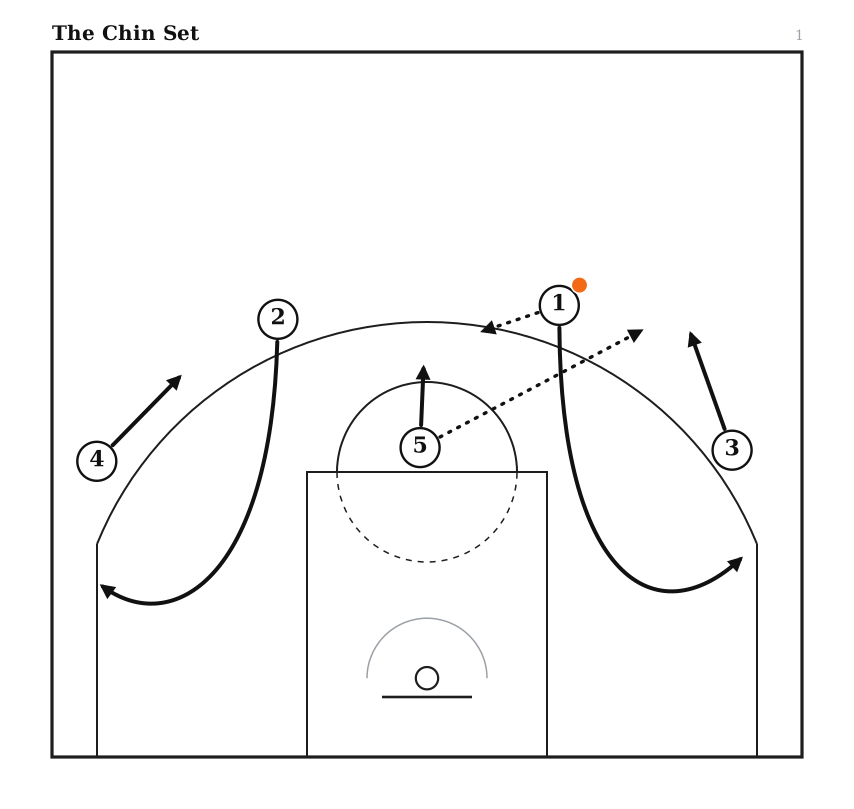
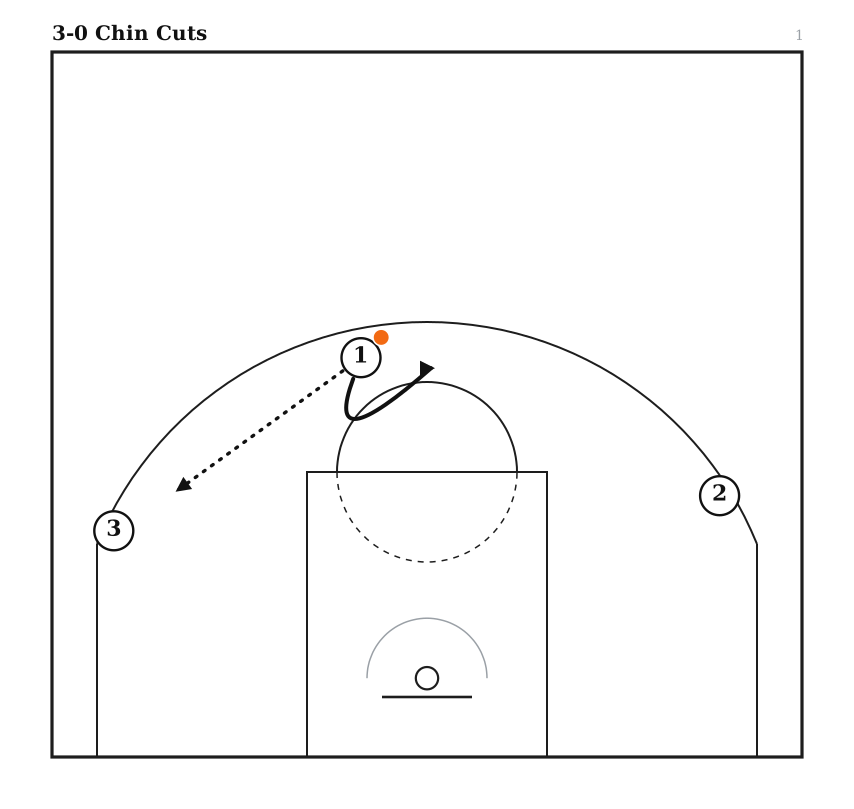
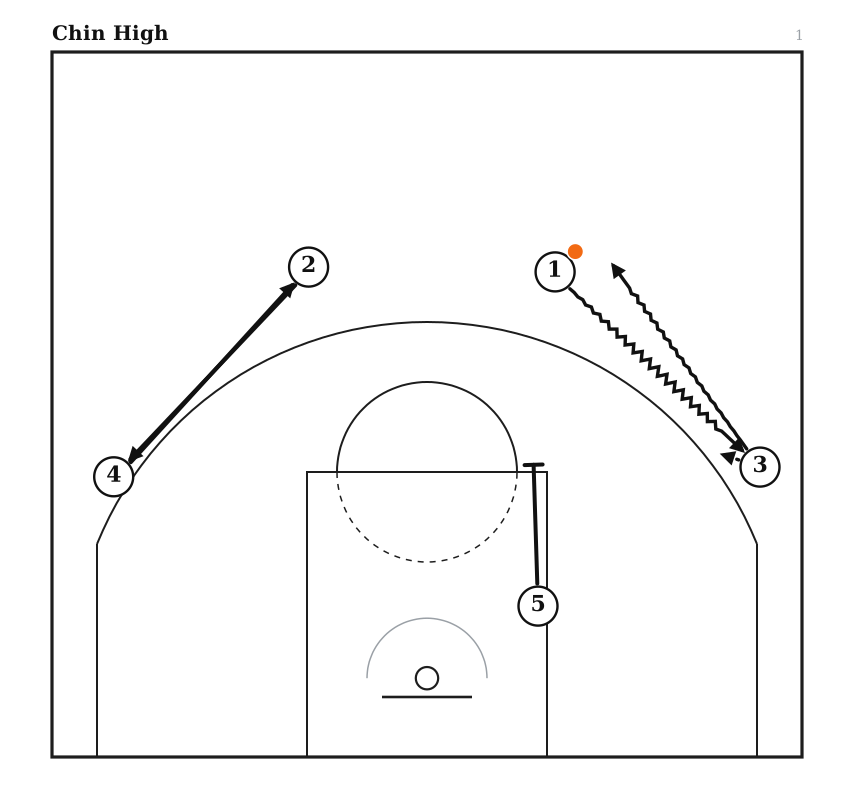
Keep Building
Related breakdowns
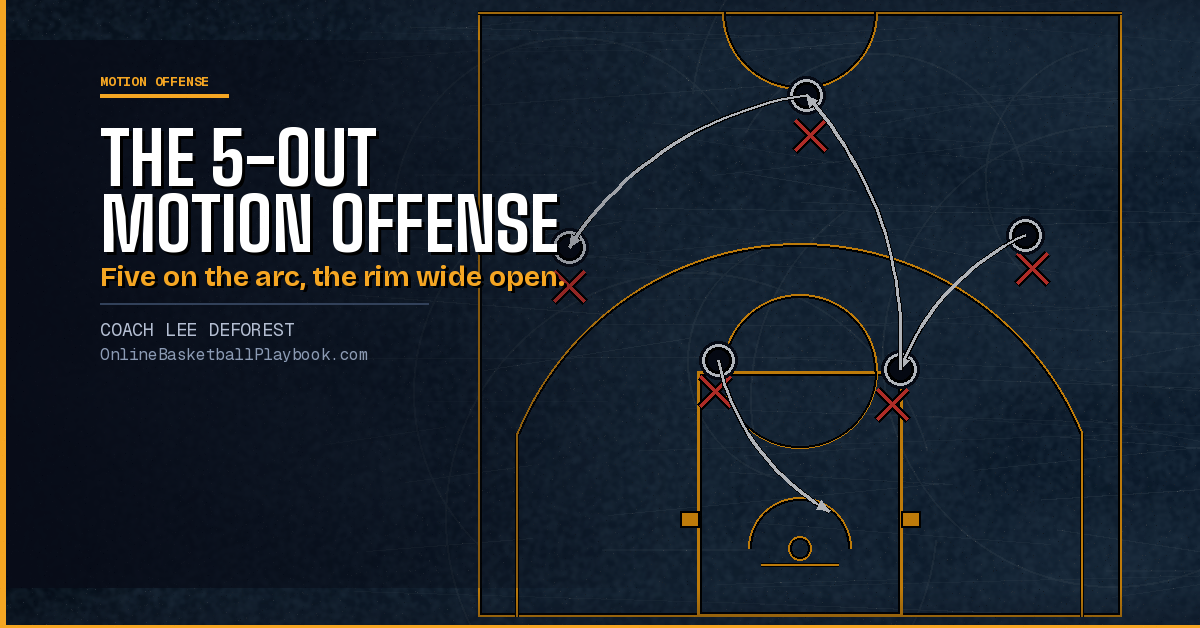
How to Coach the 5-Out Motion Offense (Complete Guide)
All five players spread outside the arc, the paint completely empty, and your players making reads — not running plays. Here's how to build it from scratch.
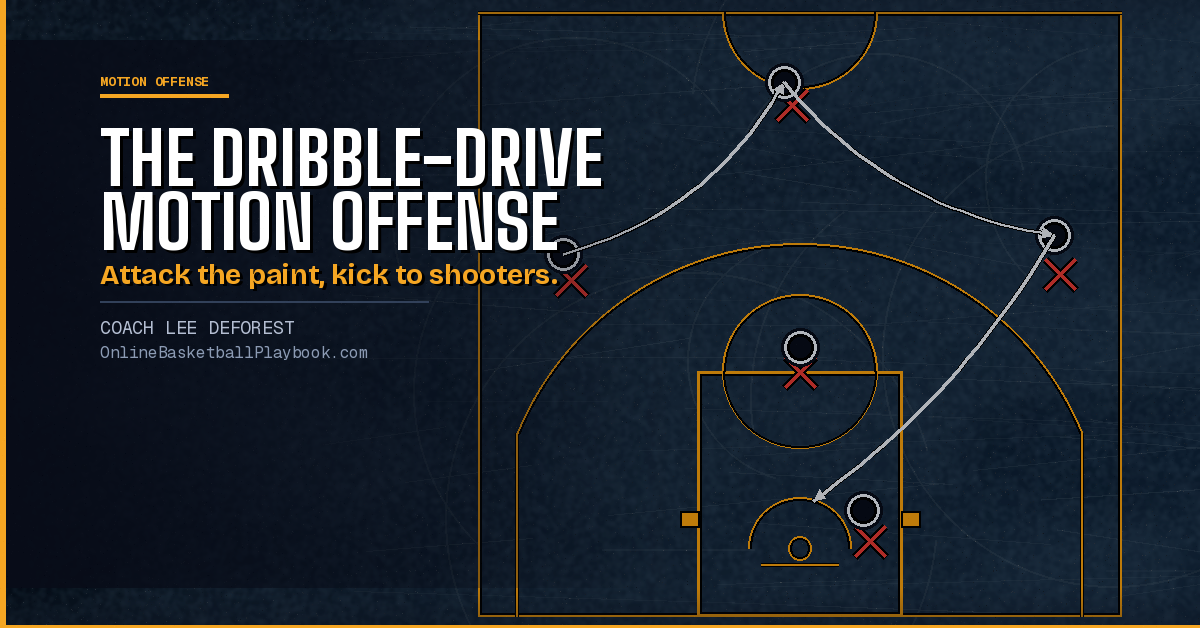
How to Coach the Dribble-Drive Motion Offense (Complete Guide)
A spread, attack-the-paint system built on dribble penetration, wide spacing, and kick-out threes — and why it might be the best offense for a guard-heavy team.
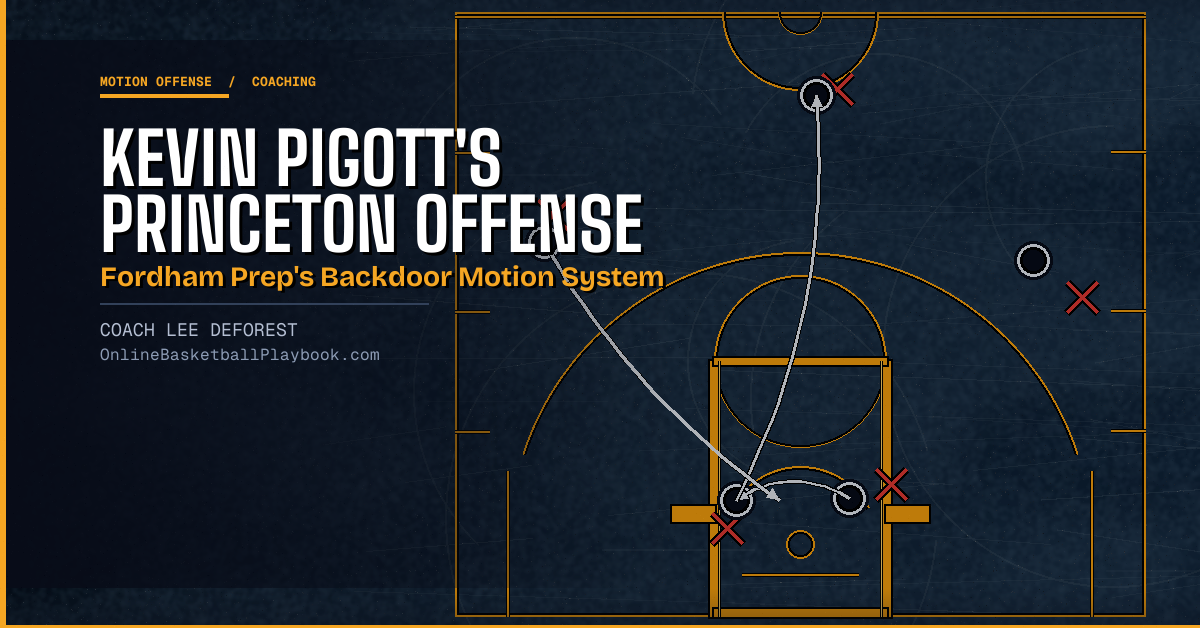
Kevin Pigott's Princeton Offense: Fordham Prep's Backdoor Motion System
Kevin Pigott's high-school Princeton Offense at Fordham Prep — a patient half-court motion system built on backdoor cuts, spacing, post reads, and named automatics that turn patience into easy layups.
More from Online Basketball Playbook
How to Teach Basketball Decision-Making
Motion runs on player decisions — teach the reads before you teach the actions.
Basketball Pace & Tempo Strategy
Control the speed: motion offense is most dangerous at a tempo the defense hates.
8 Keys to Ball Movement
The principles behind quick ball movement in any motion system.
How to Score Against Junk Defenses
When they take away your motion reads, here’s how to attack the junk.