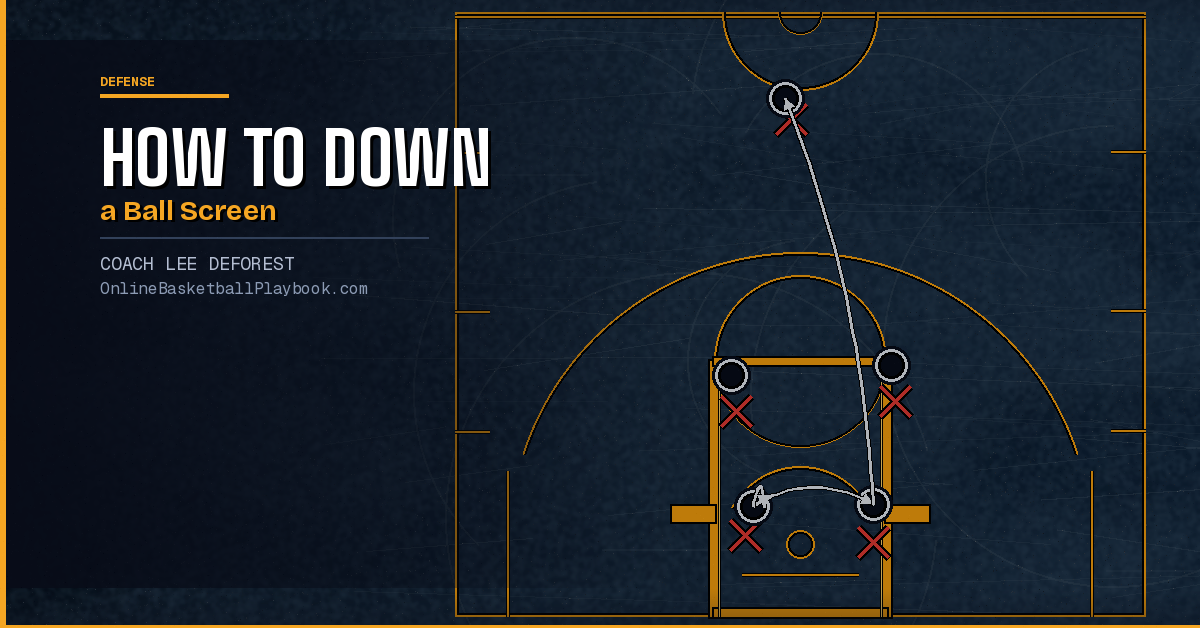

A down ball screen — set from the elbow or high post toward the wing — is one of the most practical actions in basketball. Here is exactly how to set it, use it, and read the defense off it.
What Is a Down Ball Screen
A down screen is a screen set by a player moving from a higher position on the floor — typically the elbow, high post, or top of the key — toward a lower position, usually the wing or corner. The cutter starts below the screener and uses the screen to get open near the three-point line or at the elbow extended. This is different from a ball screen, where the screener directly attacks the ball handler's defender. In a down screen, the cutter does not have the ball at the start of the action — they are catching the ball off the screen.
The phrase "down ball screen" sometimes refers to a ball screen set in a downhill direction, where the screener angles toward the baseline to push the action toward the basket. Both uses appear in coaching literature, but the most common application at the high school and collegiate level is the traditional down screen freeing a cutter to receive a pass at the wing.
Down screens appear across nearly every offensive system — from Princeton-style motion offense to pace-and-space NBA sets. They are especially valuable for getting shooters off the ball and creating mismatches when the defense switches. A single down screen, run correctly, can unlock an entire possession.
Screen Angle and Body Position
The angle of the screen determines whether the action works. This is the single most teachable adjustment for screeners at any level, and it separates effective down screens from wasted possessions.
Brad Stevens identified this principle directly in his Butler clinic notes: the screen surface must be set East/West — horizontal to the lane — not North/South. A flat, horizontal screen surface gives the cutter maximum room to come off the defender's hip and clear space. A vertical screen angle narrows that path and makes it easy for the defender to fight through or go over the top. Every screener needs to understand this before they set a single screen in a game.
Screener Checklist
When setting a down screen, the screener must:
- Sprint from the high post to the screen position — don't stroll into the action
- Get low and wide before making contact — "low and wide" is the standard cue from the Lickliter/Walthall Iowa system
- Set the screen surface East/West, perpendicular to the direction the cutter will travel
- Hold the screen until the cutter clears — do not pop or roll early, or the cutter loses the pick
- Read the defender's position to determine what to do after the cutter leaves
The cutter's job is to set up the screen before using it. Walk the defender toward the baseline or into the paint, then cut hard off the screener's shoulder. A cutter who goes directly to the screen gives the defender time to fight over it. The setup step — even two or three hard walking steps in the wrong direction — is what makes the screen uncatchable.
The screener reads the defender's height before making contact — if the defender is showing a high hedge, the screener slips to the basket before the screen is fully set — the slip fires on the defender's stance, not on the coverage call. This is faster than waiting for the screen to be hedged.
— Florida Spread Offense Principles, Basketball Vault
The Cutter's Reads Off the Screen
The cutter — the player using the screen to get open — has a read to make every single time. The read is based on how the defender plays the screen. There is no single correct path off a down screen; the correct path is determined by what the defense gives.
The Lickliter/Walthall 8-way taxonomy names every possible read from a ball screen, and many translate directly to down screens. Here are the four reads cutters will encounter most often off a down screen:
1. Come Off the Hip (Standard)
When the defender tries to go over the top of the screen, the cutter comes off the screener's hip and catches the ball at the wing. This is the base read. The cutter should arrive at the level of the screen — not higher and not lower. Coming too high kicks out the angle and gives the defender a recovery lane. Coming too low invites a baseline hedge. The level of the screen is the read point.
2. Curl
When the defender trails below the screen — going under in anticipation of a catch-and-shoot — the cutter curls tight around the screener's back and attacks toward the paint or the elbow. The curl changes the direction of the cut and takes away the defender's shortcut. A good curl read turns a defensive shortcut into an open mid-range look or a layup.
3. Fade
When the defender cheats over the top of the screen early — anticipating the curl — the cutter fades away from the screen toward the corner or the three-point line on the weak side. The screener becomes a legal obstacle between the cutter and the over-pursuing defender. The fade produces the most open three-point looks off a down screen when executed against an aggressive, over-the-top defender.
4. Back-Cut
When the defender denies the wing entirely — positioning on the high side of the cutter before the screen is set — the cutter rejects the screen and cuts back-door to the basket. The screener holds position while the cutter goes behind them, looking for a lob or a bounce pass. The back-cut off a down screen is one of the most direct routes to a layup in motion offense.
The Screener's Reads After the Action
After the cutter clears, the screener is not done. The screener has a read of their own, and it is just as important as the cutter's. The defense has just made an adjustment — it is now out of position relative to the screener, and the screener needs to exploit that.
The Euro ball screen read tree from the Basketball Immersion curriculum — sourced from Lason Perkins — names six screener options, all of which apply after a down screen fires:
- Roll to the rim. When the screener's defender helped on the cutter, the screener rolls hard to the basket. This is the default read when the defense collapses on the catch.
- Pop to space. When the screener's defender is in a switch or a drop coverage, the screener pops to the three-point line or wing for a catch-and-shoot. A big who can shoot threes makes this read self-defeating for the defense — the switch gives up a three every time.
- Short roll. The screener holds at the elbow or mid-range area to create a triangle with the ball handler. This is a more advanced read — the screener becomes a decision-making hub rather than a finisher.
- Re-screen. When the cutter couldn't use the first screen — defender fought through or the timing was off — the screener re-sets at a better angle and runs the action a second time. This forces the defense to adjust twice, often producing an even cleaner look the second time.
- Set a flare screen. When the roll is covered and the pop is contested, the screener sets a flare screen for a third player — turning a 2-man action into a 3-man sequence without a new play call.
- Roll to the opposite block. When all other reads are covered, the screener crosses under the lane to the weak-side block for a post entry or a lob.
For most players at the high school level, teaching the roll and the pop as the first two options is enough to start. The re-screen habit is the highest-value addition after those two are automatic — it costs nothing and creates a second look without a timeout.
The re-screen habit is a zero-cost teaching win. Once your screeners understand that a blown-up screen is not a dead play — it is a cue to re-set at a better angle — you get a real second-read payoff with no additional play design required. Coach it explicitly with the cue: "first screen disrupted, re-set and go again."
Defensive Coverages and Counters
Down screens attract three common defensive coverages. Each one has a correct counter. Teaching the counter vocabulary — giving each coverage a name and a matching answer — is what separates players who can execute in games from players who only look good in practice.
Going Over the Top
The defender fights over the screen on the high side, trying to stay attached to the cutter's hip. Counter: the cutter comes off the screen at the level of the screen and catches at the wing. No hesitation — the path is direct. The defender is trailing and cannot recover in time for a clean contest.
Going Under
The defender dips below the screen, accepting the chance the cutter will catch a three-pointer in exchange for not getting screened. Counter: the cutter reads the under coverage mid-action and curls tight to the paint or pulls up for a mid-range shot. The defender under the screen cannot close on a curl — they are moving away from the ball.
Switching
The defender calls a switch and exchanges assignments with the screener's defender. Counter: if a smaller defender ends up on the screener, the screener posts immediately on the catch — their man is undersized and cannot guard them in the post. If a bigger defender ends up on the cutter, the cutter catches and attacks the close-out from a wing catch-and-drive. Pop to three is also a built-in switch counter for shooting bigs — no separate play required.
Hedge or Show
The screener's defender steps out toward the cutter to slow the catch while the original defender recovers. Counter: the screener slips to the basket before the hedge fires. As the vault principle states, the slip fires on the defender's stance — before contact — not after the hedge is already set. A screener who reads the hedge early and slips on time catches the defense with two defenders committed to one area and a direct lane to the rim.
Teaching Progression for Practice
The most effective way to install down screen reads is to name them, rep them in isolation, and then put them against live defense in a forced-read environment. Rushing to 5-on-5 before reads are named produces players who default to one path regardless of coverage — which is exactly what a prepared defense is counting on.
Step 1 — Name Every Read
Before any reps, name each cutter read: straight (come off the hip), curl, fade, and back-cut. Give each one a one-word label. Players who can say "I'm in a curl situation" make faster decisions than players running on instinct. The label is a shortcut for the read process.
Step 2 — 2-on-0 with Verbal Calls
Run the screener and the cutter through all four paths with no defense. The coach calls the read aloud as the action starts: "curl" or "fade" or "back-cut." The cutter executes the named path and the screener reads what to do after. No mistakes are possible — the goal is to engrain the footwork and the communication.
Step 3 — 2-on-2 with Forced Coverages
Add a defender on the cutter and a defender on the screener. Tell the defenders which coverage to play before each rep: go over, go under, switch, or hedge. The cutter reads the defense and picks the correct path. The screener reads what their defender did and chooses roll, pop, or re-screen accordingly. This produces the pattern recognition that translates to games.
Step 4 — Live Reads in 3-on-3 or 4-on-4
Run the down screen inside a half-court set with other actions happening around it. Now the cutter must read while defenders are moving off-ball and help rotations are happening. Freeze and name the situation when the cutter makes a wrong read — walk back to the defensive stance that cued the correct path and rehearse the decision.
Common Mistakes and How to Fix Them
Down screens fail for predictable reasons. Most errors are not physical — they are timing and decision-making breakdowns that can be corrected once they are labeled.
Mistake 1 — The Screener Sets the Screen Going the Wrong Direction
A North/South screen surface — where the screener is perpendicular to the cutter's path rather than parallel — is the most common screen error. It narrows the cutter's lane and gives the defender a thin gap to slide through. The fix is the East/West angle rule: before every screen, the screener must think "am I flat to the lane?" If the answer is no, adjust before setting the pick.
Mistake 2 — The Cutter Goes Directly to the Screen
A cutter who walks straight to the screen telegraphs the action. The defender sees it coming, fights over the top, and the screen produces nothing. The fix is the setup step: make the defender move in a different direction before cutting hard to the screen. Even two hard steps toward the baseline followed by a change of direction makes the screen nearly impossible to fight through.
Mistake 3 — The Screener Rolls Before the Cutter Clears
Screeners who are eager to roll often leave before the cutter has used the screen. This removes the pick before it matters and gives the defender a clean path. The fix is a simple rule: hold the screen surface until you feel the cutter's shoulder pass — then read and react. Patience in the screen creates the pressure that makes the roll or the pop available.
Mistake 4 — Catching Flat-Footed
A cutter who coasts into the catch gives the closing defender time to recover. The fix is catching on the move — the cutter should already be in their shooting pocket or driving stance as the ball arrives. Coming off a screen at full speed and catching in a ready position produces a much shorter decision window for the defender.
Mistake 5 — Ignoring the Screener After the Pass
The player who passes to the cutter often watches the play happen instead of reading what their own defender is doing. If the screener is rolling and the defense collapses, the skip pass back to the opposite side or the feed into the rolling screener is the next decision. The passer is part of the read tree, not a spectator.
- East/West angle rule: Every screener must set a flat, horizontal screen surface — not a vertical one. Say "set it East/West" every time until it's automatic.
- Setup step before the screen: Cutters take two steps in the wrong direction before attacking the screen. This is non-negotiable for getting open against prepared defenses.
- Read before you arrive: The cutter pre-reads the defender's position before reaching the screen and commits to the correct path — straight, curl, fade, or back-cut — without hesitating mid-action.
- Screener stays until the cutter clears: Hold the screen surface until the cutter's shoulder passes, then read and react — roll, pop, or re-screen based on where your defender went.
- Re-screen when the first one is disrupted: A blown-up screen is a cue to re-set at a better angle, not a dead possession. The second screen almost always produces a cleaner look.
- Slip on the hedge stance, not after the hedge: Screeners who read the defender's body position before contact and slip early catch the defense caught in transition — no recovery available.
Want more basketball coaching strategies, drills, and tools?
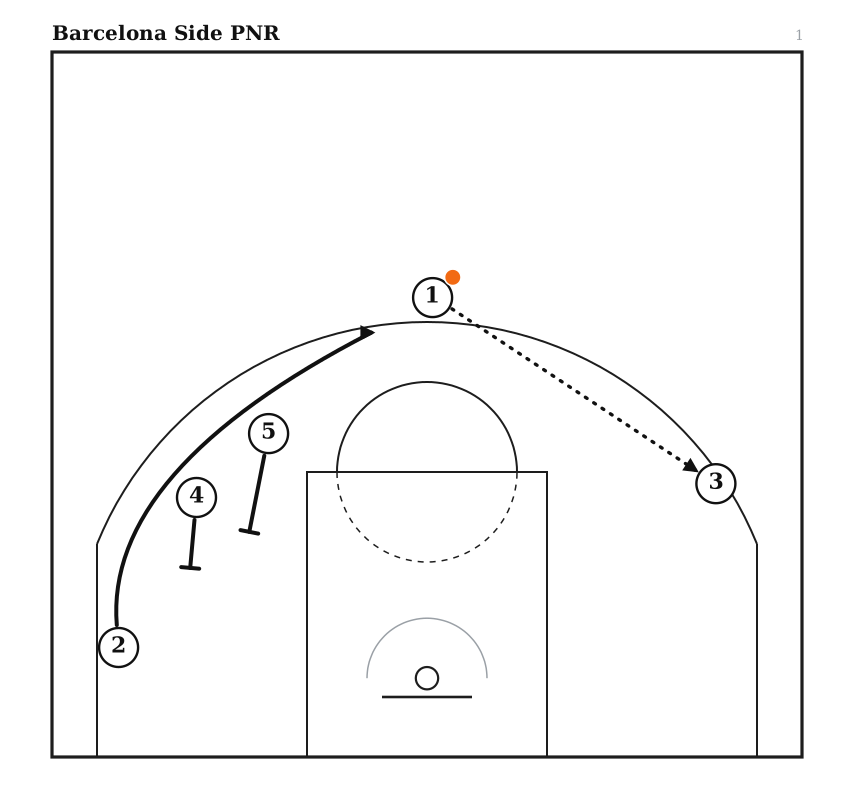
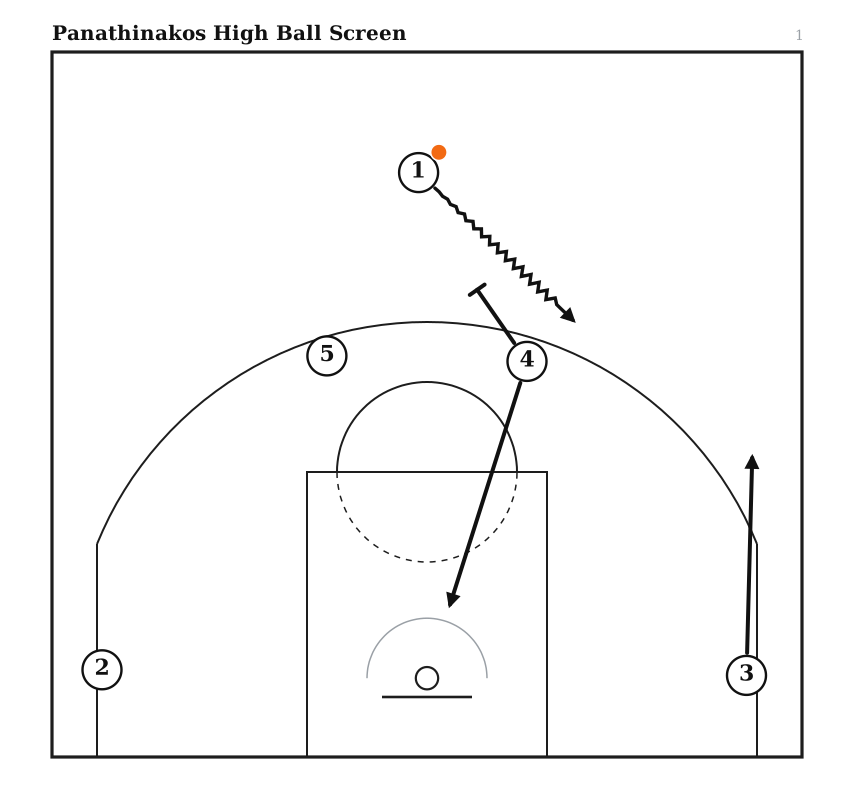
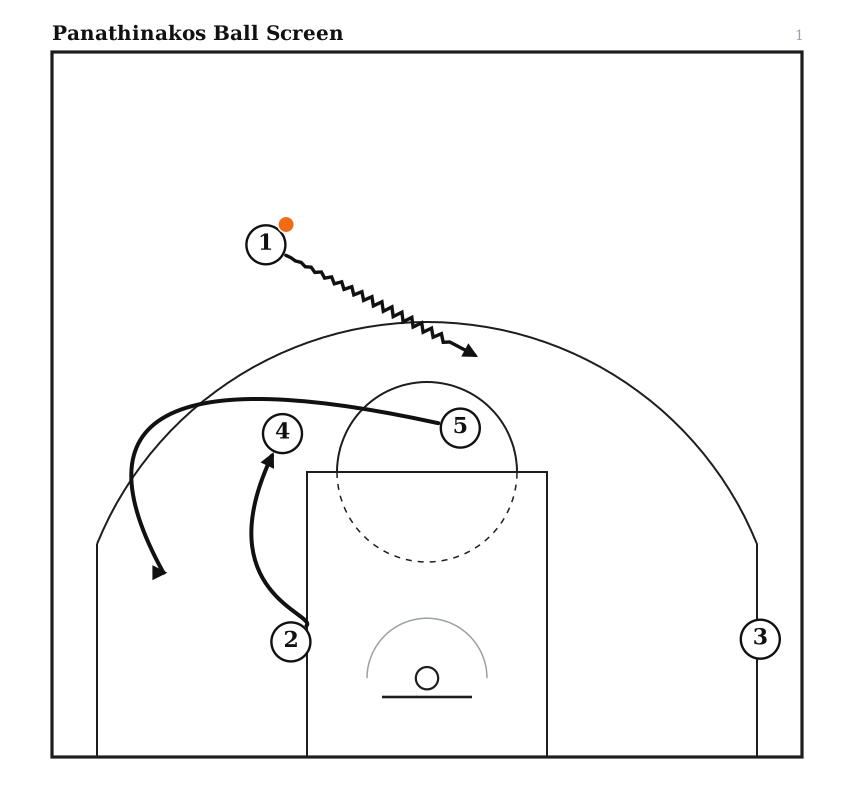
See it drawn up
Related diagrams
Keep Building
Related breakdowns
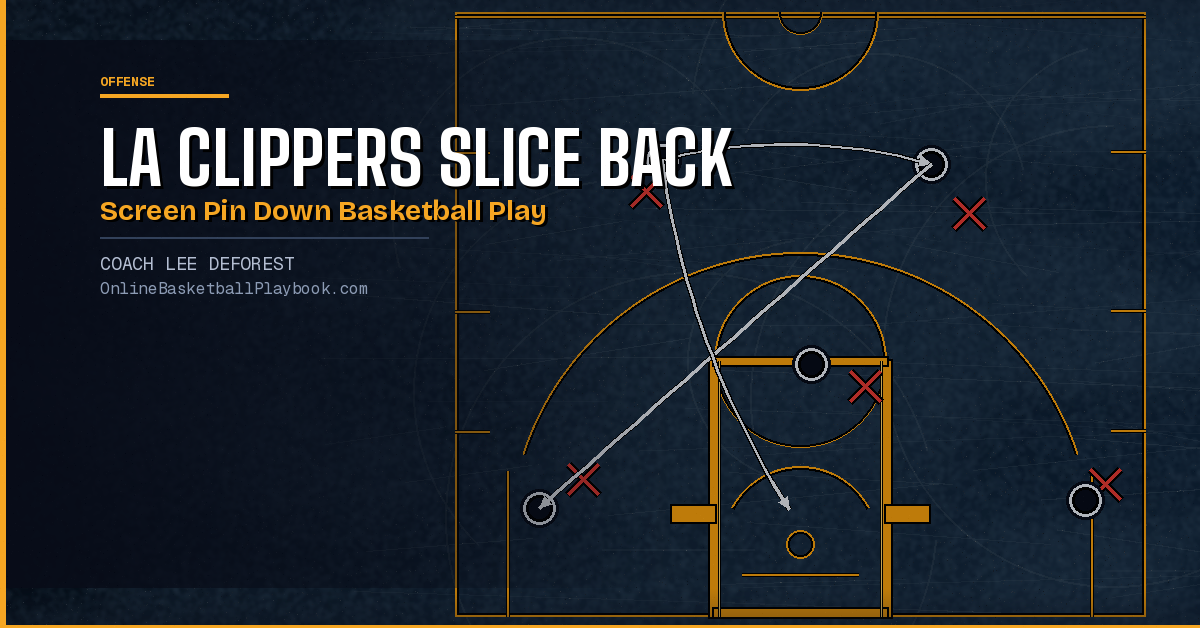
LA Clippers: Slice Back Screen Pin Down Basketball Play
LA Clippers: Slice Back Screen Pin Down Basketball Play
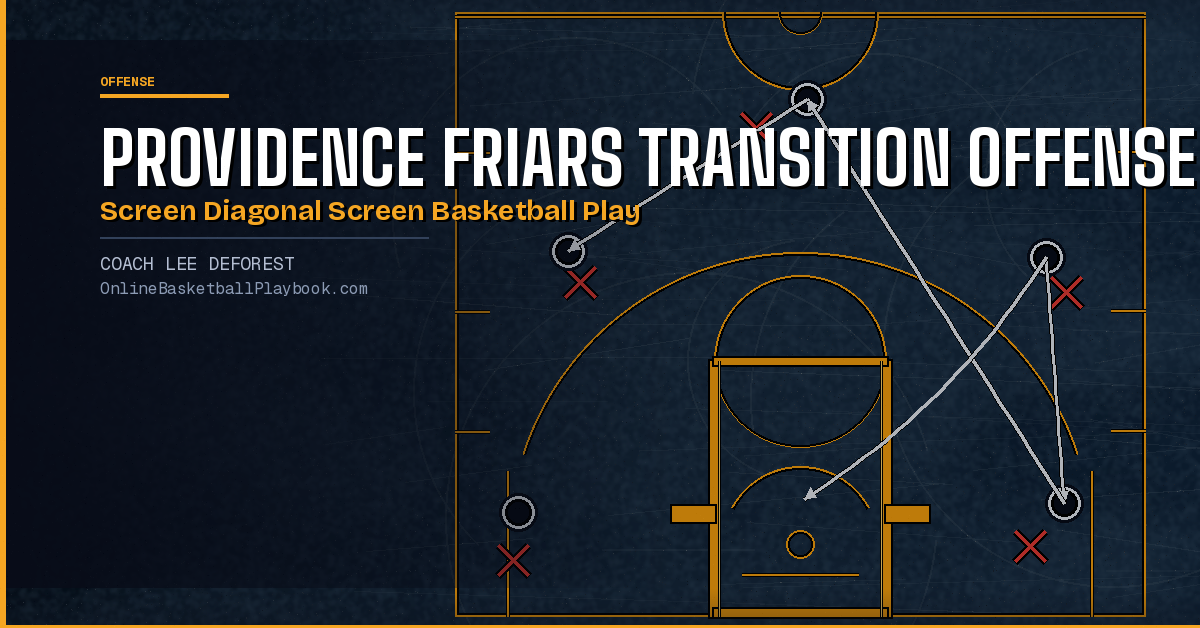
Providence Friars: Transition Offense Back Screen Diagonal Screen Play
Providence Friars: Transition Offense Back Screen Diagonal Screen Play
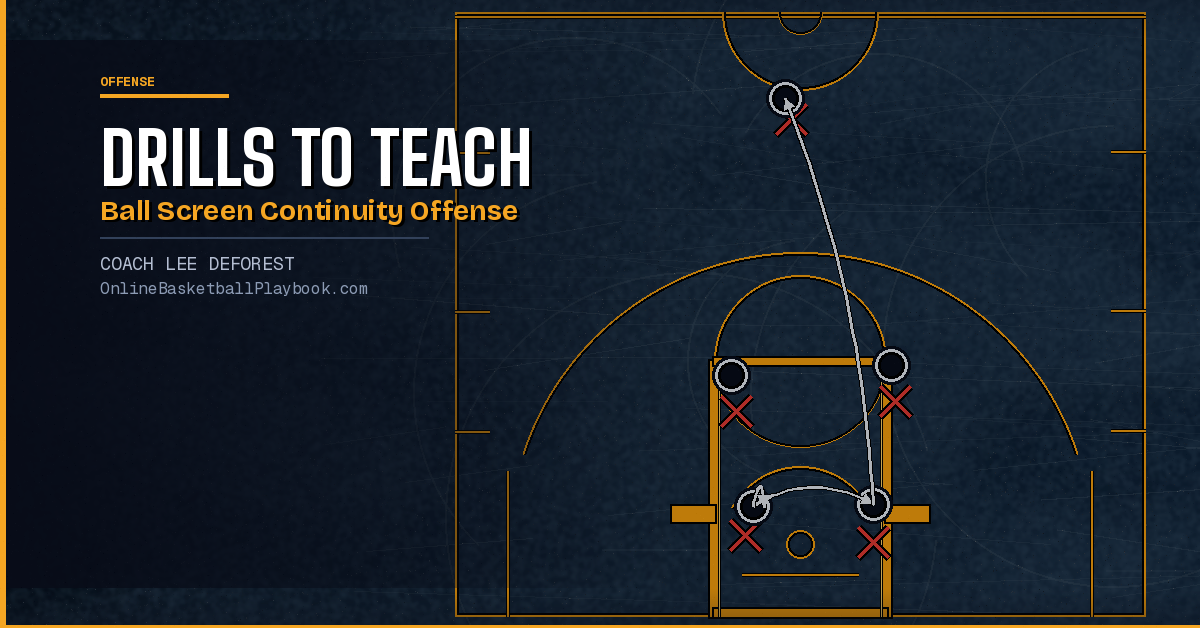
Drills to Teach Ball Screen Continuity Offense
Drills to Teach Ball Screen Continuity Offense