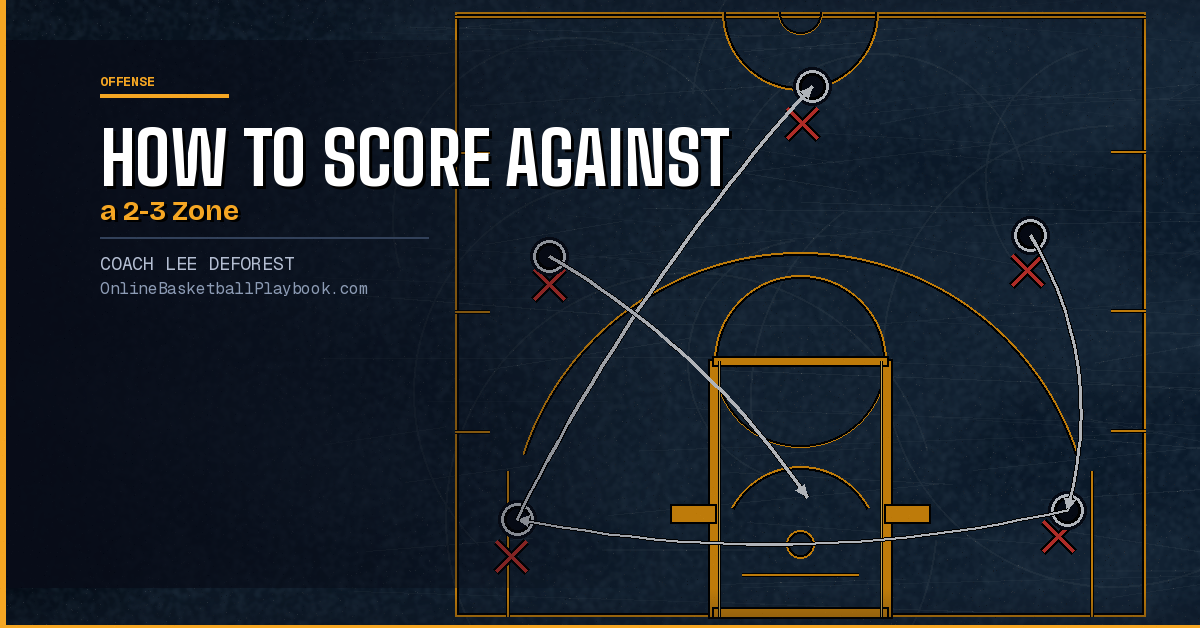

The 2-3 zone walls off the paint and dares you to shoot from the corners. Beat it by attacking its three real weaknesses — the high post, the short corner, and the skip pass — before the defense can rotate.
Understand What the 2-3 Zone Is Protecting
Before you can score against a 2-3 zone, you need to know what the defense is actually trying to do — and what it is willing to give up.
The 2-3 zone lines up with two guards above the arc and three defenders across the baseline. Its goal is simple: protect the paint and the rim. It wants to take away your best interior player and eliminate clean looks at the basket. When run well, it forces your offense to beat it from the perimeter.
But every defense makes a trade. The 2-3's trade is this: in exchange for rim protection, it concedes the high post, the short corner, and anything that comes from quick ball reversal. The two top guards can only cover so much ground. The three baseline defenders are spread along the baseline, which means the area at the elbow and the area just beyond the center's reach — the short corner — are chronically exposed.
Sophisticated 2-3 defenses like the Tandem variant run by programs such as Merrimack actually make this trade deliberately. They accept a contested 10-to-12-foot pull-up jumper from the high post because that shot is worth far less than an open corner three or an uncontested rim attempt. That tells you something important as an offensive coach: a mid-range two from the high post is considered a success by the defense. Your job is to turn that mid-range catch into something better — a corner skip, a dive cut, or a kick-out three.
Once you understand what the zone is protecting and what it is willingly conceding, you can build your attack around its true weak spots instead of running players into the defense's strength.
Flash to the High Post First
The most reliable way to begin attacking a 2-3 zone is to get the ball into the high post — the elbow area just outside the lane, near the free-throw line. This one action forces all five defenders to react at once and puts the zone in its most compromised position.
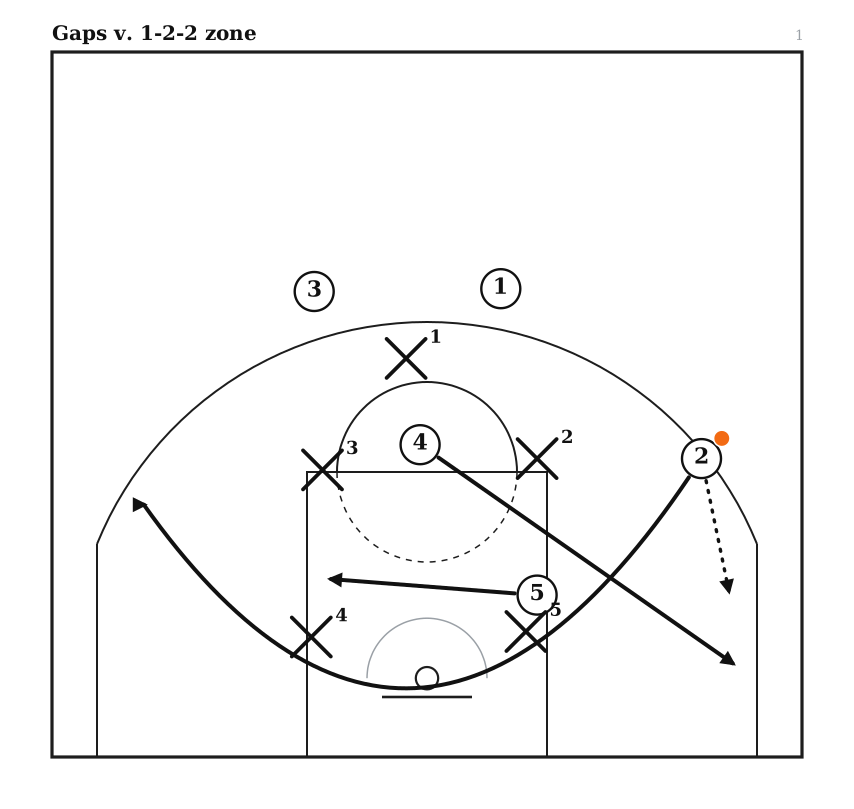
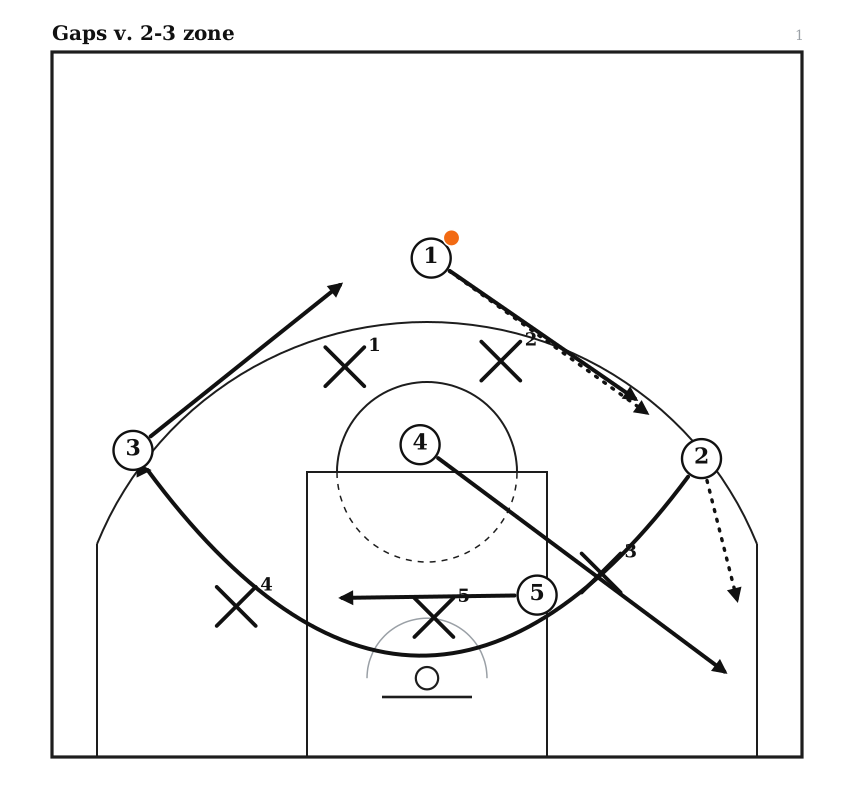
Here is why it works. The two top guards in a 2-3 start close together to deny the direct pass into the lane. But the moment the ball skips to a wing, one guard chases to contain while the other shifts to cover the middle. That creates a window — a gap between the two front defenders — that a cutting big or a smart guard can exploit by flashing to the elbow.
When the ball enters the high post, the baseline three defenders face a crisis. The center (often called X5 in zone teaching) must come up to match the catch. All four perimeter defenders are supposed to sprint to their corner-box positions to remove kick-out threes. If any one of those four is slow rotating, there is an open shooter somewhere on the floor.
Coaching the flash: the player who catches in the high post should not just hold the ball. Read the defense immediately. If X5 is late, attack off the dribble or shoot the mid-range. If X5 arrives quickly, look for the corner skip first, then the baseline cut from a wing. The high-post catch is not the destination — it is the fulcrum that tips the defense.
The player you want flashing to the high post is typically a forward or a skilled guard who can face up, make quick decisions, and hit the mid-range shot when X5 respects the drive. If defenders know your high-post player cannot shoot, they will sag and help on the baseline cuts. Pair the flash with a shooter who commands defensive attention.
Use Corner Spacing to Stretch the Defense
Against a 2-3 zone, spacing is not optional — it is the mechanism that makes every other action work. Without shooters in the corners, the zone's baseline defenders can cheat toward the paint and collapse on any drive or post entry. With corner shooters who demand a closeout, those same defenders are frozen in place, unable to help.
Load both corners. This is the foundational offensive structure for attacking the 2-3. When you have players stationed in both corners who represent genuine three-point threats, you force the wing defenders (X3 and X4) to stay wide rather than sagging into the paint. The center (X5) cannot singlehandedly cover both corners and the paint at the same time.
The wing defenders in a well-coached 2-3 are positioned at free-throw-line extended — forward of the block — so they can close out to the corner quickly. But "close quickly" still takes a step or two. That window is what you are hunting. A skip pass to a corner shooter who has established position and is ready to catch and shoot puts the wing defender in a foot race she may not win.
Spacing also creates the drive-and-kick opportunity. When a ball handler attacks a gap in the zone, one of the baseline defenders must help. If that help defender leaves a corner shooter, the ball handler kicks it to the open corner for the three. If the baseline defender does not help, the ball handler has a clear path to the rim.
One practical coaching point: your corner players cannot be passive. They need to be active receivers — feet set, hands ready, knees slightly bent. A catch-and-shoot moment against zone defense disappears in a fraction of a second. Players who catch and then set their feet are too slow.
Attack With Skip Passes and Ball Reversal
The 2-3 zone is at its strongest when the offense moves the ball slowly and allows the defense to shift, close, and reset. It is at its weakest when the offense reverses the ball faster than the defenders can travel.
The skip pass — a long two-handed pass that flies over the top of the defense from one side of the floor to the other — is the sharpest tool for creating this stress. A well-timed skip from the strong-side wing to the weak-side corner or wing catches the defense mid-rotation. The wing defender on the weak side cannot be in two places at once: she cannot be dropping to the paint to help on the ball-side action and simultaneously be in a closeout stance on the opposite wing.
Well-coached 2-3 teams use a technique called the wing bump to defend skip passes. The weak-side wing defender stunts with her outside foot and outside hand held high, back to the corner, trying to deter both the driving lane and any follow corner skip. This is a stunt, not a full closeout — it buys the defense a beat, but a skip receiver who is ready to shoot can often get the shot off before the defense fully recovers.
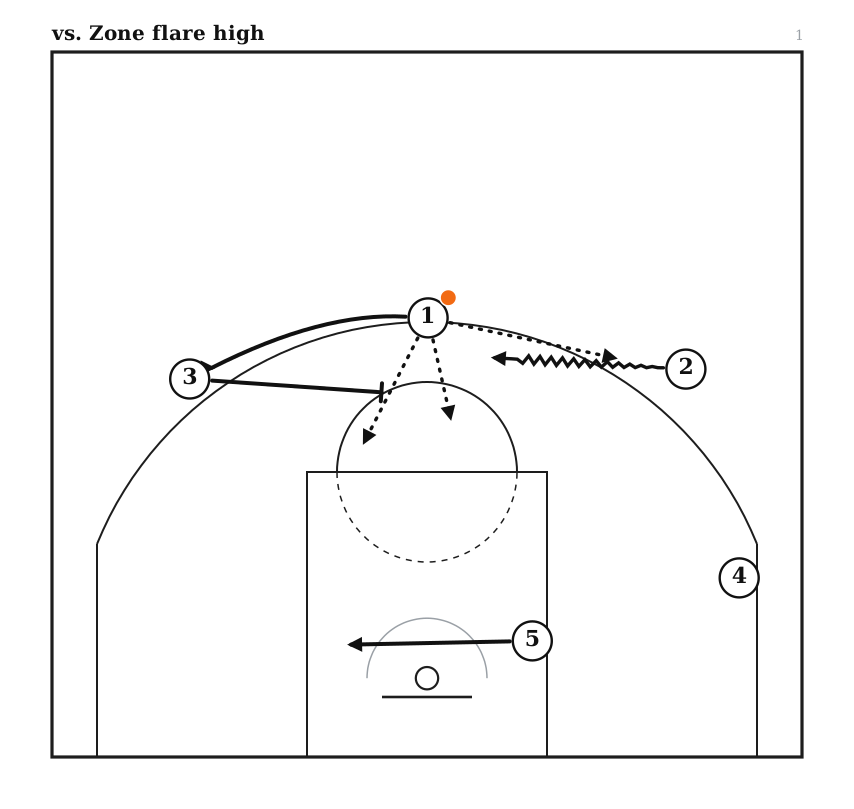
Ball reversal through the high post amplifies the skip pass. When the ball enters the high post, the zone's perimeter defenders expand to their corner-box positions. Now a quick reversal pass from the high post to the weak side finds a wing or corner player with a half-step advantage on a defender who is still arriving. This two-step combination — high-post entry followed by immediate reversal — is one of the most reliable scoring sequences against any 2-3 zone at any level.
The tempo of reversal matters. Slow ball movement lets zone defenses recover. Crisp, decisive passes that change the point of attack in two or three passes — not five or six — force continuous rotation mistakes.
Exploit the Short Corner
The short corner is the area along the baseline between the block and the corner, roughly six to ten feet from the basket. It is the 2-3 zone's most exploitable location and one of the most overlooked by offensive coaches at every level.
Here is the geometry problem the short corner creates for the defense. The center (X5) owns the paint. The wing defender (X3 or X4) is responsible for the corner and the baseline drive. Neither player comfortably owns the space between those two spots. When the ball enters the short corner off a baseline cut, a corner entry, or a post feed, X5 must step out to contest — but stepping out means vacating the paint. That creates a dive-cut opportunity from the weak side that is close to the basket with no help defender available.
Well-coached 2-3 defenses have answers for the short corner. The primary answer is X5 stepping to contest while the weak-side wing rotates under the basket to take the dive cutter. The secondary answer is a trap with a wing and X1 in a triangle around the short-corner catcher. Both coverages require precise timing and communication. When one defender hesitates or miscommunicates the coverage assignment, the short corner produces high-percentage shots.
To attack the short corner offensively, you need a player — typically a forward — who can receive in a tight space, face up quickly, and make an immediate read: shoot the short-corner mid-range, drive the baseline, or hit the cutter coming under the basket. The short corner is not a place to dribble twice and figure it out. It is a place to catch, read, and act in one motion.
Pair the short-corner action with a corner shooter on the same side. If the wing defender has to worry about closing out to the corner, she has less time to help in the short corner. If X5 steps out, the dive cutter is open near the rim. These two threats feed each other.
Beat It Before It Sets
Every transition coaching principle you have ever heard becomes doubly true against a 2-3 zone. The defense's three baseline players — the ones who give it its rim protection — need time to get to their spots. Catch them in transition and you face a 2-3 zone with only one or two defenders in place instead of five.
Push the ball after every make and every miss. When the opposing defense sprints back and sets up their zone before your offense is organized, you are playing into their strength. When you beat the press or the initial sprint back with a quick outlet and a controlled push, you attack before the alignment is complete.
Look for the early trailer in transition — typically a forward running behind the initial ball handlers. Zone defenses focus on the ball and the perimeter in transition; they often lose track of the trailing big. That trailer filling to the high post in a two-on-three or three-on-four situation catches the zone completely unprepared for the high-post flash principle discussed earlier.
If early offense is not available and you reset into a half-court set, use baseline out-of-bounds plays and timeouts as opportunities to dial up your best zone actions in a controlled environment. Zone defenses sometimes lose focus guarding a BLOB or coming out of a timeout break. Your most rehearsed zone-attack actions should be available as set plays, not only as your half-court offense.
A high-post flash combined with corner spacing is the textbook 2-3 buster — attack both soft spots simultaneously and the defense cannot cover the floor.
— two-three-zone.md, Basketball Vault
Putting It All Together
None of these actions work in isolation. The reason the high-post flash is so powerful is that corners are loaded with shooters. The reason skip passes are dangerous is that the high-post entry forces the defense to expand first. The reason the short corner produces easy shots is that the corner spacing froze the wing defender. Every piece of the attack supports every other piece.
Here is a simple sequencing framework you can teach your team. Call it a three-step zone attack:
Step one: Load the corners and flash to the high post. This is your opening action on every possession against the 2-3. It forces the defense to make its first rotation decision immediately.
Step two: Read the defense from the high post. If X5 is late, shoot or attack. If X5 arrives and corners are open, skip to the corner. If the weak-side wing is caught in no-man's-land, skip to the wing for a three or a drive.
Step three: If the first read does not produce a shot, reverse the ball quickly and reset the sequence. The zone will be in a slightly different position on the second or third reversal — now the short corner opens up, or the skip pass finds the corner shooter a step earlier in her catch.
The teams that consistently score against 2-3 zones are not necessarily teams with the most talent. They are teams that understand the geometry of the zone, move the ball at a tempo the defense cannot match, and play without hesitation at the moment of the catch. Train those habits and the 2-3 zone becomes a defense you welcome rather than one you fear.
Run a five-minute zone-attack drill at least twice a week in practice: five offensive players versus a live 2-3 zone with no dribbling allowed for the first two passes. The no-dribble constraint forces your players to move the ball quickly, read the defense with their eyes instead of their feet, and develop the spatial awareness that makes every zone-attack principle click under game conditions.
- Load both corners with shooters on every half-court possession — if corners are empty, the zone's baseline defenders can sag into the paint and shut down your interior options.
- Flash a forward or skilled big to the high-post elbow immediately after the ball enters the wing — this forces all five zone defenders to rotate simultaneously and reveals the open spot.
- Use skip passes that arrive before the weak-side wing can recover — a receiver who catches in rhythm and shoots in one motion beats the wing-bump stunt every time.
- Attack the short corner with a forward who can catch, read, and act in one motion — then pair it with a corner shooter on the same side so the wing defender cannot be in both spots.
- Reverse the ball in two or three passes, not five or six — slow ball movement is the zone's best friend; tempo reversal exposes rotation mistakes before defenders can recover.
- Push in transition after every make and miss — the 2-3 zone's rim protection disappears when the three baseline players haven't reached their spots yet.
Want more basketball coaching strategies, drills, and tools?
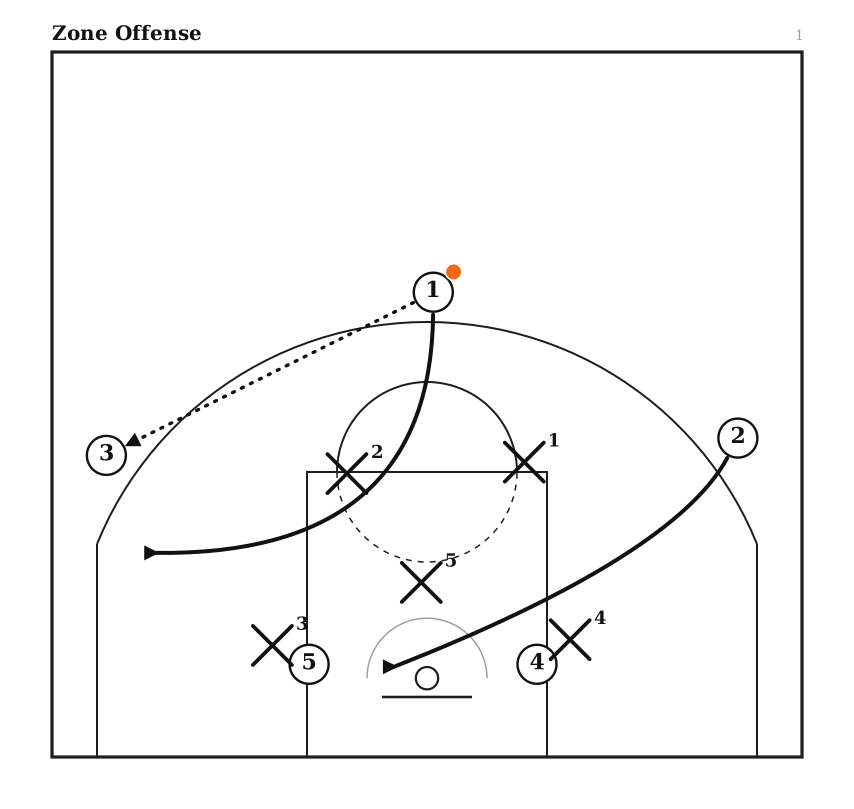
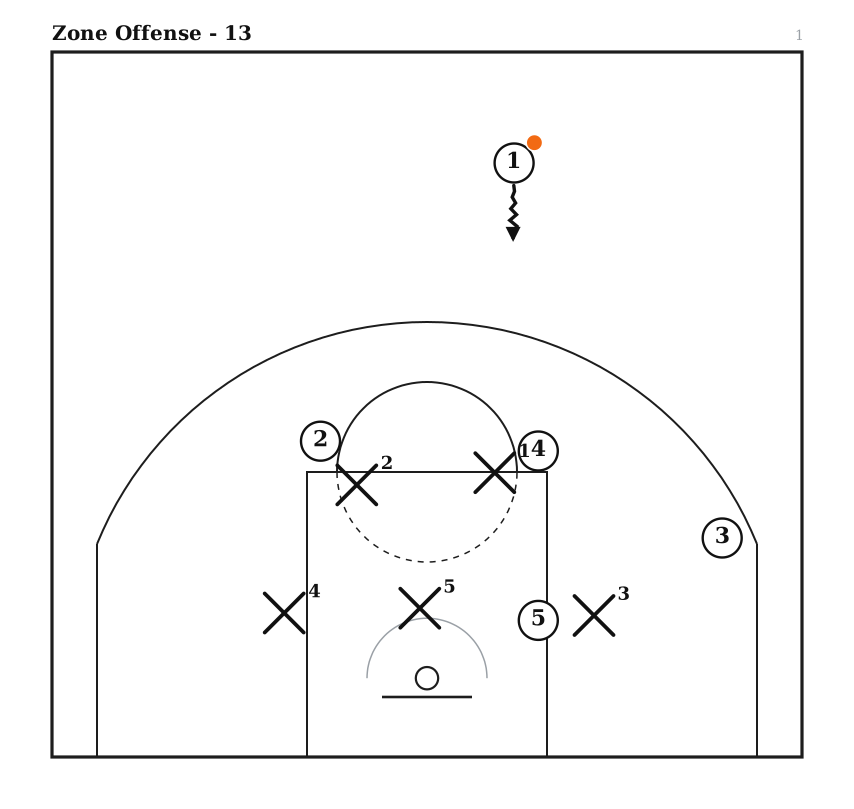
See it drawn up
Related diagrams
Keep Building
Related breakdowns
Strategies for Coaching Against Zone Press Defenses
Strategies for Coaching Against Zone Press Defenses