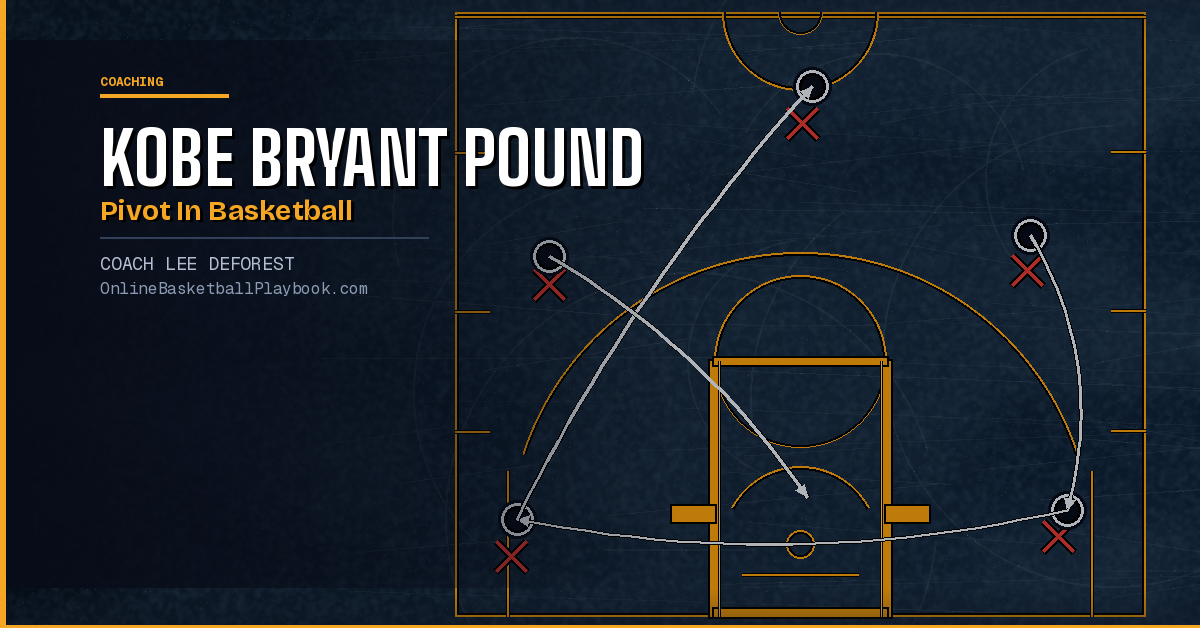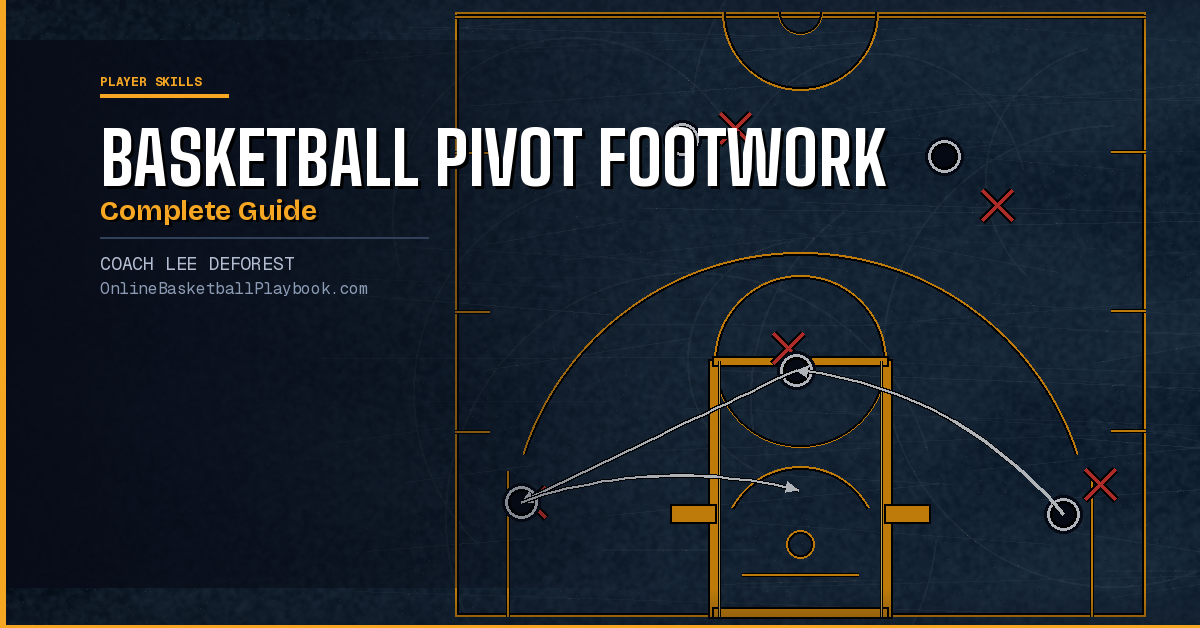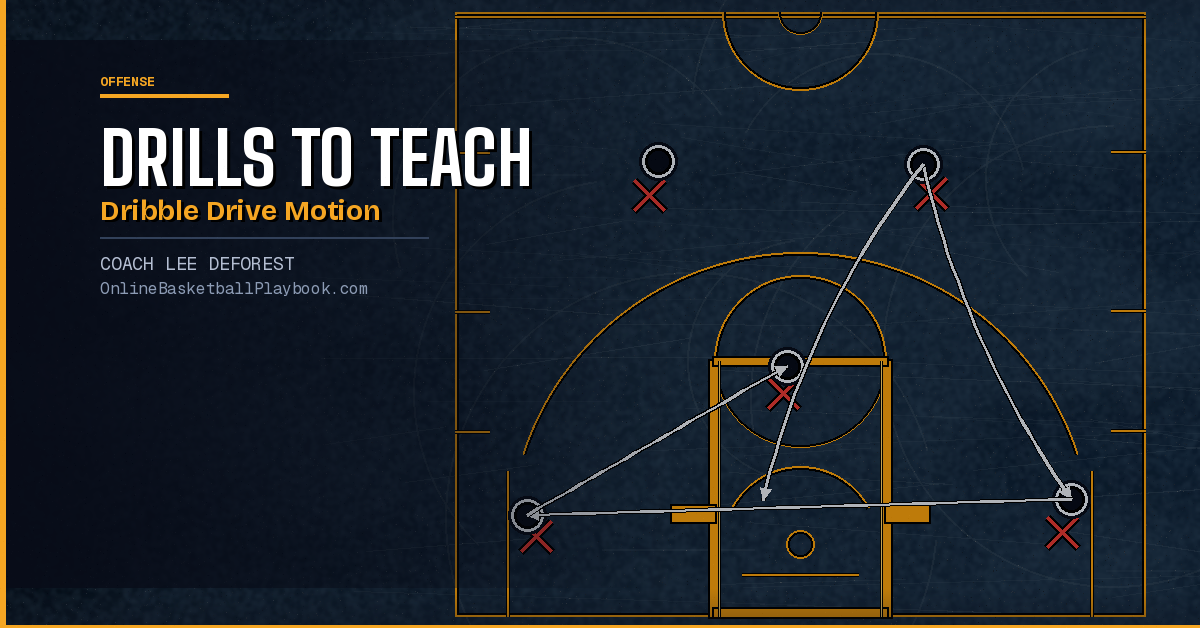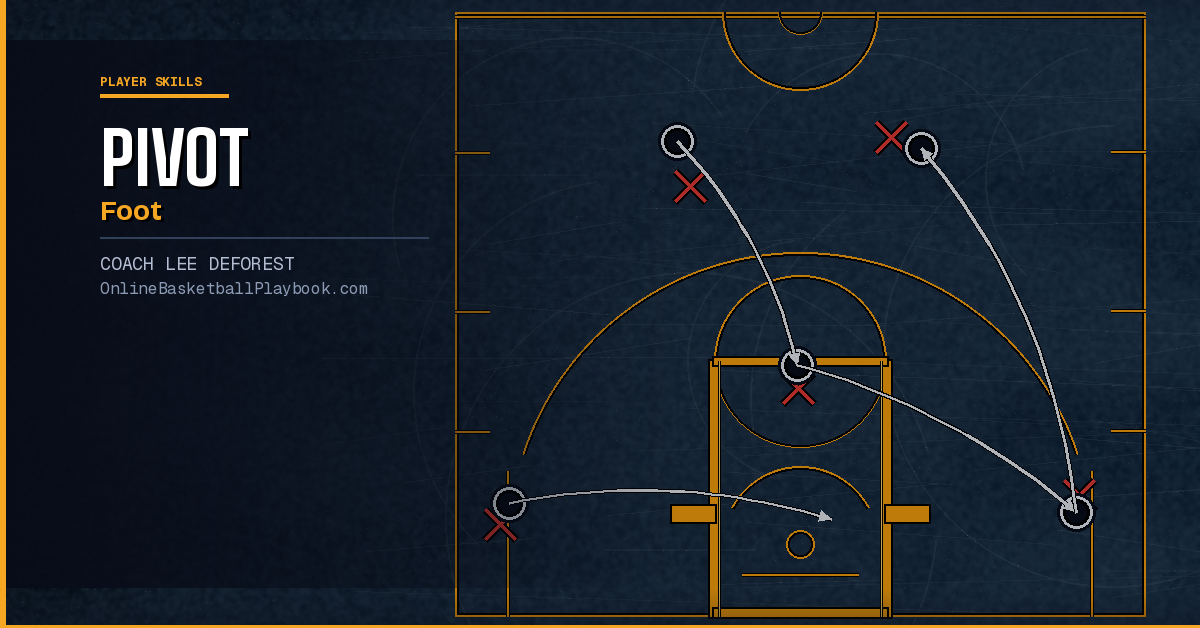

Your pivot foot is the foundation of every move you make once the dribble stops. Master the rules and the mechanics, and you gain a legal, repeatable way to create space, read defenders, and attack from any angle.
The Rules: What Is a Pivot Foot?
Once a player ends their dribble — or catches a pass while stationary — one foot must stay planted on the floor. That foot is the pivot foot. The rule is simple: the pivot foot cannot be lifted and returned to the floor before the ball is released on a pass or shot. If it comes up and goes back down, that is a travel.
There are two ways to establish a pivot foot. First, if you catch the ball while stationary, the foot you choose to keep planted becomes the pivot foot — you decide instantly, and the choice is binding until you shoot or pass. Second, if you catch the ball while moving, the two-count stop rule applies: the first foot to touch on a stride stop becomes the pivot foot. Understanding this distinction stops most traveling calls before they happen.
Under standard rules (NBA, FIBA, and college), the pivot foot may rotate in any direction around its point of contact, but the point of contact itself cannot move. The heel can lift — only the toe must stay touching the floor — but the toe cannot slide or shuffle to a new spot. Youth referees often miss the heel-lift distinction; teaching it explicitly prevents confusion during games.
One more rule players frequently misread: a player who catches the ball with both feet already on the floor may use either foot as the pivot. This is not a foul or a violation — it is the legal two-foot catch, and it gives the offensive player maximum options for their next move.
How to Establish Your Pivot Foot
The most reliable way to arrive at a clean pivot foot is the jump stop. On any catch or killed dribble: take a small hop and land on both feet simultaneously. This bunny hop — as John Kimble calls it in his complete footwork taxonomy — preserves the right to choose either foot as your pivot foot. You delay the decision until you see the defender's position, then designate one foot and move from there.
The stride stop is the alternative. You receive the ball mid-stride, the first foot down is your pivot foot, and the second follows. This is faster but gives you less flexibility — you have already committed to a pivot foot before you have read the defense. Use the stride stop when you are catching on the move and need to shoot immediately. Use the jump stop when you need to read before committing.
Body position on the catch matters as much as foot position. The classic "quick stance" — weight on the balls of the feet, head over midpoint, knees bent, ball protected — is the base every coach worth listening to comes back to. You cannot pivot cleanly from a high, upright catch. The balanced athletic posture is the prerequisite. Teach it before the move.
The Permanent Pivot Foot Concept
Some coaches — Mike DeVillibis among them — teach a permanent pivot foot: every player picks one foot and uses it exclusively all year long. The benefit is muscle memory. When players rotate between feet situationally, they spend mental bandwidth deciding. When the pivot foot is always the same foot, the decision is already made and the player can focus on reading the defense.
For most players, the permanent pivot foot is the same-side foot as their shooting hand. A right-handed player keeps the right foot planted and swings the left freely. This naturally squares the shooting shoulder and simplifies the step-through to the right. There is nothing wrong with being situationally flexible at the advanced level, but for youth players and new guards, the permanent pivot foot builds consistency faster.
Front Pivot vs. Reverse Pivot
Two directions of rotation. Two very different uses. Coaches who teach the pivot without specifying which type to use in which situation end up with players choosing by habit rather than by read — and habit picks the wrong pivot often enough to matter.
The front pivot (also called the forward pivot) swings the free foot forward, rotating you to face the direction you are stepping. When you catch the ball facing away from the basket and want to face up quickly, the front pivot off the inside heel is the cleanest path to a shooting position. Kimble's inside-heel pivot rule applies here: drive the heel of the inside foot down at the exact moment the ball hits your hand, stop lateral momentum, then swing the outside foot around to square up. This stops the two most common shooting errors — falling away and floating sideways.
The reverse pivot (drop step or spin pivot) swings the free foot backward, rotating you away from the direction you started. When you catch the ball as a passer or driver and have no immediate shot, the reverse pivot off the outside foot frees the baseline foot and keeps you positioned to attack either direction. The rule of thumb: if you plan to shoot immediately, front-pivot off the inside heel. If you plan to drive or pass, reverse-pivot off the outside foot and keep your options open.
Kimble's situation-specific pivot decision tree is the most practical framework in coaching literature on this topic. Backcourt outlet receive: front pivot off outside foot, turn away from unseen pressure. Frontcourt catch, instant shooter: front pivot off inside heel. Frontcourt catch, passer or driver: reverse pivot off outside foot. Box-out on the shooter: front crossover pivot into the shooter's path. Box-out one-pass-away: reverse pivot off the trail foot. The decision must be made before the catch — coaches communicate this through play design.
Dead-Ball Moves Built on the Pivot
Once the dribble is dead, the pivot foot is the engine of your entire offense. This is what separates players who go dead on the catch from players who remain dangerous. A skilled ball handler with a dead dribble and a solid pivot foot can still create a shot, get a teammate open, or draw a foul.
The basic dead-ball move sequence starts with the jump stop. From there, Kimble names four phases against a live defender:
Jump stop: land simultaneously, designate pivot foot. Step-out: the free foot steps laterally — due east or west, not north or south — outside the defender's lead foot. If your foot beats the defender's, look to pass. Rip-through: if the step-out is defended, rip the ball low and hard across the shoe tops (inches from the floor), front-pivot the free leg across the defender's face, ball protected beside the free knee. Most defenders will not get that low. Swing-around: if the rip-through is defended, a second front pivot back to the original side probes the middle. If both trappers have spread, split the gap — chin the ball, elbows out, step through like a fullback.
The shot fake is another dead-ball weapon the pivot foot enables. A convincing shot fake — head down, ball up, slight bend at the knees — draws the defender off the floor. The pivot foot stays planted, the free foot steps through, and the offensive player attacks the now-off-balance defender. The shot-fake-to-one-dribble pull-up is a formally drilled finishing move at the highest levels of the game, not an improvisation. Train it that way.
Live-ball moves: attack off the dribble before you have picked it up — jab-and-go, jab-and-shoot, crossover, hesitation, change-of-direction into a shot. Dead-ball moves: once the dribble is used, create with pivots, shot fakes, and step-throughs. Know which you are in.
— Finishing & Footwork, Basketball Vault
The Jump Stop: Your Most Versatile Tool
If you could only teach one footwork concept to young players, the jump stop would win. Every other footwork skill branches from it. The two-foot simultaneous landing — Kimble calls it the two-foot bunny hop — is the one-count equivalent of the stride stop, but without the commitment to a pivot foot until you land and read.
DeVillibis makes a jump-stop-only layup rule the foundation of his early-season teaching: for the first two to three weeks of practice, every layup must end with a jump stop before the finish. No running layups. No stride-stop finishes. Jump stop only. This sounds restrictive, and players initially feel slowed down. But the rule forces two things: proper gathering before the finish, and natural awareness of help defense. A player who jump-stops before every layup cannot blow through a help defender on a lucky step. They have to see the defender and choose to go around them or through them — which is the actual skill.
The teaching cue is straightforward: "Catch the ball with your feet in the air — it allows you to be balanced." When players hear "catch the ball with your feet," they land softer and more deliberately. The cue works at every age level.
For ball handlers killing the dribble, the jump stop is equally important. Ending the dribble with a jump stop instead of a stride stop means arriving at a legal, balanced position rather than stumbling to a stop. Referees see jump-stop endings as clean, controlled movement. Players who routinely stride-stop pick up more borderline travel calls because the stride-stop is mechanically harder to execute legally under pressure.
Common Pivot Foot Mistakes and How to Fix Them
Three mistakes account for the majority of traveling calls and missed opportunities at every level from youth through high school.
Lifting the Pivot Foot Before Releasing the Ball
The most frequent travel call. A player catches, pivots, and the pivot foot comes up before the ball leaves the hand. Usually caused by rushing — the player is trying to get to the shot or the pass so quickly that the foot lifts with the body before the release. The fix is the Antoine Walker cue, which Kimble cites: "Get my feet set. Get my hands ready. Get my legs up under me." Sequence matters. Feet first, then the ball. Film the player from the side and show them the sequence — seeing the foot come up before the ball releases cures the habit faster than any verbal cue.
Sliding the Pivot Foot Instead of Rotating
Players under defensive pressure have a tendency to shuffle the pivot foot rather than rotate it. The toe slides several inches, the ref blows the whistle, and the player has no idea why. Cure: practice pivots against a wall. The player's pivot foot heel touches the baseboard. They can rotate freely but cannot slide the foot without the heel hitting the wall. Run five minutes of this at the start of any individual workout focused on footwork.
Choosing the Wrong Pivot Direction
Players who have not been taught the front/reverse decision tree default to the same pivot regardless of situation. The player who always front-pivots gets exposed by overplay — there is no counter. The player who always reverse-pivots loses shooting rhythm because the reverse pivot takes longer to face up. Teach the decision tree explicitly. Drill both directions every session. The cue is the question before the catch: "Will you shoot immediately?" If yes, front-pivot. If no, reverse-pivot.
When a player keeps getting called for traveling after killing the dribble, the problem is almost never the pivot foot itself — it is the catch. Players who receive the ball off-balance and high cannot execute a legal pivot because their weight is already moving before their feet are set. Prioritize the "quick stance" catch (weight on the balls of the feet, head over midpoint, knees bent) and the traveling calls drop without ever drilling the pivot directly. Fix the catch and the pivot cleans itself up.
Drills to Own Your Pivot Foot
Footwork is trained, not taught. Verbal explanations establish the concept; repetition at game speed builds the reflex. These drills come from Kimble's complete footwork system and from DeVillibis' three mini-clinic framework.
Circle Footwork Drill for Shooters
Three to four players per free throw circle (a standard gym has seven circles, so you can run the entire team at once). Players jog clockwise around the circle. On the whistle, each player tosses the ball to themselves, catches it, and pivots off the inside heel of the inside foot — squaring to the center of the circle as if it were the basket. No shot taken. Coach stands at the center and can observe every player's footwork simultaneously. Run in both directions for equal reps on each foot. This is mass-training the inside-heel pivot without using any baskets.
Offensive Pivoting and Passing Breakdown Drill
Three-person groups: dribbler, defender, and pass receiver. The dribbler practices the full jump-stop-to-step-out-to-rip-through-to-swing-around sequence against a live defender while the receiver catches and shoots. Fifty-five-second rotations, three-minute rounds. Run two rounds so each player reps both pivot feet as the designated pivot. Six minutes total covers the full team's footwork and passing and shooting simultaneously. This is the most efficient multi-fundamental drill in Kimble's system and belongs in every pre-practice warmup.
Wall Pivot Drill
Individual or small group. Player stands with the heel of the pivot foot touching a baseboard or wall. They practice front and reverse pivots, making sure the heel never slides along the wall. The physical constraint is the feedback — no whistle needed, no coach standing over the player. Run two minutes on each foot as a warm-up before any skill workout.
Jump-Stop Layup Rule (DeVillibis)
During the first two to three weeks of the season, every layup in practice ends with a jump stop before the finish. No stride-stop layups allowed. This is not a full-season rule — it is a habit-installation rule. Once the jump stop is automatic, allow stride-stop finishes back into the menu. But for those early weeks, the restriction is deliberate: it trains the gather before the finish and builds the natural read of help defense.
- Jump stop before every killed dribble: land on both feet simultaneously, preserve the right to choose either pivot foot, then read the defense before committing to direction.
- Inside-heel pivot for shooters: drive the inside heel down at the exact moment the ball arrives, stop lateral momentum, then swing the outside foot to square up — prevents drift and falling away on every catch-and-shoot.
- Front pivot for instant shooters, reverse pivot for passers and drivers: make the decision before the catch based on play design — communicate it to receivers so they arrive at the right pivot automatically.
- Step due east or west when passing out of a dead dribble: lateral steps around the defender; straight north is for drivers only — the "scrape the shoulder" cut-off angle that takes away the defender's recovery path.
- Rip-through is inches off the floor: the rip-through only works if the ball travels at shoe-top level — a mid-body rip gets deflected; a floor-level rip almost never does.
Want more basketball coaching strategies and drills?
Keep Building
Related breakdowns