
The best point guard drills train decisions, not just dribbling. This guide gives coaches a full drill menu — from ball-handling circuits to live reads — built for real practice time.
Why Isolation Drills Build Smarter Point Guards
Most coaches run too much 5-on-5 too early. The point guard makes bad decisions in scrimmage, and the coach stops play to explain the read. The player nods. The next possession, the same thing happens. The drill design is the problem, not the player.
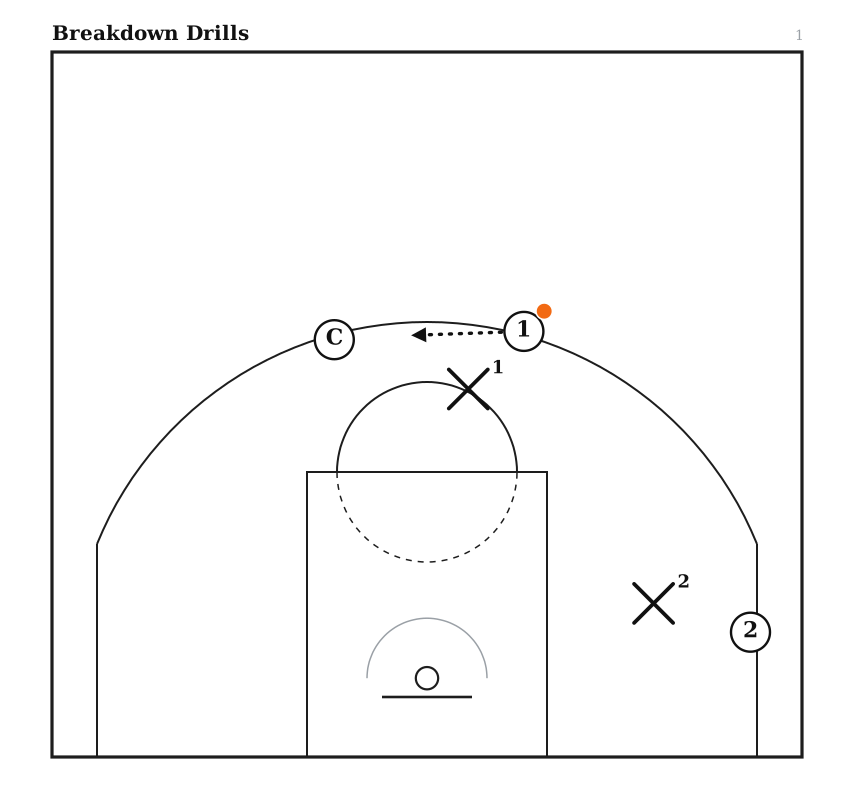
The fix is to use breakdown drills — part-whole drills that isolate one read or one skill at a time before scaling to the full offense. This is how top programs install an offense at every level, from youth leagues to the NBA. You teach the point guard a single decision, put them in a drill that forces exactly that decision thousands of times, and then connect the decisions into chains. The player owns the read before they ever see it in a scrimmage.
The core design principle, pulled directly from championship practice structures, is this: each drill enforces a single decision or skill, not the whole offense. When you put too many variables in front of a developing point guard at once, they guess. When you remove the noise and isolate the read, they learn it. Once they own it at game speed under pressure, you layer in the next decision.
This is not a soft approach. It is a faster one. Constraint-based drills — where a rule like "mid-range equals a turnover" forces a specific outcome — teach shot discipline without a lecture. Scored drills with penalties for turnovers create the same pressure your point guard will feel in a close game. The point of the drill is to manufacture real decision-making pressure at scale, so the game feels slower.
Every drill in this guide follows three design rules: isolate one read, run it at game speed, and score it. If you can't score the drill, add a competitive element. If a player can coast through it, tighten the constraint. Let's get into the specific drills.
Ball-Handling and Pressure Drills
Ball-handling drills for a point guard should do double duty — build toughness with the ball while developing decision triggers. Straight stationary dribbling has its place in early development, but practicing point guards need the ball moving toward a read.
The 12-Second Drill
Set a timer for 12 seconds. The point guard must advance the ball from baseline to half-court and make a pass or a shot decision before the clock hits zero. This is not a race — it is a pressure simulation. The defense counts it out loud. Run this daily at the start of practice before any other ball-handling work. The time limit trains urgency without drilling sloppiness.
Dribble-Weave vs. Human Cones
Instead of stationary cones, use coaches or managers as "human cones" who can move slightly and give the point guard live body to react to. The dribbler must change hand, speed, and angle around each human cone while keeping their head up and reading the next obstacle. This builds the habit of dribbling without looking at the ball while processing spatial information — which is exactly what a point guard does on every possession.
The J-J Touch Drill
Place a cone at a specific spot on the floor. The point guard must dribble to the cone, touch it, and return to a catch point to receive a pass and shoot. The rule: they must make two to three consecutive shots before they rotate. Critically, the player should not be standing still waiting to shoot. The drill builds the habit of moving to the catch, not drifting and settling. Run it from both sides of the court at elbow-extended distances.
Each drill enforces a single decision or skill — not the whole offense. Constrain the environment to coach the behavior you want, and add competition so the player has to execute it under real pressure every single repetition.
— Offensive Breakdown Drills, Basketball Vault
Catch-and-Shoot Drills for Point Guards
A point guard who cannot shoot off the catch is easier to guard. Defenders don't have to respect them beyond the arc, which collapses spacing for every other player on the court. Teaching point guards to shoot off the catch — with correct footwork before the ball arrives — is one of the highest-leverage investments a coach can make.
The Hays Footwork Drill
This is an elbow-to-elbow self-pass drill with a hop. The player throws the ball with an underhand toss to the opposite elbow, reads where the ball is going, and hops into the shot with squared footwork before the ball arrives. This simulates catch-and-shoot footwork without a passer. Run 20 to 25 reps per side. The key is that the feet are moving toward the ball, not catching flat-footed and then adjusting. Footwork always precedes the ball.
Olympic Shooting
Set up five spots around the arc. The point guard moves through all five spots on each made basket, shooting and then sprinting to the next position. A coach or manager feeds each pass with the ball already chest-height so the player must be "locked and loaded" — squared before the catch, not catching and then squaring. This drill builds conditioning alongside shooting volume, so late-game shots carry the same mechanics as the first shot of practice.
Five-Spot Shooting
The player works from five designated spots, making a target number of shots before rotating. Add a free-throw validation rule — after hitting the target at each spot, the player must make a free throw before moving on. This trains a shift in focus and footwork mid-drill, which mirrors the pressure free-throw environment in games. Track makes per minute and post the results. When the board is visible, competition takes care of the motivation.
Backpedal Catch-and-Shoot
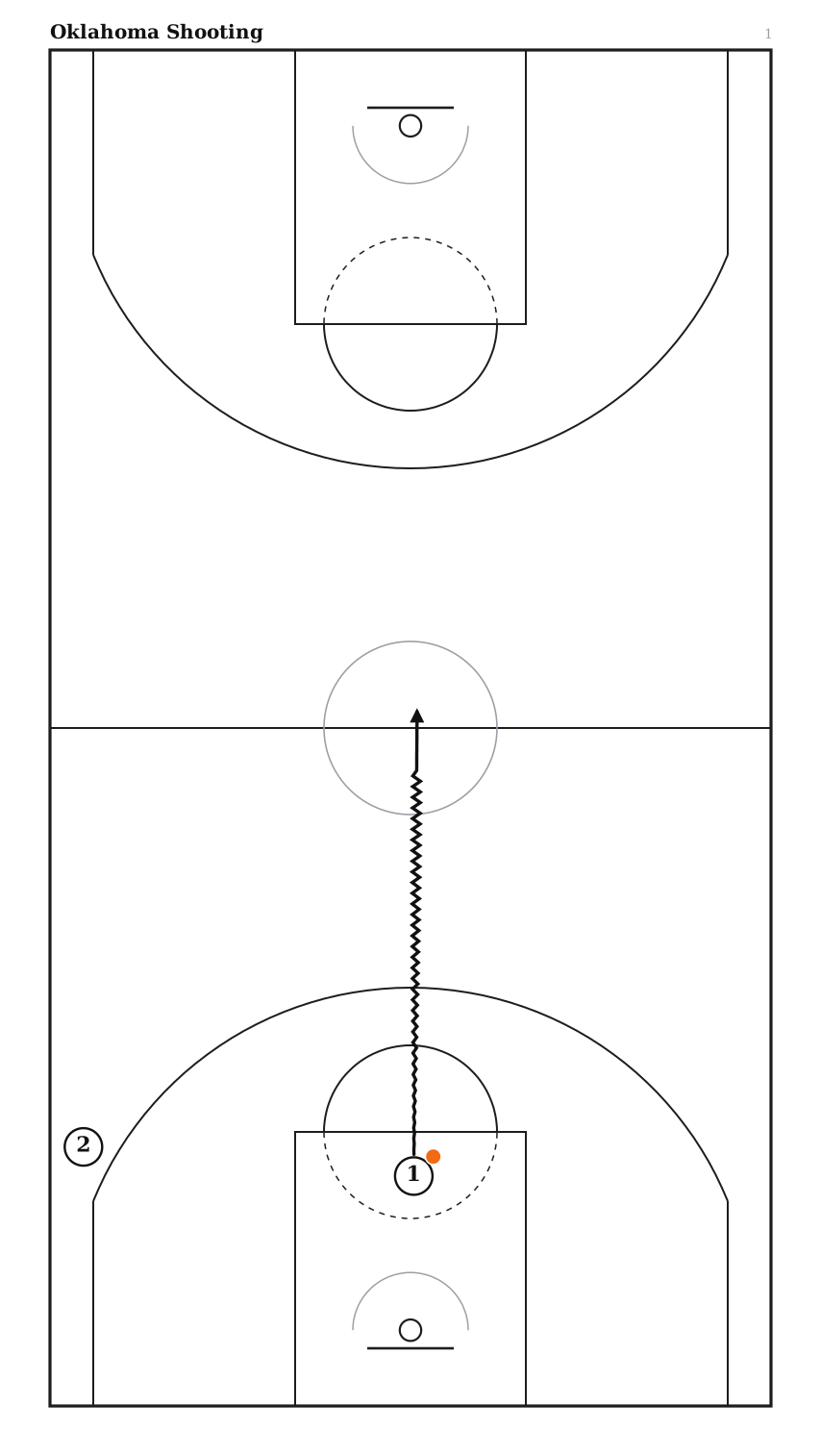
The point guard backpedals to half-court, then sprints to a baseline catch point and receives a pass on the move. They must shoot off one or two dribbles maximum. Running this drill backward first builds the habit of catching while moving at game speed. Catching flat-footed in practice is why players catch flat-footed in games. This drill corrects the cause, not the symptom.
Live Decision Drills: 1-on-1 and 2-on-2
Ball-handling and shooting drills build the tools. Decision drills put them to use under live pressure. The best point guard decision drills start with one clear read, then layer in a second defender who changes the read.
1-on-1 from 15-20 Feet
Start the point guard with the ball at the top of the key or wing, 15 to 20 feet from the basket. The defender is in a live guard stance. The guard must make a decision — attack the basket, pull up, or pass back to the coach — within three dribbles. No more. The dribble limit is the constraint. Without it, players will kill time instead of making a read. Rotate defenders frequently so the guard sees different body sizes and positions.
Partner Penetrate-and-Pitch
Two players work at 20 to 25 feet. The point guard drives toward the basket with live ball and must kick to the partner at a guard-forward angle or a baseline-release angle. The partner shoots the pitch. Run the drill both directions and switch roles every five reps. This installs the drive-and-kick chain — one of the most important reads a modern point guard must own — without the noise of a full half-court set.
2-on-2 Live with a Decision Built In
Two offensive players versus two defenders, starting from a set position. The coach controls the starting advantage — if the ball is on the outside hip of the guard, the baseline drive is open; inside hip means middle drive. The defender on the ball must touch the sideline marker before guarding. This one constraint gives the point guard a built-in read that matches what they will see in a game. Run three reps from each start position before switching roles. The guard learns to process the cue quickly and act on it, which is the skill that carries over to 5-on-5.
When running live decision drills, use guided defense rather than full resistance at first. A defender who gives a trail, a cut-off, or a neutral approach — rotating through three looks for three reps — gives your point guard repetition without repetition. They see three different reads from the same starting position, which is far more valuable than three identical possessions at full defense.
Transition and Conditioning Drills
The point guard is the engine of transition offense. They must push the pace, read numbers advantages, and make decisions while physically fatigued. Drills that train transition without conditioning are doing half the job.
Full-Court Speed Layups
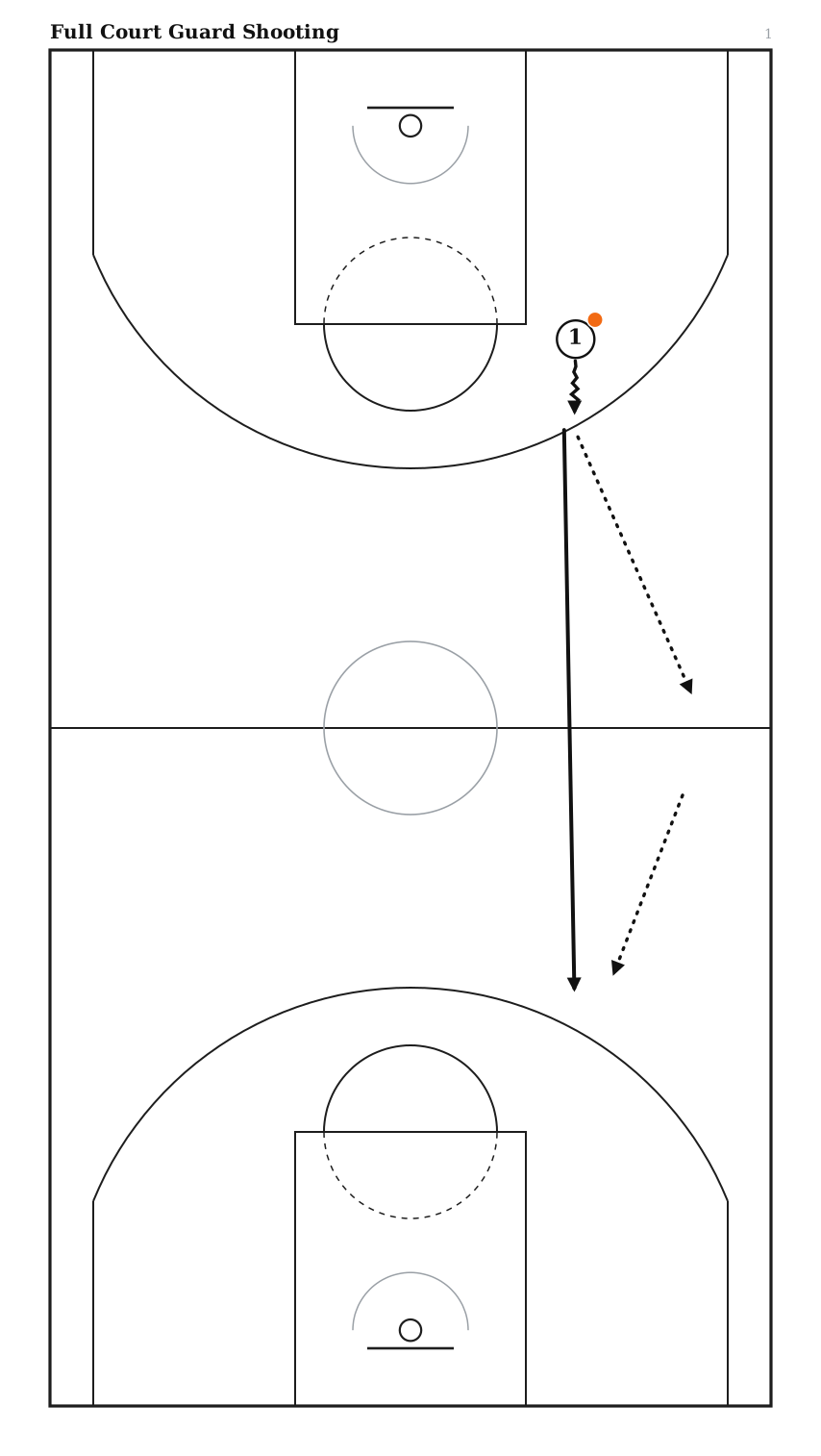
The target is 50 makes in 2 minutes. Two lines, two balls, layups and outlets on both ends. The point guard plays as the primary outlet receiver and decision-maker — when to push, when to pause, when to set a teammate up for a better finish. This is a conditioning drill that trains transition instincts at the same time. Track the count and post it. Teams that hit 50 consistently are in better transition shape than teams that run suicides.
11-Man Continuous 3-on-2
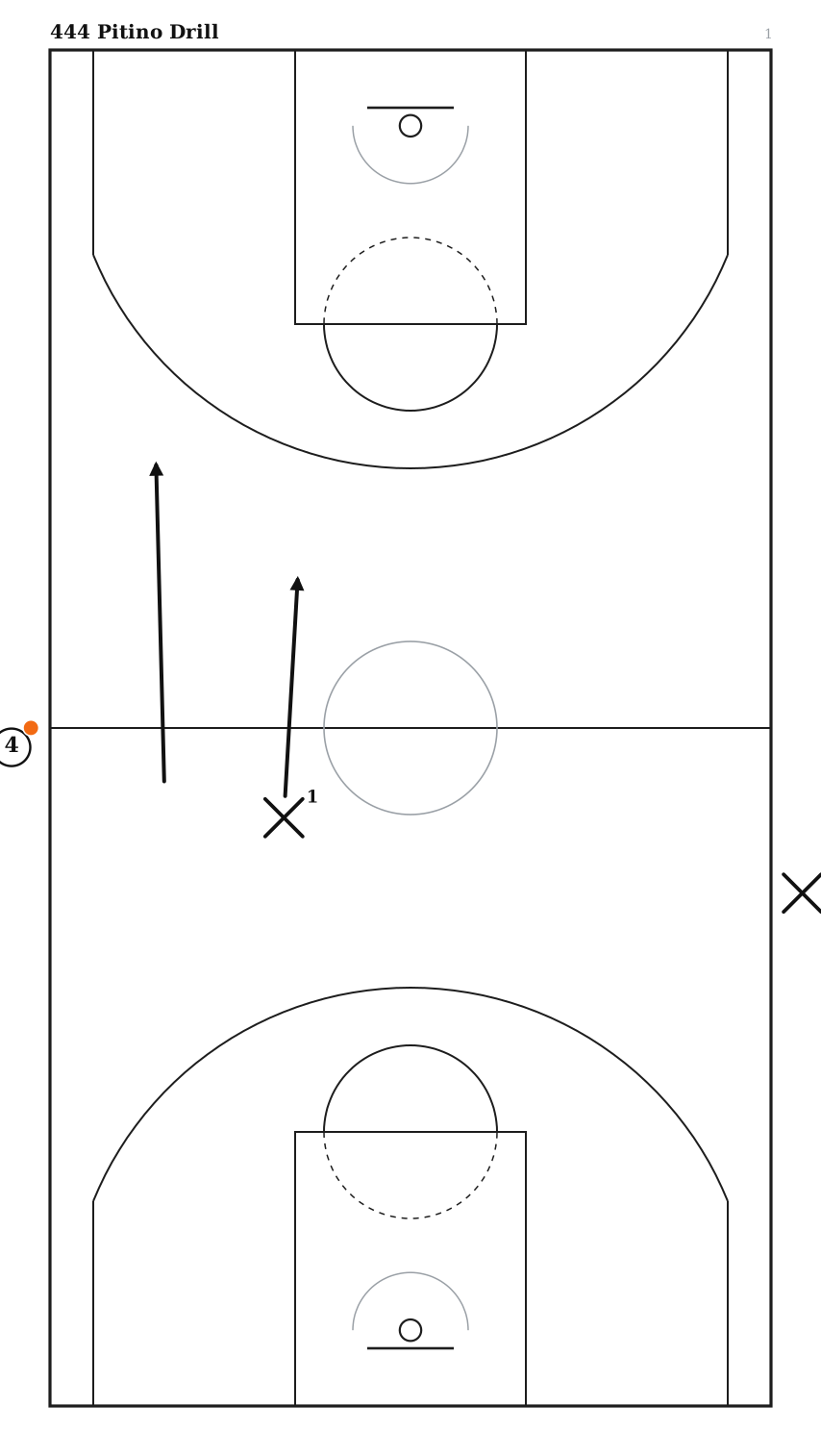
Three offensive players attack two defenders. After the possession ends, the rebounder and two defenders push the break the other direction. The point guard must outlet quickly, fill a wide lane, and read whether to take the early shot or swing for a better look. The continuous nature of this drill is the point — it never stops. Transition decisions made while winded are the ones that matter in the fourth quarter. Run this for four to five minutes without stopping and watch decision quality over time.
Duke 21 — Score and Recover
The point guard scores at one end, then sprints to touch half-court before turning and playing defense against the next wave. Every possession immediately follows a conditioning demand. A player who can make a correct defensive read after sprinting half the court has the physical foundation the position requires. Rotate the scoring player after each successful recovery.
Constraint Games That Force Better Reads
Constraint games are the highest-leverage drills in a point guard's development. Instead of telling the player what to do, the rule forces the correct behavior. The coach becomes unnecessary. The game does the teaching.
No-Paint Game
In this half-court 3-on-3 or 4-on-4, no player is allowed to dribble into the paint. Every drive gets a kick. Every post touch requires a pass out. This one rule forces point guards to develop their drive-and-kick decision, their pull-up at the paint edge, and their ability to read the defense before they commit. Violating the constraint costs a possession. Players self-police after two minutes.
Mid-Range Equals Turnover (Blood Series)
Any shot taken from the mid-range area counts as a turnover and switches possession. This constraint, used in the Blood drill series from the Memphis system, forces the point guard to attack the rim or shoot from the arc. There is no comfortable middle ground. The result after two weeks of this drill is a guard who never settles for the mid-range pull-up under pressure, because that habit has been conditioned out of them.
Complete 10 Passes First
In 3-on-3 or 4-on-4, the offense cannot score until they complete 10 passes. Every catch requires a rip or sweep move before the pass. This rule installs two habits simultaneously: ball movement patience and ball security on the catch. The point guard learns to push tempo through passing rather than dribbling — which opens the court for everyone else. Track pass counts out loud.
Scored 5-on-5 as a Drill Format
Full 5-on-5 scrimmage is not usually thought of as a breakdown drill, but structured scoring transforms it into one. Award plus-3 for a score in transition, plus-2 for a half-court set score, plus-1 for an offensive rebound putback, and minus-2 for a turnover. Post the point totals. Now the scrimmage has coaching built into its structure — the score itself tells the point guard whether they are making the right decisions without the coach stopping play every possession.
Popovich's "3 Ways" format extends this idea further. Play 5-on-5 to 10 points where one point goes for a score and one point goes for a defensive stop — even a 3-pointer earns only one point. After going down and back twice, the ball goes to the coach and the possession resets. This structured scrimmage prevents ripping-and-running and forces the point guard to play deliberately through two ends. The coach controls tempo, not the players.
- Isolate one read per drill. Never put more than one decision in front of a developing point guard at a time — once the single read is owned, layer in a second defender who changes it.
- Score every drill competitively. Assign plus and minus values: plus-2 for a score, minus-2 for a turnover, losers run the point difference. The scoring does the coaching so you can watch instead of stop play.
- Validate with free throws. After hitting a shooting target, the player makes a free throw before rotating. This shifts their mental focus mid-drill and trains the pressure free throw at the same time.
- Use dribble limits as a constraint. Cap all live 1-on-1 and 2-on-2 drills at three dribbles maximum. Players who can get a quality shot in three dribbles do not need five in a game.
- Run transition drills while tired. The 11-Man and Duke 21 are not optional conditioning add-ons — they are the point guard development drills. Decision quality under fatigue is the skill that separates good point guards from great ones.
- Add guided defense to any decision drill. A defender who cycles through trail, cut-off, and neutral positioning over three reps gives the point guard three different reads from one starting position — far more valuable than identical possessions at full speed.
Putting It Together: A Practice Block Template
The drills above work best when organized into a coherent practice block, not dropped in randomly. Here is a 25-minute point guard development segment that can run before 5-on-5 work or as a standalone guard workout.
Minutes 1–5: Footwork and Shooting (no defense) — Hays Footwork Drill for 2 minutes, then Olympic Shooting for 3 minutes. The goal is movement, footwork, and volume. No standing still.
Minutes 6–12: Ball-Handling Under Pressure — 12-Second Drill for 3 minutes (track completions), then Dribble-Weave vs. human cones for 4 minutes. Add the J-J Touch Drill for 2 minutes if you have a third passer available.
Minutes 13–20: Live Decision Work — 1-on-1 from the top with dribble limits for 4 minutes, then Partner Penetrate-and-Pitch for 4 minutes. Use guided defense for both. Track which reads the guard is owning and which ones they are still guessing on.
Minutes 21–25: Transition and Constraint — 11-Man Continuous 3-on-2 for 4 minutes, then one round of a constraint game (No-Paint or Mid-Range Equals Turnover) for the final minute. Score it. End practice on competition.
This block trains every point guard skill — footwork, ball-handling, catching, decision-making, transition, and reads under pressure — in 25 minutes. It installs the parts before the 5-on-5 requires them together. That sequencing is the difference between a guard who understands the offense conceptually and a guard who executes it automatically under game pressure.
Run this block three times a week over a four-week stretch and chart each player's progression on the scored drills. You will see the decisions getting faster, the footwork becoming automatic, and the constraint violations disappearing. That is the drill sequence working exactly as designed.
Want more basketball coaching strategies, drills, and tools?
See it drawn up
Related diagrams
Keep Building
Related breakdowns