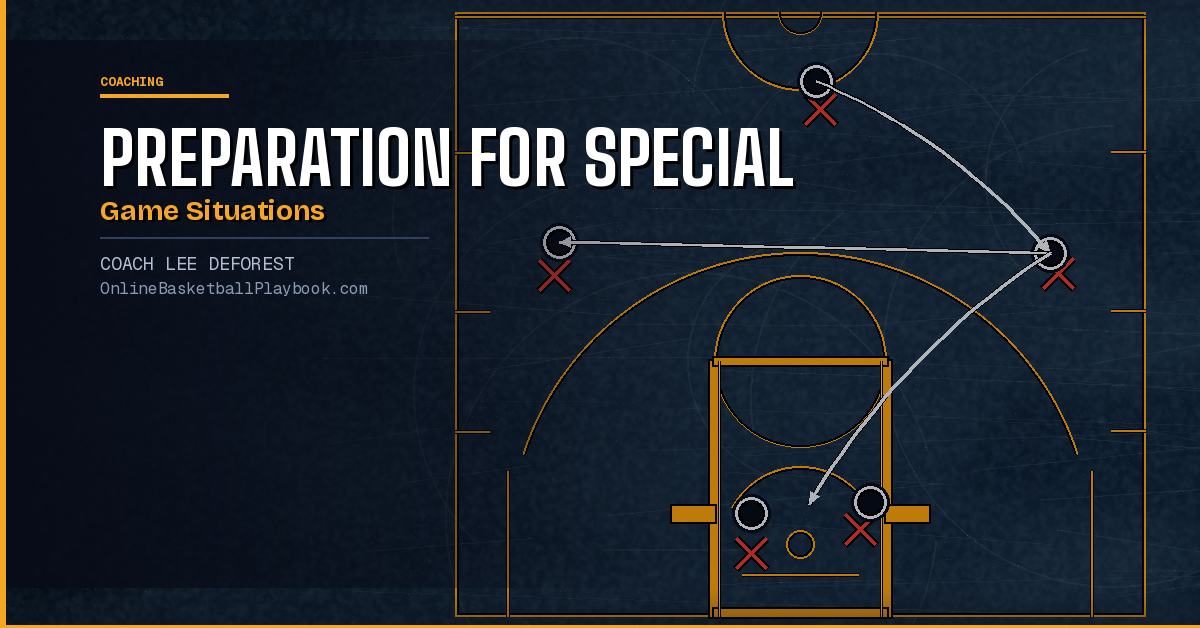

Games are won and lost in the margins — the last-second inbound, the jump ball you never practiced, the end-of-game foul decision your team makes on instinct rather than on a plan you designed in advance.
Why Special Situations Deserve Their Own Practice Time
Most coaches spend the bulk of their practice reps on half-court offense, transition defense, and press breaks. Special situations — the dead-ball plays, end-of-game scripts, and micro-situations like jump balls and free-throw-rebound alignments — often get squeezed into the last ten minutes of a Friday walkthrough. That's a mistake, and the margin it costs is real.
Consider what the data from elite programs actually shows. A survey of 65 NCAA programs revealed that the highest-output teams carry a tight battery of five to seven out-of-bounds variations drilled from a single formation — not fifty plays with fifty different personnel alignments. Kentucky's complete BOB battery runs seven plays from the same base look. Indiana runs five. The competitive edge isn't volume; it's depth of execution on a small, well-rehearsed menu.
The same principle holds at every level. Youth and high school teams routinely give away free possessions on jump balls, on free-throw-rebound coverage, and on the two-second sideline inbound that every defense relaxes through. These are not complicated plays. They require one or two reps a week and a coaching staff that has decided in advance what the answer is.
I've lost every possible way you can imagine up three points — so we decide in advance exactly who fouls, when they foul, and when we break the rule.
— Erik Spoelstra, Miami Heat
Spoelstra's point cuts to the heart of why preparation beats improvisation at the end of a game. When the clock reads four seconds and you're up one, there is no time to think through your options. The decision has already been made in practice, or it hasn't been made at all — and if it hasn't, you're gambling with the outcome of a game your team earned over forty minutes of work.
The Core Principles Every Coach Must Know
Special situations offense is a distinct discipline from your base offense. The reads are compressed, the margin for error is near zero, and the defense is often its most focused. Here are the foundational principles that elite programs build their situational libraries on.
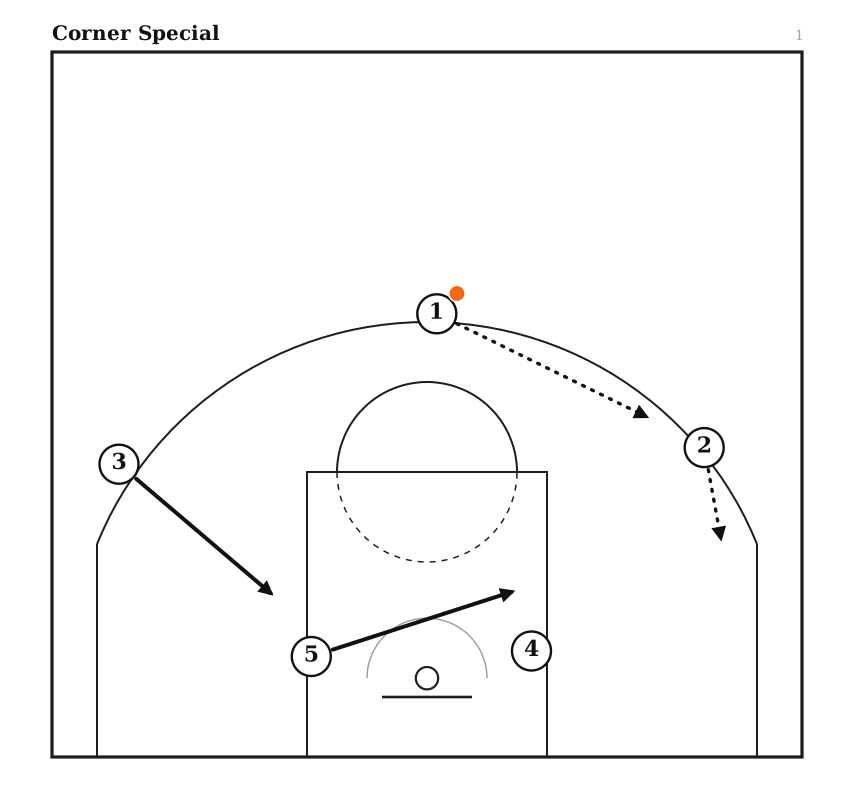
One Trusted Core Special
Pick one play — a ball screen into a pin-down, a stagger for your best shooter, whatever matches your personnel — and run it with every team, every year. Players gain confidence from repetition. The value of the play compounds over a season because your team can execute it automatically when the moment demands it, without a timeout, without a huddle.
Vasilis Sfairopoulos, who coached Fenerbahçe to EuroLeague championships, called his go-to action the "L side." It was not complicated. The complexity was in the players' familiarity with it — they had run it hundreds of times and knew every variation and counter without being told.
Decoy the Star
The most powerful structural tool in dead-ball offense is misdirection. The defense keys on your best scorer — that is a certainty. Design your specials so that player is the decoy and the real scoring action goes to the second cutter, the back-screener, or the slip. "Everyone thinks it's for the shooter, but it's for someone else" is not a cliché; it is the mechanism behind most game-winning plays at every level of the game.
Clear the Floor
Two players in opposite corners, one two-man action at the point of attack. Help defenders cannot rotate from the corners in time. The read stays simple: the ball-handler and the screener play with space. This is why sideline out-of-bounds plays are often the best after-timeout vehicle — there is more floor to work with, and the inbounder re-enters the action naturally.
Timing Beats Talent
An extra dribble lets the defender recover. A late pass gives the help time to arrive. Elite coaches are explicit about this: the shooter must be open the instant he calls for the ball. That means no dribble. It means the passer reads the window before the cutter makes the move, not after. And it means the inbounder steps to the free-throw line extended — not the elbow, not the corner — so the help cannot reach.
BLOBs, SLOBs, and ATOs — Know the Difference
Coaches who treat all dead-ball plays as interchangeable are designing plays for the wrong situation. Baseline out-of-bounds (BLOBs), sideline out-of-bounds (SLOBs), and after-timeout sets (ATOs) are structurally different, and the best programs treat them that way.
BLOBs are the free-points situation. The defense has just scored and often relaxes as they get back. A fast, simple BLOB — executed before they can set their alignment — deflates an opponent's momentum run. Nearly every play in the BLOB library comes from four formation families: Box, Line/Stack, Triangle, and Spread. Learn the shell, and you can install multiple variations without teaching a new alignment each time.
SLOBs are a different animal. More court space, more room for the inbounder to re-enter the action, and the ability to flow directly into your half-court offense if the primary read is not there. This is why the sideline inbound is the natural ATO vehicle — there is more space to work, and the second action can be your base offense rather than a predetermined play.
ATOs (after-timeout sets) are your best-designed possessions. You have thirty seconds in the huddle and can set up exactly the personnel and action you want. The most sophisticated programs, including Sergio Scariolo's Spanish national team, index their ATOs separately from their BLOBs and EOG sets — each situation filed under its own category, each requiring different spacing and execution discipline.
A 2024 NCAA Tournament study of fifteen programs found that the same alignment — Horns, 4-out, Box — produced completely different plays from team to team. That is deliberate. One formation, multiple reads, no tell for the defense. Build your battery from one base alignment per team so the defense cannot read the play from the huddle before the inbound.
Olympic-level SLOBs from the 2024 Paris Games showed that elite programs never run a one-pass dead-ball play. Every SLOB used two sequential actions: a preliminary screen to retrieve the inbound safely, then a second action — a DHO, a screen-the-screener, a pick-and-roll — that created the actual shot. Phase one gets the ball in. Phase two attacks. Teach both phases or the play is incomplete.
End-of-Game Execution: Clock, Score, and Decisiveness
End-of-game basketball is its own discipline. The reads are the same as your base offense, but they are compressed into a five-to-ten-second window where one screen must create the shot and the next screen must cover the denial. There is no continuity. There is no second option if you miss the timing. This is why end-of-game situations require their own practice time — not just a walkthrough, but rep after rep with game-clock pressure.
File Sets by the Clock, Not by Name
The most useful end-of-game library is indexed by exact time and score, not by play name. A film-sourced NBA and NCAA library that surveys last-possession sets across thousands of game situations reveals a simple framework that every coach can carry:
- Under one second: the inbound is the play. No off-the-dribble option exists. Design a catch-and-shoot, a tip action, or a lob off a back screen. The play must resolve on the catch.
- A few seconds: one screen creates the shot. Back screen for the lob, flare, stagger, screen-the-screener. The compression of your base offense into a single action.
- Under one minute: ISO or two-man game. Know whether you need a two or a three before you call the play. The score dictates the shot; the play delivers the right creator to the right spot.
Don Meyer, whose game sheet included a named answer for every situation from jump ball to box-and-one, framed it this way: don't run plays in special situations — have good players with the ball. That is not a dismissal of preparation. It is a reminder that a skilled player reading a scrambling defense beats a scouted set. The plays exist to get your best creator a clean look; after that, basketball takes over.
Don't bank timeouts — you can't eat them. Use them to control tempo and put your team in the right situation.
— Don Meyer, Northern State University
The Math of Being Up Three
Spoelstra's observation about losing "every possible way you can imagine up three" is the sharpest coaching instruction available on late-game defense. When you are ahead by three in the final seconds, the decision tree has already been solved: foul before the opponent gets a shot attempt. The difficulty is not the decision — it is designating exactly who is allowed to foul and executing it cleanly. Assign a defender. Practice the scenario. Make it automatic.
Similarly, when Miami let Dwyane Wade rebound and go without calling timeout late in a close game, that was not improvisation. It was a pre-scripted decision: try to get a cheap look; if not, call time. The script existed. The players knew it. Decisiveness came from preparation, not instinct.
Building a Practical Special Situations Battery
The goal is not a library of fifty plays. The goal is four to six plays your team can execute without thinking, from a single base formation, against any defense.
A practical battery for most programs should cover exactly these situations, and no more until those are mastered:
- One core ATO / SLOB: a sideline set that flows into your half-court offense if the primary read is not there — two phases, ball-screen or screen-the-screener retrieval, then the scoring action.
- One BLOB battery of four: a lob play, a shooter off a stagger or double screen, a post entry, and a zone BLOB — all from the same base formation so the alignment reads identically to the defense every time.
- End-of-game index with four answers: need a three, need a two, under two seconds, and one-minute-and-under — one set drilled for each, matched to your personnel.
- Three cheap situational edges most opponents ignore: the jump-ball hit-ahead (tipper wide, tip to a big, immediate advance), the free-throw-offensive-rebound screen (screen the box-out defender, slip behind, cover the long board), and the two-second sideline three (inbounder to free-throw-line-extended, no dribble).
- One "up" possession for the final thirty seconds of a lead: initiate late, design the clock so the action starts at twenty seconds, get a clean look, and leave no time for a strategic foul or a quick counter.
- One built-in counter for every installed special: if they deny the inbounder, the short-corner flare; if they chase the cutter, the back-cut lob. Diagram the counter at the design stage — never leave it as an audible your players have to improvise under pressure.
The 2024 Paris Olympics data makes the point cleanly: the United States ran three half-court sets and won gold. Serbia ran five. Execution depth always beats set volume. When pressure from parents or administrators to add more plays arises, point to that data.
Anti-Scouting Your Dead-Ball Sets
Out-of-bounds plays are the most-scouted possessions in the game because they repeat. Every program runs the same BOB set three times a game from the same formation — and good opponents have that on film before tip-off. The fix is simple and costs nothing: change the call, not the play.
John Brannen's Northern Kentucky program runs everything from a 1-4 Low alignment, which morphs from a Box when the defense denies it. The plays stay the same all season. The number that triggers each play changes every game. NKU sewed a call card into the players' shorts — the same sheet the coach carries — so the menu rotates from game to game while the physical execution stays constant. The opponent's scout of your BOB signals is worthless by tip-off.
The same anti-scout logic applies to DHO actions. A 2024 NCAA Tournament survey of fifteen programs found that DHO sets from Alabama, Northwestern, and Yale all used the handoff as misdirection — and in every case the scoring action was a back-cut or a slip away from the exchange, not a catch off the DHO itself. If the opponent has scouted your DHO play, the scoring read has already moved somewhere else. Build that into the design of every DHO-based special you install.
NC State, Northwestern, Yale, and Texas A&M all showed the screener slipping before the defense could rotate — and in every case this was diagrammed in the original set at the design stage, not called as an in-game audible when a switch happened. Build one automatic slip read into every installed special before you ever walk it through in practice. A switching defense against a set that has no built-in slip counter is a scouting gift you are giving away for free.
Coaching Applications: What to Install First
For a program building its special-situations system from the ground up, the order of installation matters. Trying to teach ATOs, BLOBs, SLOBs, jump balls, and free-throw-rebound alignments simultaneously produces a team that runs all of them poorly.
Start with the three situational edges that most opponents concede for free, because they require the least practice time and produce immediate results. The jump-ball hit-ahead — tipper reverse-pivots wide, tips to a big, the big hits ahead for a layup or alley-oop — is often won or lost before the defense even sets. The free-throw-offensive-rebound screen requires one designated player to screen the box-out man and slip behind to cover the long board. The two-second sideline three requires the inbounder to step to free-throw-line-extended and throw to a shooter who calls for the ball without dribbling. None of these require a timeout. All of them are ignored by most youth and high school programs.
Next, install one BLOB battery from a single formation. Four plays — lob, shooter, post, zone — drilled until the alignment is automatic. Then one SLOB that flows into your half-court offense. Then one ATO for your most important dead-ball possessions.
Last, build the end-of-game index: need a three, need a two, under two seconds, one-minute-and-under. Match each to the personnel you actually have — a good screener, an athlete who can catch a low lob, a big who can pass, a post threat. The play only works with the right people in the right roles, and the right personnel assignment is the first decision in every end-of-game situation.
Jay Wright's approach to free-throw situation timing is the quietest competitive edge in the game: "Two should take his time and act busy — tie shoes if needed — before taking the ball from the referee. You want to be sure everyone is in their positions." That costs nothing. It is not practiced by most high school programs. It is the difference between a designed action and a scramble, and it is available to every coach who makes it part of their standard operating procedure before the season starts.
Special situations are not a luxury for programs with deep rosters and extra practice time. They are the margin where games are decided — and they are available to every team willing to spend thirty focused minutes a week building a small, trusted, executable menu of answers for the moments that matter most.
Get coaching breakdowns, set diagrams, and game-situation scripts delivered to your inbox.
Join the Coach Princeton NewsletterSee it drawn up
Related diagrams
Keep Building
Related breakdowns
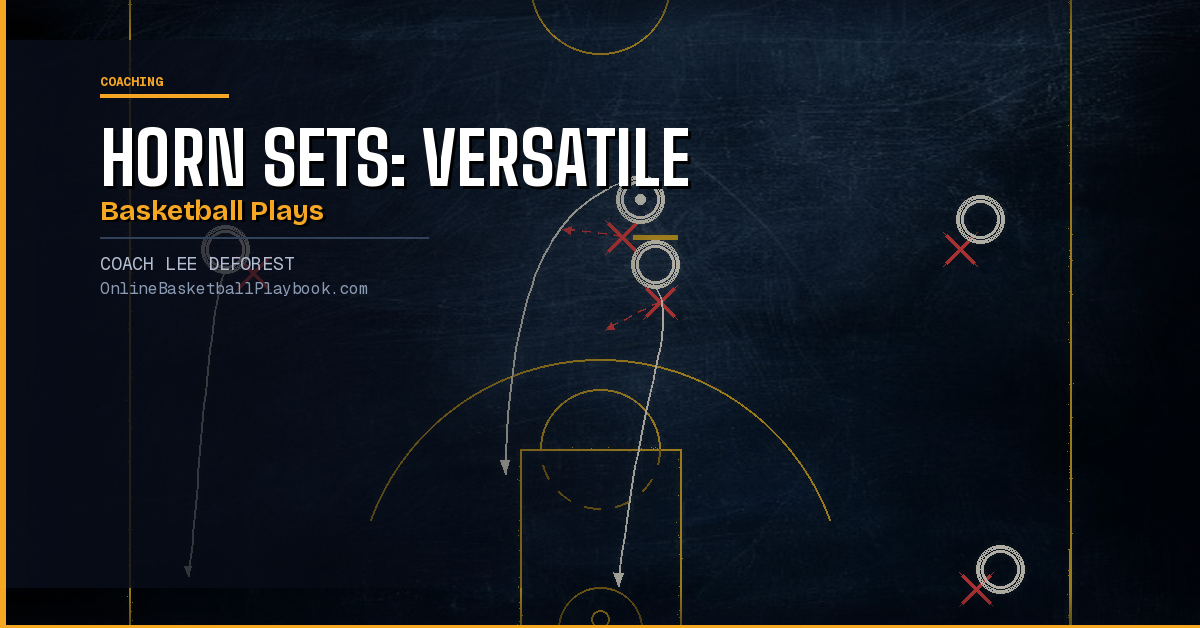
Horn Sets: Versatile Basketball Plays for Various Situations
Horn Sets: Versatile Basketball Plays for Various Situations
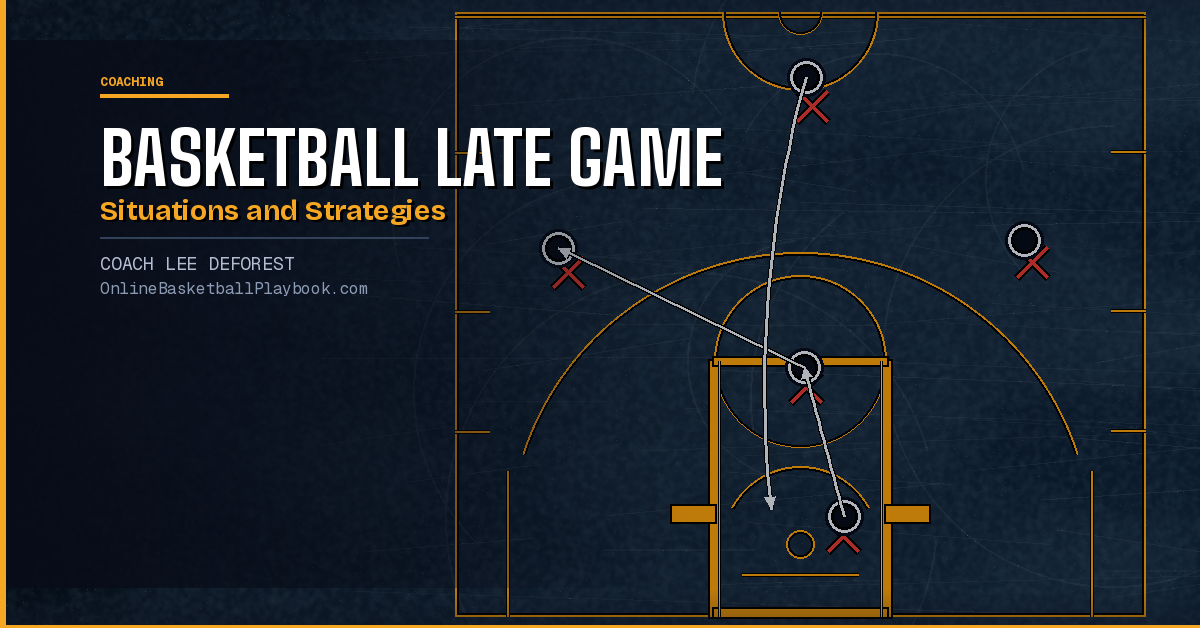
Basketball Late Game Situations and Strategies
Basketball Late Game Situations and Strategies