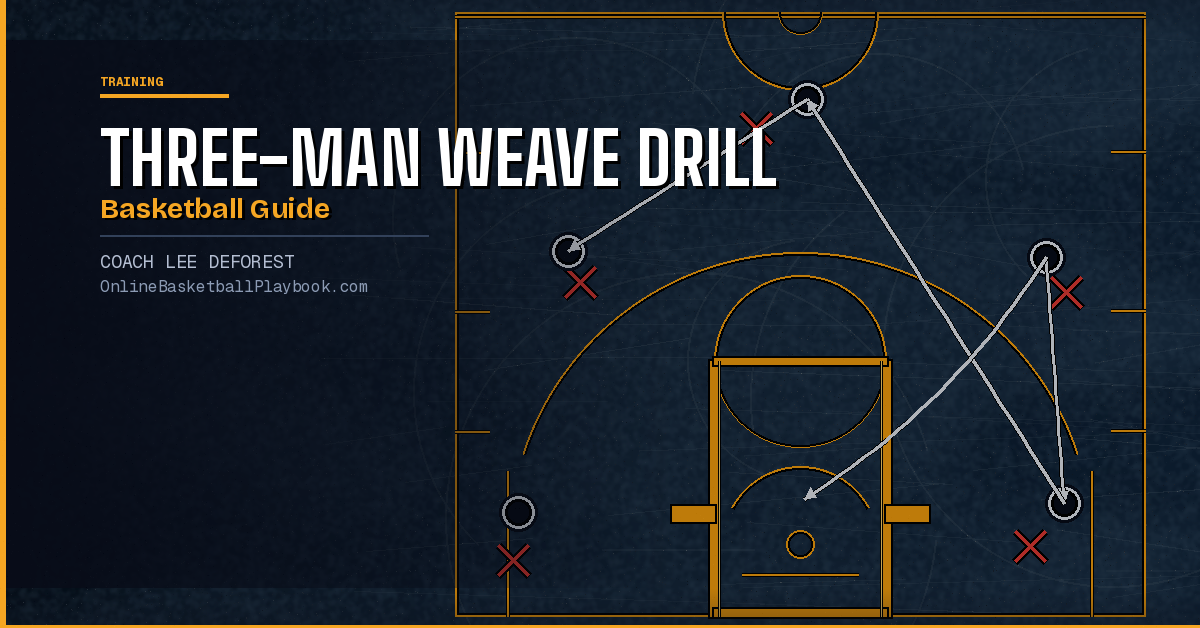

The three-man weave is a full-court passing and finishing drill that builds spacing, timing, and conditioning simultaneously. Three players, no dribbles, one made layup — every rep teaches the game.
What the Three-Man Weave Actually Is
Strip away everything and the three-man weave is a passing drill with a finish at the end. Three players start at one baseline — one in the middle, one on each wing — and pass their way to the opposite basket without a single dribble. The ball moves down the floor through a continuous weave pattern: pass and cut behind the receiver, fill the open lane, pass again. The player who catches the final pass puts the ball in the basket.
It sounds simple. It is not simple, especially the first time a group of players tries it. The weave requires every player to be moving before the ball arrives, to cut at the right angle, and to deliver a pass to someone who is themselves already in motion. The footwork, the timing, and the communication all have to be working at the same time. That is exactly what makes it valuable.
This is one of the oldest drills in organized basketball, and it has survived this long because it solves multiple problems at once. It teaches players to pass ahead rather than waiting for teammates to set up. It forces them to run hard because slowing down means the next pass doesn't have a target. It builds court vision because the passer must track two moving receivers. And it conditions players — this is not a standing-around drill. Every player is sprinting the full length of the floor on every rep.
The drill also scales. A youth team just learning to pass without telegraphing the ball gets real value from the base version. A varsity team that has run it for two years can be pushed into the live-pressure version with a trailing defender, or the scored competitive version where missed layups mean the group runs. Both ends of that spectrum are getting something they need.
Setup and Starting Positions
You need three players and one basketball. That is the full equipment list. Start at the baseline under one of the two baskets.
The player with the ball stands at the middle of the baseline, directly under the basket. The two wing players set up a few feet to each side — wide enough that the middle player has a real passing angle, but not so wide that they are standing out of bounds. A good starting position puts the wing players roughly at the lane lines extended. The key spatial cue: all three players need enough separation that the drill immediately opens the floor rather than beginning in a crowded cluster.
The middle player initiates. They pass to either wing, and the drill is live from that first pass. The cue to the group before starting: get your feet moving before you expect the ball. The most common early mistake is standing and watching instead of running to the spot.
For coaching large groups, run multiple lines simultaneously. Set up one group at each end of the floor. Send one group down and back while the next lines up. With good organization you can have 12 players in motion at the same time — three going, three coming back, three resting, three up next. The drill does not reward standing in line.
How to Run It: Step-by-Step
The mechanics of the weave follow a clear sequence, but the sequence has to become automatic — players who are thinking about the pattern are too slow. Walk through it once, then run it at speed.
Step 1 — The opening pass. The middle player passes to either wing. As soon as the ball leaves their hands, they sprint toward the receiver's side, cutting behind them. This "cut behind" is the defining movement of the weave. The passer does not stand and watch. They cut immediately, filling the lane the receiver just vacated.
Step 2 — The first receiver catches and passes ahead. The wing player who caught the opening pass looks immediately to the opposite side. The third player — who has not touched the ball yet — has been sprinting down the opposite wing lane since the drill started. The first receiver passes ahead to that sprinting player, then cuts behind them into the vacated middle lane.
Step 3 — The pattern continues. The weave continues down the floor in this manner: catch, pass ahead, cut behind. The player cutting behind the receiver is always filling the lane the receiver came from. The result is three lanes being occupied at all times, rotating as the ball moves. Nobody drifts wide. Nobody drifts behind. The spacing stays tight enough to pass safely, wide enough to give the passer an angle.
Step 4 — The finish. As the group approaches the far basket, one player will have the ball in a position to score. The rule: no extra dribbles to adjust. Catch it in stride and finish the layup. Catching in stride is itself a skill — this is the moment the drill tests whether players can translate a pass into a shot without resetting.
Step 5 — The return. After the layup, the group returns down the floor the same way — weaving back to the starting basket. The player who finished the layup takes it out of the net (or off the floor after a miss) and the return trip begins. Two full-court trips is one rep.
Coaching Cues and Common Mistakes
The three-man weave will show you exactly who understands floor spacing and who is guessing. Watch for these things during every rep.
Cues that fix the most problems
"Pass and cut, not pass and watch." This is the single most useful cue for a group learning the drill. Players who stand after passing will create traffic jams because they are occupying a lane someone else needs to fill. The cue installs the habit: the moment the ball leaves your hands, your feet are already moving.
"Cut behind, not through." Players learning the drill will sometimes cut in front of or across the path of the receiver. This kills the spacing and forces bad passes. The cut is always behind — running through the space the receiver just left, not into the space they are currently occupying.
"Eyes ahead before you catch." Before the ball arrives, each receiver should already know where the next pass is going. This is the court-vision habit the drill builds when you demand it. Players who wait until the ball is in their hands to look for the next receiver slow the whole group down.
"Run hard or you won't have a target." If any of the three players jog, the spacing collapses and the passing angles close. The drill requires all three players to sprint the whole time. This is not optional.
Common mistakes to correct immediately
Drifting too wide. Players instinctively spread wide for safety. Wide spacing actually makes this drill harder — the pass has to travel too far, and the cutter has too much ground to cover. Keep the three players within roughly one-third of the court width each.
Taking extra dribbles near the basket. The finish should be catch-and-layup. Extra dribbles mean a player caught the ball too far out and tried to adjust rather than changing their route earlier. If this is happening consistently, back the group up and address the approach angle.
Forcing the ball to one side. Some groups fall into a rhythm of always going right, or always hitting the same player. Force the drill to change sides by requiring the opening pass to alternate each rep — left side one rep, right side the next.
Stopping after a missed layup. Make a clear rule on day one: a missed layup does not stop the drill. The shooter sprints to get their own miss and the group returns immediately. If you allow stops after misses, you are conditioning players to treat a missed layup as a break.
Every drill should isolate one read or skill at a time — constraining behavior through rules rather than lecturing, so players own the habit instead of performing for the coach.
— Offensive Breakdown Drills, Basketball Vault
Progressions and Competitive Variations
Once the base version is clean — no extra dribbles, correct cutting angles, layup made in stride — the drill has several productive progressions. Each adds one layer of difficulty.
Scored version
Set a target: the group must make a certain number of layups in a set time, or make a streak of consecutive layups without a miss. A miss resets the count. This is the version Drew Hanlen's drill bank calls "game-like" — the drill becomes a competition, not just a movement pattern. Players who don't care about their footwork will suddenly care when a miss costs the group the streak.
One effective format: require the group to make five in a row before they can stop. A miss means the count goes back to zero. The first few times you run this version, expect the group to fail several times before they string five together. That repeated failure is productive — it builds the habit of bearing down on the finish rather than treating the layup as automatic.
Finish-and-recover variation
After the layup, the shooter sprints back to touch half-court before the next player can receive the ball from the outlet pass. This mirrors the Duke 21 format from the Walberg clinic material — score and immediately recover. It adds a conditioning layer and teaches the mental discipline of sprinting after scoring, which is a skill many players lack.
Live trailing defender
Add a fourth player who starts at the same baseline. Their job is to run the floor and try to disrupt the layup. They cannot foul, but they can contest. The offense must now make all the same weave passes under pressure, and the finish has to be made against a live close-out or a chase-down contest. This version brings the drill into game reality — the finish is no longer uncontested.
Three-man weave into half-court offense
The group completes the weave, makes the layup, and transitions directly into a 3-on-0 or 3-on-2 half-court set from the opposite end. This links the transition work the weave does to the half-court reads the offense needs. It also trains players to shift gears — running full speed and then organizing themselves quickly into a set before the defense can set up.
Two-ball variation (advanced)
Two balls are in play simultaneously. The middle player starts with one ball and one wing starts with the other. Both balls move through the weave pattern at the same time. This version exposes every lapse in court vision and hand-eye coordination. It is demanding enough that most teams should run the standard version reliably before attempting it.
Why This Drill Belongs in Every Practice
There is a reason coaches at every level — middle school programs, college programs, NBA teams — still run some version of the three-man weave. It earns its time on the practice floor because it addresses several problems at once without requiring elaborate setup or specialized equipment.
It teaches passing in motion. Most passing drills run with both the passer and receiver stationary or moving in predictable, pre-set routes. The weave forces passing to a receiver who is sprinting across the floor on a diagonal. That is a much harder pass to throw accurately, and it is closer to what the game actually requires.
It builds the habit of moving without the ball. In a half-court offensive system, getting players to move without the ball is one of the hardest teaching problems coaches face. The weave punishes the player who stops — if you are not moving, there is no lane to cut into and the drill stalls. The habit transfers: players who have run the weave for a full season understand at a physical level that they must keep moving.
It conditions players in practice. The weave is a full-court sprint on every rep. It is not disguised conditioning — players know they are running — but it is conditioning with a purpose attached. Purposeful conditioning is better conditioning. Players run harder when the sprint has a skill goal at the end of it.
It gives you a daily diagnostic. Watch three players run the weave and you will learn something about all of them. Whose passing is off today? Who is not sprinting? Who keeps cutting to the wrong spot? The drill is an honest read on where a group is, and it gives you that read in three to five minutes at the start of practice.
It scales to any level. A youth group running the drill for the first time will work on basic passing and running lanes. A varsity group that has done it for three years can run the scored or live-defender variations and still be challenged. Very few drills have that kind of range.
The team-oriented Perfection drill described in the MCDS/MTXE breakdown battery ends with a three-man weave component — specifically, a weave that must finish with a made three-pointer before the drill is complete. That design choice is instructive. The three-man weave was chosen as the culminating challenge of a full team drill sequence because it demands the passing, running, and finishing precision that every other drill in the battery was building toward. That is not an accident.
The best coaches in the game know that a drill earns its spot in practice by doing more than one thing well. The three-man weave passes that test every time.
Before introducing the scored or live-defender progressions, run the base version until you see two consecutive clean reps — correct cutting angles, no extra dribbles, layup made in stride. Rushing to the competitive variations before the movement pattern is clean just means players are competing at bad habits rather than building good ones. One clean drill is worth more than ten messy ones.
- Start all three players at the baseline — middle player with the ball, wing players at lane-line width, feet already moving before the first pass is thrown.
- Enforce the "pass and cut behind" rule from rep one: the moment the ball leaves your hands, your feet are moving to cut behind the receiver and fill the vacated lane.
- Demand eyes ahead before the catch — each receiver should already know the next pass location before the ball arrives in their hands.
- Never allow extra dribbles near the basket; if players are adjusting with dribbles, the approach angle is wrong — fix the route, not the finish.
- Score it as soon as the pattern is clean: five consecutive made layups without a miss is a standard target that creates the pressure needed to transfer the skill to a game.
- Add the trailing defender only after the group can complete clean reps under the scored version — live pressure before the pattern is automatic teaches players to survive the drill, not win it.
Want more basketball coaching strategies, drills, and tools?
See it drawn up
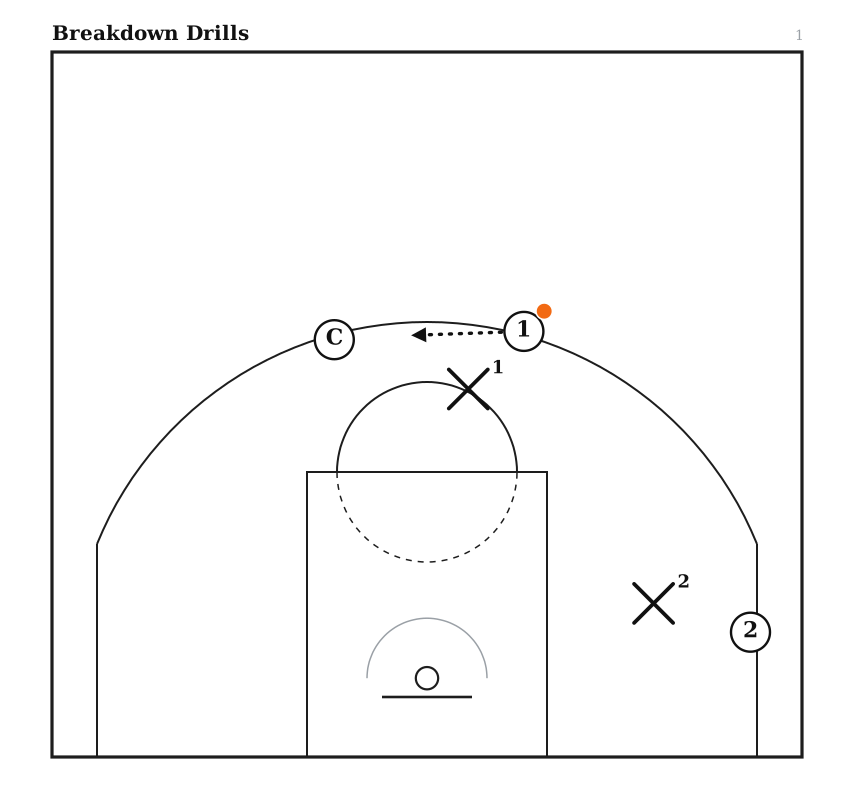
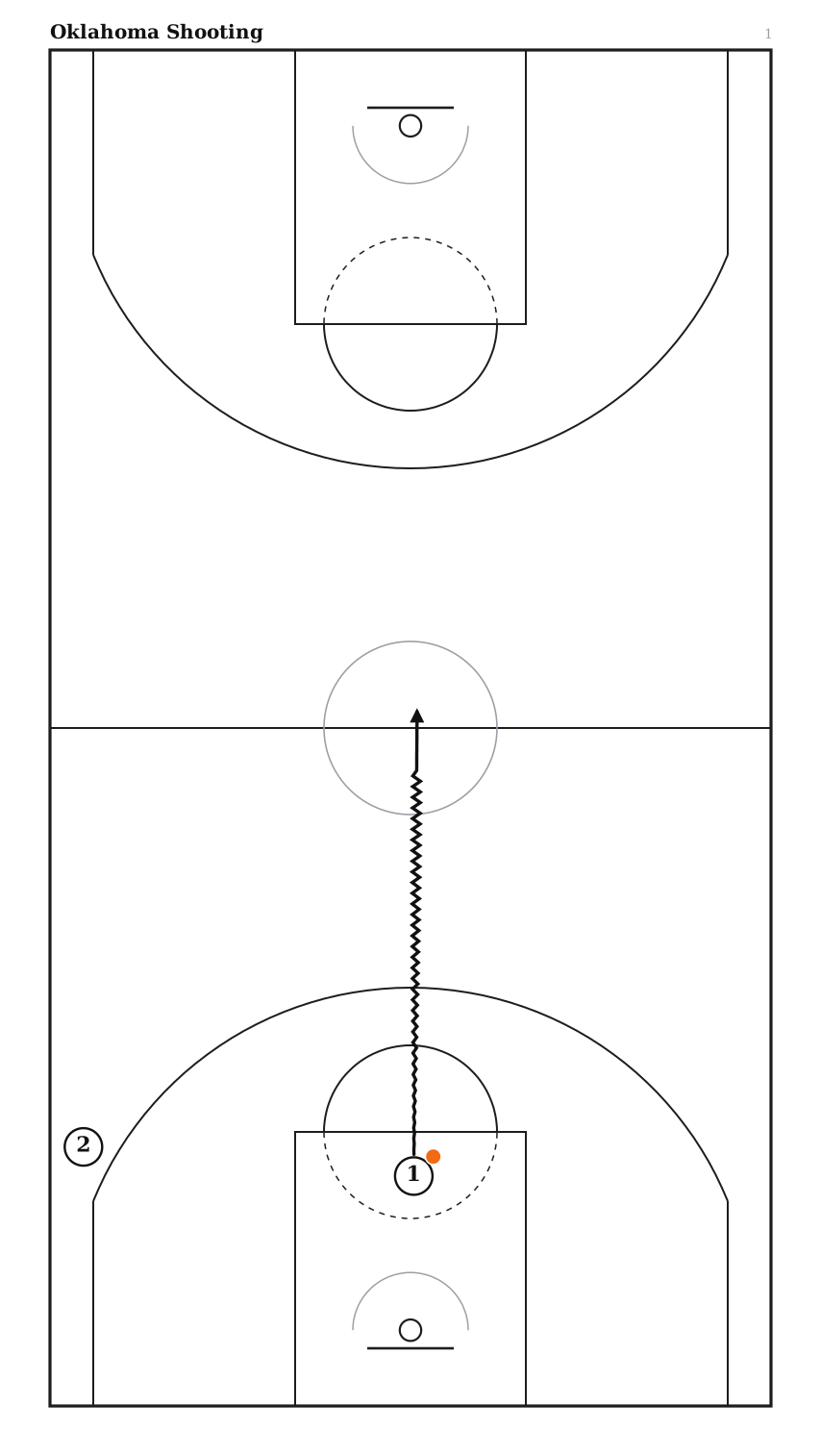
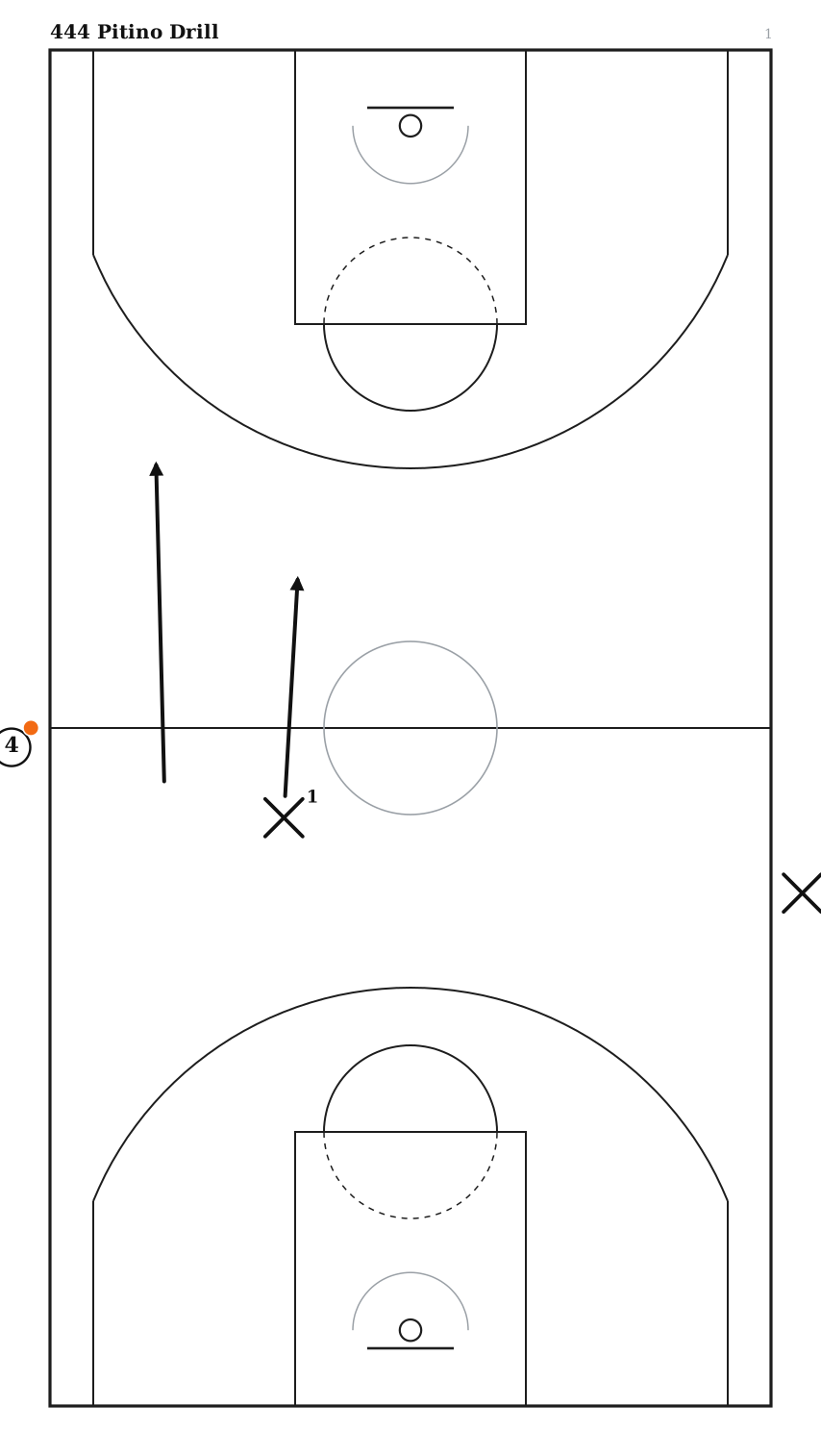
Related diagrams
Keep Building
Related breakdowns
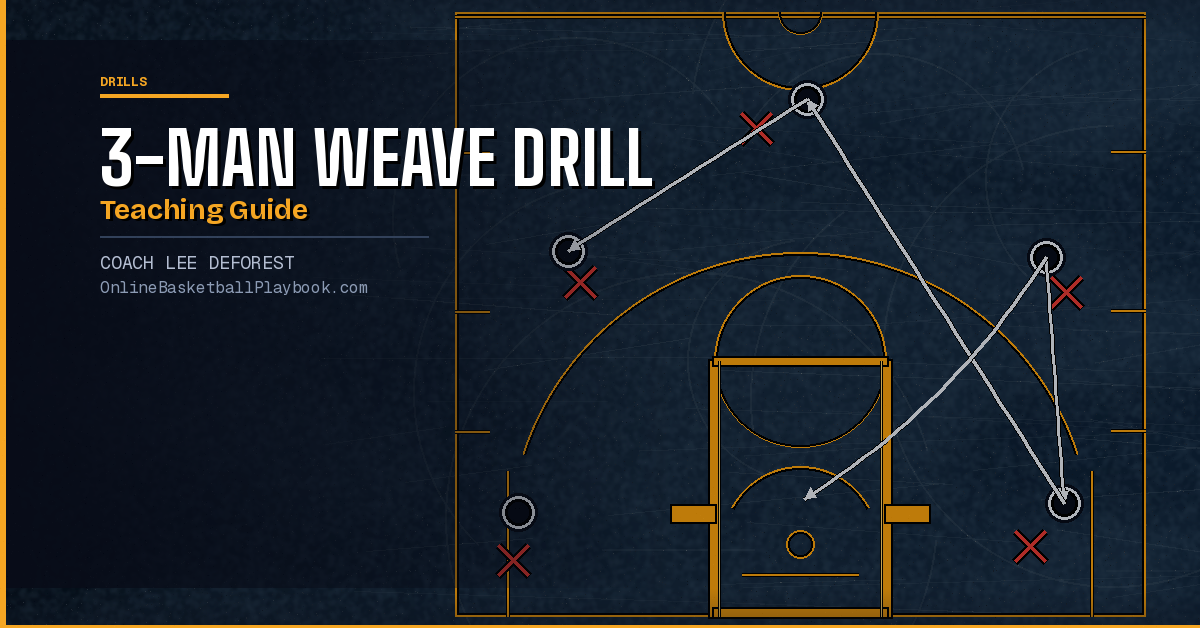
3-Man Weave Drill: Teaching Guide and Variations
3-Man Weave Drill: Teaching Guide and Variations
Basketball Drill Design: How to Create Drills That Work
Basketball Drill Design: How to Create Drills That Work