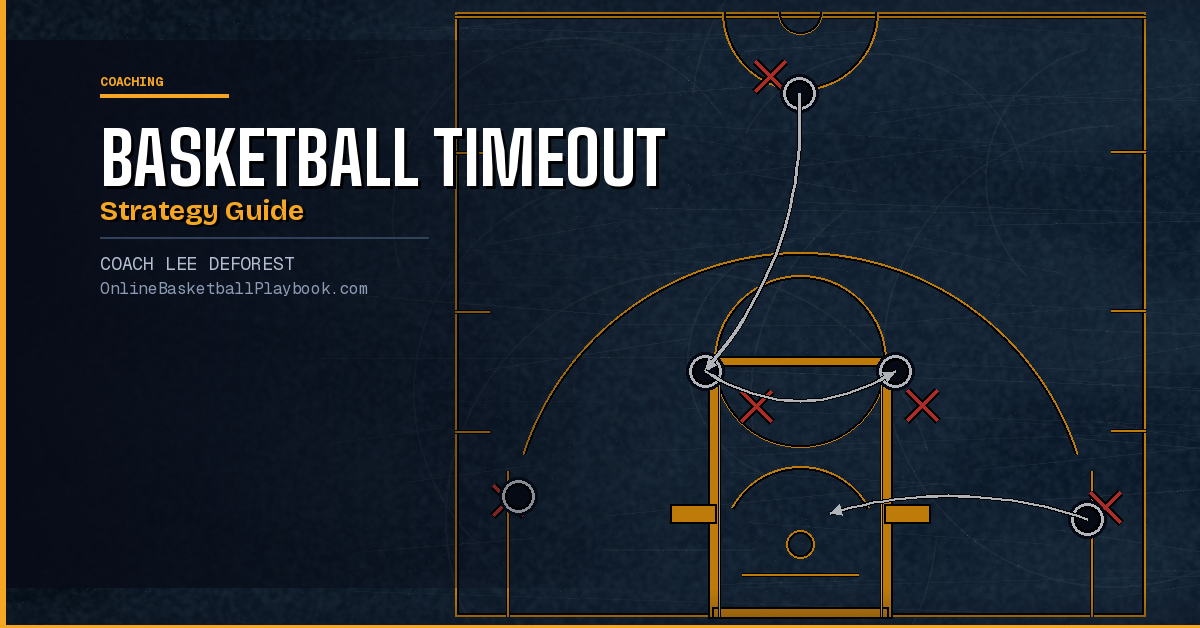

A timeout is one of the most powerful tools a coach controls. Used well, it stops runs, resets focus, and creates scoring opportunities. Used poorly, it leaves you empty-handed at the end of a game when you need it most.
When to Call a Timeout
Knowing when to call a timeout separates disciplined coaches from reactive ones. Most coaches call timeouts when they are frustrated. Elite coaches call them with a purpose — to stop momentum, deliver information, or design a specific play.
The clearest trigger is a scoring run. If the opponent scores five or more consecutive points, you need to disrupt their rhythm immediately. Every basket they make builds confidence on their side and doubt on yours. A timeout breaks that cycle before it becomes a ten-point swing.
The second trigger is confusion. When your team doesn't know what to do — players standing still, nobody setting screens, defensive breakdowns happening repeatedly — a timeout resets your structure. Letting confusion compound is far more costly than burning a timeout early.
The third trigger is clock management. In the final two minutes of a close game, timeout positioning matters enormously. A team that enters the last minute with two timeouts has dramatically more options than one that used them in the third quarter out of frustration. Think of your late-game timeouts as assets, not reflexes.
Developing basketball IQ in your players reduces how often you need emergency timeouts. When players can read the game and make decisions on their own, you preserve your timeouts for true tactical moments rather than damage control.
How to Structure the Timeout Huddle
A timeout lasts sixty seconds at most levels. That sounds like enough time, but coaches routinely waste it by talking too long, addressing too many issues, or speaking to players who aren't listening. The most effective timeout huddles are short, specific, and organized.
Use the first ten seconds to let players catch their breath. Do not start talking immediately. Let them get water, get oxygen, and physically calm down. If you start speaking while players are still panting and emotionally elevated, most of what you say will not register.
Use the middle thirty seconds to deliver one clear message. Not three messages — one. Either you are addressing a defensive adjustment, drawing up a play, or rallying energy. Pick the most important thing and communicate it directly. If you have an assistant, have them handle the tactical piece while you handle the emotional piece, or vice versa.
Use the final ten seconds to get confirmation. Ask your point guard to repeat the assignment. Ask your best defender to tell you who they have. Confirmation is not a quiz — it is your check that information actually landed before the ball goes back in play.
Structuring your basketball practice plan to include timeout simulation is one of the most underused coaching tools. Run a drill, blow the whistle mid-possession, huddle the team, draw up an action, and execute it. Players who have rehearsed timeout huddles are calmer and more responsive during games.
Drawing Up After-Timeout Plays
An after-timeout play — often called an ATO — is one of the highest-leverage moments in basketball. You have stopped the clock, gathered your players, and now the defense knows something is coming. Your job is to design an action that is simple enough to execute under pressure but clever enough to get a clean look.
The foundation of a good ATO is the principle from special situations offense: have one trusted core special you run with every team. Players gain confidence from repetition. When they have run the same ATO action dozens of times in practice, they can execute it at the buzzer without overthinking. Novelty is the enemy of clutch execution.
The most reliable ATO structures involve a decoy. Your best scorer draws maximum defensive attention. A secondary player — often a shooter or a cutting big — benefits from that attention and gets the actual shot. Screen-the-screener actions, hand-offs, and flare screens all accomplish this if players understand their role and trust the design.
Floor spacing is critical. Clear two players to the corners and run the primary action with two or three players in the middle of the floor. This creates maximum driving and passing room, and it keeps weak-side help defenders from cheating into the play early. A cluttered floor is a defense's best friend on an ATO.
One detail coaches overlook is timing on the catch. A late pass or an extra dribble gives the defender time to recover. Your shooter should be open the moment they receive the ball — if they have to wait on the catch, the play is already behind schedule. Practice catching and shooting in one motion specifically for ATO situations.
For coaches who want to build a deeper library of set plays and basketball inbounds plays, studying sideline and baseline out-of-bounds sets expands your after-timeout arsenal significantly. Many of the best ATO concepts are borrowed from SLOB and BLOB situations.
"Have ONE trusted core special you run with every team."
— Basketball Vault
End-of-Game Timeout Management
The final two minutes of a close game expose every weakness in a coach's timeout management. Teams that run out of timeouts in the last thirty seconds have taken away their own ability to design plays, foul strategically, or stop the clock. This happens more often than it should, and it is almost always preventable.
Work backward from the end of the game. Ask yourself how many timeouts you need to execute your end-of-game strategy. If you need one to draw up a final play, one to stop the clock after a defensive stop, and one in case of emergency — you need three timeouts entering the fourth quarter. Budget accordingly from the start of the game.
Do not call timeouts to avoid a five-second count when your point guard simply needs to slow down and think. Teach your players to handle ball pressure without burning timeouts. Do not call timeouts after made free throws when you are down by two possessions and have plenty of time remaining. These are common timeout leaks that leave coaches empty in critical moments.
Fouling strategy and timeout strategy are linked. If you are down three with forty seconds left, you need a foul, a stop, a timeout to draw up a three, and a made shot. Map out the sequence before the situation arrives. Coaches who plan their end-game sequence during a timeout with two minutes left execute far more cleanly than coaches who are improvising.
Understanding transition defense is also part of late-game timeout strategy. If you call a timeout after scoring to go up one, your transition defense on the ensuing possession is the most important play of the game. Use the timeout to cover both the ATO and the defensive assignment after it.
Timeout Strategy for Youth Coaches
Timeout strategy looks different at the youth level, and coaches who apply varsity logic to ten-year-olds will frustrate themselves and their players. Youth basketball timeouts serve a different primary purpose: emotional regulation and basic clarity, not tactical adjustment.
Young players are not processing complex X's and O's during a sixty-second huddle. What they are doing is looking at your face and reading your energy. If you are calm and clear, they feel calm and focused. If you are agitated and loud, they feel anxious and hesitant. Your demeanor in the huddle is often more important than your message.
For youth timeouts, keep the message to one or two words. "Box out" or "run our offense" or "talk on defense" is enough. Deliver it with confidence, make eye contact, and remind them to compete hard and trust each other. Tactical complexity can be added gradually as players develop.
Coaches who are newer to the game and learning how to coach youth basketball should focus on timeout habits early: never yell, always have a message prepared before you blow the whistle, and end every huddle with a clear call or chant that unifies the group before they break.
Youth players also benefit from practicing timeout situations. Run a possession, stop it, and have your players huddle. Walk them through what a timeout looks like from the inside — breathing, listening, re-setting. When they have experienced it in a low-stakes practice environment, game timeouts feel less jarring.
At every level, the most underused timeout tool is confirmation. Before breaking the huddle, ask one player to repeat the assignment back to you. This takes five seconds and dramatically increases the odds that your players actually execute what you drew up.
Common Timeout Mistakes to Avoid
Even experienced coaches make the same timeout mistakes repeatedly. Identifying them is the first step toward eliminating them from your game management.
The most common mistake is calling a timeout to substitute players rather than to address a tactical situation. If you want to make a change, make it during a dead ball or a free throw. Using a timeout to sub is an expensive solution to a free problem. Reserve your timeouts for situations where you are buying time or delivering information.
The second mistake is addressing too many things in one huddle. Coaches often have three legitimate concerns — the defensive assignment on their best shooter, the offensive spacing issue, and the energy level — and they try to cover all three in sixty seconds. Players leave the huddle uncertain about which one matters most. Pick one. The other two can wait for halftime.
The third mistake is not practicing ATO situations. A well-designed play fails if players have never run it at speed, under pressure, against a live defense. Your after-timeout library should be practiced weekly. Put them at the end of a practice session when players are tired — that more closely replicates the fatigue state of a late-game timeout.
The fourth mistake is emotional timeout calls. A referee makes a bad call, a player throws a bad pass, and a coach calls timeout out of frustration. The team gathers and there is nothing tactical to say — the coach vents for thirty seconds and sends them back out unsettled. This is worse than no timeout at all. Have a rule for yourself: if you cannot identify a specific message to deliver before you call it, do not call it.
Building building accountability in your program extends to how players manage themselves in timeout situations. Players who hold each other accountable make the coach's job easier — they communicate in the huddle, they remember assignments, and they hold the standard when the game is tight.
- Call timeouts to stop momentum, not out of frustration — always know what you will say before you call it
- Structure every huddle the same way: rest first, one clear message, confirm the assignment before breaking
- Keep at least two timeouts entering the fourth quarter of a close game
- Practice your ATO library weekly under fatigue so players execute automatically under pressure
- Use a decoy in every ATO — screen your best scorer so the defense commits, then attack the secondary option
- At the youth level, your energy and tone in the huddle matter more than the tactical content of your message
- End every huddle with a confirmation: have one player repeat the assignment back before you break
Get free play diagrams, drills, and coaching guides delivered weekly.
Keep Building
Related breakdowns
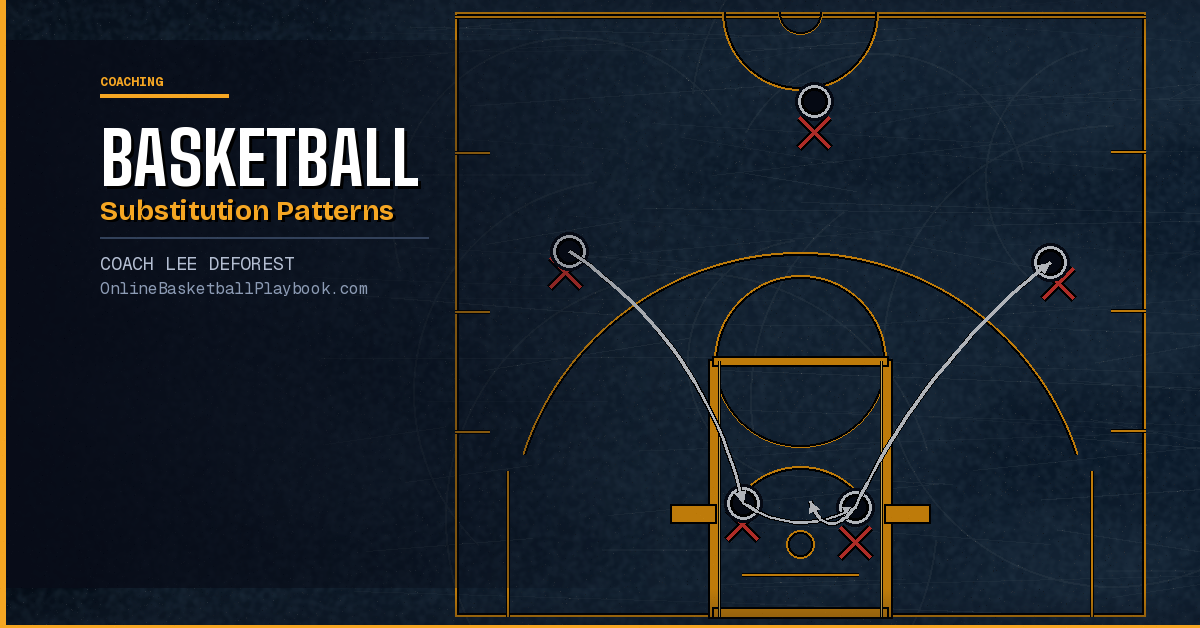
Basketball Substitution Patterns and Rotation Strategy
Basketball Substitution Patterns and Rotation Strategy
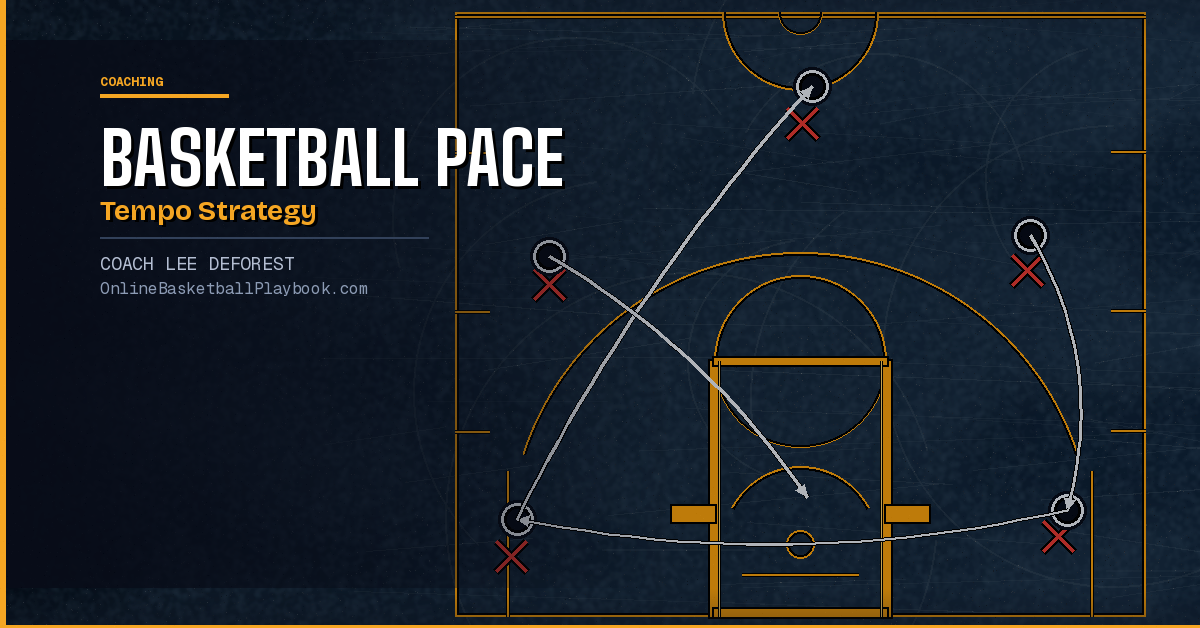
Basketball Pace and Tempo Strategy for Coaches
Basketball Pace and Tempo Strategy for Coaches