
Good shooting starts with form, not volume. Master the stance, hand placement, and follow-through first — then build reps that are scored, competitive, and tracked. That's how players become real shooters.
Build Your Form First
Most players rush to volume before they have repeatable form. The result is hundreds of reps grooving a bad habit. The right sequence is: build the shot without the ball, then to a wall, then to the rim. Only once the mechanics are clean do you start adding distance, speed, and pressure.
Form work without a ball feels slow. It isn't. It's the fastest way to own a motion because your brain is free to focus on mechanics instead of result. Stand in front of a mirror. Get into your shooting stance. Trace the full motion — load, rise, release, follow-through — and freeze at the top. If your hand isn't finishing high with fingers pointed down toward the rim, you've found the problem.
Wall shooting is the next step. Stand two feet from a wall, shoot straight up, and catch the ball off the wall. This removes the arc pressure and isolates the push, the spin, and the wrist snap. It's boring and it works. Ten minutes of wall shooting daily will clean up a broken release faster than any drill at full distance.
Once the form holds up close — within eight feet — you can start extending range. But form comes before distance. Always. A player who locks in mechanics at close range and earns their way out to the three-point line is a fundamentally different shooter than one who backs up before they're ready.
"Make every rep competitive — against the clock, an opponent, or yourself. A shooting workout should have a winner."
— Shooting Development Vault
Stance and Footwork
Shooting starts from the ground. Your feet determine your balance, and your balance determines everything above it. A player who catches off-balance or doesn't have a consistent foot position will be an inconsistent shooter no matter how good their upper body mechanics are.
Start with feet shoulder-width apart, knees slightly bent, and your shooting-side foot staggered just slightly ahead of your non-shooting foot — a few inches is enough. This stagger points your hip toward the basket and helps the ball travel on a straight line to the rim. Some players prefer a square stance; that's fine at the youth level, but most high-level shooters have some degree of stagger.
Weight should be on the balls of your feet, not your heels. When you catch the ball, you want to be ready to go up — not rocking back to re-set. The catch and the shot should feel like one motion, not two. This is where footwork directly feeds into shooting speed. A player who catches ready to shoot is nearly impossible to contest on time.
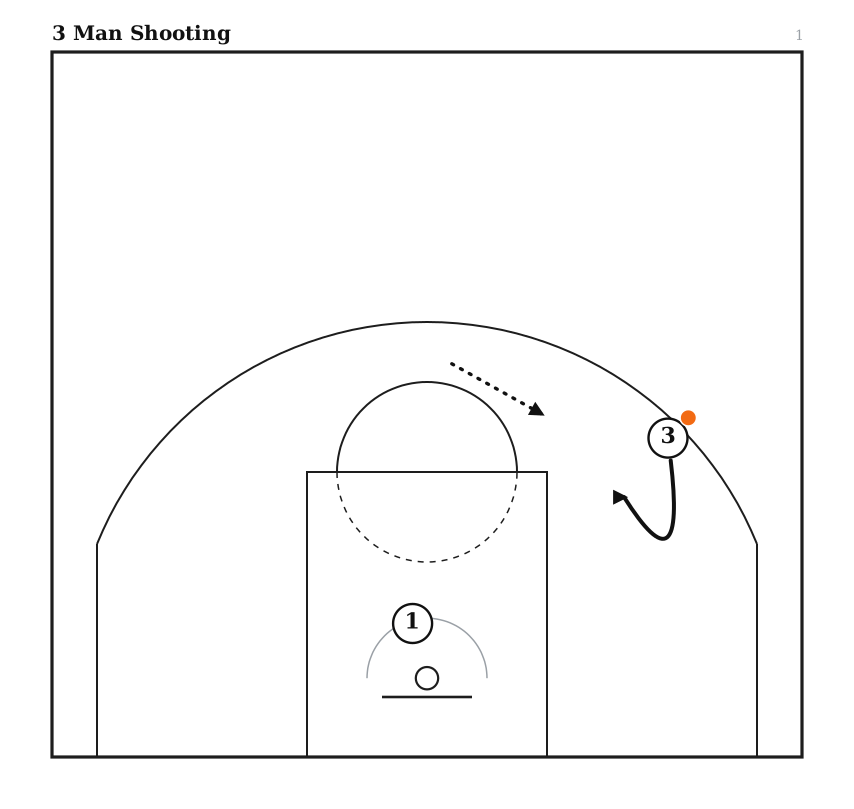
Pivot footwork matters just as much as catch footwork. Coming off a screen, catching on the move, stepping into a shot off a drive kick-out — every one of these requires you to gather your feet quickly and find balance before you go up. Practice these situations in isolation. Catch and shoot off a screen set by a chair or a cone. Walk through the footwork slowly, then speed it up. The feet should become automatic so your mind is free for the read.
Hand Placement and the Release
The "pizza waiter" cue is the most useful teaching image in shooting: picture yourself carrying a pizza with your shooting hand flat under the ball, palm up, fingers spread. Your guide hand — the off hand — sits on the side of the ball, not the back. It guides, it does not push.
Elbow position is critical. Your shooting elbow should sit directly under the ball and aligned over your shooting knee at the load position. When the elbow is out — flared to the side — the ball drifts offline. Tuck it. The elbow under the ball is the mechanical key that keeps your shot straight.
The release point should be high. Not in front of your face, not at chest level — above your head, above your hairline. A high release point means a higher arc over the defender and more room for error on the back rim. Players who release low get their shots blocked and tend to be flat on their arc, which means they only win the rim when they're perfect.
Follow-through is what players skip when they're tired or rushed. Extend your arm fully, snap your wrist down, and hold the finish — fingers pointing down toward the rim, often called the "cookie jar" reach. Coaches watch the follow-through because it reveals everything: if it's inconsistent, the shot will be inconsistent. If players hold it every time, muscle memory locks in.
Guide hand discipline deserves its own mention. One of the most common flaws at every level is the guide hand pushing or rotating into the shot. After the release, your guide hand should come off the ball cleanly and your shooting hand should finish alone. Drill this by shooting with just your shooting hand at close range until the motion is clean, then bring the guide hand back in — as a passenger, not a driver.
Make Every Rep Competitive
Volume alone doesn't make shooters. Aimless gun-up — launching a hundred shots in a gym with no target, no score, no pressure — builds volume, not skill. The reps that matter are scored, tracked, and competitive. When there's something on the line, you practice the mental side of shooting alongside the physical side.
The simplest competitive layer is a made-shot count with a target. Pick a number — say, 20 makes from the wing — and race yourself. Can you hit 20 in under three minutes? Set a personal record and try to break it next session. This turns an ordinary shooting drill into a benchmark you're always pushing against.
Personal-record boards posted in the gym are one of the most underrated culture tools in basketball. When players set marks, sign them, and see them on the wall, shooting becomes a team conversation. Who holds the record for the M Drill? Who's the best free throw shooter on the team? Suddenly everyone is competing to get on the board, and shooting practice becomes self-motivated.
Partner competition is another layer. Beat-the-Pro shooting is a simple version: your make is worth 1, your miss is worth 2 for the "Pro." You're always fighting from behind. This creates pressure on individual shots in a low-stakes setting — which is exactly the pressure that translates to late-clock situations.
Streaks are the other key competitive format. Try to make five in a row from a spot before you can move. Miss one and you restart the count. A player who needs to make five consecutive shots will start experiencing the pressure of a make streak — and will also learn, over time, that misses are just resets, not disasters. Both lessons matter.
Shooting Drills That Build Real Skill
Not all drills are equal. The best shooting drills mix form, movement, and competition. Here are the formats that show up consistently in elite development programs and why they work.
Around the Horn
Five spots around the arc: left corner, left wing, top of the key, right wing, right corner. Make a set number at each spot before moving. This builds consistency across multiple angles, which is where most players have gaps. Most players practice their favorite spots. Around the Horn forces equal reps at every spot.
Star Shooting
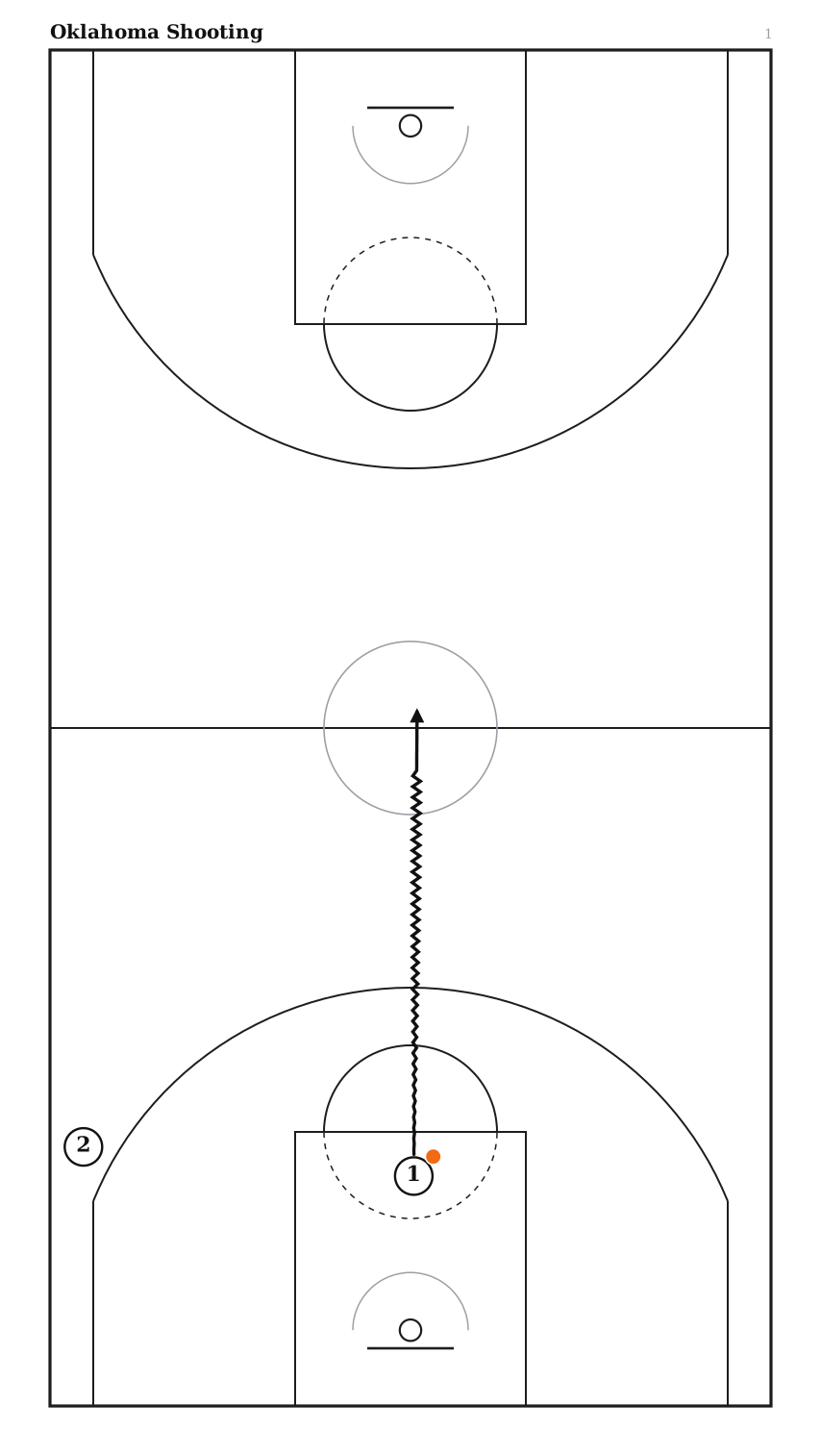
Similar to Around the Horn but with movement — sprint to each spot after each shot, simulate a catch from a pass (slap the ball up as you arrive), then shoot. Add a screen entry or a DHO handoff to make the catch more game-realistic. The movement component bridges the gap between form shooting and game shooting.
The Burner
A timed two-to-five-minute shooting sprint where the goal is maximum makes. This is a late-in-the-workout drill designed to test shooting under fatigue. Your mechanics have to hold when your legs are tired. If your form breaks down in a Burner, it will break down in the fourth quarter. This drill is a mirror for game condition shooting.
Streak
Make a certain number in a row from one spot. Simple, high-pressure, and brutally honest. Players who claim to be shooters but can't hit three in a row from the wing have a form or focus problem the drill quickly surfaces.
30-30 Personal Best
Thirty shots in thirty seconds. Count your makes. Set a record. Try to beat it. This is pure volume-under-time-pressure and builds both conditioning and the ability to shoot without over-thinking. The second half of a 30-30 set is where mental toughness separates players from each other.
- Form before distance: don't extend range until close-range form is clean
- Score every session: set a make target, track it, and post personal records
- Move to the shot: at least half your reps should come off movement, not a stationary catch
- Hold the follow-through: freeze the finish on every rep — if it varies, the shot varies
- Practice game shots from game spots: don't shoot only from spots you like; train every angle
- Add fatigue: end every shooting session with a Burner or free throws after sprints
The Pull-Up and the Mid-Range
The pull-up jumper and the mid-range game are disappearing from player development curricula, and it's a mistake. The free throw line pull-up — one to two dribbles off the catch or off the pick-and-roll, gathering into a jumper around fifteen feet — is one of the most valuable skills a guard or wing can have. It attacks closeouts, punishes over-helping defenders, and creates a rhythm that opens up the drive.
A player who only shoots threes and attacks the rim is readable. A player who can stop and pull up in the mid-range forces defenders into a genuine dilemma: if they go under the screen to take away the three, the pull-up is open. If they fight over to contest the pull-up, the drive is open. The mid-range is the lever that makes the whole offense more flexible.
Practice pull-ups off the dribble at game speed. One hard dribble left, gather, rise, shoot. One hard dribble right. Crossover into a pull-up. Hesitation step, then pull. The ball should come up from the dribble into your shot pocket without a separate load — the gather and the load are one motion at game speed. This takes repetition to feel natural.
The hesitation before the pull-up is a skill in itself. A slight pause, a shoulder dip, a change of pace — any of these can freeze a defender long enough to get your feet set for a clean look. Study how good pull-up shooters use their eyes and their body language to set up the shot before they've even taken the dribble. The deception starts before the ball moves.
Free Throws Under Fatigue
Free throw practice standing still at the start of practice is nearly useless as preparation for game free throws. In games, you shoot free throws after hard drives, after getting fouled on a scramble play, after running a fast break. Your legs are tired. Your breath is short. Your heart rate is elevated. And you need to make the shots.
Bake free throws into fatigue. Run a sprint, then shoot two free throws. Finish a full-speed defensive slide series, then step to the line. Complete a Burner shooting drill, then shoot two free throws on a made-shot quota — if you miss, you do another sprint. The uncomfortable part of this structure is the point. You need your free throw motion to be automatic enough that physical fatigue doesn't disrupt it.
Free throw routine matters here. Develop a consistent pre-shot routine — same number of dribbles, same breath, same visual target on the rim — and repeat it under fatigue until it's muscle memory. The routine is what bridges the gap between calm practice and pressure game situations. When the stakes rise, the routine stays the same, and the body follows the routine.
Track your free throw percentage in practice, not just in games. If you're shooting 85% when fresh but 65% at the end of a hard practice session, that's your real game free throw percentage. Close the gap in practice. Over a season, a few extra made free throws per game from improved fatigue performance will directly affect wins and losses more than almost any other individual skill.
Want more player development breakdowns, drills, and coaching frameworks?
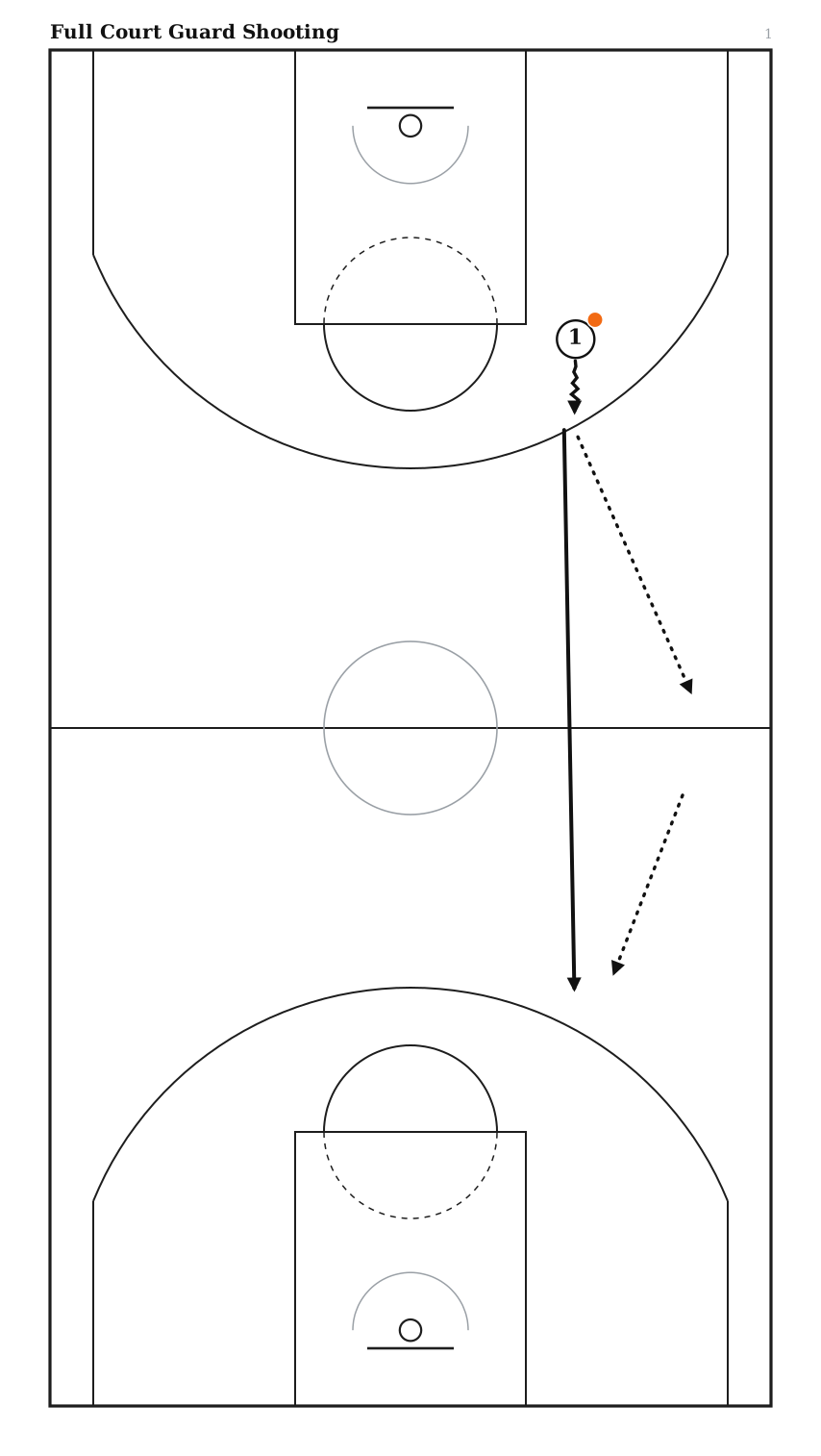
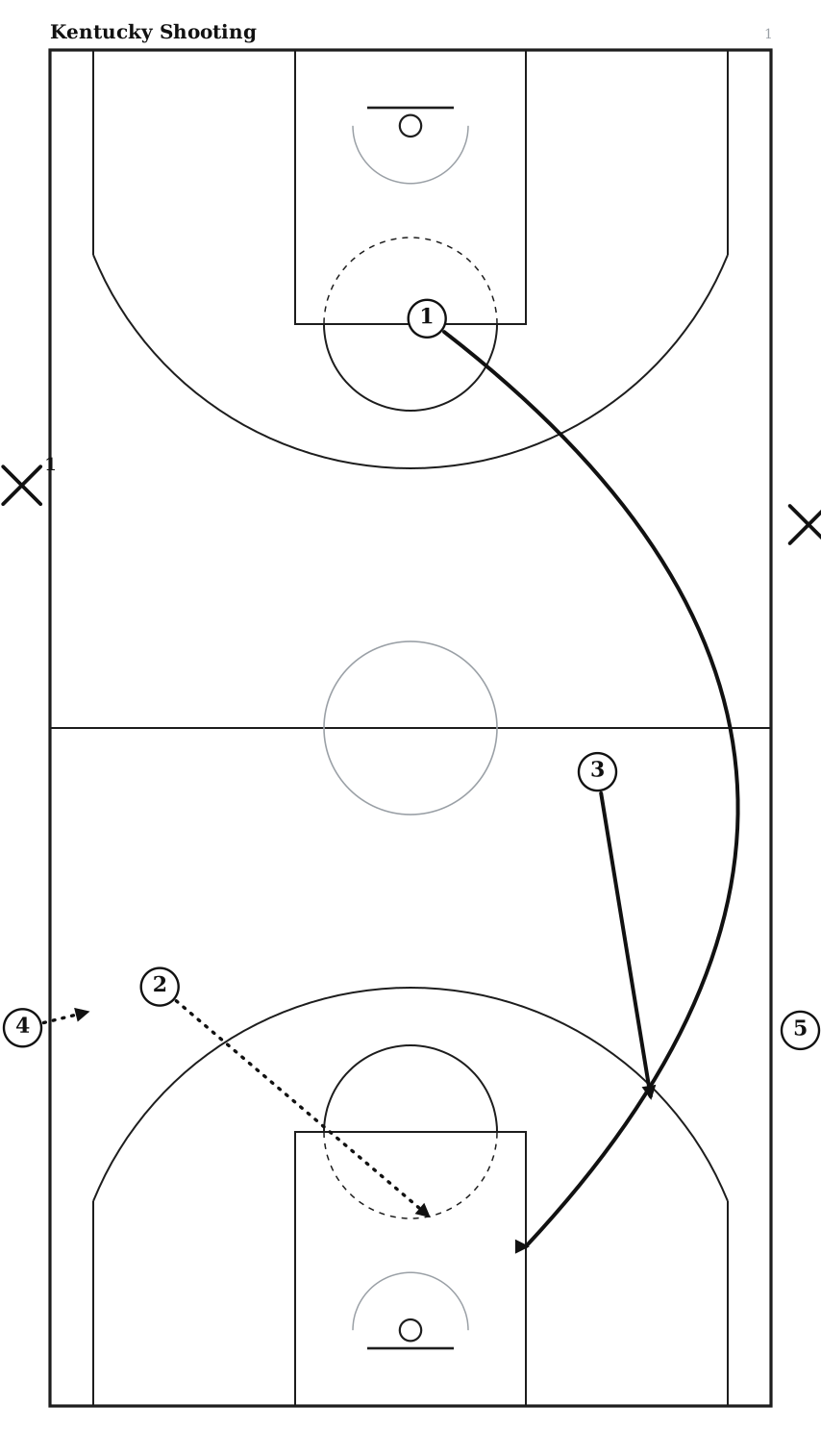
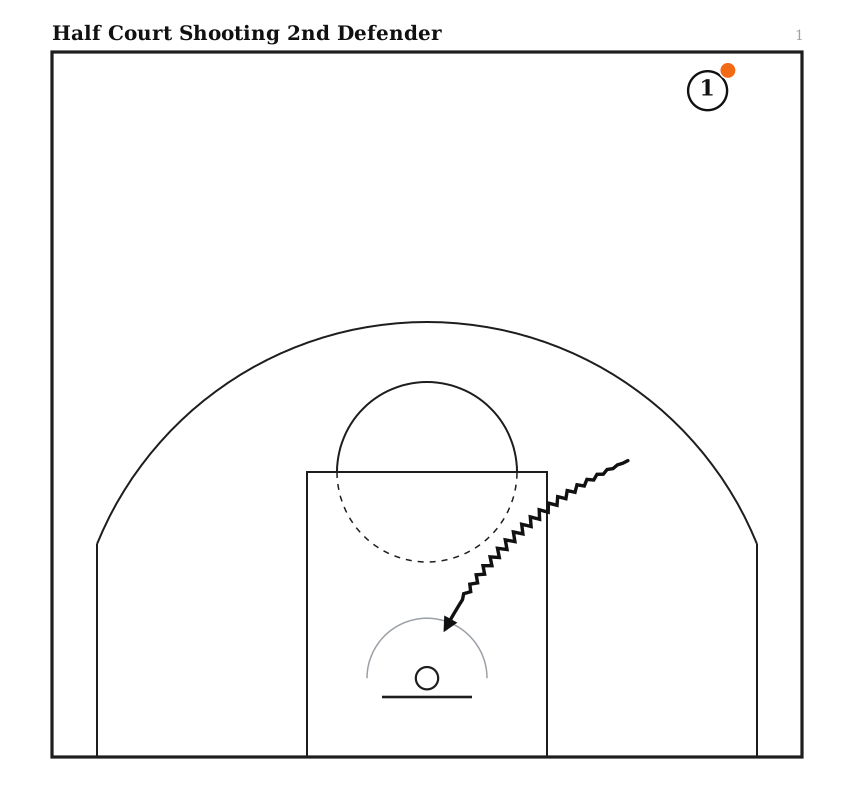
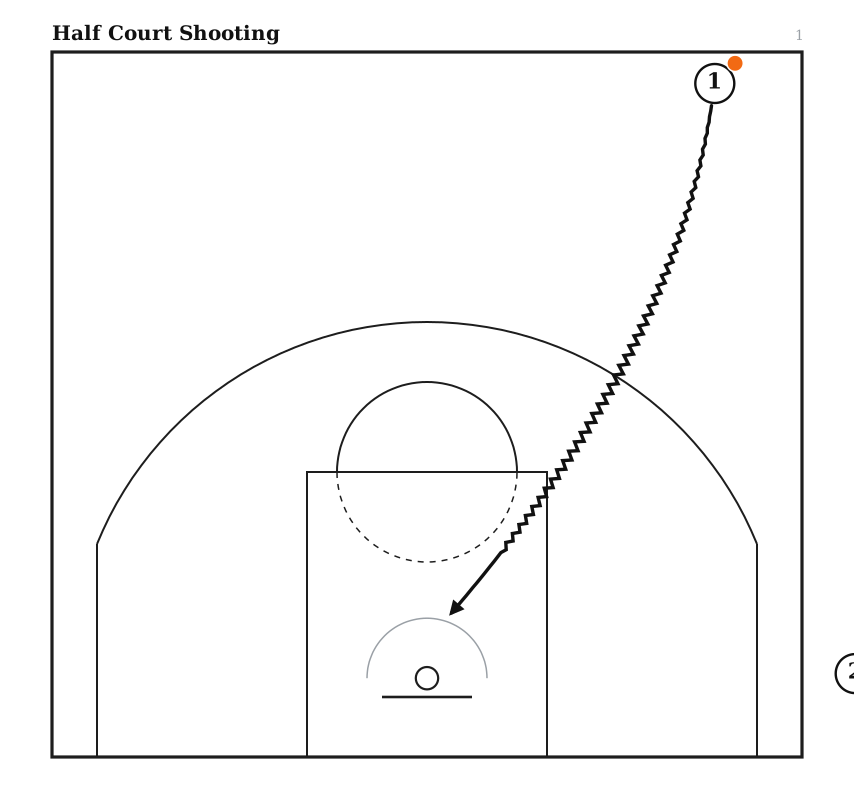
See it drawn up
Related diagrams
Keep Building
Related breakdowns
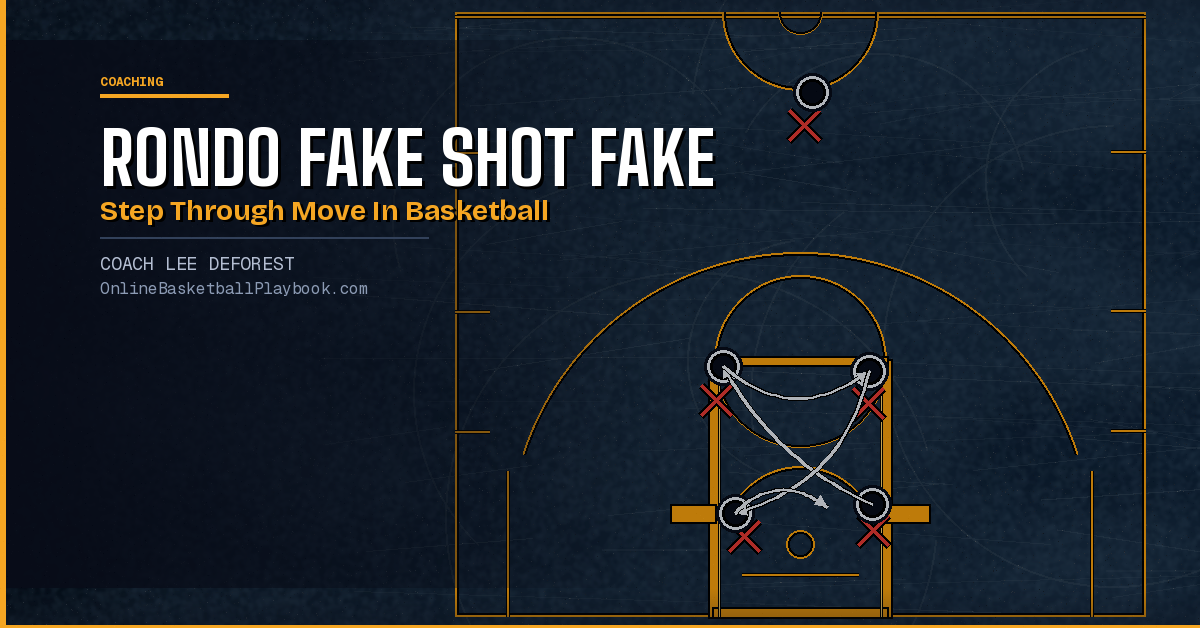
How to Do a Rondo Fake Shot Fake Step Through Move in Basketball
How to Do a Rondo Fake Shot Fake Step Through Move in Basketball
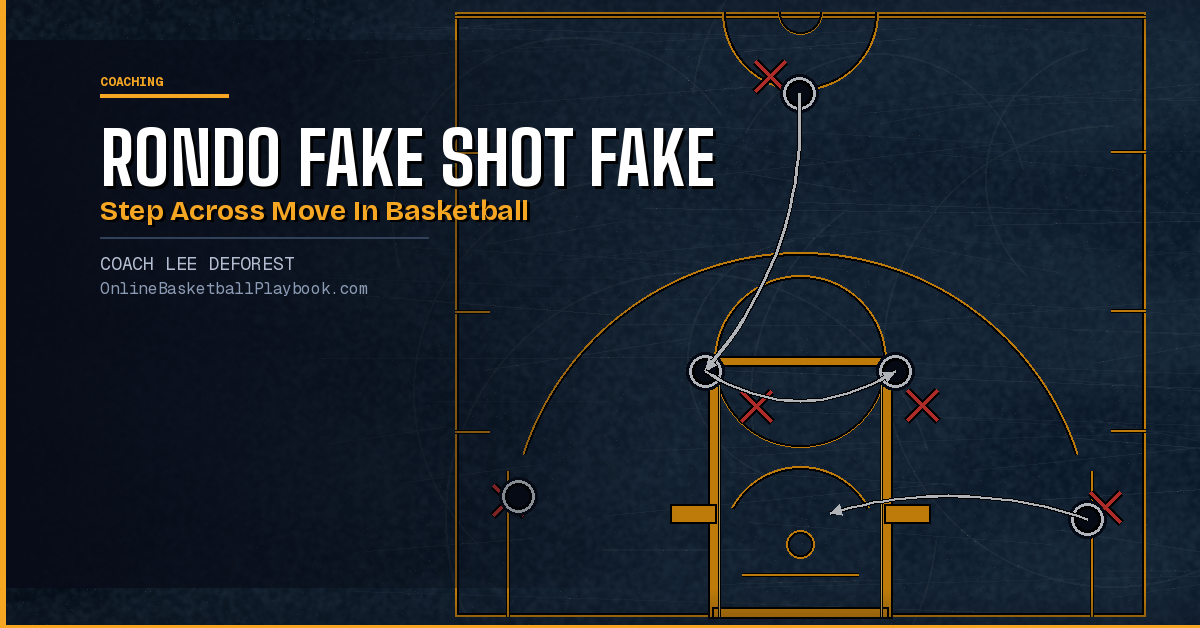
How to Do a Rondo Fake Shot Fake Step Across Move in Basketball
How to Do a Rondo Fake Shot Fake Step Across Move in Basketball