
Shooting a basketball is a chain of small mechanical decisions made in less than a second. Get one link wrong and the shot falls short, drifts wide, or never develops at all. Here is what actually separates shooters from non-shooters.
Building Correct Form First
Before a player takes a single high-speed rep, the mechanics have to be right. Volume on top of bad form just grooves a bad shot deeper. The sequence used at elite levels — from youth academies to Division I programs — always starts with form work before the ball even reaches the basket.
The foundational cues are consistent across coaches. The shooting hand sits under the ball like a "pizza waiter" carrying a tray — palm up, ball resting on the finger pads with a visible gap between the ball and the palm. The elbow locks in directly under the ball, over the shooting knee. The guide hand rides the side of the ball without influencing the release. At the top of the shot, the wrist snaps forward and the fingers finish pointing down toward the rim — a full "cookie jar" follow-through that holds until the ball lands.
Jay Wright at Villanova opens every practice with a two-drill form sequence: the Set Lift and the Bradley Drill. The Set Lift isolates elbow alignment and follow-through. The Bradley Drill pushes players to release the ball as high as possible, reinforcing the principle that a release point closer to the rim demands a higher arc and a later snap. Neither drill has a defense. Neither drill is run at full speed. The goal is one thing: to create a shot that is mechanically sound before pressure is applied.
John Beilein at Michigan taught the same logic independently. His teams ran two-drill form sequences before any live shooting because, as he put it, "footwork is more important than any offense you run." The shot can only be what the foundation allows. Build the foundation right and every drill after it compounds correctly. Build it wrong and volume becomes a liability.
Footwork: The Foundation of Every Shot
The feet determine whether the mechanics can even express themselves. A catch off-balance or a foot planted wrong means the elbow is already out of position before the wrist has done anything. This is why Jay Wright and John Beilein — two of the most accomplished offensive coaches of the last two decades — arrived at the same rule independently: on all V-cuts and screen-catches, plant the inside foot first.
The inside foot is the foot closest to the ball when receiving it off a cut or coming off a screen. Planting it first squares the hips to the basket and creates a stable two-foot platform for the shot. Players practicing this at Villanova said the footwork sequence aloud during technique work: "1-2, lift, follow through." Making it verbal slows the movement enough to make it deliberate, then habits form and the verbal cue disappears.
The catch-and-shoot footwork drill is straightforward. A feeder stands at the wing. The shooter V-cuts toward the baseline, plants the inside foot as the pass arrives, brings the outside foot parallel, and shoots off the rise. The goal is to be in balance before the ball lands in the hands — not scrambling to find balance after it. Coaches from Nelson's advanced skill development work to the Larry Brown/SMU system all mandate the same thing: feet in position on the catch, every single time.
The pull-up requires its own footwork discipline. Coming off one or two dribbles, the gather step sets balance. The shooter lands on a jump-stop or a one-two step, squares up, and rises straight. What kills the pull-up is lateral momentum from the dribble carrying into the shot — the result is a fadeaway or a leaner that never develops consistency. Stopping the momentum first is the whole skill. Coaches from Rumjahn's comprehensive offensive work to the UNCW battery all describe the pull-up as a "lost art" precisely because it demands footwork discipline that players skip when they only practice catch-and-shoot.
Making Every Rep Competitive
Shooting volume without stakes produces players who can shoot on empty gyms and miss in games. The research on skill acquisition is clear: practice must replicate the pressure of the real performance environment. For shooting, that means every rep needs a winner, a score, or a consequence.
The approach is straightforward: build a scoring system into every shooting drill. Jay Hernandez structures entire workouts around the record board — a visible chart where players set, break, and sign their personal marks in named drills. Shaka Smart's Texas program ran explicit team records that players chased: the 3-Minute drill carried a team record of 157 makes, Evans carried 219. When a player can look at a board and see a number they are trying to beat, the rep carries weight.
Tom Billeter's Purdue Drill is a simple example of the scored approach: a shooter has one minute to make four threes with a rebounder and a passer, sprinting baseline to half-court between shots. Miss the target and you run for each point below four. The sprint consequence is not about punishment — it is about creating the stakes that make the make matter. The most dangerous player, as Hernandez put it, is "the one who is continually improving." A scoreboard makes improvement measurable.
The competitive standard matters too. At Michigan, Beilein's benchmark was seven makes out of ten in thirty seconds, coming off a down-screen and flare-screen sequence. At Villanova, Wright's standard was six of ten in thirty seconds. Both required three players to run together if the standard was not met — removing the individual escape of "I tried" and replacing it with team accountability. Players who failed the standard ran a half-court sprint in five seconds. The standard is set where the difficulty creates real pressure without being unreachable.
The most dangerous person is the one who is continually improving — a shooting workout should have a winner and a recorded number attached to every drill.
— Shooting Development, Basketball Vault
Diagnosing and Fixing Common Shooting Errors
When a player misses consistently, the mistake most coaches make is repeating a generic cue — "bend your knees," "follow through" — without identifying what is actually going wrong mechanically. Dr. Hal Wissel's diagnostic framework fixes this by giving coaches a root-cause pathway: identify the error pattern, find the mechanical cause, then prescribe the specific correction.
The most common errors and their causes fall into clear patterns. A short shot almost always means the release point was too low — the ball left the hand before the arm reached full extension. The correction is to hold the follow-through with the arm fully extended and fingers pointing down at the rim until the ball lands, forcing the habit of completing the motion rather than cutting it short.
A flat arc — the line drive — comes from a flat wrist at release and an elbow that never finishes above eye level. The ceiling target drill addresses it directly: pick a point on the gym ceiling above the front of the rim and aim the arc there. Players who shoot line drives gain four to six inches of arc immediately because they are finally aiming up rather than at the rim. The physics of the shot reward a steeper entry angle.
Pushes wide left or right — the most common flaw — almost always come from the guide hand. The non-shooting thumb crosses over the ball at release and redirects the shot. The fix is the thumb-lock drill: consciously hold the guide-hand thumb up and away, shoot one-handed form shots until the ball tracks straight without intervention from the off hand. Once the shooter feels what a clean release is, they can reproduce it with the guide hand present.
Side spin — the ball rotating sideways instead of straight back — comes from the shooting hand being cocked to the side at the set point instead of aligned straight under the ball. The elbow-in alignment check catches this: at the set point, the shooting elbow must be directly under the ball and directly over the shooting knee before the wrist snaps. If the elbow is flared outward, the wrist will turn rather than flex forward, and side spin follows. Have a coach or teammate call out elbow position before the shot.
Rick Pitino put a number on one of the most overlooked errors: contested-shot rate. Louisville was making only 22% of challenged shots compared to the NBA baseline of 42%. His practice rule became concrete because of it — if a shot would be challenged in a game, pass it back and restart the action. No exceptions. Teaching it as a number rather than a feeling — "22%, restart" — made it a verifiable coaching rule rather than advice that players heard but did not follow.
When a player misses three or more times in the same pattern, work backward from the error: check arc angle first, then hand position at release, then elbow alignment at the set point, then balance and foot position at the catch. The root cause is rarely where the player thinks it is, and repeating the same generic cue without finding it just grooves the wrong pattern deeper.
Game Shots, Game Spots, Game Speed
Kevin Eastman's framework — game shots, game spots, game speed — is the cleanest summary of what separates a useful shooting workout from one that produces gym shooters who disappear in games. The parameters of every rep should match the parameters of a real possession.
Block shooting, where a player stands in one spot and fires until they have taken a set number of shots, has a role early in a workout when the goal is grooving form. But staying in block shooting for the entire session produces a form that exists in controlled conditions only. Movement shooting — catching off a V-cut, relocating after a shot, reading a closeout before pulling — trains the body to reproduce mechanics when the environment changes.
The Larry Brown/SMU system makes this structural. Every drill is designed so that a real offensive action precedes the shot: a zipper cut, a baseline drive, a ball screen, or a drive-and-kick. Players are always responding to something — a defensive angle, a roll-or-pop decision, a closeout — before pulling the trigger. Standing still and catching a clean pass is never the starting condition because it is never the starting condition in a game.
Shaka Smart's Texas drill bank carries the same principle with an added rule: in Star-type movement drills, players cannot shoot the same spot twice. After each shot they must relocate to a new position. The drill forces shooting from different angles, off different footwork patterns, and at different distances — exactly the variety that a real offensive possession demands. The shooter who can only make shots from their favorite spot on the floor is a player the defense will simply take away.
The pull-up and the hesitation are part of game shots too. Catch-and-shoot threes get the most practice time, but the player who can take one or two dribbles and pull up at the free throw line is equally valuable — sometimes more so because defenses practice stopping the catch-and-shoot and are less prepared for the one-dribble pull. Pair shooting work with the handling that creates shots: game-speed stationary dribbling, pull-back crossovers for separation, straight-line drive finishes. The shot comes off the dribble in a game — train it that way.
Free Throws Under Fatigue
Free throws are practiced fresh and shot tired. That mismatch is one of the most correctable problems in player development, and almost every coach who has addressed it has landed on the same solution: shoot free throws inside the workout, not at the start when players are fresh and focused.
Bake free throws into the middle of a shooting session. Ten after the second drill block, ten after the final drill — tired, heart rate elevated, legs already worked. Track the percentage. The number matters because free throws in games happen when players are exhausted and under pressure, not when they are fresh and calm. If practice free throws are always taken fresh, the player has never actually practiced the game condition.
Rick Pitino tracks free throws at the end of live 1-on-1 games for exactly this reason. After playing a full 1-on-1 possession, both players shoot free throws and the percentages are recorded. The fatigue is real because the game situation was real. The ball and head over the free throw line to project the ball toward the rim — his mechanical cue — gets practiced in the state it will be needed.
Bob Hurley's daily program gave shooting a twenty-minute block every practice, with free throws baked into the back half. Steve Nash's game-speed shooting circuit — shoot, rebound, dribble to the next spot, repeat — builds fatigue into the structure so that the later shots in a set are taken tired by design. The shooter who can make free throws after a drive, a scramble, and a foul is the player you want at the line in the final minute. Train that player deliberately, not by accident.
- Form before volume: Run Set Lifts and one-handed form shots before any live shooting — bad reps grooved at speed are harder to unlearn than slow reps done right.
- Inside foot first on every catch: Plant the foot closest to the ball on all V-cuts and screen-catches; this is the single footwork rule shared by Wright, Beilein, and Nelson independently.
- Put a score on every drill: Set a make target, record it, post it — a shooting workout without a scoreboard is just cardio with a ball.
- Diagnose before you cue: When a player misses in a pattern, check arc, then hand position, then elbow alignment, then foot balance — the root cause is upstream of where the miss looks obvious.
- Shoot free throws tired and counted: Move free throw blocks to the back half of the workout when legs are gone; that is when they get shot in games and that is when they should be trained.
Want more basketball coaching strategies and drills?
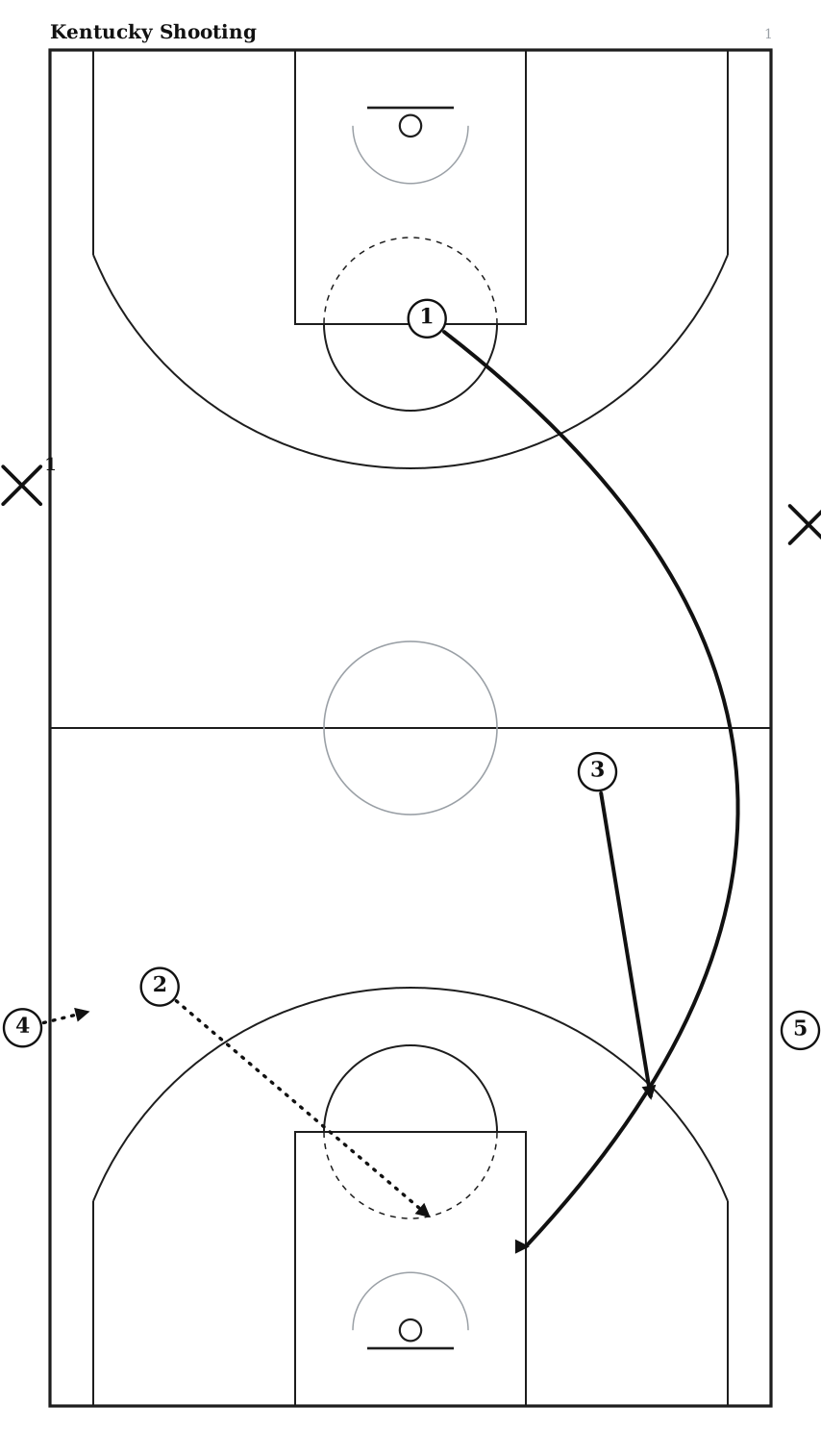
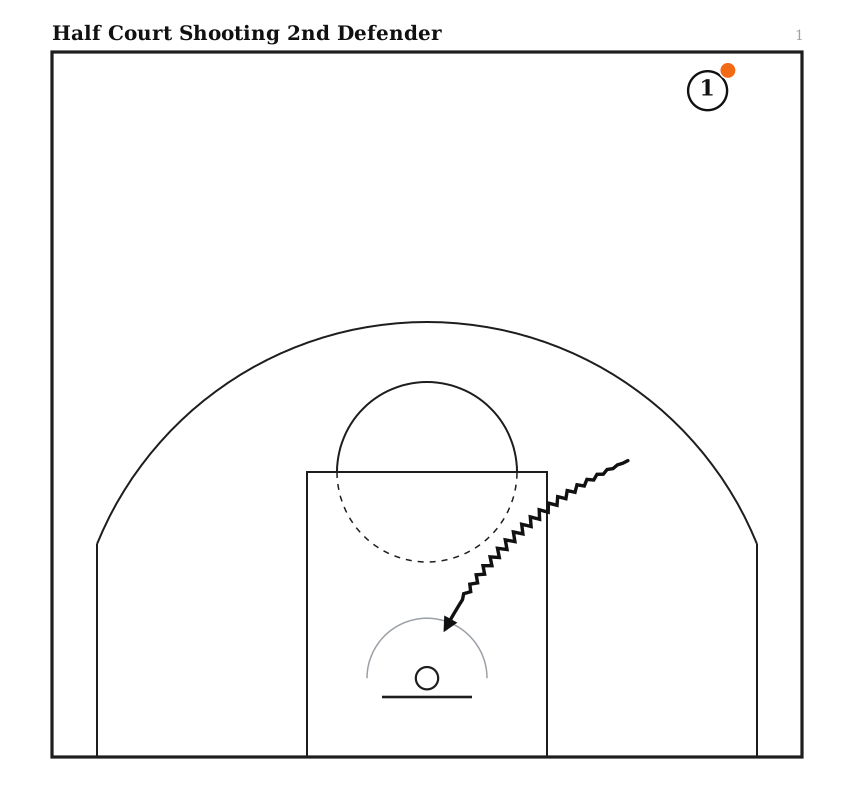
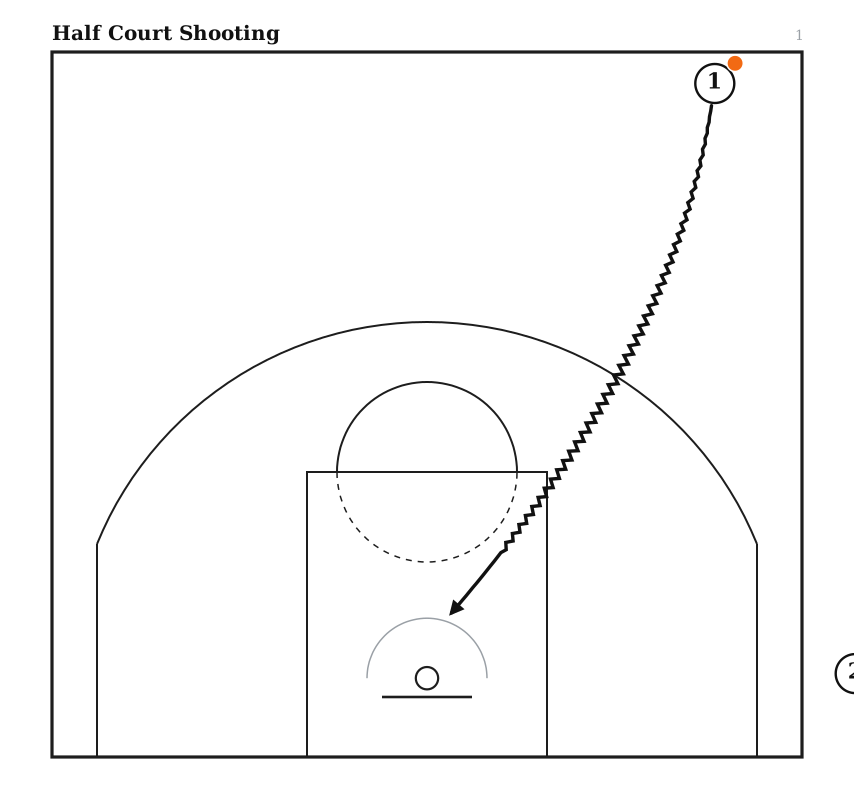
See it drawn up
Related diagrams
Keep Building
Related breakdowns
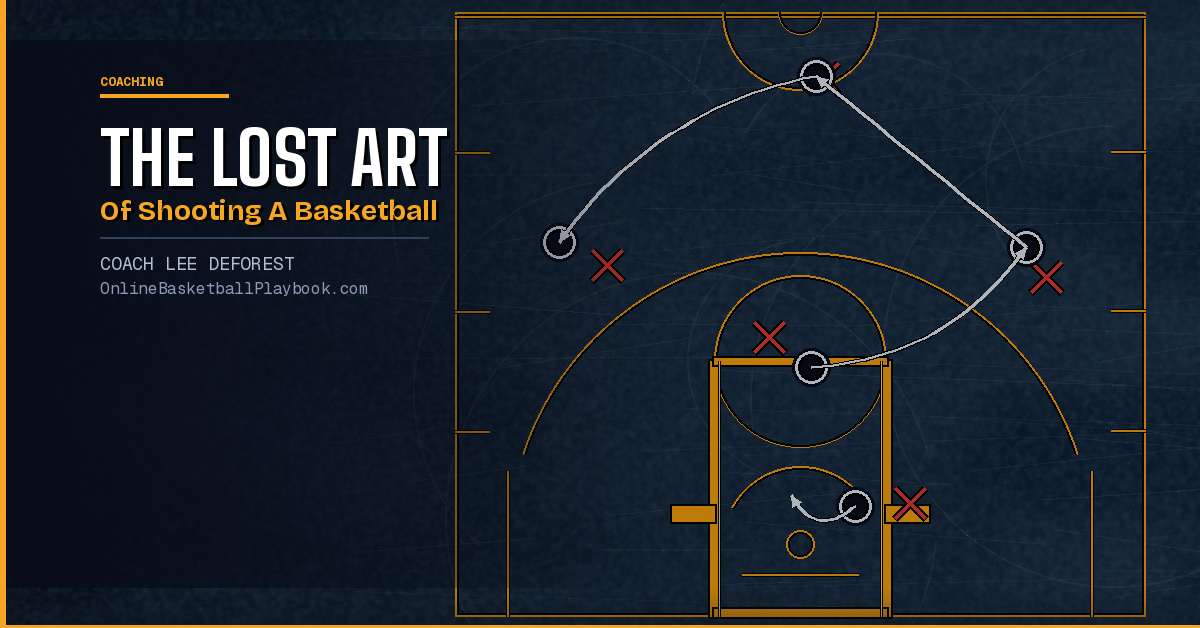
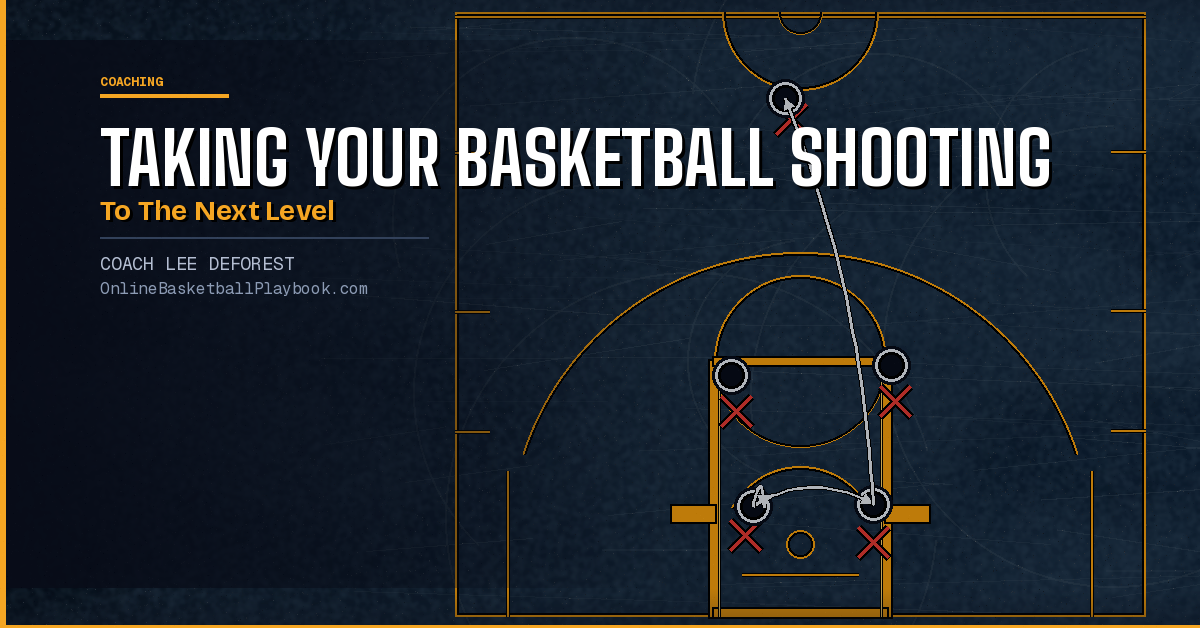
Taking Your Basketball Shooting to the Next Level
Taking Your Basketball Shooting to the Next Level
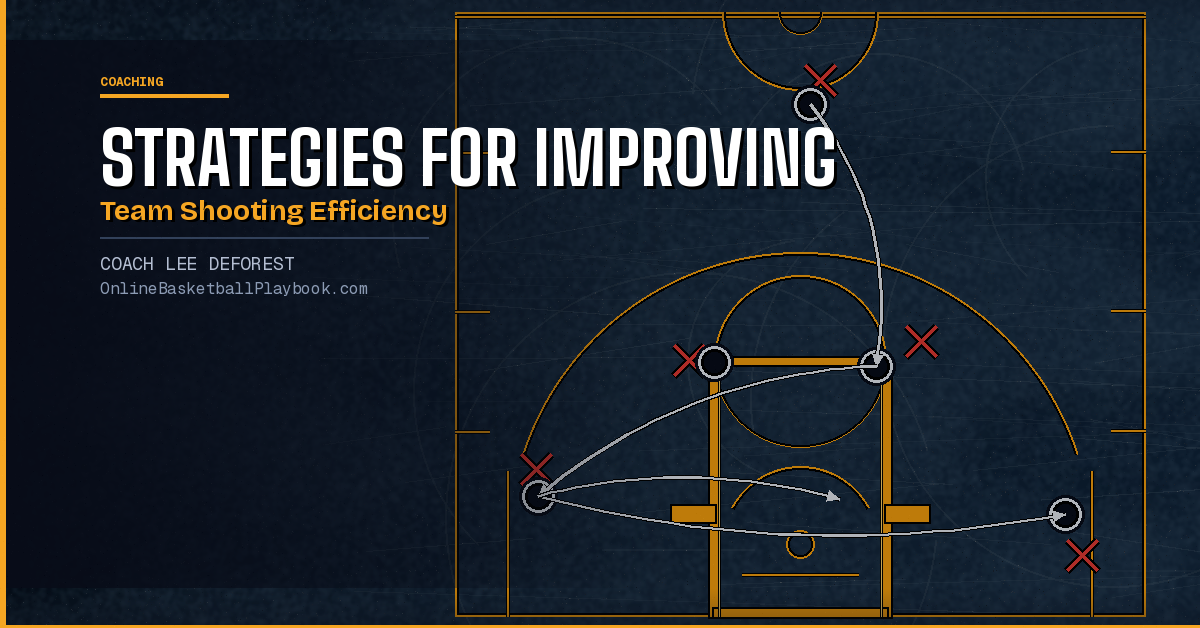
Strategies for Improving Team Shooting Efficiency
Strategies for Improving Team Shooting Efficiency