Your defense won't get a stop when it matters, and practice is the reason. Run a normal shell drill and nobody actually competes for the ball, because a stop isn't worth anything. There's no scoreboard for defense, so there's no urgency.
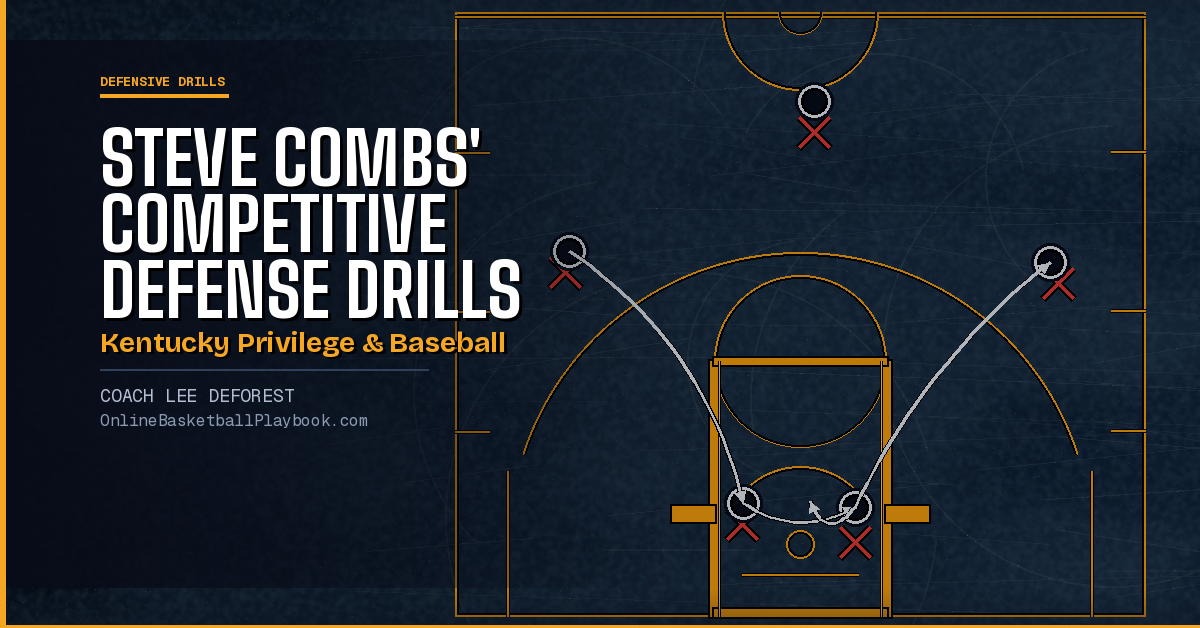
Steve Combs' Vincennes Lincoln practice notes attack that problem head-on. His competitive drills share one idea: make a defensive stop the only way to score. When the only currency in the drill is a stop, players stop coasting and start fighting for the ball. Two drills carry the whole concept — "Kentucky Privilege" and "Baseball."
"You can only score by getting defensive stops."
This article breaks down both drills exactly as they're scored in the Vincennes notes, explains why the scoring rules do the coaching for you, and gives you a Monday practice block to install them without confusing your team.
Coach's Cheatsheet
- Use this when: your team treats defense as the boring half of practice and won't compete for stops without you nagging.
- Core teaching point: change the scoreboard, not the speech — when a stop is the only way to score, effort takes care of itself.
- First drill: Kentucky Privilege — three teams of five, ten minutes on the clock, you can only score by getting a stop.
- Second drill: Baseball — two-dribble closeouts, three stops is an out, switch ends after the inning.
- Correction cue: "Stop scores!" — remind players the offense's bucket means nothing; the defensive stop is the point.
- Practice install: add a manager to keep score out loud so the competition is public and nobody can hide.
The Idea: Make Stops the Only Currency
Before the drills, the principle. Most defensive drills fail for a boring reason: there is no reward for playing great defense. The offense scores points; the defense just "stops them" — an outcome with no number attached. Players are wired to chase the number.
So Combs flips it. In these drills the defense earns the points. A stop is a score. A turnover is worth more than a stop. A made basket by the offense earns the offense nothing but the right to keep possession. Once the scoreboard rewards defense, you don't have to beg for effort — the drill begs for you.
The Key Principle: players compete for whatever you put on the scoreboard. If defense is never on the scoreboard, it will never be a competition — and a defense that doesn't compete in practice will not compete in a game. Score the stop and the effort follows the points.
Both drills below are just different deliveries of that one idea — one is a continuous three-team grind, the other is a short-burst closeout game. Run them on the same day and the message lands twice.
Drill 1 — Kentucky Privilege (3-Team Continuous)
Kentucky Privilege — 5-on-5 Continuous, Three Teams
Players needed: 15 (three teams of five) + a manager to keep score
Area: Full court
Focus: Continuous live defense, defensive stops as the only score, transition discipline
Setup
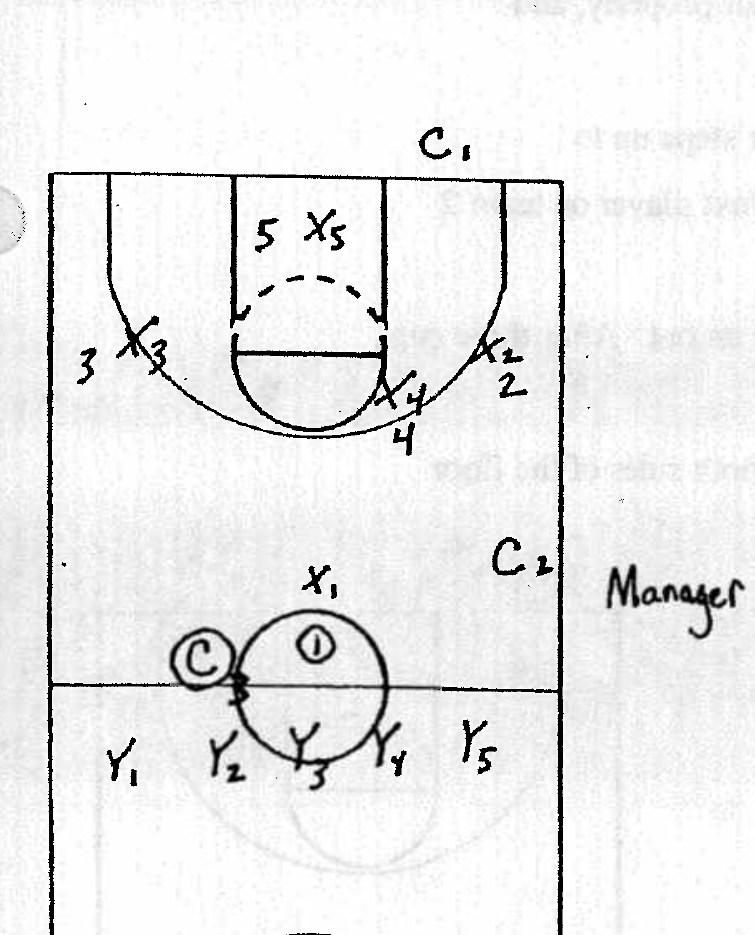
One team is on offense, a second team is on defense, and the third team waits at half court, ready to come on as the next offense. Put ten minutes on the clock and let it run. A manager keeps score out loud the entire time.
How It Works
- You can only score by getting defensive stops. The offense scoring does nothing for them but keep the ball moving — the defense is chasing the points.
- If the offense scores, they go on defense. Make a bucket and your reward is… now you have to guard. The incentive is inverted on purpose.
- On a change of possession, the ball goes coach-to-coach-to-coach. Under the basket to the sideline to half court, and the half-court coach hands it to the next offensive team. That relay is what keeps the drill continuous.
- All five offensive players must be at half court before they start. No leaking out early — that's the entire purpose of routing the ball through the coaches.
- Turnovers are worth two points; a stop is worth one. You can also award points for deflections, so the defense is rewarded for activity, not just the final outcome.
The coach-to-coach relay isn't busywork — it buys the time that forces all five defenders to sprint back and all five new attackers to gather at half court. Skip the relay and the drill turns into sloppy open-floor chaos. Keep the ball moving through the coaches and the transition discipline coaches itself.
Common Mistakes
- Letting the new offense leak out early. If players don't gather at half court, the defense never gets to set, and the rep stops teaching defense.
- Silent scorekeeping. If the manager isn't calling the score out loud, the competition disappears and effort sags. The number has to be public.
- Forgetting to reward deflections. Award a point for activity and you'll see hands, gaps, and gang rebounding — not just clean stops.
Drill 2 — Baseball (Two-Dribble Closeouts)
Baseball — 1-on-1 Closeout Game, Innings and Outs
Players needed: two teams, split evenly, + a coach to feed the pass
Area: Half court (wing and baseline)
Focus: Closeout technique, contesting in two dribbles, short-burst competitive defense
Setup
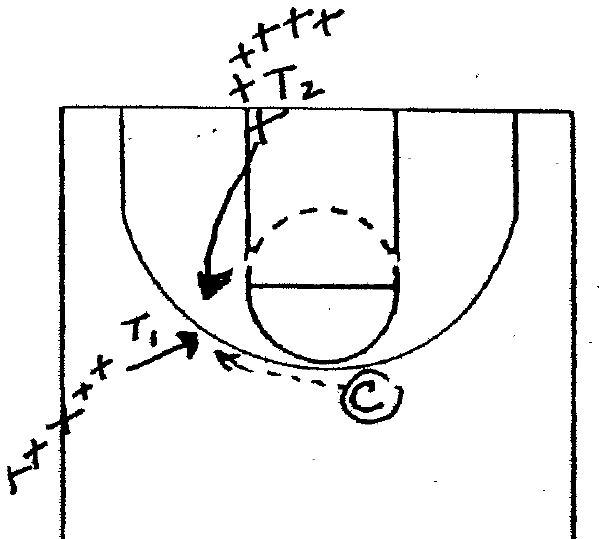
Split into two teams. One team lines up on the wing (offense), the other on the baseline (defense). The offense's objective is to score using only two dribbles; the defense's objective is to close out properly and prevent the score.
How It Works
- Team one tries to score using two dribbles. Capping the dribble forces a real closeout read — contest the shot or take away the straight-line drive, you can't give up both.
- Team two closes out properly and protects the rim. The defender's job is the textbook closeout: sprint, break down, contest high hands, no blow-by.
- Score and the line keeps rolling. If team one scores, the next player steps up to receive the coach's pass while the next defender steps up to guard.
- A stop is an out. Three outs and you switch. Stop the offense and that's an out for the defense; after three outs, offense and defense trade roles.
- Play two innings on each side of the floor. Running it on both sides keeps closeout angles honest for right- and left-side reads.
The two-dribble cap is the whole drill. Unlimited dribbles lets a good athlete win every rep and the defender learns nothing. Cap it at two and the defender gets rewarded for a disciplined closeout instead of just out-athleting the rep — which is exactly the skill that transfers to a game closeout.
Why Scoreboard Rules Beat Coach Talk
You can tell a team to "take pride in defense" every day for a season and get nowhere. These drills don't ask for pride — they pay for it. The rules do the coaching:
- Make the offense score worthless and you remove the reason to coast on defense.
- Make a stop a point and you give players a number to chase.
- Make a turnover worth double and you reward the most disruptive defense, not just the adequate kind.
That's the thread running through both drills — and it's the same idea behind a lot of elite defensive cultures: defense only becomes a habit when winning the drill requires it. Change the scoreboard, and you change the behavior without raising your voice.
Practice Install: Your Monday Plan
Here's how I'd put both drills in with a team seeing them for the first time. One defensive block, about 25 minutes.
Block 1 (4 min) — Teach the Scoring, Not the Defense
Before anyone guards anybody, explain the rule that matters: a stop is a point, a turnover is two, the offense's bucket is worth nothing. Put a manager on the scoreboard and make them say it out loud. Players need to hear the new currency before they'll chase it.
Block 2 (8 min) — Baseball First
Start with Baseball because it's small and fast. Two dribbles, three outs, switch. It teaches the closeout fundamentals you'll need in the bigger drill, and the short bursts get everyone competing quickly.
Block 3 (10 min) — Kentucky Privilege
Now go five-on-five continuous. Ten minutes on the clock, three teams, manager calling the score. Your only two corrections: did the new offense gather at half court, and is the defense sprinting back as a connected five?
Block 4 (3 min) — Read the Scoreboard Back
End by reading the final score out loud and naming the team that earned the most stops. Public accountability is the point of the manager. When players know the stop total is going on the board with their name on it, the next practice's defense starts before you blow the whistle.
Variations and Progressions
Progression 1: Stop Quota to End Practice
Tie the end of practice to a number. "We're done when the defense banks twenty stops." Suddenly every possession matters and the team polices its own effort.
Progression 2: Win-by-Stops Scrimmage
Run a normal scrimmage but only count baskets that follow a defensive stop — the offense has to earn the right to score by getting a stop first. It's the same idea stretched to full five-on-five flow.
Progression 3: Deflection Bonus Round
For one Kentucky Privilege rotation, double the deflection points. You'll see gap discipline, active hands, and players digging at the ball — the disruptive habits that turn a decent defense into a ball-hawking one.
Get Free Coaching Notes
Join the Online Basketball Playbook newsletter for new playbook breakdowns, drills, and practice-ready install ideas.
Get Free Coaching NotesDraw this play free in the play drawer →
Membership: the full library, playbook packs, and Pro drawing tools →
Final Thoughts
Neither of these drills is fancy. A clock, three teams, a manager keeping score — that's the whole setup. But inside that simplicity is a complete idea: defense becomes a competition the moment a stop is worth something.
Stop scores. Turnover scores double. The offense's bucket is just the price of staying on the floor. Put that on the scoreboard and you'll stop begging your team to compete on defense — the drill will do it for you.
Keep Building
Related breakdowns
Andy Weaver's Man-to-Man Defensive Drills: Western's Defense-Scores-Only System
Andy Weaver's man-to-man drills from Western High School all share one idea — a stop, a deflection, or a rebound is the only way for the defense to score.
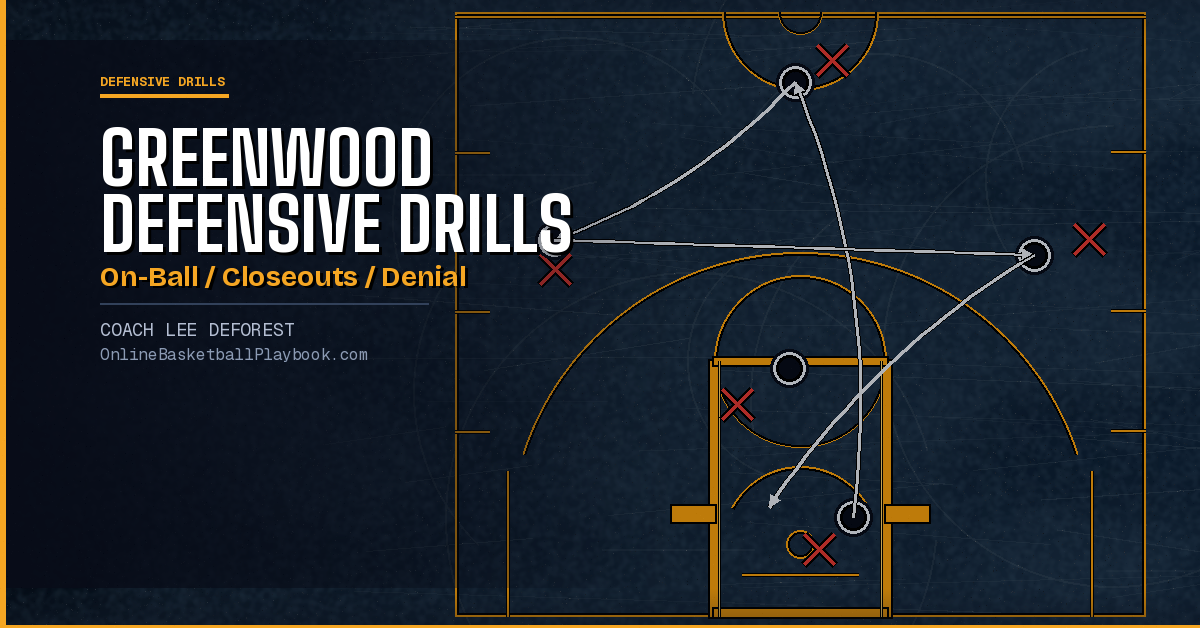
Greenwood's Defensive Drill Progression: On-Ball, Closeouts, and Denial
A complete individual-defense drill menu — stance, closeouts, denial, and help — that builds a defense one rep at a time.
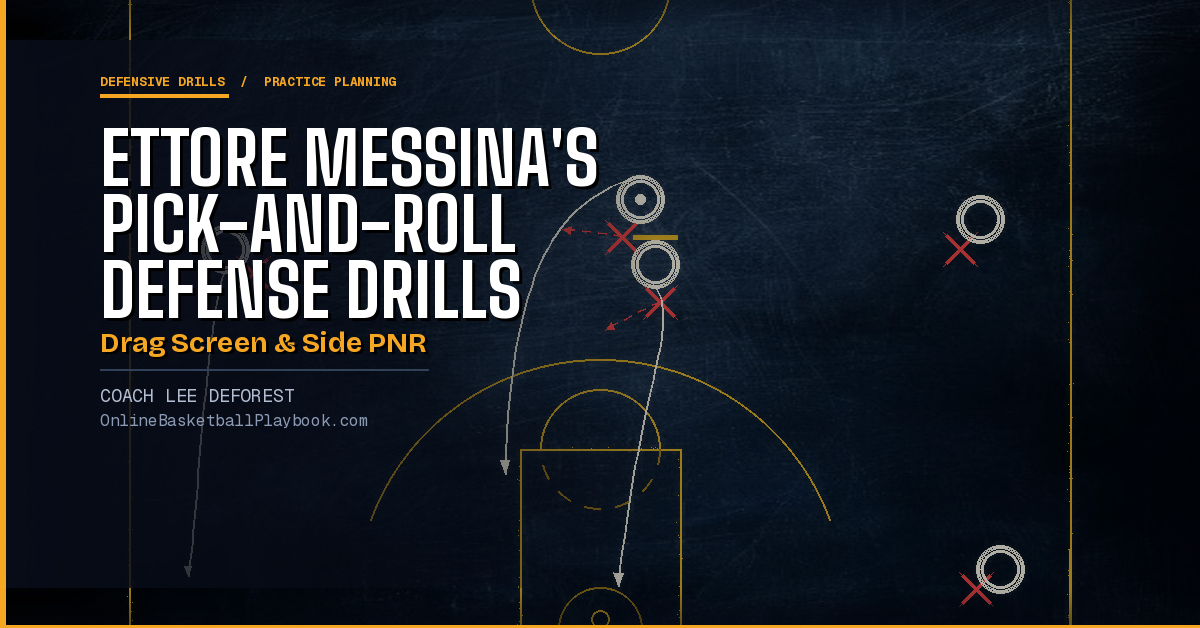
Ettore Messina's Pick-and-Roll Defense Drills: Drag Screen & Side PNR
Two 2-on-2 drills from Messina's clinic notes that fix the biggest reason teams give up easy buckets in transition: letting the ball handler reach the arc before the screen arrives.
More from Online Basketball Playbook
How to Build a Defensive Identity
Competitive drills build the identity — this is the culture behind the reps.
Basketball Finishing & Footwork Drills
Pair defensive drill work with finishing work so players develop both ends together.
Defensive Stance in Basketball
Every competitive drill starts with stance — players can’t compete without it.