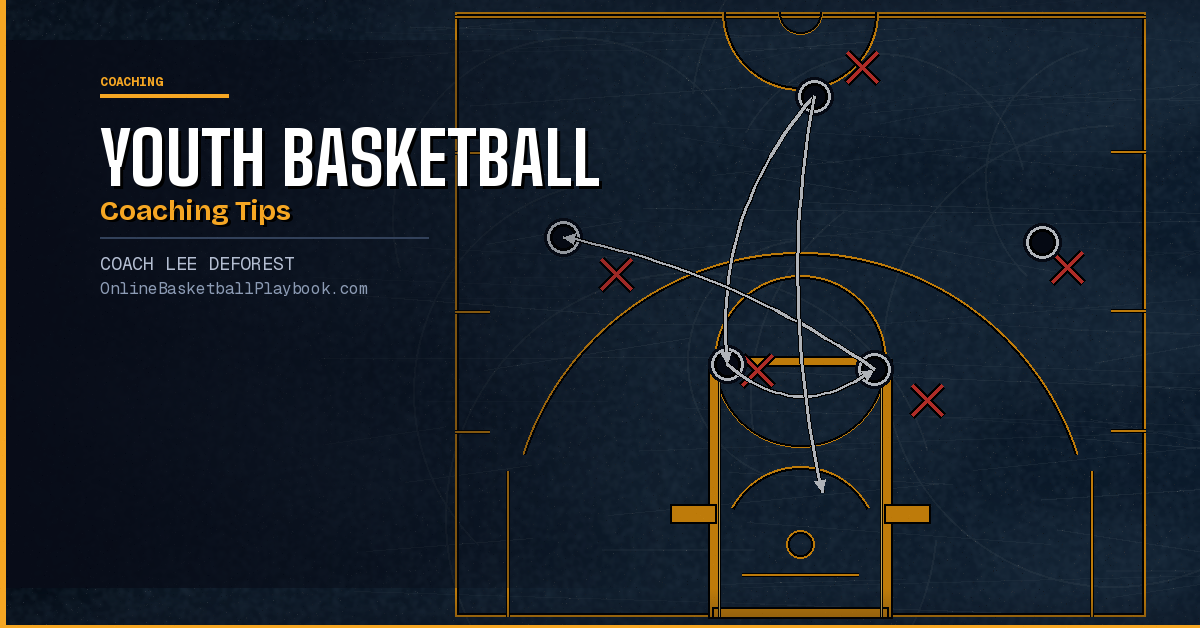

Coaching youth basketball well means more than teaching plays. It means building confidence, developing fundamental movement, and making the game so enjoyable that kids keep coming back. Here is how to do it right.
Put Fun First — Every Single Practice
The single most important thing you can do as a youth basketball coach is make sure every child leaves practice having enjoyed themselves. This is not a soft, feel-good principle — it is a developmental reality. If a kid does not enjoy showing up, they will find something else to do. Your job is to make basketball so appealing that, given a free afternoon, they choose the gym over everything else.
Enjoyment drives intrinsic motivation. Intrinsic motivation drives voluntary repetition. Voluntary repetition builds skill. That is the whole chain. If you skip the first link — fun — the rest collapses. Young players at the six-to-eight age range are especially sensitive here. They are egocentric by nature, with short attention spans and a genuine inability to pace themselves. They will run until they drop and then wonder why they feel terrible. They need coaches who understand this stage of development, not coaches who treat them like miniature high schoolers.
One practical rule: never end practice on something that feels like punishment. Always close on a positive note — a game they enjoy, a skill they have mastered, a moment of laughter. That last feeling is what they carry home and what they tell their parents about. End on energy, and they will want to come back.
"Fun first — 'if they don't enjoy it, they won't play it.' Enjoyment is the key ingredient in developing motivation. The primary goal is to make basketball so enjoyable that, given a choice of activities, the child chooses to play."
— Basketball Vault
Set up small competitions and track them. Let players earn points for dribbling without looking up, for making a chest pass to a moving target, for beating their own personal record. Gamification turns repetitive skill work into something kids actually want to do. You can build an entire basketball practice plan around this principle without sacrificing a single minute of real skill development.
Teach Movement Before Basketball
Before you teach a crossover dribble, teach a proper lunge. Before you teach a jump shot, teach a jump. The athletic foundation — push and pull, bend and twist, throw and catch, change of direction — must come before sport-specific skills if you want players who can actually execute under pressure years later.
Young players at the FUNdamental stage (roughly ages six through eight) have a high center of gravity relative to their bodies, which means they fall on sharp direction changes. Their balance systems are still developing. Their coordination is inconsistent. If you rush past agility, balance, and coordination work in favor of basketball skills, you end up with players who look okay in slow, controlled drills but fall apart when the game speeds up.
The sequence that works: agility, balance, coordination, and speed — all woven into the fabric of practice — combined with the simplest basketball skills. Stance. Footwork. Dribbling. Passing. Shooting. In that order of priority, not as an afterthought at the end of practice. Basketball footwork drills built on solid athletic movement will pay dividends for years. Coaches who skip this stage consistently produce players who plateau early because their bodies were never prepared for what the game demands.
Structure Practice for Short Attention Spans
Youth coaches lose players not because the drills are bad but because the practice is poorly organized. Long explanations, long lines, and long stretches without a ball in a player's hands are the three killers. Eliminate all three and your practice transforms immediately.
The rule of thumb at the youth level: no drill runs longer than three to five minutes. If you need more time to teach a concept, break it into two shorter segments with a game or a movement break in between. Put the most technically demanding skill at the very beginning of practice, when attention is sharpest. As the session goes on, shift toward more game-based activities that reinforce the same skill without requiring as much focused concentration.
Every player should have a ball. There is no reason for a youth player to stand in line watching two teammates work. Get enough balls, split into small groups, and keep everyone moving. A good benchmark: if more than three players are ever standing still at the same time, you have a structure problem. Fix the organization, not the players.
Keep sessions to 45 to 60 minutes total for the youngest age groups. Their bodies and minds both fade after that window. Better to end early with high energy than drag it out past the point of productive learning. A tightly run hour-long practice is worth more than two loose hours of loosely organized chaos.
Write out your full practice plan before you arrive. Know the drill name, the time block, the key coaching point, and the transition to the next activity. Coaches who plan in detail spend less time thinking on the fly and more time actually coaching their players through the work.
Skills Progression for Young Players
One of the most common mistakes youth coaches make is trying to teach too much at once. At the FUNdamental stage, reduce every decision to two choices. Shoot or pass? Dribble right or left? Drive or pull up? The cognitive load of multiple options overwhelms young players and produces paralysis rather than decision-making. Keep it binary, keep it clear, and add complexity only when the binary choice is automatic.
For dribbling, start with the dominant hand only — stationary, then slow walking, then jogging, then a change of direction. Once they can dribble without looking at the ball while walking, introduce the off hand. Once both hands work separately, introduce the crossover. This progression takes longer than most coaches want, but players who go through it correctly arrive at the intermediate level with a foundation that lets them absorb more complex skills quickly. Players who are rushed arrive with gaps that are increasingly hard to fill.
For passing, start with the chest pass from a stationary position to a stationary partner. Add a step. Add a pivot. Add a moving receiver. Passing drills built in this progressive sequence produce players who understand passing as a skill, not just something you do when you can't dribble anymore. Teach the bounce pass and overhead pass only after the chest pass is clean and consistent.
For shooting, the most important thing you can do is get the right-sized ball and the right basket height. A ten-foot basket and an adult basketball are both too big and too heavy for most eight-year-olds. Lower the rim. Use a smaller ball. Let them experience making shots. Basketball shooting form built correctly at a young age is nearly permanent. Form built incorrectly because the basket was too high and the ball too heavy is one of the hardest things to undo. The equipment matters as much as the coaching at this stage.
Long-Term Player Development Mindset
Success at the youth level should never be measured by wins and losses. That is the wrong scorecard entirely. The right question is: did each child improve at something compared to where they started? A player who could not dribble in September and can dribble without looking at the ball in December has succeeded, regardless of what the scoreboard said in any game. If the only way to succeed on your team is to be the best player and win the most minutes, most of your roster will never experience success. That is a coaching failure, not a player failure.
Set individual goals for each player at the beginning of the season. Make them challenging but achievable — something they cannot do yet but will be able to do if they work at it consistently. Review those goals mid-season. Celebrate when they are reached. This guarantees that every player has a path to success that does not depend on being the most talented person on the floor.
Think about what you are building toward. The players who are seven years old today will be fifteen in eight years. What skills do they need at fifteen that you can start building now? The answer is not a specific play or a specific defensive scheme. The answer is athleticism, ball handling, footwork, passing vision, and the habit of working hard. Focus on those and the basketball will follow. Good basketball player development at the youth level is almost entirely about building a foundation — not a finished product.
Building a Positive Team Culture
Youth coaches shape culture whether they intend to or not. Every time you respond to a mistake, you are teaching something. Every time a player takes a risk and fails, your reaction tells the rest of the team how safe it is to try new things. If failure is met with frustration or sharp criticism, players stop trying new things. They default to what is safe. That stifles development and creates timid players who are afraid to compete.
The alternative is a culture built on encouragement, accountability, and genuine effort. Effort is the one thing every player on your roster can choose to give regardless of talent level. When you consistently praise and reward effort, you create a team where every player has a way to succeed and to contribute. Talent is not required for maximum effort. That is the culture you are building for.
Keep your criticism specific and always pair it with a correction. Not "you're doing that wrong" but "try taking a wider stance — watch how your balance improves." Specific feedback with an immediate correction gives the player something to do with the information. Vague criticism leaves them with nothing. Be direct, be clear, and always leave the player knowing exactly what to work on next.
Teach players to cheer for each other. Build in moments where teammates acknowledge good plays, good passes, good defense. A team that communicates positively on the court is more cohesive and more resilient in tight situations. Building basketball team culture starts at practice, not in games. The habits players develop during the week are the habits they bring to competition.
- Ball for every player: no standing in line — every player works simultaneously to maximize touches and engagement.
- 3–5 minute drills: rotate activities fast; put the hardest skill at the start when attention is highest.
- End on a positive note: close every practice with something players enjoy and feel good about.
- Set individual goals: each player needs a personal benchmark they can achieve regardless of team talent level.
- Match equipment to age: lower the rim, use a smaller ball — let them experience success making shots early.
- Praise effort, correct technique: every piece of feedback should include a specific, actionable correction paired with encouragement.
- Teach movement first: agility, balance, coordination before crossovers, jump shots, or zone defense schemes.
Get free play diagrams, drills, and coaching guides delivered weekly.
Keep Building
Related breakdowns
How to Be a Good Player in Basketball: Tips for Success on the Court
How to Be a Good Player in Basketball: Tips for Success on the Court
Top Tips for Basketball Beginners: Start Your Journey to Success
Top Tips for Basketball Beginners: Start Your Journey to Success
Strength Training for Youth Basketball Players
Strength Training for Youth Basketball Players