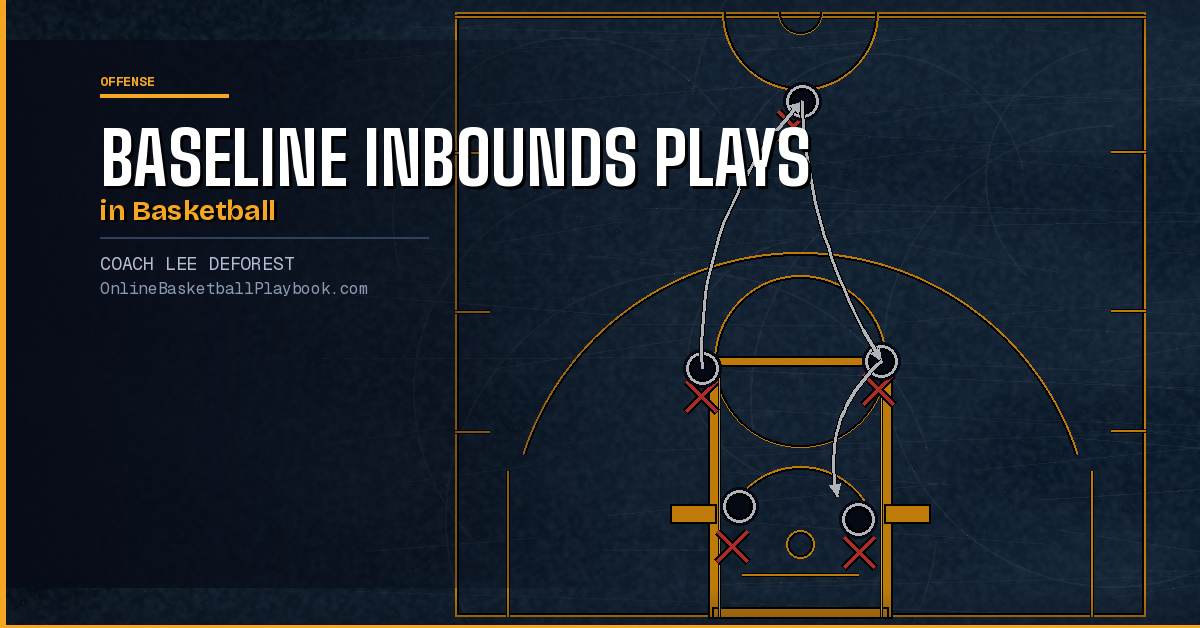

Baseline inbounds plays — called BLOBs — put your offense in scoring position before the clock starts. The defense can't double-team, you control the timing, and a well-run set should produce a layup or open three on nearly every possession.
Why Baseline Inbounds Plays Matter
Every dead-ball situation under the opponent's basket is a free-point opportunity. The clock does not start until the ball is touched, the offense controls when the play begins, and the five-second rule is the only real pressure the defense can apply. That combination — prime court position plus a dead clock — makes BLOBs the highest-percentage free-scoring situation in the game.
Most teams treat baseline inbounds plays as an afterthought. They scatter four players near the paint, hope someone gets open, and throw a lob that the defense reads easily. Coaches who design deliberate BLOB sets with multiple reads and a clear hierarchy of options generate easy baskets that never show up in a scouting report as a systemic threat — until it's too late for the opponent to adjust.
At the high school level especially, a three-play BLOB package that your team executes cleanly can be worth eight to twelve points per game. Those are possessions where the defense starts at a disadvantage. When you build your basketball practice plan, BLOBs should have dedicated reps — not just a walkthrough before tip-off.
The strategic value goes beyond the points. A team that is known for running sharp BLOBs forces the defense to commit extra attention every time the ball goes out of bounds under the basket. That attention creates hesitation. Hesitation opens gaps elsewhere. The threat alone creates value even on possessions where you don't score directly off the set.
The Box Set — Your Default BLOB Formation
The Box Set is the most versatile baseline inbounds formation in basketball. Two players station on each block, forming a rectangle around the paint. The defense cannot sag to one side or shift without immediately exposing one of the four occupied zones. That structural tension is exactly what you want — the defense has to make a choice, and every choice leaves something open.
The Box family generates four distinct scoring reads from a single starting picture, which is what makes it worth installing as your primary BLOB front. The primary option is a lob off a back screen — your best cutter times a hard screen on the weak-side block defender, the inbounder lofts a pass to the rim. The secondary option is a shooter off a stagger screen — two screeners set sequential screens, freeing your best shooter to the three-point line or elbow. The tertiary option is a post player on a cross screen across the paint. And the last-resort option is the inbounder stepping in on a delayed action.
What makes the Box reliable is that a coach can install one alignment and teach multiple tagged finishes. Players learn the shell. The tag tells them which finish to run. Over time, reading the defense becomes natural because the starting picture never changes — only the finish does. This is the same principle behind any well-designed offense: reduce the number of decisions your players have to make before the ball is live.
Box sets also pair naturally with what you're already teaching in your half-court offense. If you run motion offense, your players already understand spacing and cutting. The Box simply applies those same principles to a set situation where the ball is dead and you have the advantage of choosing when to start.
Running the Lob Variation
The lob is the primary threat because it scores two points in a fraction of a second. Station your best vertical athlete on the weak-side block. On the inbounder's signal, that player cuts hard off a back screen set by the strong-side block player. The inbounder targets the ball above the backboard plane. Timing between the screener and the cutter is everything — if the cutter goes too early, the defense recovers; too late, and the window closes before the inbounder can release the ball within the five-second count.
Running the Stagger Variation
The stagger variation frees your best shooter. Both weak-side players set sequential screens along the baseline or toward the elbow. Your shooter reads which screen to use based on how the defense is playing. If both defenders go under the stagger, the shooter pops to the three-point line. If a defender fights over the top, the shooter curls to the elbow for a mid-range look. The inbounder must read the shooter's angle and deliver a catch-and-shoot pass — not a pass the shooter has to gather before firing.
The Stack Set — Quick-Hitter Complement
The Stack Set lines all four offensive players in a tight vertical stack on one side of the lane, baseline extended. Where the Box Set creates structural tension across four paint zones, the Stack Set concentrates action in one corridor and triggers a sequential release of cutters. The result is a quick-hitter that fires in two or three seconds — useful against zone defenses or when you need a fast shot late in a possession.
The read in a Stack is straightforward: the first player off the stack is the decoy. They hard-cut to draw a defensive reaction. The second player off the stack is the money cutter — they read the gap created by the first cut and attack it. The inbounder must stay patient for the count of one before releasing the second cutter's pass. Throwing to the decoy is the most common error; coaches should drill "wait for the second cut" until it is automatic.
Stack plays work best when you have a clear best shooter. The stack conceals that player until the last moment. Stack the best shooter last, use the first cutter as a hard decoy, and let the shooter come off clean. Against man-to-man defense, the defenders must navigate past each other to cover sequential cuts from a tight stack — collisions and hedge errors are common, and a well-timed second cut exploits both.
Against zone defense, the Stack Set attacks a different problem. Zone players cover areas rather than people, so a sequential release floods a single zone and forces a rotation. If that rotation is slow — which it often is in transition from defense to BLOB coverage — the second cutter arrives before the zone closes the gap. Teams that run a 2-3 zone defense are particularly vulnerable on baseline inbounds plays because the two wing defenders are positioned to stop perimeter catches, not to cover stack sequences under the basket.
The Inbounder's Role and the Step-In Action
The single biggest mistake in high school BLOB execution is treating the inbounder as a passer and nothing more. When the inbounder is not a threat, the defense can assign one defender to cover the primary option and shade a second toward the secondary option. The math works against the offense. The moment the defense knows the inbounder cannot receive the ball, they have a numerical advantage on the four players inside the court.
"Every BLOB must have an action that threatens to use the inbounder as a receiver late in the count."
— Basketball Vault
The Step-In action is the solution. Late in the five-second count — typically after three seconds — the inbounder steps to one side of the lane line, signaling availability. If the primary and secondary reads are covered, one of the interior players sets a quick screen on the nearest defender, and the inbounder steps in-bounds to receive the pass. This converts the inbounder from a passive passer into an active fifth scoring threat.
Coaching the Step-In requires two things: first, the inbounder must commit to actually stepping in if the count gets long rather than forcing a dangerous pass; second, the interior players must read the count and automatically trigger the screen when three seconds have elapsed. A "fist" call — the inbounder raising a closed fist — is the simplest live signal for triggering the Step-In.
Physically, your inbounder should be a player with decent scoring ability who is comfortable making decisions under pressure. Many coaches assign a guard to the inbounder role by default, which is fine. But some of your most dangerous Step-In actions come when you station a wing who can shoot off the catch — the defense that was ignoring the inbounder suddenly has to close out on a live shooter.
Reads, Counters, and Defensive Adjustments
No BLOB play runs the same way twice against a prepared defense. The best BLOB packages are not a collection of scripted plays — they are a collection of reads built on one or two starting formations. Once your players understand the primary read in a Box or Stack set, they can adjust to whatever the defense gives them without stopping to call a new play.
The most common defensive adjustment against a Box Set is hard switching on all screens. When defenders switch every screen, the back-screen lob becomes dangerous because a smaller defender may end up on your best vertical athlete. Coach your cutter to recognize a switch and attack the size mismatch immediately. If the defense switches and puts a guard on a post player, the cross-screen tertiary read becomes the primary call — get the ball into the post before the defense can recover.
Against a Stack Set, defenses often try to front the second cutter to take away the money read. When that happens, the first cutter — who was the decoy — becomes a live option. The inbounder reads the front, pump-fakes the second-cutter pass, and hits the first cutter on the other side of the paint. Drilling this counter takes ten minutes and pays dividends all season.
Trapping the inbounder — sending a second defender toward the ball — is another common adjustment. When this happens, the inbounder should immediately signal a specific play that exploits the two-on-four situation on the court. The simplest response is a quick lob to your biggest athlete at the rim. With only three defenders covering four players inside, someone is always open near the basket.
Understanding defensive counters connects to broader man-to-man principles. Coaches who want their players to read BLOB coverage intelligently should build that foundation through standard defensive concepts. A player who understands man-to-man defense from the inside already knows how defenders rotate on screens — which means they can exploit those rotations far more instinctively when running BLOB actions on offense.
Before every game, identify which BLOB coverage your opponent prefers — straight man, switching, zone, or trap. Assign your first two BLOB calls based on what the defense is most likely to run. Have a check-with-me option for unexpected looks so the inbounder can call an audible if needed.
Installing BLOBs in Practice
BLOB packages fail when teams treat them as a quick review item at the end of practice. Two minutes of walk-through before tip-off produces sloppy timing, hesitant cutters, and turnovers in critical moments. Installing a BLOB package correctly takes reps — live reps against a defense that is actively trying to stop you.
Start with one formation. Run the Box Set primary read — the back-screen lob — until every player can execute it correctly from both sides of the floor. Add the stagger secondary read only after the primary is automatic. This sequencing matters because players under five-second pressure will default to whatever they learned first. Make sure the first thing they learned is also the right first read.
Practice BLOB situations at game speed. Walk-throughs are fine for installing the concept, but they do not develop the timing a cutter needs to lose a defender off a back screen. The screener must set a legal, physical screen. The cutter must time the cut to the screener's body contact. The inbounder must release the ball at the moment the cutter breaks free. That coordination only comes from live reps at real speed against real resistance.
Build in the five-second count from day one. Put a coach on the sideline counting aloud. Players who have never practiced under a count develop slow habits — they wait to see a read develop rather than triggering the next option when the first one is covered. The count is always ticking. The Step-In action should be automatic after three seconds, not a panic decision at four-and-a-half.
Embed BLOB reps into your regular practice structure. A five-minute segment at the start of half-court work — three reps per play, alternating offense and defense — builds cumulative repetitions without eating a large block of practice time. Track your conversion rate: how often does a BLOB set produce a layup, an open three, or a foul? Tracking this number gives your team a concrete goal and helps you identify which sets are working and which need adjustment. If you want a full framework for building these reps into your week, the effective basketball practice guide covers how to sequence drills and situations efficiently.
One underrated installation detail: personnel. Match your best vertical athlete to the back-screen lob role, your best shooter to the stagger-peel role, and your most composed player to the inbounder role. The right personnel executing simple reads will outscore wrong personnel running complex plays every time. Keep the package to three to four named sets. Master those before adding more. Depth of execution on a small package beats shallow familiarity with a large one.
- Box Set first: Install the Box alignment as your default BLOB — it teaches four reads from one starting picture and covers every defensive adjustment you'll face.
- Count aloud in practice: Put a coach on the sideline counting the five-second clock every BLOB rep — players who hear the count develop faster triggers and better decision-making under pressure.
- Step-In is mandatory: Every BLOB set must include a timed inbounder action at three seconds; without it, the defense has a numbers advantage on the four players inside the court.
- Stack for quick shots: Use the Stack Set as a quick-hitter complement against zones or when you need a fast look — the first cutter is always the decoy, the second cutter is the money read.
- Match personnel to roles: Best athlete on the lob cut, best shooter on the stagger peel, most composed player on the inbound — right people in right roles matters more than play complexity.
- Scout the coverage: Know your opponent's preferred BLOB defense before tip-off and call your first two sets based on what they're most likely to run — have a check-with-me audible ready for surprises.
Get free play diagrams, drills, and coaching guides delivered weekly.
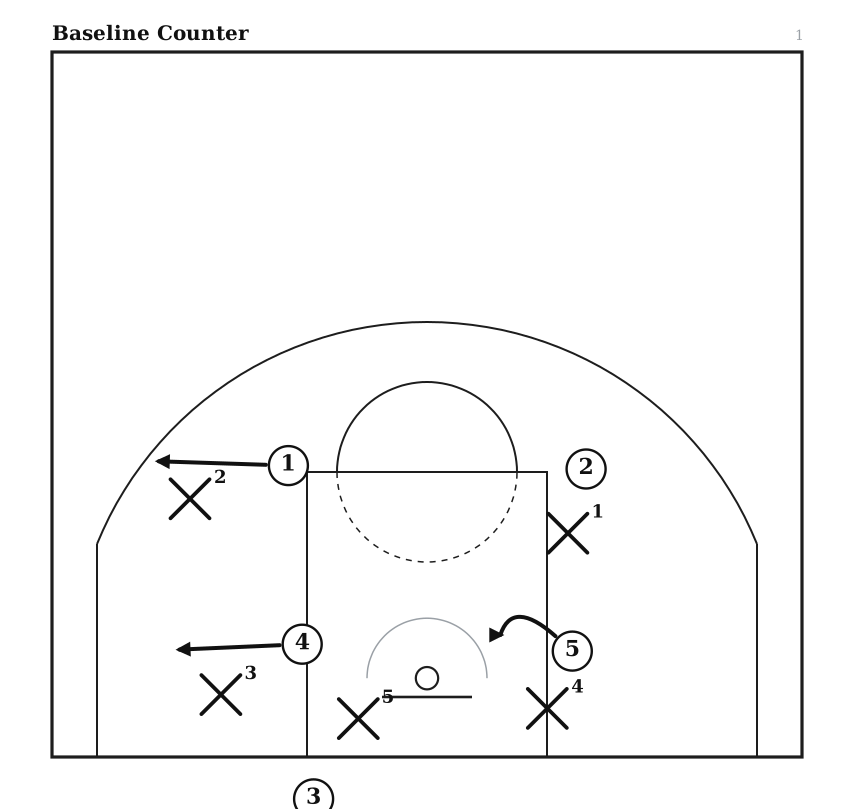
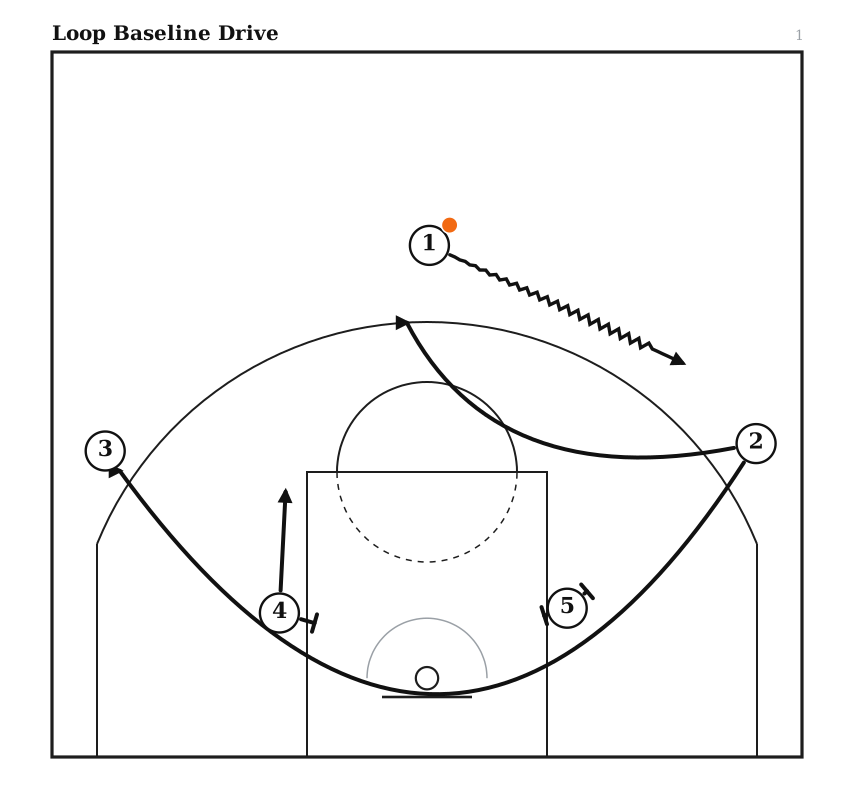
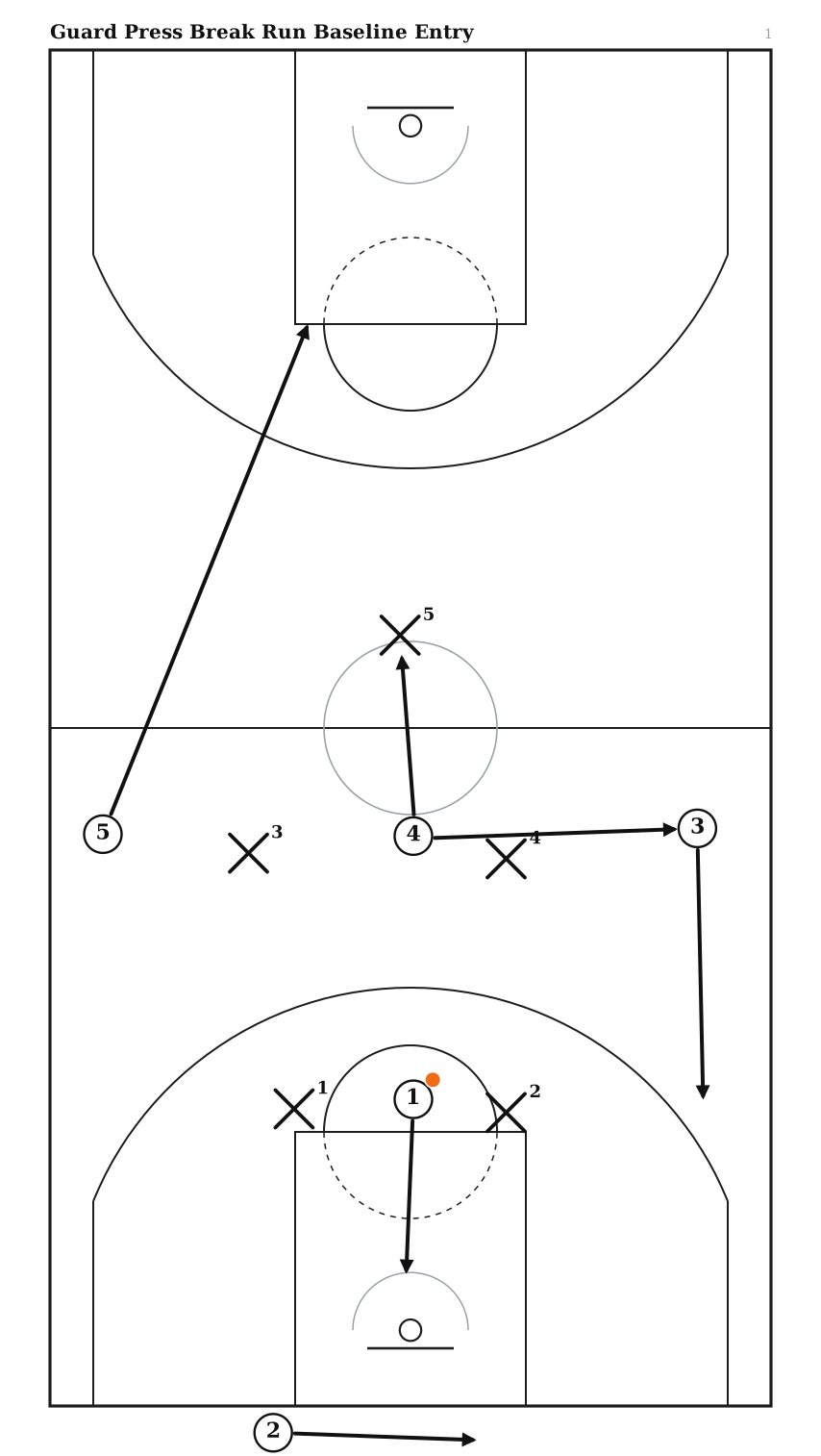
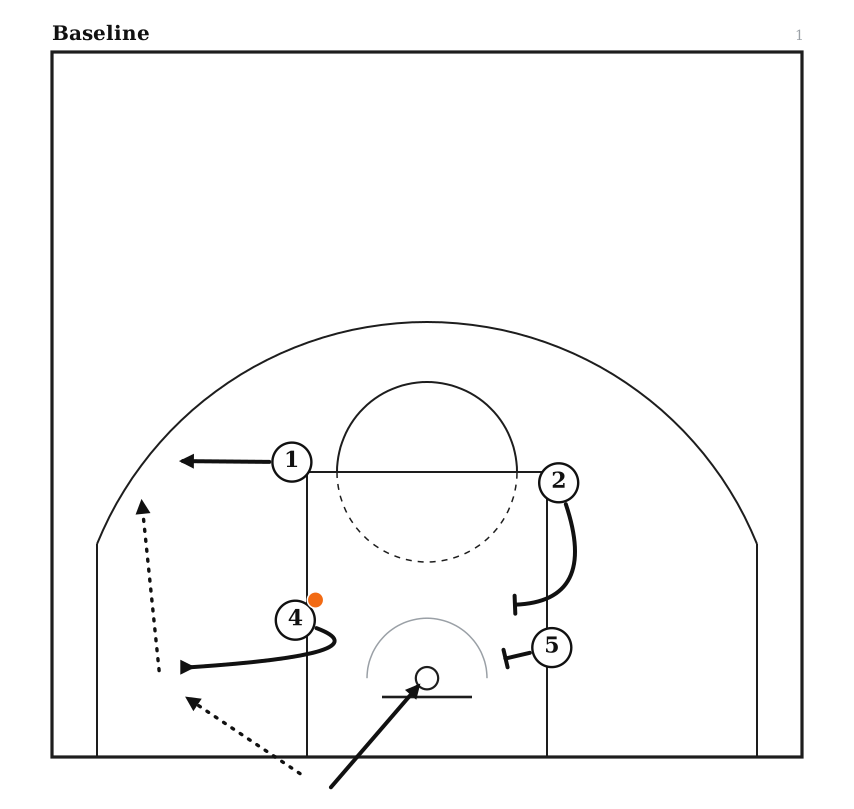
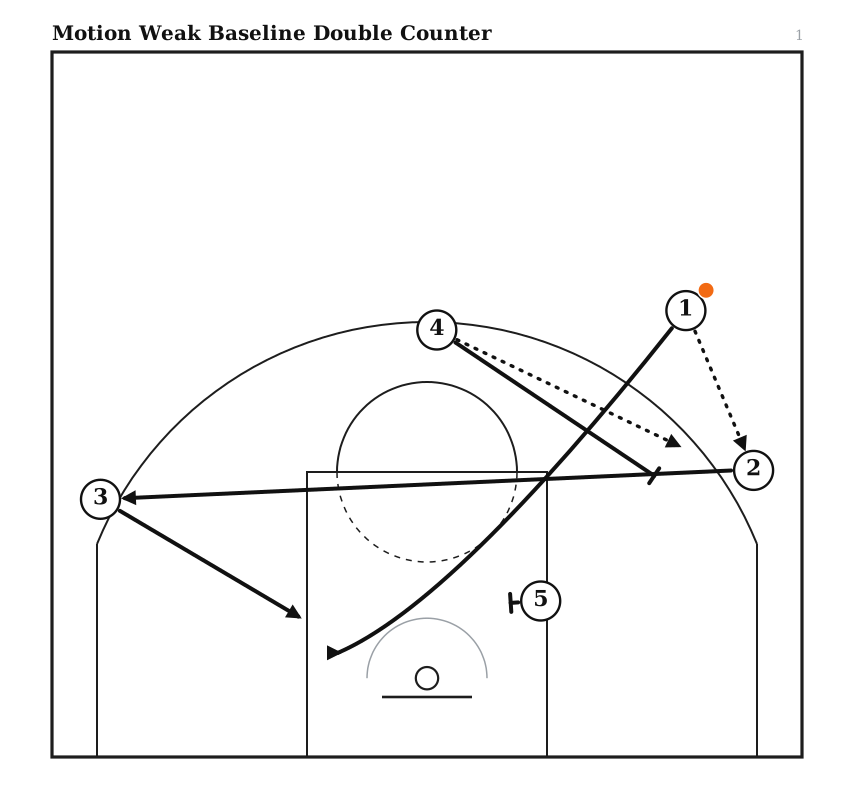
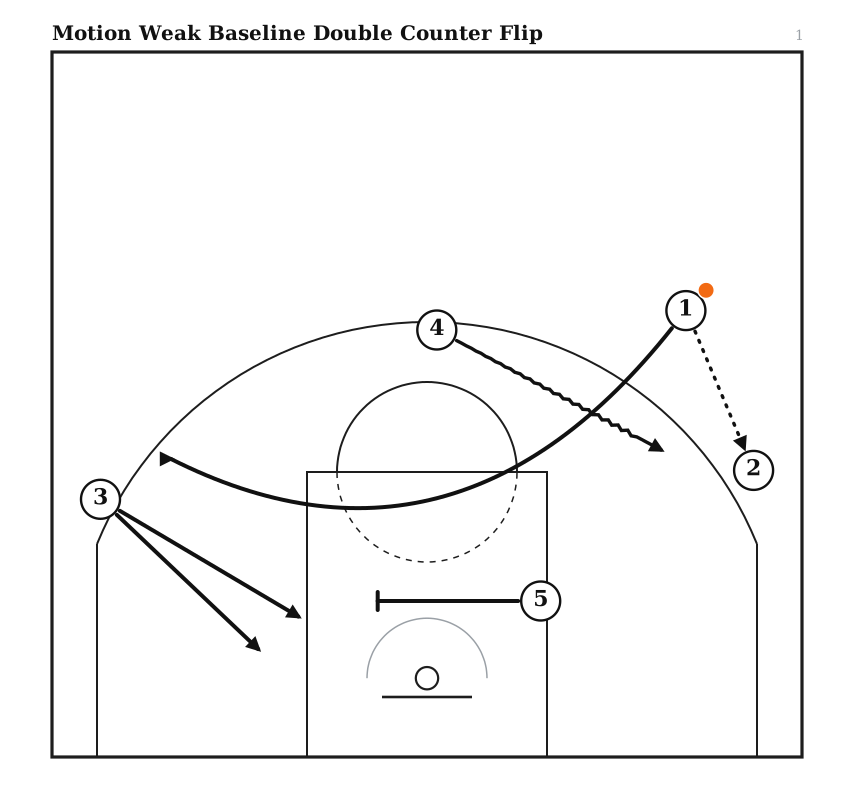
See it drawn up
Related diagrams
Keep Building
Related breakdowns
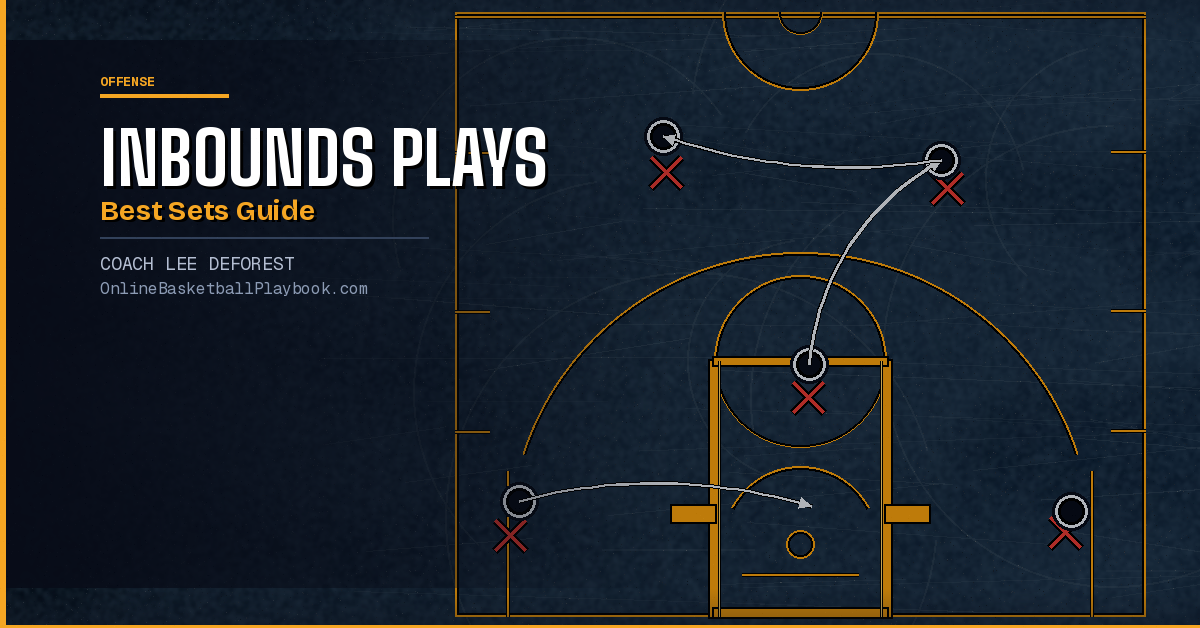
Basketball Inbounds Plays: Best Sideline and Baseline Sets
Basketball Inbounds Plays: Best Sideline and Baseline Sets
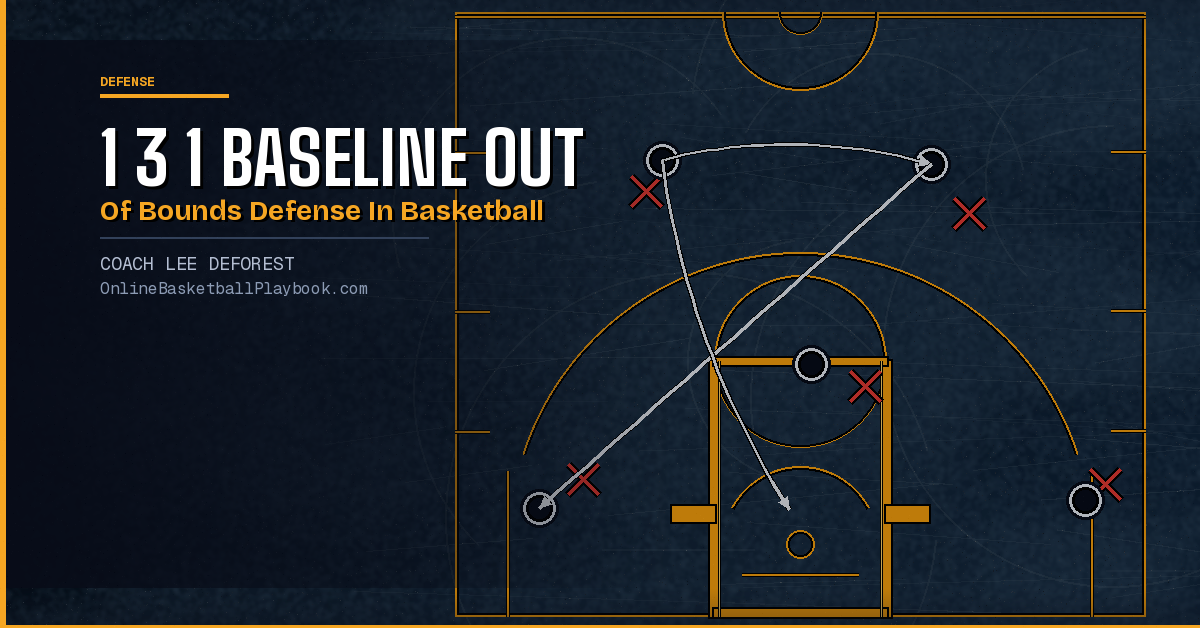
1-3-1 Baseline Out of Bounds Defense in Basketball
1-3-1 Baseline Out of Bounds Defense in Basketball
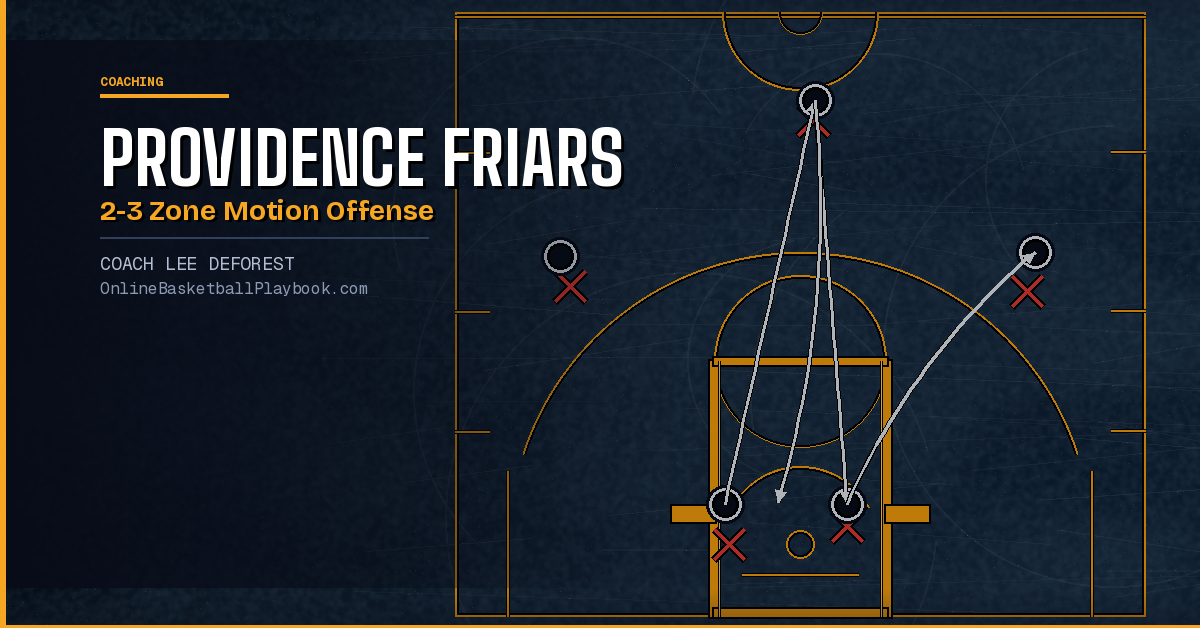
Providence Friars 2-3 Zone Motion Offense Baseline Runner Basketball Play
Providence Friars 2-3 Zone Motion Offense Baseline Runner Basketball Play