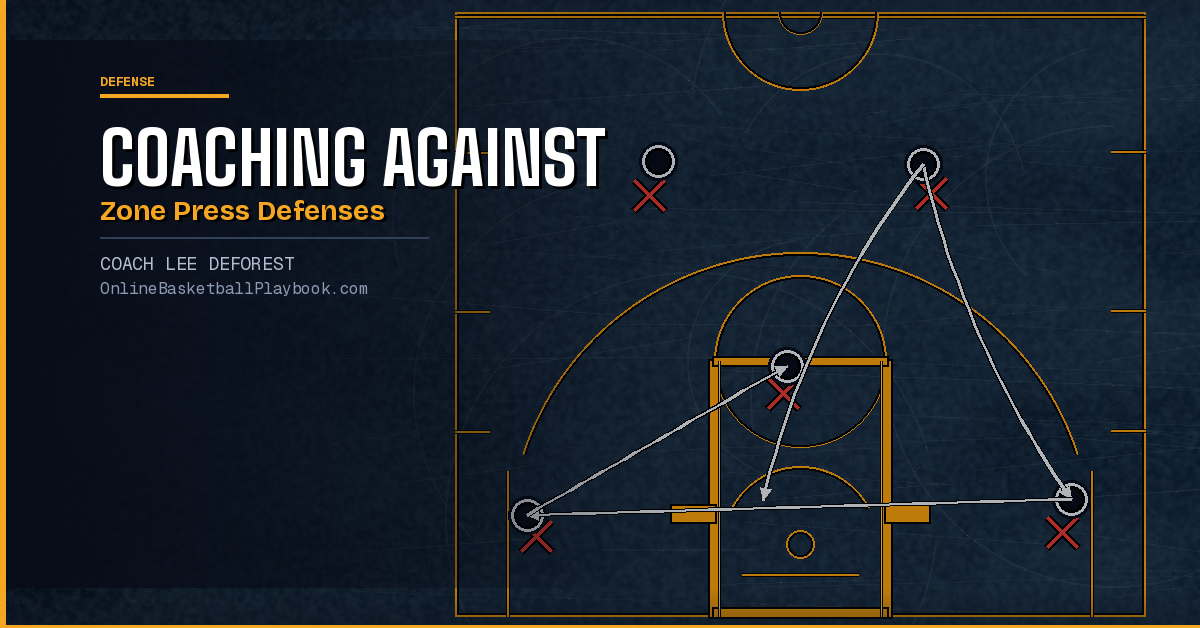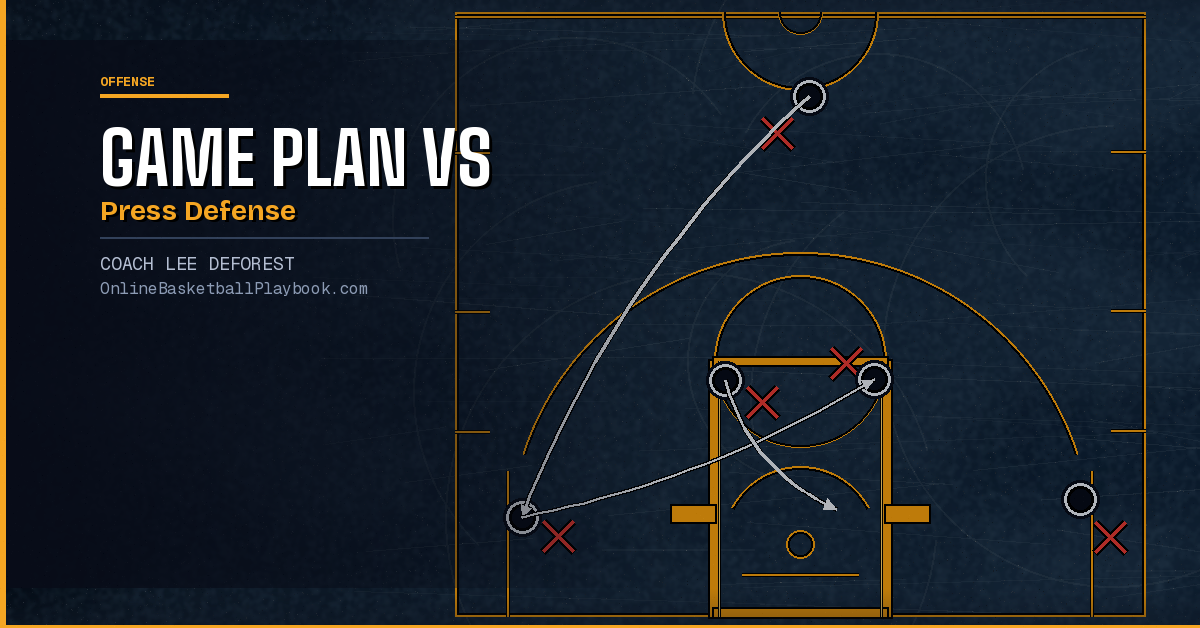

Press defense forces chaos at the inbounds — and teams that panic hand over easy points. A structured game plan, practiced under pressure, turns a press from a threat into an opportunity for your offense to score in transition.
Understanding Press Families and Their Goals
Before you can build a game plan against press defense, you need to understand what the pressing team is actually trying to accomplish. Not every press is the same. Zone presses — the 1-2-1-1, the 2-2-1, and various 1-2-2 looks — are designed to funnel the ball into specific trap zones and intercept reversal passes. Run-and-jump presses use athleticism and switching to create surprise. Match-up presses read the offense and adjust in real time.
Each press family has a different mechanism for creating turnovers. The zone press sets the trap at predetermined floor areas — typically the corners near half court and the sidelines. The defense concedes the inbounds, then smothers the receiver and doubles before the ball can advance. A well-coached zone press communicates instantly: every defender knows exactly where to be based on where the ball is.
Understanding the family of press your opponent runs tells you which spacing adjustments matter most. Against a zone press that traps the sideline, your answer is width and a safety valve in the middle. Against a run-and-jump, you need players who can handle the basketball and make quick decisions rather than just fill spots. Against a match-up press, you want movement and floor balance that forces the defense to make rotation decisions it isn't comfortable with.
Knowing the press your opponent prefers also tells you where to attack. If they press with a 1-2-1-1, the middle of the floor is often open because their wing trappers are spread wide. If they run a 2-2-1 look with two defenders at the ball, the long pass up the far sideline behind their press can produce layups. Your press break should be designed around the specific vulnerabilities of the press you'll face — not a generic universal package that covers every situation adequately but none of them well.
"Turnovers are a byproduct, not the measure."
— Basketball Vault
Personnel Roles in the Press Break
The most important decision you make in designing a press break is personnel assignment. Every player on the floor needs a defined role — and those roles must be practiced to the point of habit. When a press is sprung late in a close game, your players cannot be thinking. They need to react from muscle memory.
The Inbounder
The inbounder is your quarterback for the first two seconds of every press situation. This player needs to see the whole floor, communicate with the receiver, and make a quick, accurate pass. Your inbounder should not be your best ball handler — they are already out of bounds and cannot catch and drive. Instead, they should be a player with court vision who can identify where the defense is overloaded and quickly enter the ball to the open area.
The Primary Ball Handler
This is typically your point guard, and their role is to receive the inbounds pass when safe to do so — or to get open for the early pass if the defense is denying the initial receiver. Strong ball handling drills are essential here, because this player will face immediate pressure and will need to dribble out of traps or make quick passes under defensive contact. The primary ball handler should never put the ball on the floor into a double team — catch, pivot, and pass is almost always the better decision.
The Safety Valve
Every press break needs a player who can receive a pass in the middle of the floor and advance the ball safely. This player operates between the trappers and the back defenders — in the seam where the press is most vulnerable. They need to be calm, catch the ball with confidence, and immediately look to push ahead before the defense can recover. This role is often filled by a forward with good hands and court sense rather than a perimeter player who may draw defensive attention.
The Outlet Options
Beyond the initial three roles, you need two more players spread wide and ahead of the ball. One on each sideline, near or just past half court. These players serve as the next pass option after the safety valve receives the ball, and they are often the ones who catch the ball with numbers advantages for easy baskets. Their job is to sprint to their assigned spots and hold them — not drift, not come back toward the ball, not cluster near other players.
Spacing Principles That Dismantle Any Press
Width and depth are your two best weapons against any full-court press. Pressing defenses rely on congestion — forcing your team into tight spaces where the defense can outnumber the ball. The counter is to spread the floor so dramatically that the press cannot maintain gaps. When your players are positioned correctly, there is always an open receiver somewhere on the floor. The challenge is getting the ball to that receiver before the defense can rotate.
The first spacing rule is simple: never have two players standing within ten feet of each other when breaking a press. Cluster kills spacing. Clustering is a stress response — players instinctively want to get near the ball in a chaotic situation. Your job as a coach is to train that instinct out of them. Defensive pressure rises when your players are close together. It evaporates when they spread apart.
The second spacing rule is to keep at least one player ahead of the ball at all times. This sounds obvious, but under pressure players tend to drop back toward the ball to help. When everyone comes back, you lose the numerical advantage that a press break is trying to create. The player who stays ahead forces the back defenders to stay home, which opens the middle of the floor for the safety valve pass.
The third spacing rule is to use the sidelines as your ally, not your enemy. Beginning coaches often teach players to "stay away from the sidelines" during a press break because sidelines help the defense trap. But a disciplined offense uses sideline positioning to create a clear passing lane to the safety valve in the middle. Position players on the sidelines near the trap zones to draw the defense wide, then hit the open middle.
If you want to see these spacing concepts at work in a more structured system, study how 5-out motion offense creates floor balance — many of the same floor-spacing principles apply when breaking pressure.
Reads and Decision-Making Under Pressure
Spacing and personnel get you to the right positions. Reads and decisions determine whether you actually score. This is where most teams fail. They practice the press break until the spacing looks right, but they never train players to make fast, accurate decisions under live defensive pressure. When the game comes and the defense is physical and loud, spacing collapses because players don't trust their reads.
The most important read your primary ball handler needs to make is this: is the defense trapping, or staying man-to-man? If the defense traps, the middle is open and the safety valve is the pass. If the defense stays home in a man look, the ball handler can advance with the dribble. Making this read in under two seconds takes repetition. It takes basketball IQ development over a sustained practice period, not just a few scrimmage reps late in the season.
The Two-Pass Rule
Teach your team a simple rule for defeating pressure: make two quick passes and you will likely be in your half-court offense with a numbers advantage. The first pass defeats the initial pressure. The second pass defeats the rotation. By the time the defense has rotated twice, they are out of position and your offense is in control.
Dribbling vs. Passing Under Pressure
One of the most common press-break mistakes is over-dribbling. When a player catches a pass and faces pressure, the instinct is to put the ball on the floor and try to go around the defender. Against an aggressive press, this plays into the defense's hands — they want the ball on the floor because now the offensive player cannot pivot freely and has only one option (dribble). Train your players to catch, pivot, read the floor, and pass before they dribble. The dribble should be used to advance the ball when the lane is clear, not to escape pressure.
Reading the Back Defenders
The back defenders in a zone press — typically one or two players near the half-court line or the paint — are the key to your scoring opportunities. If they stay back to protect the basket, the middle is open for the safety valve. If they cheat up to help with the trap, the long pass over the top becomes available. Your safety valve and your players ahead of the ball need to watch the back defenders on every possession and communicate what they see before the ball is passed their way.
The biggest mistake coaches make when installing a press break is practicing it in a controlled setting without any defensive pressure. Run your press break live, at game speed, against your own defense — make the reads real before you need them in a game situation.
Building It Into Your Practice Plan
A press break is only as good as the time you devote to it in practice. This does not mean you need to spend thirty minutes every day on it. But it does mean you need to make press-break work a consistent part of your weekly schedule — not something you throw in two days before you face a pressing team.
Start the installation with a walk-through. Get five players in the correct positions and walk them through the reads — no defense, no dribbling, just movement and communication. Do this until every player can articulate their role and demonstrate the correct position from any spot on the floor. This takes one or two sessions depending on your roster's experience level.
Then add movement. Run the press break with passive defense — defenders who move into position but do not actively contest passes. The goal here is to build timing. Can the safety valve get to the open spot before the pass arrives? Can the inbounder get the ball in before the five-second count? Are the wide players sprinting to their spots or jogging? Fix timing issues at this stage before they become habits.
Then go live. Put your best defensive players on the press break and let them go. This is where you discover the reads your team cannot make under pressure, the spacing errors that only show up against active defense, and the personnel questions you may have gotten wrong in theory. A strong basketball practice plan includes at least ten minutes of live press-break work two to three times per week during the competitive season.
The final piece is conditioning. Pressing defenses often go up in pressure as the game gets into the fourth quarter. Your team needs to be physically capable of executing the press break at full speed in the final minutes of a close game. Build press-break conditioning into your late-practice drills when players are already fatigued — that is the closest simulation to the real game situation you can create.
Scouting and In-Game Adjustments
Even the best press-break system needs adjustments based on what you actually see in a game. Before you face a pressing opponent, your scouting should answer four questions: when do they press (after every basket, after made free throws, only in the fourth quarter), what is their press family (zone, match-up, run-and-jump), where do they prefer to set the trap (near half court, at the three-quarter line, immediately at the inbounds), and who is their most active trapper (the player who initiates the pressure).
Knowing when they press tells your team when to be alert and prepared for the change in defensive tempo. Some teams only press when they are down late in the game. Others press as their primary defensive scheme from the opening tip. Your team needs to know which type they are facing so they can stay engaged without burning mental energy watching for a press that may not come until the fourth quarter.
Knowing where they prefer to trap tells you where to position your safety valve. If their trap point is at half court, your middle player should be positioned a step beyond half court rather than behind it. If they trap early at the three-quarter line, your safety valve needs to be deeper down the floor to receive the pass before the trap forms.
In-game, the most important adjustment you can make is to call a quick timeout if your team turns the ball over twice in a row against a press. Two consecutive turnovers against the same press look tells you either your players are misreading the defense or the defense has made a wrinkle adjustment you did not anticipate. Stop the momentum, reset the reads, and come back on the floor with clarity.
Understanding how full-court press defense is designed from the defensive side is one of the most valuable preparation tools you have. Coaches who understand what the defense is trying to accomplish — not just what it looks like — can make adjustments that players who only drill the press break from the offensive side will miss entirely.
Finally, keep a simple signal system for calling your press-break adjustment from the sideline. Whether you are switching to a direct middle attack or going with the long outlet pass, your players should be able to receive the call and execute the adjustment within one possession. Complex sideline communication systems break down under crowd noise and game stress. Simple is fast, and fast is what you need against a pressing team.
- Assign every player a named role in the press break before the first practice of the season
- Never allow two players to stand within ten feet of each other during a press-break possession
- Keep at least one player ahead of the ball at all times to freeze the back defenders
- Train the two-pass rule: two quick passes should advance the ball into your half-court offense
- Catch and pivot before dribbling — protect the ball against the initial trapper
- Scout four things: when they press, their press family, their preferred trap zone, their best trapper
- Call timeout after two consecutive press-break turnovers — never let a third happen without resetting
Get free play diagrams, drills, and coaching guides delivered weekly.
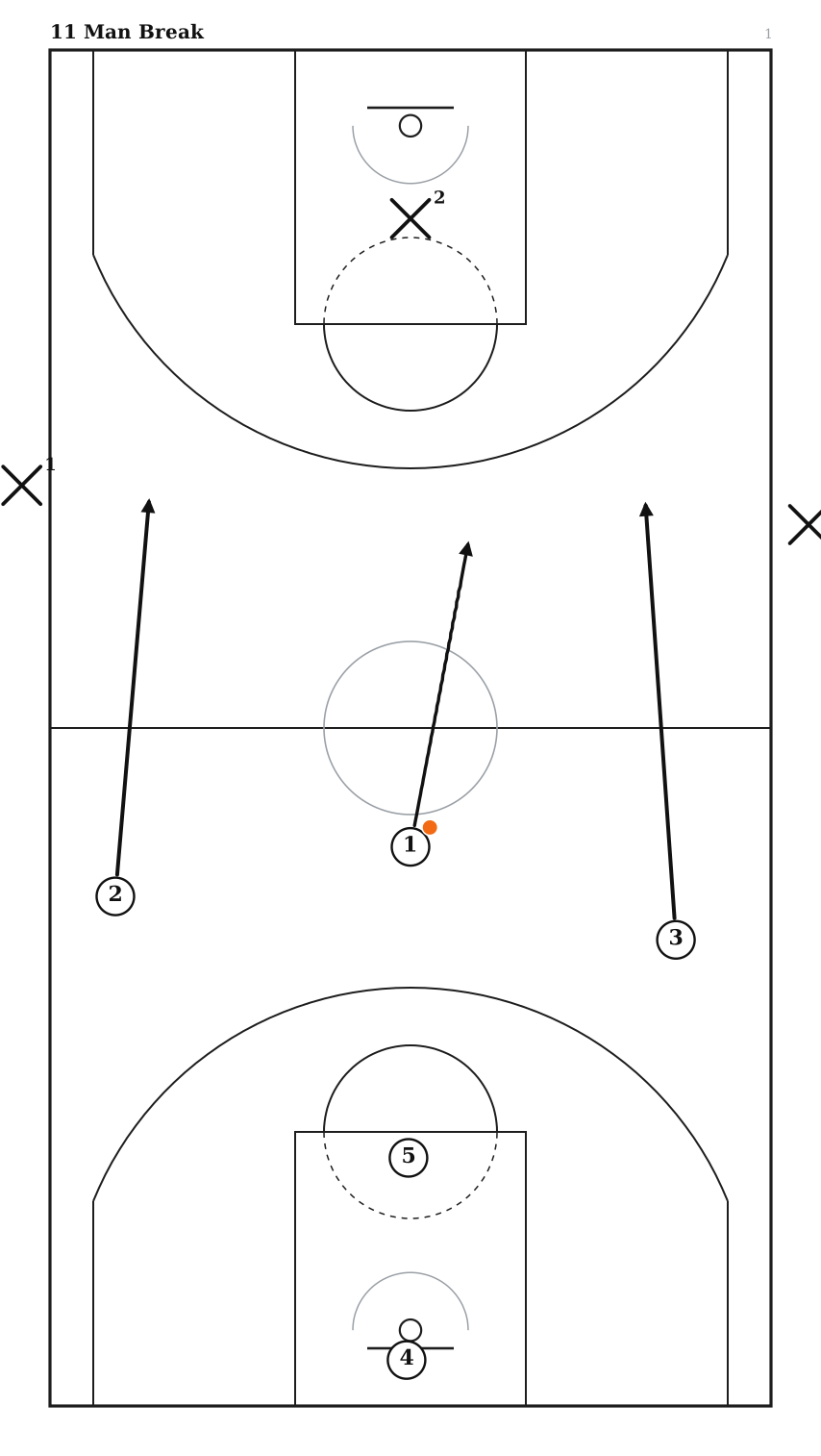
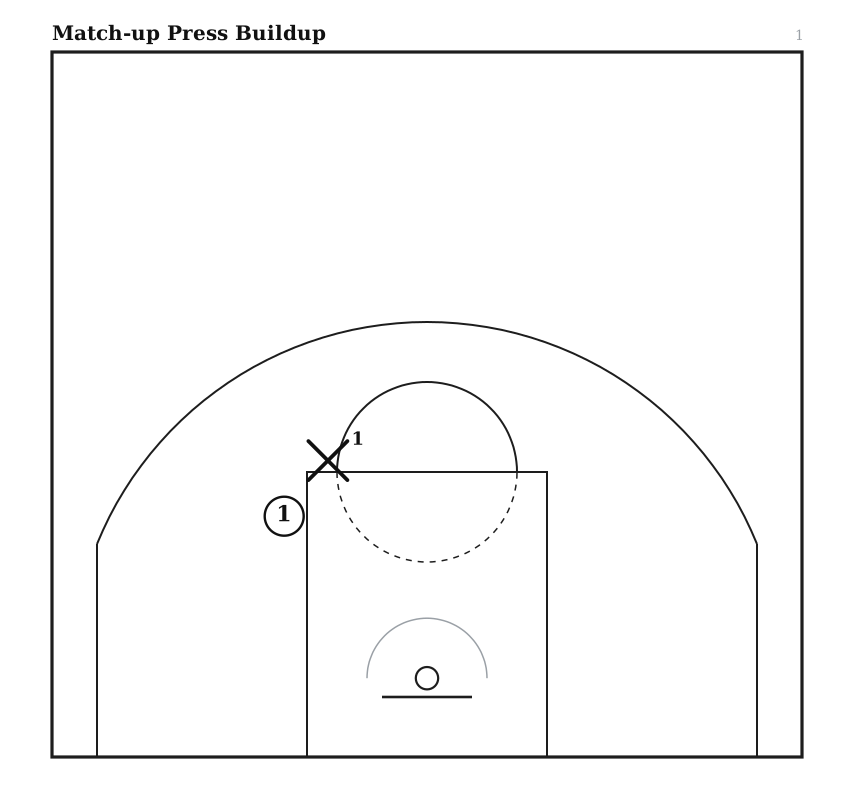
See it drawn up
Related diagrams
Keep Building
Related breakdowns
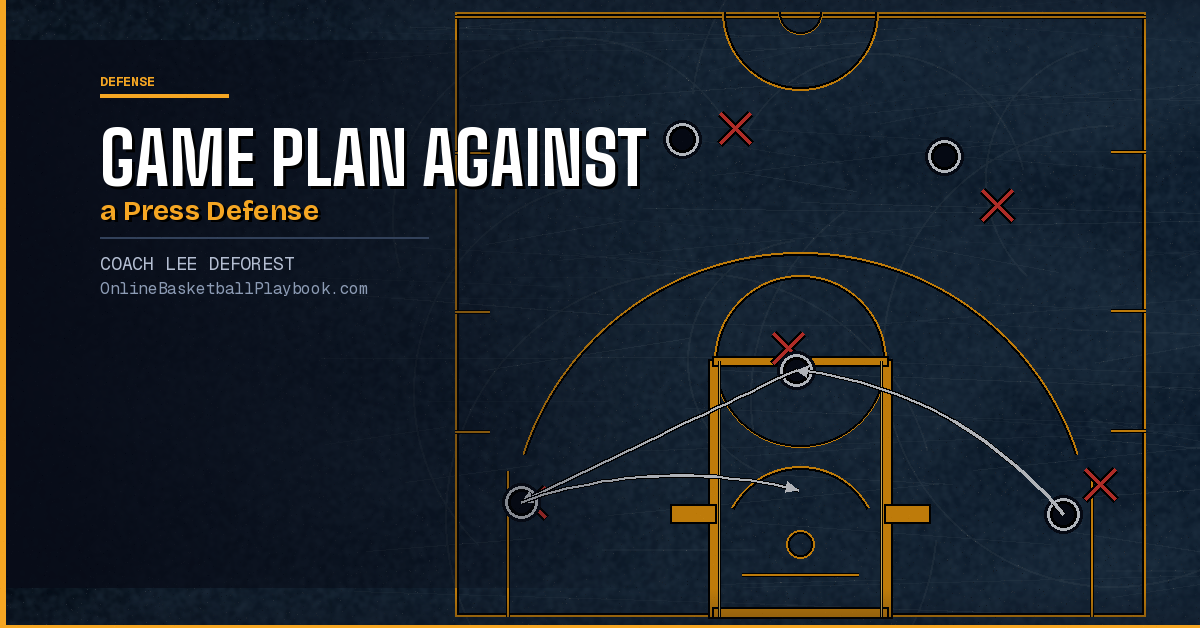
Creating a Winning Game Plan Against a Press Defense in Basketball
Creating a Winning Game Plan Against a Press Defense in Basketball
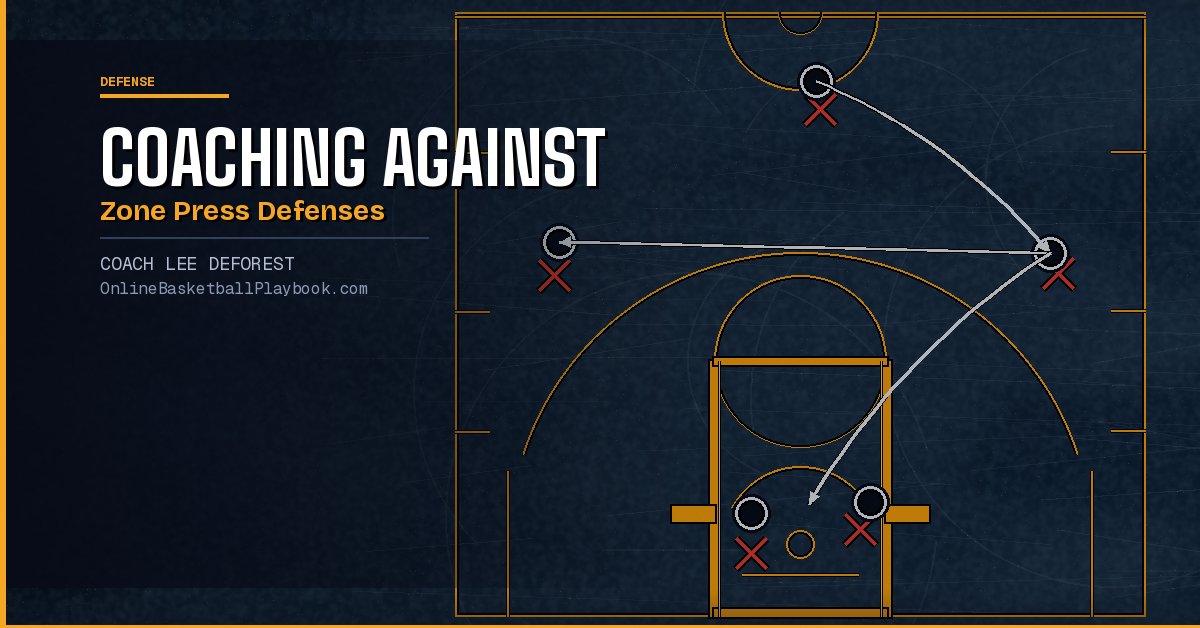
Strategies for Coaching Against Zone Press Defenses
Strategies for Coaching Against Zone Press Defenses