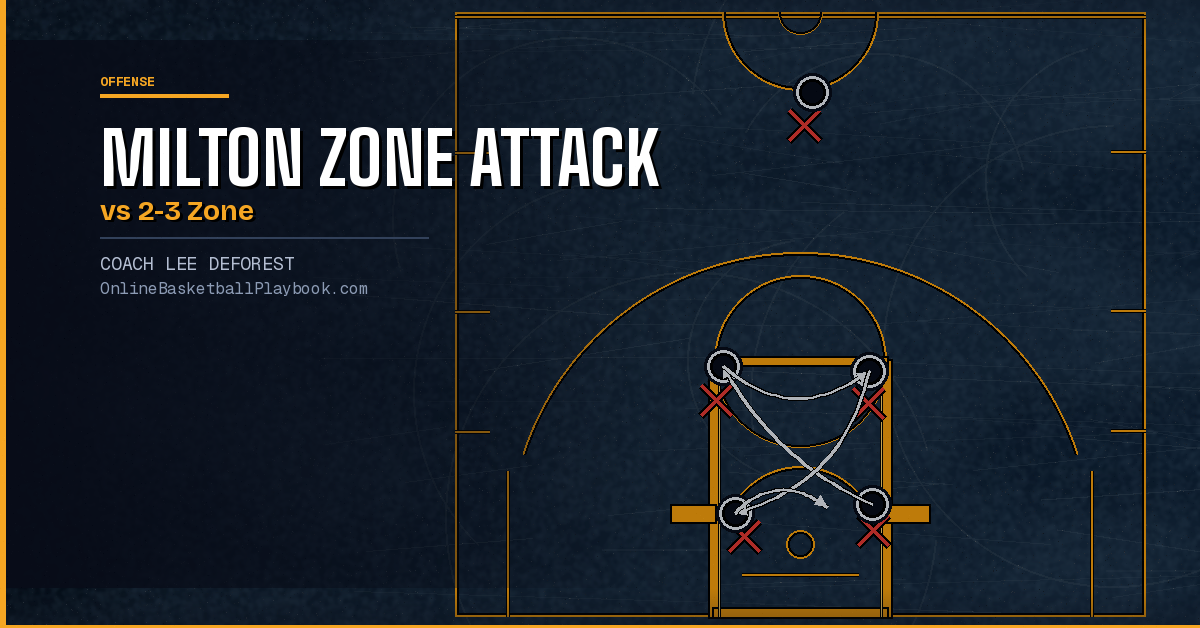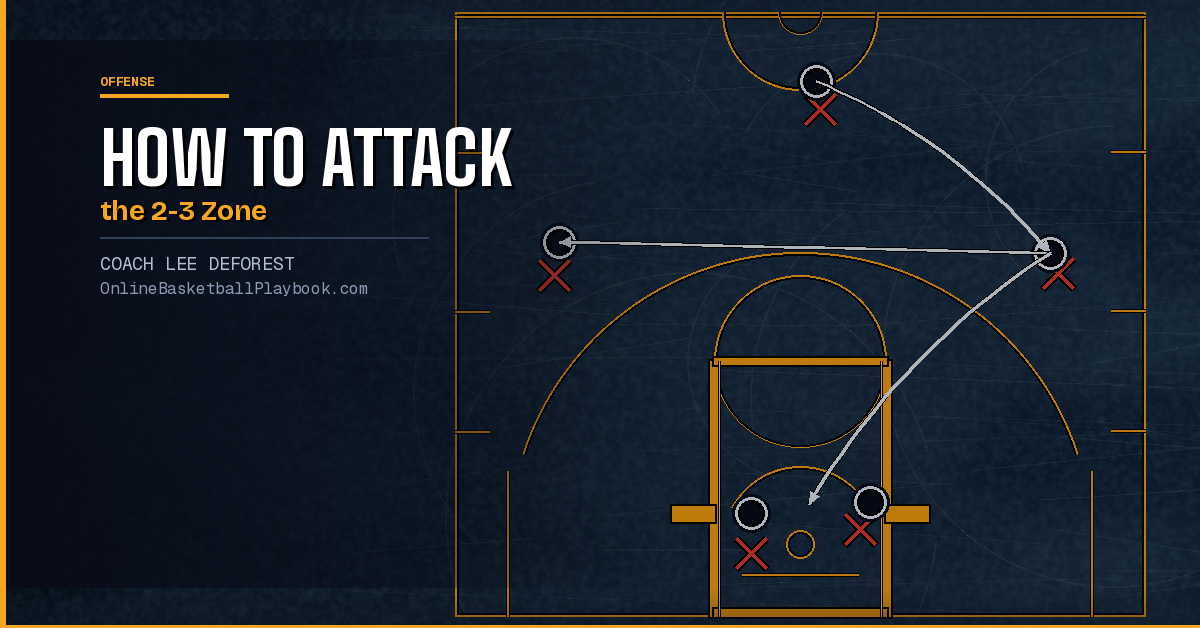

The 2-3 zone gives up corners, the high post, and ball reversal — three spots your offense can exploit. Attack those gaps with pace, patience, and purpose, and this defense breaks down fast.
Why the 2-3 Zone Works — and Where It Doesn't
The 2-3 zone is the most common zone in basketball for good reason. Two guards across the top and three defenders spanning the baseline creates a wall around the paint, clogs driving lanes, and removes the threat of a dominant post player. Teams run it to force opponents into uncomfortable catch spots, induce skip-pass turnovers, and slow down a man-to-man offense that hasn't prepared for it.
But every defense has a blueprint, and the 2-3 is no exception. Understanding the 2-3 zone defense from the defensive side — how positions are assigned, where guards rotate, how the center covers the paint — is the fastest way to understand exactly where the cracks are. Three weaknesses are structural and unavoidable: the corners, the high post at the elbow, and the seam between the two top guards. Attack those spots consistently and the defense has to choose which gap to give up.
The second thing to understand is that zones thrive on stagnation. When the offense stands still, the zone can hold its shape. When the offense moves the ball quickly, makes purposeful cuts, and shifts the defense side to side, the gaps open. Your first job isn't to run a special play — it's to make the zone work for every possession rather than settling for a contested jumper off the first reversal.
Offensive Alignment Against the 2-3
The single most common mistake teams make against a 2-3 zone is staying in a standard man-to-man offensive set. A five-out alignment or a 1-3-1 offensive set shifts the math entirely. When you put players at the spots the defense doesn't cover — corners, high post, short corner — the zone has to stretch to guard them and leaves other spots exposed.
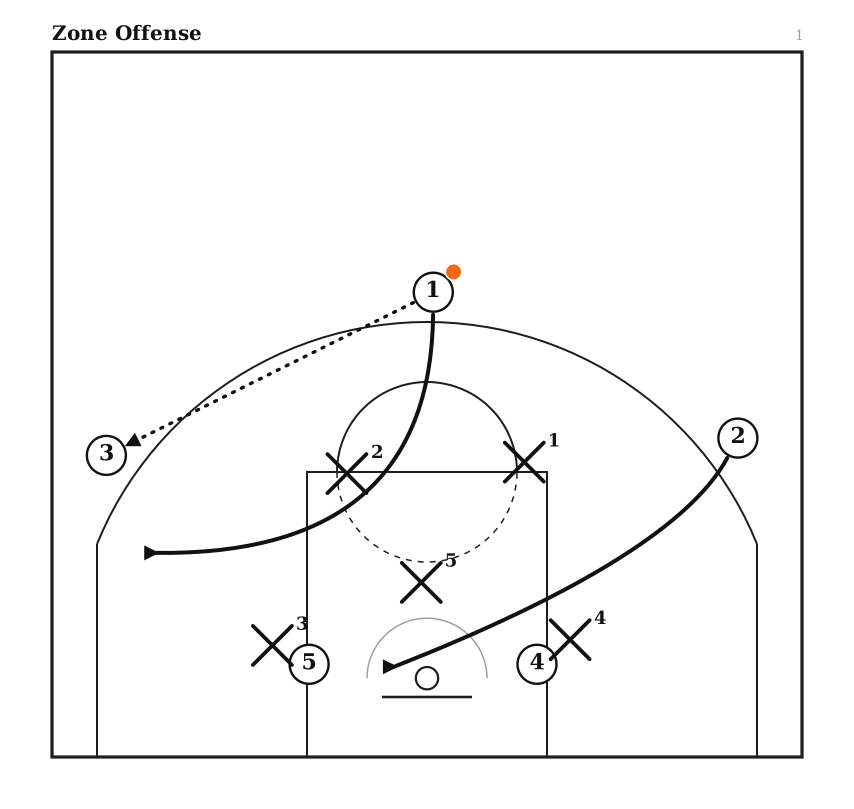
A 1-3-1 offensive set is particularly effective. The point guard sits above the zone, one wing on each elbow, a post at the high post, and a baseline runner opposite the ball. That baseline runner — whoever your most active and athletic player is — is your secret weapon. The baseline runner moves opposite ball movement, hunting the short corner and the weak-side block. The center (X5) can't cover the high post and chase the baseline runner at the same time. One of them will be open.
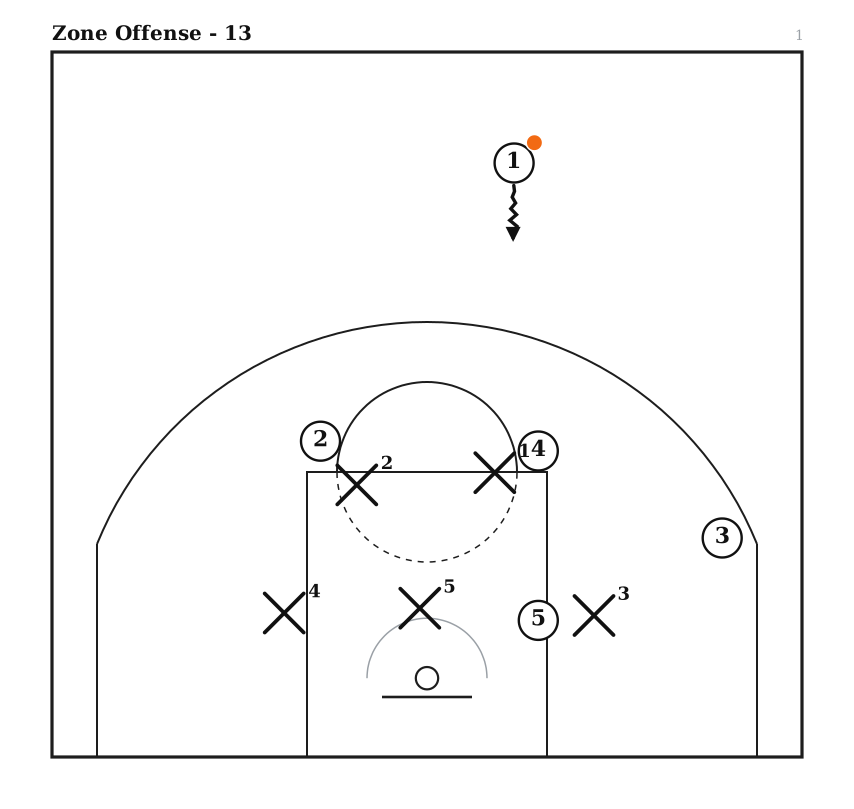
A simpler alignment for younger teams is the 2-3 offset: two guards up top, one wing at the elbow, and two players at the corners. This puts shooters in the two spots the defense struggles most to cover quickly — the corners — and forces the bottom wing defenders to decide which corner to protect on every reversal. Running a motion offense framework within this set keeps players moving and prevents the defense from settling.
Spacing Rules
Whatever alignment you choose, spacing rules matter. Players must stay spread enough that one defender can't guard two of them at once. If your corner shooter drifts toward the wing, she's giving the wing defender a free ride. Hold the corners wide, keep the high post at the elbow rather than the mid-post, and give your ball handler room to operate at the top. Tight spacing is how zone defenses survive — wide spacing is how you kill them.
Attacking the High Post
The elbow is the 2-3's most exploitable soft spot. A guard-to-high-post entry can split the entire defense: the top guards can't drop low enough to cover it without opening the wings for a skip pass, and the center has to step up and leave the paint. When the high post catches, the defense is broken.
Getting the ball to the high post isn't always easy — the top guards are coached to gap the high post and pick off lob passes — but there are reliable ways in. A dribble-handoff at the top of the key, where the guard dribbles toward the elbow and hands off to the high post player coming across, forces the guard on that side to make a decision. A skip pass from the opposite wing to a high post flashing from the weak side also arrives before the zone can adjust.
Once the high post catches, she has four options: shoot the mid-range jumper (if the center didn't get out in time), drive baseline through the gap left by a collapsing center, dump down to the short corner opposite, or hit the weak-side wing for a corner three. Good high post players read which gap opened and make the right play. Developing that skill is one of the key basketball IQ habits your offense must build.
"The elbow / high-post area is the 2-3's most exploitable soft spot: a guard-to-high-post entry can split the entire defense in one."
— Basketball Vault
Exploiting the Corners
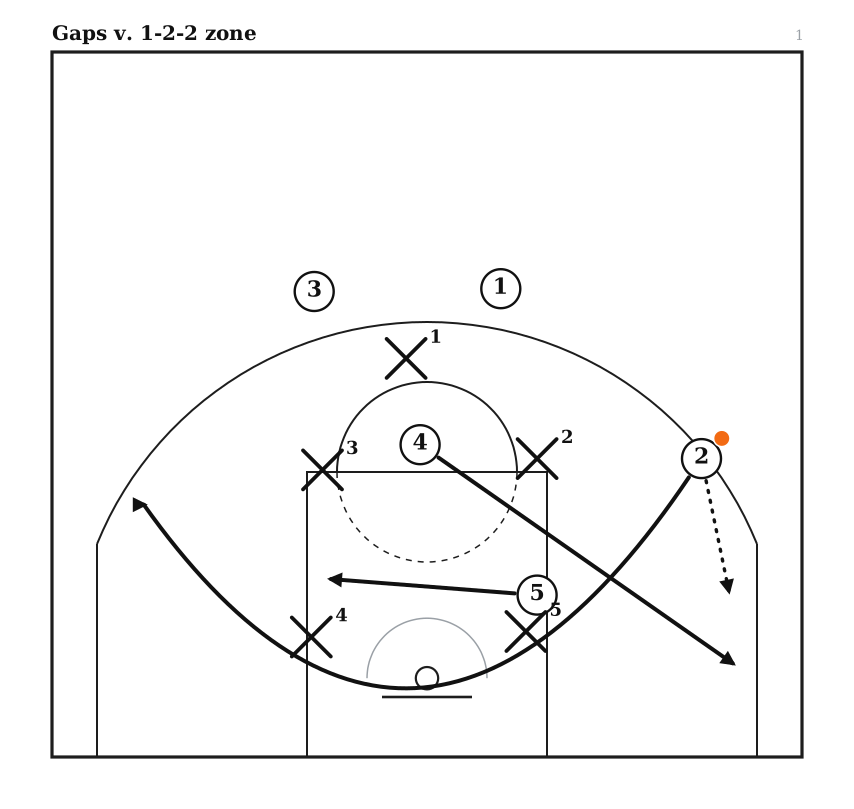
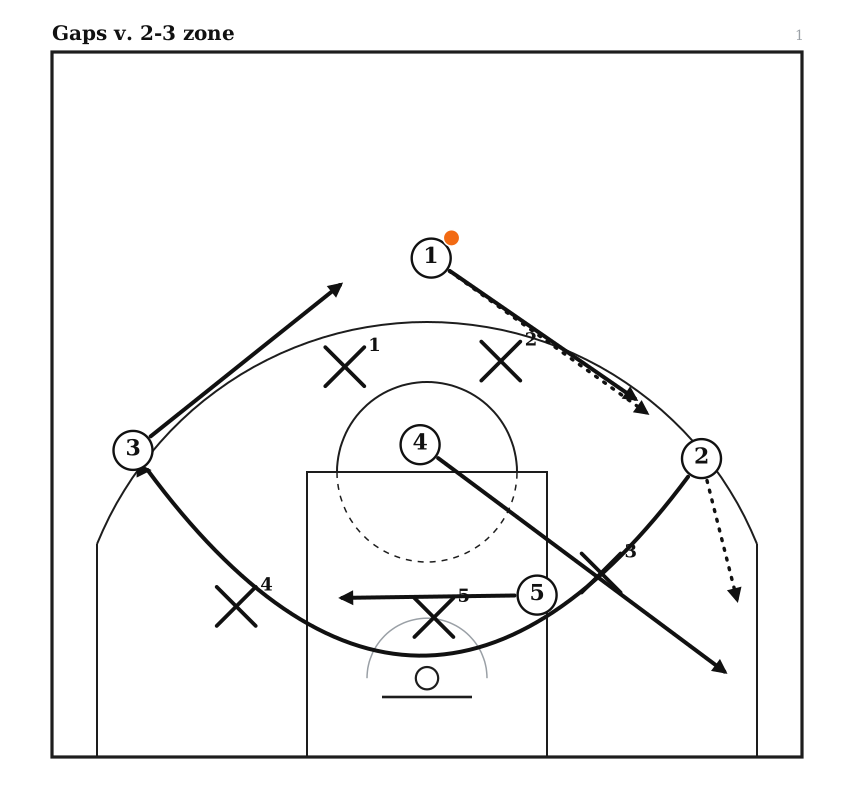
The corners are the 2-3's structural weakness, and every team that plays this defense knows it. The bottom wing defenders (X3 and X4) are taught to close hard on corner catches, but they start at free-throw-line-extended to protect the baseline drive — not in the corner. That's a six-foot sprint on every ball reversal. A shooter who catches and shoots quickly makes that close-out impossible to contest in time.
The key is moving the ball fast enough that the close-out arrives late. When the offense reverses the ball from one side to the other in two passes, the wing defender doesn't have time to recover. Your corner shooter needs to be set and ready before the pass arrives — not reacting to the catch, but anticipating it. That one-count difference is what separates a contested corner three from an open look.
When the wing defender does close hard, the corner catch becomes a drive opportunity. A ball-handler who catches in the corner with momentum toward the baseline can beat X4 on the baseline before X5 recovers. That drive either draws a foul at the rim or kicks back to the opposite corner as X5 rotates. The corner attack is not just about the three-point shot — it's about forcing the defense to make an impossible rotation choice.
The Skip Pass
The skip pass from the strong-side wing to the weak-side corner is the fastest way to move the ball from one dead zone to another before the defense can rotate. Your wing players need to develop the ability to throw accurate skip passes under pressure, and your corner shooters need to catch-and-shoot in one fluid motion. Build that in passing drills before you expect it in a game.
Using Ball Reversal to Create Open Shots
Ball reversal is the engine of any zone offense. Moving the ball from one side to the other forces the defense to sprint laterally, and every time they sprint, a step of distance opens between a defender and a scorer. The goal isn't to run set plays on every possession — it's to reverse the ball quickly enough that the defense is always one step behind.
The rule of thumb: two-pass reversal is minimum. One reversal rarely opens a shot against a well-organized 2-3. Two reversals — strong side to point to weak side — starts to stress the rotation. Three reversals often breaks it entirely as the bottom wing defenders are caught mid-rotation between the corner and the elbow. Patient ball movement isn't passive; it's aggressive in a way that puts the defense under real pressure.
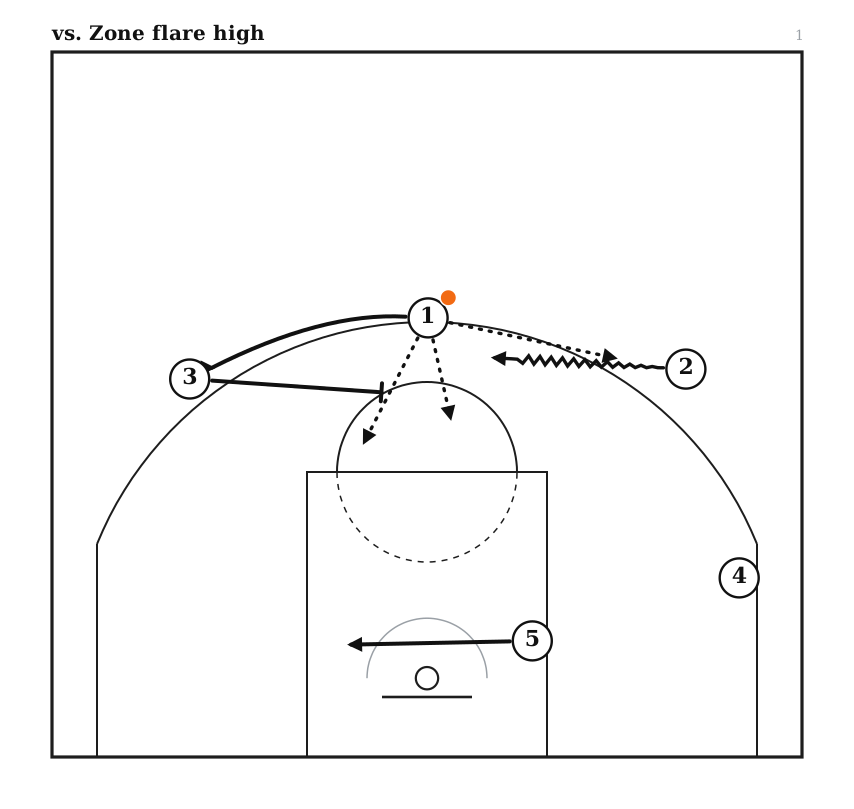
Another weapon in the reversal game is the dribble reversal. When the top guard dribbles from one side of the floor to the other, the zone shifts — but not as fast as a skip pass would move it. A guard who can attack the seam between the two top defenders on the dribble, then kick to the open corner when the center steps up, is using dribble reversal as an attack rather than a ballhandling display.
Dribble Penetration and Drive-and-Kick
The 2-3 zone is built to protect the paint, which means penetration is supposed to be difficult. But the zone's paint protection comes from the center alone — when a ball-handler attacks the seam between the two top guards, that center has to step up, and the whole bottom of the zone collapses with him. That leaves shooters behind the rotation, waiting for the kick-out pass.
Attacking the seam between the top two guards is the most direct route into the paint. The guards are coached to stay close enough together to deny that gap, but under ball movement pressure and live dribble pressure, the seam opens. A ball-handler with first-step quickness can get into the paint before X1 and X2 can recover. Once she's in, the defense has to choose: give up the rim or give up the kick-out.
Drive-and-kick against the zone works best when your shooters are already in position before the drive starts. If your corner shooter has to read the play and relocate on the drive, the pass window closes. But if she's already standing in the corner, spotted up, the ball-handler can drive and kick in one motion. That's why spacing discipline — keeping shooters in their spots before the dribble penetration starts — matters as much as the dribble-drive skill itself. Developing strong individual basketball footwork for guards helps them attack the seam with confidence.
Against a 2-3 zone, your best ball-handler should attack the top seam at least once every other possession to force the center to step up. Even if the drive doesn't score, it makes the defense hesitate on every subsequent reversal, which creates open corner looks later.
Drilling the Zone Attack
Knowing where the gaps are doesn't win possessions — executing under pressure does. Zone offense needs to be rehearsed in practice just as deliberately as any other system. Players need to understand the defensive rotations well enough to anticipate openings before they appear. That takes repetition against a live zone.
The most productive drill structure is 5-on-5 half-court against your own scout team running the 2-3. Set a two-reversal rule: the offense cannot shoot until the ball has been reversed at least twice. This forces patience and teaches players to work through the gaps rather than settling on the first look. Track how many corner catch-and-shoot opportunities are created per possession — that number tells you whether your reversal game is working.
Supplement with 3-on-2 half-court drills that simulate the corner and high-post attack: two wing players and one post working against the bottom three defenders. This isolates the specific reads — corner catch, baseline drive, dump to short corner — that come up most often against the 2-3. Repetition in isolated settings builds the confidence to make those reads at full speed.
Building an effective basketball practice plan that includes dedicated zone offense time each week pays off when you face a zone in a late-game situation and your players don't panic. Zone offense is a skill that transfers to any zone you face — the reads are the same regardless of which zone the opponent uses.
- Put a shooter in both corners every possession — force the wing defenders to make a rotation choice on every reversal
- Enter the high post at least once per half to make the center commit and open the paint for the next drive
- Reverse the ball a minimum of twice before looking for a shot — two reversals starts to break zone rotations
- Teach your baseline runner to move opposite the ball and hunt the short corner gap when X5 steps up
- Attack the seam between the top two guards on the live dribble to collapse the center and create kick-out threes
- In practice, enforce a two-reversal rule before any shot attempt to build the patience the offense needs
Get free play diagrams, drills, and coaching guides delivered weekly.
See it drawn up
Related diagrams
Keep Building
Related breakdowns
Basketball Coaching Leadership: 5 Proven Strategies To Grow
Basketball Coaching Leadership: 5 Proven Strategies To Grow
Strategies for Coaching Against Zone Press Defenses
Strategies for Coaching Against Zone Press Defenses