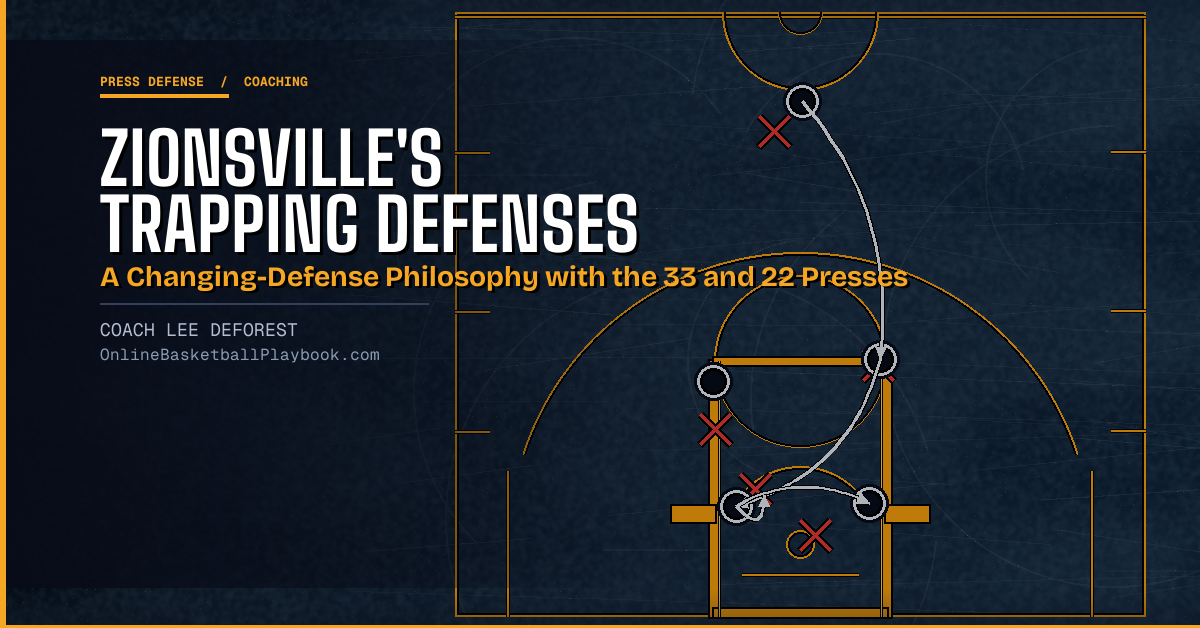
Most teams pick one press and live with it. Zionsville does the opposite. They change the look on purpose, because a team that has to prepare for several defenses in a few days never gets ready for any of them.
That is the whole idea behind a changing defense. Your opponent has a scouting report, a walkthrough, and maybe two practices before they play you. If all of that has to cover one press, they break it. If it has to cover a three-quarter trap, a half-court trap, and a run-and-jump that turns into deny-everywhere, they run out of time. Young players especially cannot absorb that much in a short week.
Zionsville builds the menu around two trapping looks they call the 33 and the 22, plus a Run & Jump variant that teaches the opponent the wrong lesson early and punishes it late. None of it is exotic. It is a 1-3-1, a 1-1-3, and a simple jump-and-trace rule — stacked together so the picture keeps changing.
"My philosophy in changing defenses stems from the belief in having a competitive advantage."
Coach's Cheatsheet
- Use this when: you want to tax an opponent's prep time by making them ready for several defenses, not just break one.
- The 33: a 1-3-1 three-quarter-court press — needs athletes and team speed; never let the ball get reversed through the middle.
- The 22: a 1-1-3 (2-3) half-court trap — needs team quickness and solid post defense; guards play like linebackers.
- Non-negotiables: constant communication, do not let them split the trap, and no fouls when you spring it.
- Run & Jump: trap early so they learn to pick the ball up before the trap — then show a trap, trace hard, and peel off into the passing lanes.
- The endgame: the variant works toward a deny-everywhere matchup once the dribble is dead.
Why Change Defenses at All
The case for a changing defense is a case about your opponent's clock, not yours. Prep time is scarce. A coach who knows you press has to teach a press break, rehearse it against scout-team pressure, and trust teenagers to execute it under stress. Give them one press to solve and a good staff will solve it. Give them three and the math turns against them.
That is why Zionsville treats the changing look as the competitive advantage itself. The traps create turnovers, yes, but the deeper edge is the preparation tax — every defense you show is one more thing the other team has to spend a practice on instead of running their own stuff. For a young team, absorbing several presses in the few days before a game is genuinely hard, and that difficulty is the point.
Do not change defenses at random. The advantage comes from the opponent not knowing which look is coming, but your own players still need a clear trigger for each one — a call, a made free throw, a dead ball. The goal is confusion for them, not for you. Script when the 33 shows up and when you flip to the 22 so your team is never the one caught guessing.
The Two Trapping Looks: 33 and 22
The menu starts with two trapping defenses. The 33 is a 1-3-1 that picks the ball up three-quarters of the floor. The 22 is a 1-1-3 — a 2-3 look — that waits and traps at half court. Same trapping spirit, two different starting points, and that difference alone forces a press-break team to re-read the floor every trip.
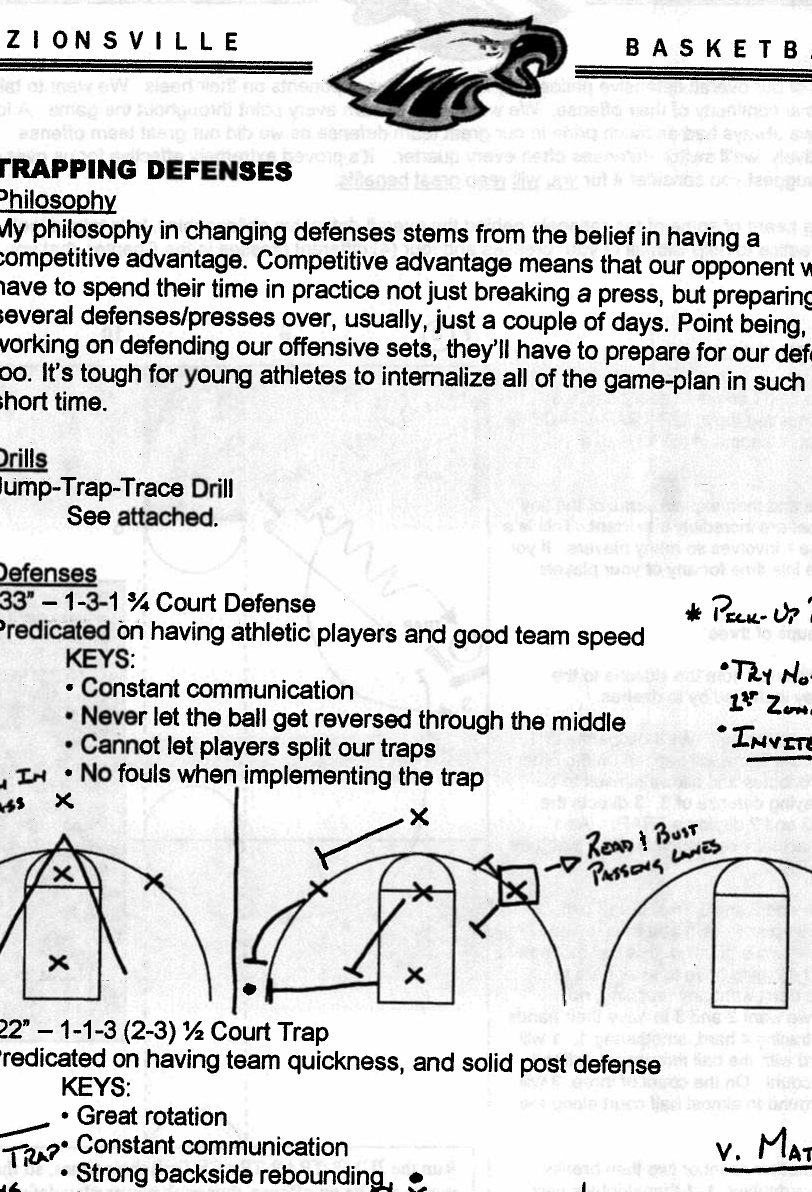
Each look is predicated on a different team strength, so pick based on the personnel you actually have. The 33 asks for athletes and speed up and down the floor. The 22 asks for quickness and a post defender who can hold the back line. Read those two sentences before you install either one — the wrong press for your roster traps air and gives up layups.
The 33: A Three-Quarter 1-3-1
The 33 is a 1-3-1 defense that applies pressure three-quarters of the court. It is predicated on having athletic players and good team speed, because the front of a 1-3-1 covers a lot of ground and the trap only works if your defenders can close it fast.
The keys to the 33
- Communicate constantly. A trapping 1-3-1 is a five-man conversation — the rotations behind the trap fall apart the second players go quiet.
- Never let the ball get reversed through the middle. The middle is where a 1-3-1 is most vulnerable, so the ball goes around the trap, never back through the heart of it.
- Do not let them split the trap. Two defenders close, but they close with a base — leave a gap and a quick guard splits it and the press is broken behind you.
- No fouls when you spring the trap. The trap is meant to steal possessions and clock, not gift free throws and reset the offense.
"Never let the ball get reversed through the middle"
The Key Principle: the 33 only earns its keep with speed and talk. If your team cannot cover the ground a three-quarter 1-3-1 demands, or cannot keep the ball out of the middle on the reversal, this is the wrong look on the menu that night — drop to the 22 instead.
The 22: A Half-Court 1-1-3 Trap
The 22 is a half-court trap out of a 1-1-3 — a 2-3 shape. Instead of pressuring three-quarters of the floor, it lets the ball come to half court and springs there. It is predicated on team quickness and solid post defense, because a half-court trap that fails leaves the back line exposed near the basket.
The keys to the 22
- Rotate well. When the trap goes, somebody has to cover the man the trapper left — great rotation is the whole defense, not a bonus on top of it.
- Rebound the backside. A half-court trap pulls defenders to the ball, so the weak side has to crash and finish possessions on the glass.
- Guards play like linebackers. Up top, the guards read, fill gaps, and blow up the pass out of the trap the way a linebacker reads a play and fills a hole.
The 22 lives or dies on the rotation behind the trap, not the trap itself. Teach the back line to rotate up and cover the open man before you ever let your guards leave their feet for a steal. Run it in slow motion until the post defense and the backside rebounding are automatic, then add speed — a half-court trap with a late rotation is just a layup line.
The Run & Jump Variant
The third piece is a run-and-jump look layered on top of the traps. Its genius is that it teaches the opponent the wrong lesson early. Run the trapping presses in the first part of the game so the other team learns to pick the ball up before the trap arrives. You have just trained them to stop their own dribble.
"The RUN & JUMP press is a fantastic variant in our press strategy."
Later in the game, you show a trap again — but this time it is a bluff with a purpose. Once the dribble is dead, one defender traces the ball hard, smothering the live pivot, while the second defender does not commit to the trap at all and instead peels off to fill the passing lanes. From there the whole thing works toward a deny-everywhere matchup, where the dead ball plus denied lanes leaves the offense with nowhere clean to go.
The Key Principle: the early traps are the setup and the late jump is the payoff. You spend the first half teaching them to kill their dribble, then spend the second half punishing the dead ball by tracing hard and denying every lane out of it.
The Jump-Trap-Trace Drill
To teach the run-and-jump rule, Zionsville uses a drill built on one clear command. The trapper yells "JUMP." The second defender does not trap. He peels off to find a passing lane. The first defender then traces the ball alone, staying tight on the dead pivot while his teammate takes away the outlet.
That is the whole rep, and the simplicity is the point. The drill drills one decision — jump means peel and deny, not trap — so that in a game the second defender never gets sucked into a trap that is supposed to be a bluff. Get that single read automatic and the deny-everywhere finish takes care of itself.
The hard habit to break is the instinct to trap on the call. Your second defender hears "JUMP" and wants to help double the ball — that is exactly wrong here. Rep it until peeling off to the passing lane is the reflex, because the trace only works if the outlet is already covered when the ball handler looks up.
Variations and Progressions
Progression 1: Script the Order of the Looks
Once your team can run the 33, the 22, and the Run & Jump cleanly on their own, script the sequence you show across a game. Open in the 33 to set a fast tone, flip to the 22 after a made basket, then introduce the Run & Jump once the opponent has learned to pick the ball up early. The order is where the preparation tax compounds.
Progression 2: Match the Look to the Roster
Some nights you have the athletes for a three-quarter 1-3-1, and some nights you do not. Build the habit of choosing the 33 when your team speed is the edge and leaning on the 22 when your quickness and post defense are the edge instead. Same menu, weighted to the strength you actually have that season.
Progression 3: Build Toward Deny-Everywhere
Treat the deny-everywhere matchup as the destination, not a separate defense. Once the dribble is dead off the Run & Jump, the next step is everyone denying their man so the offense has no clean outlet. Drill the dead-ball moment specifically — trace on the ball, deny one pass away — so the finish is a habit and not a hope.
Get Free Coaching Notes
Join the Online Basketball Playbook newsletter for new playbook breakdowns, drills, and practice-ready install ideas.
Get Free Coaching NotesDraw this play free in the play drawer →
Membership: the full library, playbook packs, and Pro drawing tools →
Final Thoughts
Zionsville's trapping system is not really about any one press. It is about the menu — a three-quarter 1-3-1, a half-court 1-1-3, and a run-and-jump that flips a dead dribble into deny-everywhere. Each look is simple. Stacked together and changed on purpose, they cost an opponent the one thing a young team cannot buy back: prep time. If you want the deep version of a single full-court look, pair this with Eric Rauch's 1-2-1-1 diamond press or the contain-and-trap rules in Winchester's pressing-team build.
Pick the two looks your roster can actually run, give each one a clear trigger, and trust that the changing picture does work your scout report never could. Talk on every rep, keep the ball out of the middle, never foul the trap, and the deny-everywhere finish will show up exactly when the other team has run out of answers — and out of practices to find them. If you need the individual-defense reps underneath all of it, the Greenwood defensive drill progression builds the stance and closeouts every trap depends on.
Keep Building
Related breakdowns
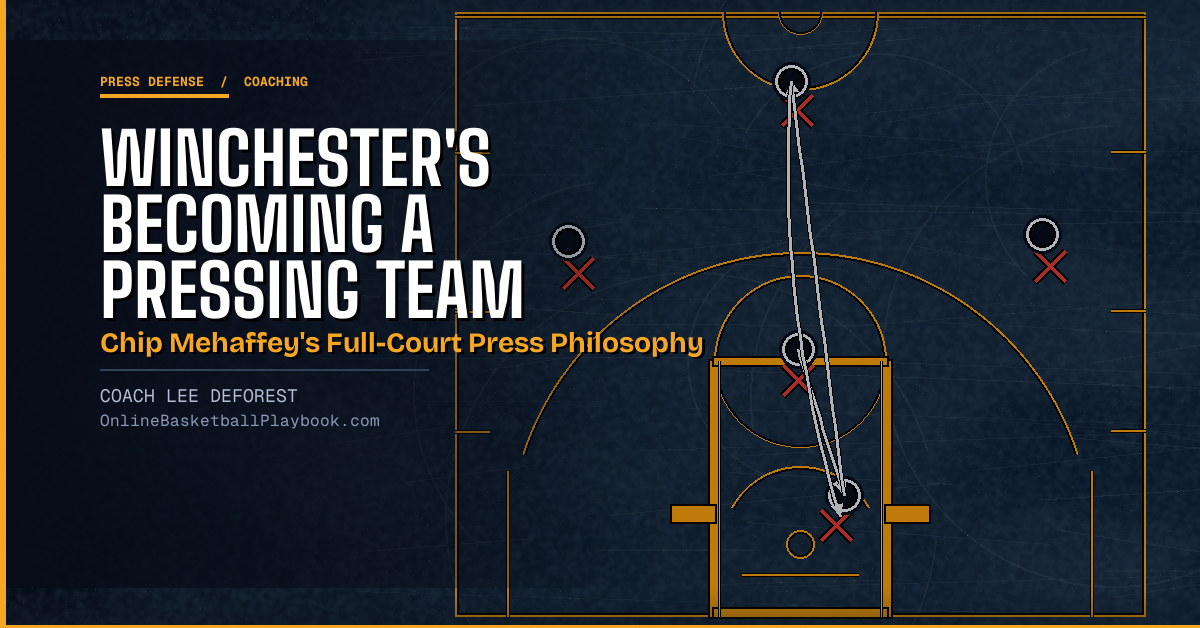
Winchester's Becoming a Pressing Team: Chip Mehaffey's Full-Court Press Philosophy
Chip Mehaffey builds Winchester into a pressing team with one identity goal — trap the backcourt every possession — plus the rules, daily skills, and drills that make it hold up.
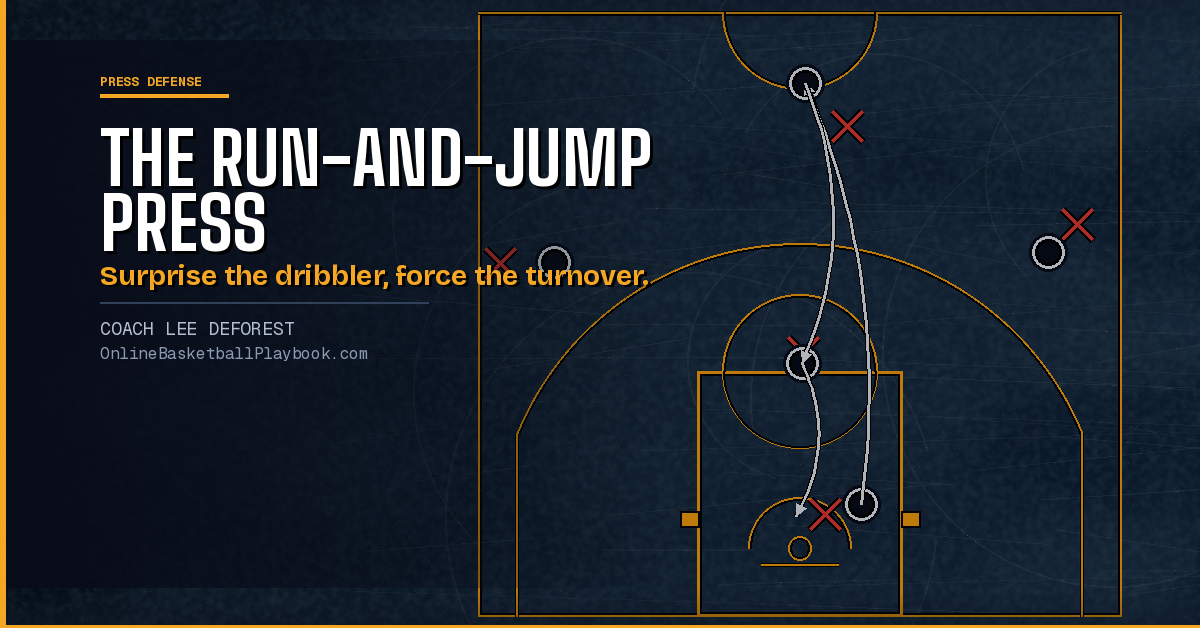
How to Coach the Run-and-Jump Press (Complete Guide)
The full-court man press that wins by surprise instead of numbers — what it is, how every defender moves, and why it's the lowest-risk way to pressure the ball.
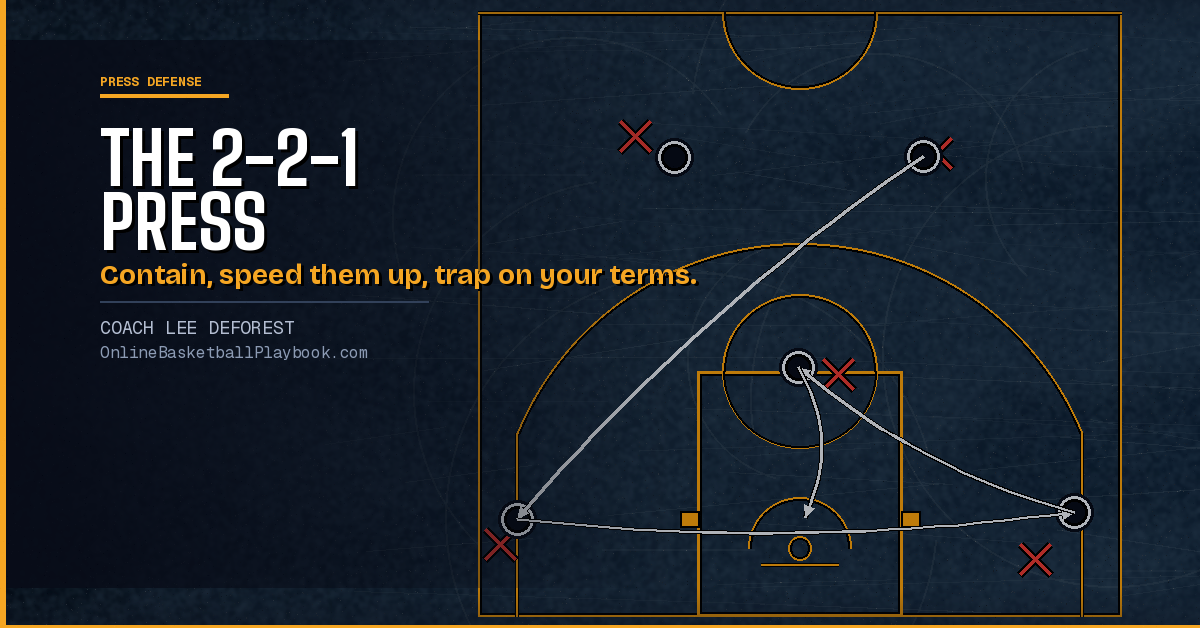
How to Coach the 2-2-1 Full-Court Press (Complete Guide)
The containment press that speeds opponents up and forces turnovers on your terms — without gambling your back end on every possession.
More from Online Basketball Playbook
How to Build a Defensive Identity
Trapping defenses are a commitment — build the identity that makes traps sustainable.
Basketball Substitution Patterns
Trapping burns legs fast — a rotation plan keeps the traps coming late in games.
Basketball Pace & Tempo Strategy
Trapping defenses speed the game up — control pace before and after the trap.