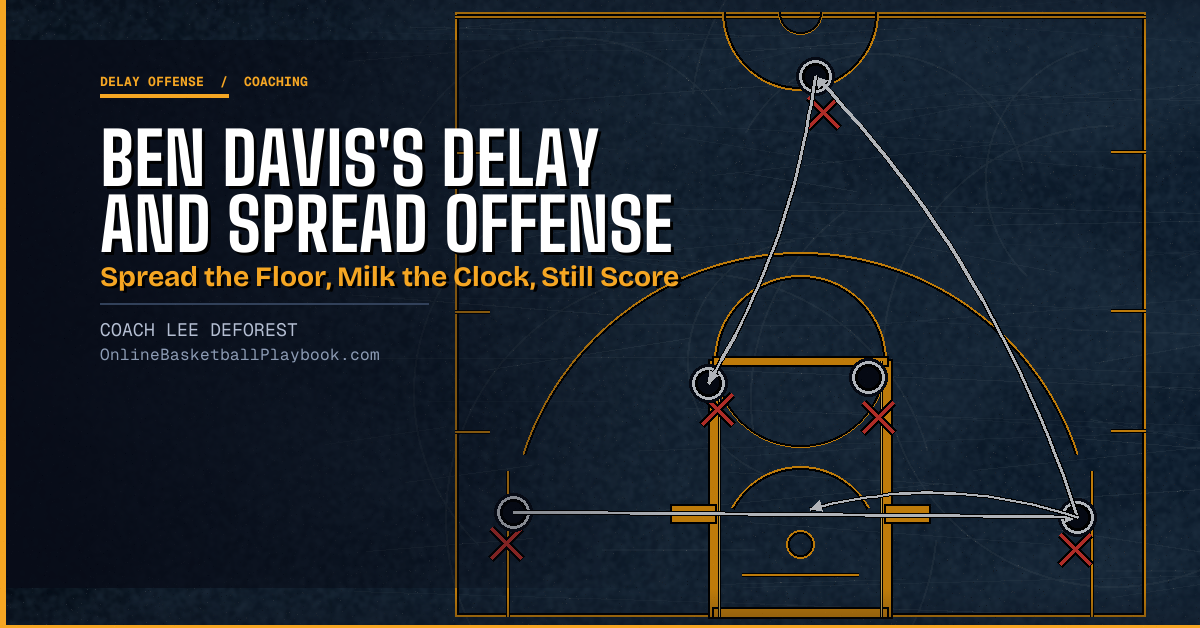
Most delay offenses make you choose: hold the ball or score it. The Ben Davis package refuses to pick. You spread five players out, empty the lane, and milk the clock while staying able to attack the rim anytime.
This is the open-post offense from the Ben Davis Giants, the Indianapolis program presented by coach Scott White at the West Central Indiana Coaches Roundtable. It is not one continuous play sheet — it is a family of delay-and-spread handouts off the same idea: clear the post, stretch the defense to the sideline and beyond, and use the open lane to run clock or drive a defender who cannot guard you.
That open lane is the whole trick. Take your post man out of the paint and stand five players above the foul line, and there is nothing in the middle to help. A defender who is tough to stop on the bounce suddenly has a runway to the rim, and a defense that wants to pack the paint has nobody to pack it against.
"Our delay offense serves two purposes."
Coach's Cheatsheet
- Use this when: you want to drain clock late, attack aggressive man pressure, or exploit a post defender you have dragged out to the perimeter.
- Core teaching point: all five players stay free-throw-line-extended or higher — a true open, empty post with a driving lane down the middle.
- Backdoor rule: any time a pass is denied, the passer pass-fakes and the intended cutter goes backdoor for the layup.
- Clearing rule: cutters clear the lane to the side away from the ball, so the middle stays open for the next driver.
- The exception: when the high-post man catches in the middle, both wings go backdoor and return to the spots they came from.
- Honest drawback: it is physically demanding, it needs four players who can all handle and cut, and it struggles to score against soft perimeter defense.
Why an Open-Post Delay — Two Purposes
The delay is built to do two jobs at once, and that is what separates it from a stall. The first job is to hold the ball at the end of a quarter or a game while never surrendering the ability to score. You are not freezing the ball and praying — you are running offense slowly, and a backdoor layup is available the entire time.
The second job is to attack a defender who is hard to stop off the dribble. Because the post is empty, the driving lane is wide open, so a good one-on-one player can beat his man and finish with no help waiting. The delay and the attack are the same offense, dialed to two tempos.
"All five players must remain free throw line extended or higher."
Sell both purposes before you ever run it. Players hear the word delay and assume the goal is to stand around and burn clock. Tell them the opposite: this is an attacking spread that happens to be patient. When guards believe a layup is always one read away, they keep moving instead of freezing the ball.
The Alignment: Five Out, Empty Post
The alignment is the non-negotiable. All five players start free-throw-line-extended or higher, and the guards try to stay above the old volleyball or five-second hash mark. The result is a true open post — nobody stands inside, and the lane is empty by design so there is always somewhere to drive.
That spacing is what makes everything else legal. If a player drifts low or a cutter parks in the lane, the driving lane closes and the help defender you worked to remove walks right back into the paint. Before the first pass, the job is simple: get high, get wide, keep the middle clean.
The Key Principle: the offense lives and dies on the empty post. Keep all five players high and the lane stays open for the drive — let one man sag low and you have handed the defense back the help you spaced them out to remove.
The Rules: Backdoor and Clearing
The alignment is the easy part. Two rules turn the spacing into offense, and the first one is the answer to pressure. Against an aggressive man-to-man that wants to deny every pass, you do not fight the denial — you punish it.
"Anytime a pass is being denied, the player with ball must pass fake and cutter must backdoor cut."
So the backdoor rule is automatic: the moment a defender overplays the passing lane, the ball handler shows a pass fake and the intended receiver cuts behind him to the rim. With the post empty, that backdoor cut has nothing but open floor in front of it. The harder the defense denies, the easier the layup gets.
The second rule keeps the floor clean. After a cut, the cutter clears the lane to the side away from the ball, so he never clogs the driving lane or the next backdoor. There is one exception, and it is worth drilling on its own: when the high-post man catches the ball in the middle, both wings go backdoor and then return to the exact spots they came from. That keeps the alignment intact while still threatening two quick rim cuts off the middle catch.
Drill the clearing rule until it is muscle memory — it is the rule players forget first. A cutter who does not clear away from the ball is the most common way this offense breaks: he clutters the lane, kills the next drive, and erases the empty post you built it around. Run it slow and make every cutter exit to the weak side before you add speed.
The Spread: Drive-and-Kick to Break It Down
When the goal shifts from milking clock to scoring, the spread offense breaks the defense down with dribble penetration. The spacing is the same open look, but the jobs are sharp. Your 1 is the best ball handler with the ball in his hands. The 2 and 3 are your perimeter shooters. The 4 and 5 spot up in the corners as the kick-out targets.
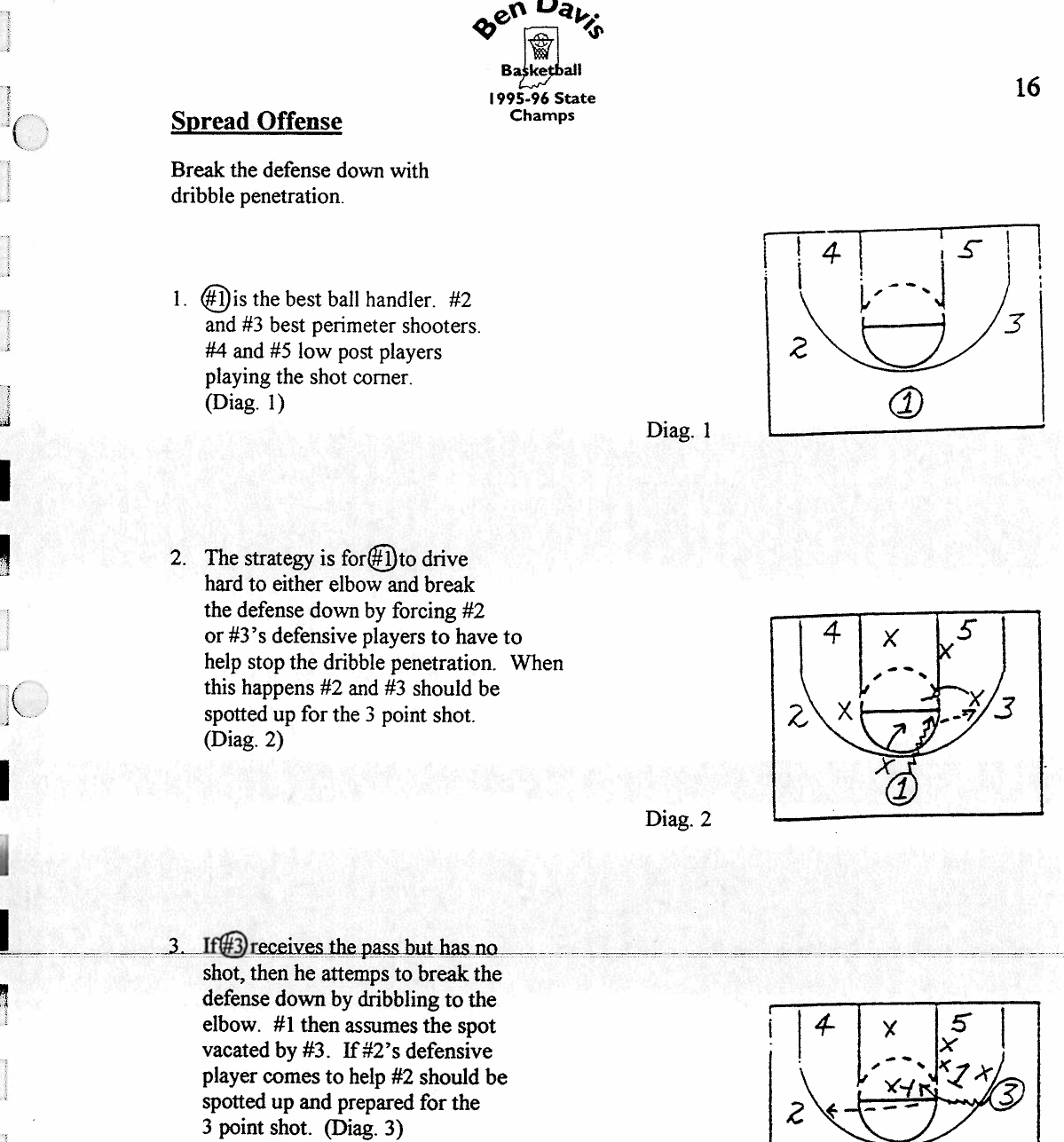
The action is direct: the handler drives hard to an elbow to force a help defender to commit, then kicks to the open shooter the moment help arrives. Drive to draw two, pass to the man the second defender left. That is the entire read, and the empty post is what makes the drive a genuine threat — there is no big sitting in the lane to wall off the rim.
The drive has to be a scoring drive, not a passing drive. If your handler leaves his feet looking to dish, the defense sits down and the kick never comes open. Teach him to attack the elbow with intent to finish — only then does the help man step up, and only then is the corner shooter actually open. A drive that does not threaten the rim breaks nothing down.
The Diagonal Delay: Screen-and-Slip Rules
The diagonal delay is the screening version of the same spread. The alignment rule does not change — keep everyone free-throw-line-extended — but you put your best athletic post at the 5 spot, because his job is to slip screens to the rim. It is a 5-out look with screening rules layered on top.
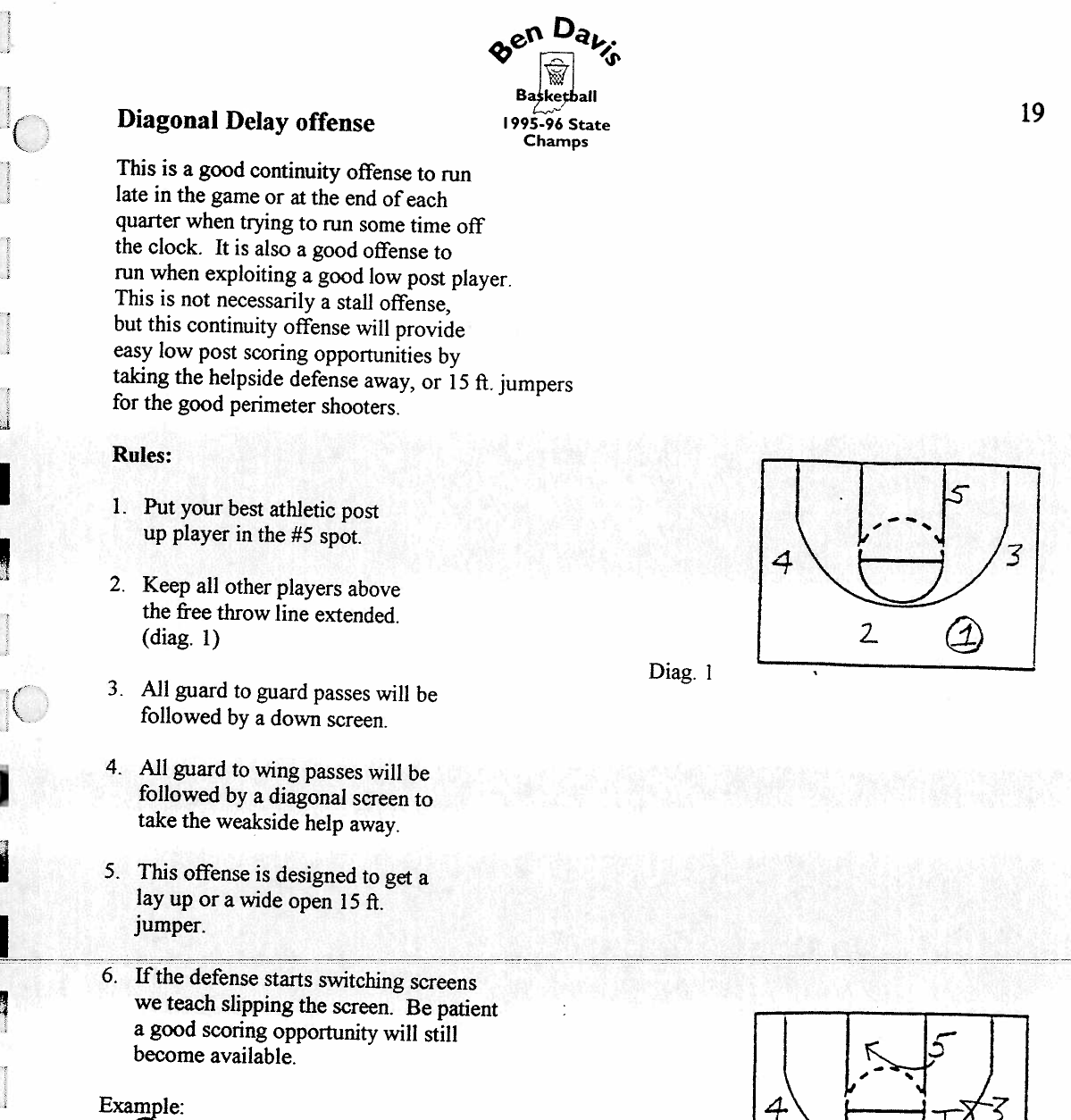
The rules read off the pass. Every guard-to-guard pass is followed by a down screen. Every guard-to-wing pass is followed by a diagonal screen, whose job is to take away the weak-side help before the defense can use it. Then stay patient and let the screen work — slip it for a layup if the defender jumps it, pop out for a fifteen-foot jumper if he goes under. The 5-out alignment keeps the slip lane clean every time.
The Key Principle: the screen is a threat, not a destination. Be patient, set it for real, and read the defender — slip it for the layup when he cheats over the top, take the fifteen-footer when he sags under. The diagonal screen exists to erase weak-side help so the slip cannot be covered.
When to Use It — and When Not To
The Ben Davis package is honest about its time and place. Reach for it in three situations: when you face aggressive man-to-man pressure and want to punish the denial, when you need to milk the clock late while keeping a scoring threat alive, and when you lack a true low-post player but want to drag the opponent's post defender out to the perimeter and drive past him.
Be just as clear about the drawbacks. It is physically demanding and hard to lean on as your primary offense, because four players handle and cut constantly for whole possessions. It struggles to score against a soft perimeter defense that is happy to let you hold the ball. And it only works if four of your five can genuinely handle and cut with purpose — one weak link and the package stalls.
Match the version to the defense in front of you. Aggressive denial? Lean on the backdoor rule and let their overplay feed your layups. A soft, sagging defense that will not chase? The spread's drive-and-kick is your answer — make them guard the drive or give up the kick-out three. Reading which problem you are solving is half of running this offense well.
Variations and Progressions
Progression 1: Backdoor Series First
Before you run anything full, install the backdoor rule in a 3-on-3 spread on one side of the floor. Have the defense deny every pass on purpose so the offense has no choice but to pass-fake and cut backdoor. You are not grading the shot — you are grading whether the pass fake and the cut happen automatically the instant the denial shows.
Progression 2: Drive-and-Kick Shell
Add the spread's penetration in a 4-on-4 shell with the corners filled. The only rep that counts is a hard elbow drive that forces help, followed by a kick to the man the help defender left. End the rep the instant the handler picks up his dribble without committing the help, so players feel how a passive drive breaks nothing.
Progression 3: Diagonal Screening Rules
Drill the screen reads on air first, then live. Guard-to-guard triggers the down screen, guard-to-wing triggers the diagonal screen. Make your 5 set both, slip both, and pop out of both, so the read becomes a habit before a defender ever fights over the top of it.
Pair this delay with the rest of your spread package. The five-man open post offense is the read-and-cut cousin that teaches the same spacing discipline as your base, and the TRIPLE and West half-court offenses give you two scripted sets for the possessions when the spread is not the answer. The full playbook breakdowns library has more delay and spread ideas to steal.
Get Free Coaching Notes
Join the Online Basketball Playbook newsletter for new playbook breakdowns, drills, and practice-ready install ideas.
Get Free Coaching NotesDraw this play free in the play drawer →
Membership: the full library, playbook packs, and Pro drawing tools →
Final Thoughts
The Ben Davis delay is not complicated on paper: five players out, an empty post, a backdoor rule for the denial, and a clearing rule that keeps the lane open. What makes it work is the discipline wrapped around it — stay free-throw-line-extended, pass-fake and cut backdoor the moment you are denied, clear away from the ball, and drive the empty lane with the intent to finish.
Spread the floor to milk the clock, and trust that the score is never out of reach because the backdoor and the drive are always live. Do those things, and Ben Davis's delay-and-spread package will let you control tempo and still attack — instead of forcing you to choose between holding the ball and scoring it.
Keep Building
Related breakdowns
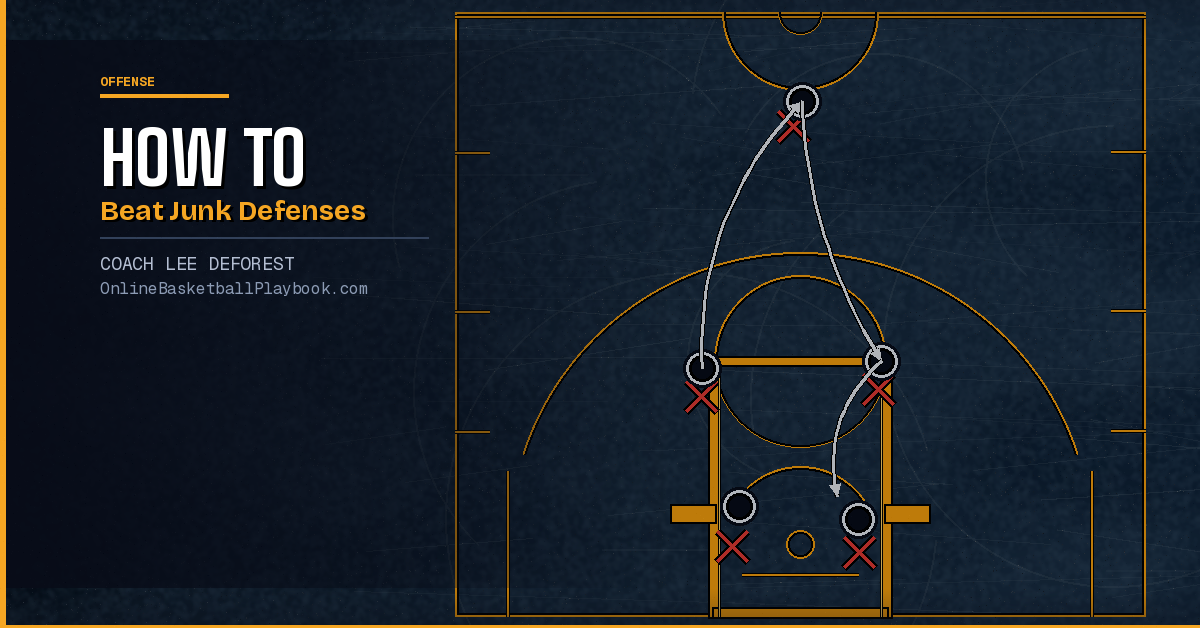
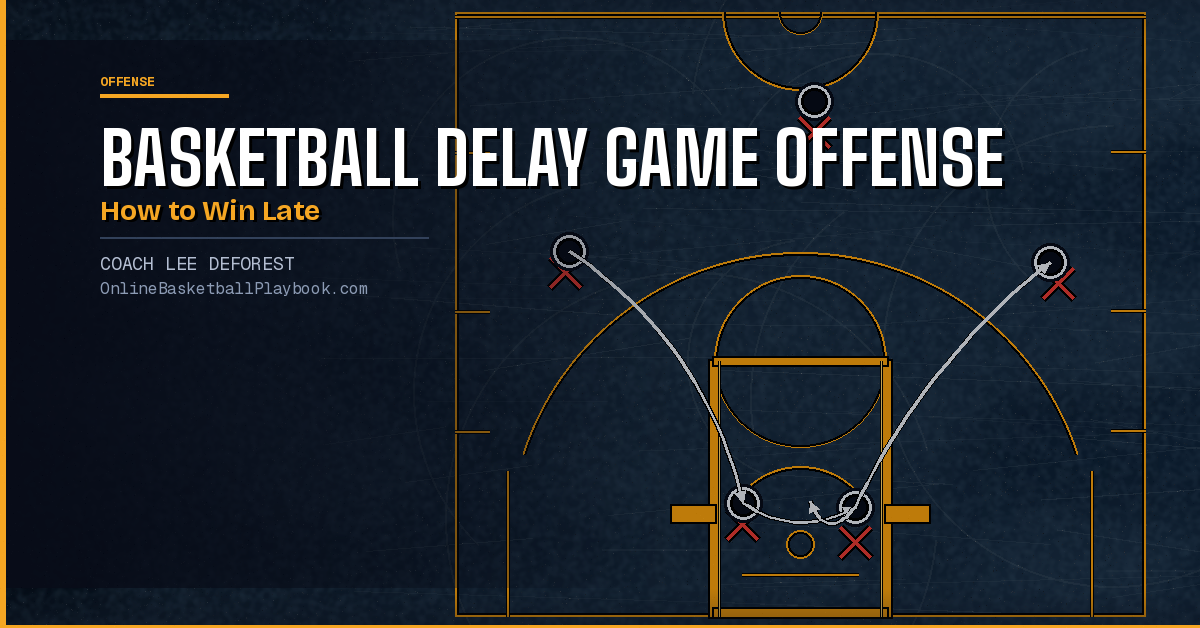
Basketball Delay Game Offense: How to Win Late
Basketball Delay Game Offense: How to Win Late
More from Online Basketball Playbook
Basketball Pace & Tempo Strategy
The delay spread is tempo control — understand the full pace philosophy behind it.
Taking Advantage of the Sideline
Use the sideline as a fifth defender when you’re protecting a lead.
How to Score Against Junk Defenses
When defenses go to a junk look against your delay, here’s the counter.