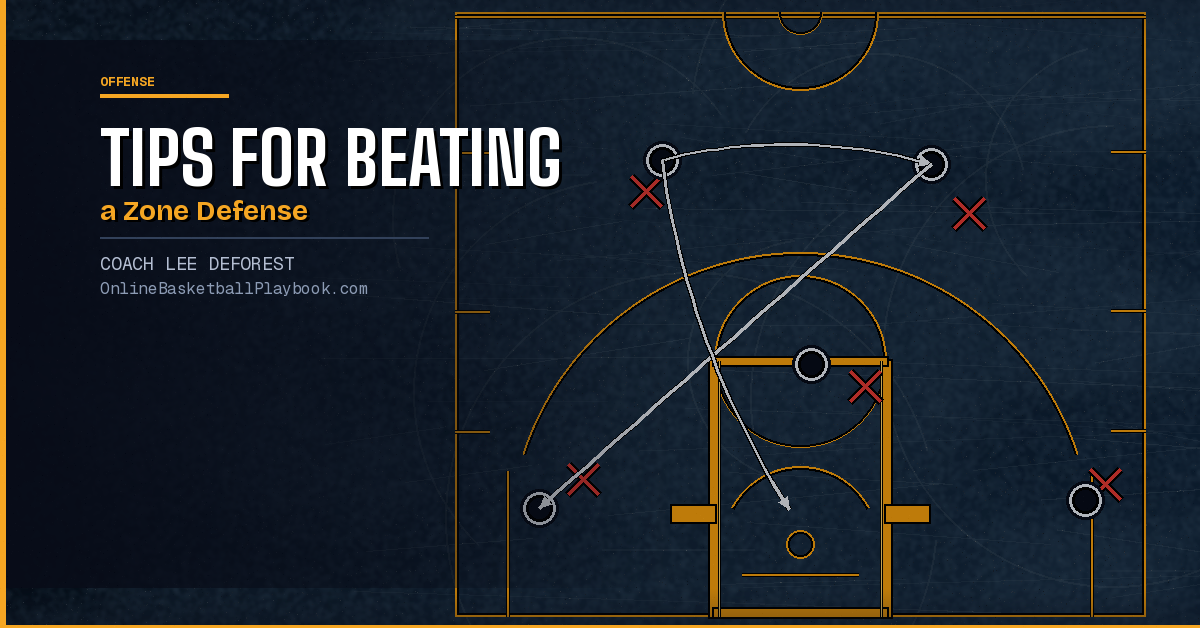

Zone defenses frustrate teams that run man-to-man actions at them. Beat the zone by attacking its gaps, moving the ball faster than defenders can shift, and occupying the spots that force impossible choices.
Why Zone Requires Different Thinking
A zone defense is built on a simple idea: defenders guard areas, not specific players. Every weakness in a zone attack comes back to one coaching team running their man-to-man reads against a fundamentally different system. The result is predictable — dribble penetration that closes off, pass-and-stand spacing that lets the zone rotate easily, and post feeds that go exactly where the defense wants the ball.
The correct frame is this: a zone is beaten by outnumbering an area, not a person. When you can force one defender to account for two threats simultaneously, you have cracked the zone's structure. That is the entire game. Everything else in this guide is a specific application of that principle — the high post, the short corner, the skip pass, the overload, the ball screen. Each one is a different way to put a single defender in an impossible situation.
Understanding the 2-3 zone defense from the defensive side first gives you a clear map of where the gaps are and why they exist. If you know what the bottom two defenders are taught to do when the ball hits the short corner, you can put someone there with confidence every possession. This is a major advantage that most teams skip.
Zone offense also rewards basketball IQ development more than almost any other offensive system. Reads are happening on every catch — where is the defense, who moved on the flight of the pass, is the high post open for a flash. Investing time in teaching your players to read the defense before they catch the ball pays dividends all season.
Find the Gaps and Seams First
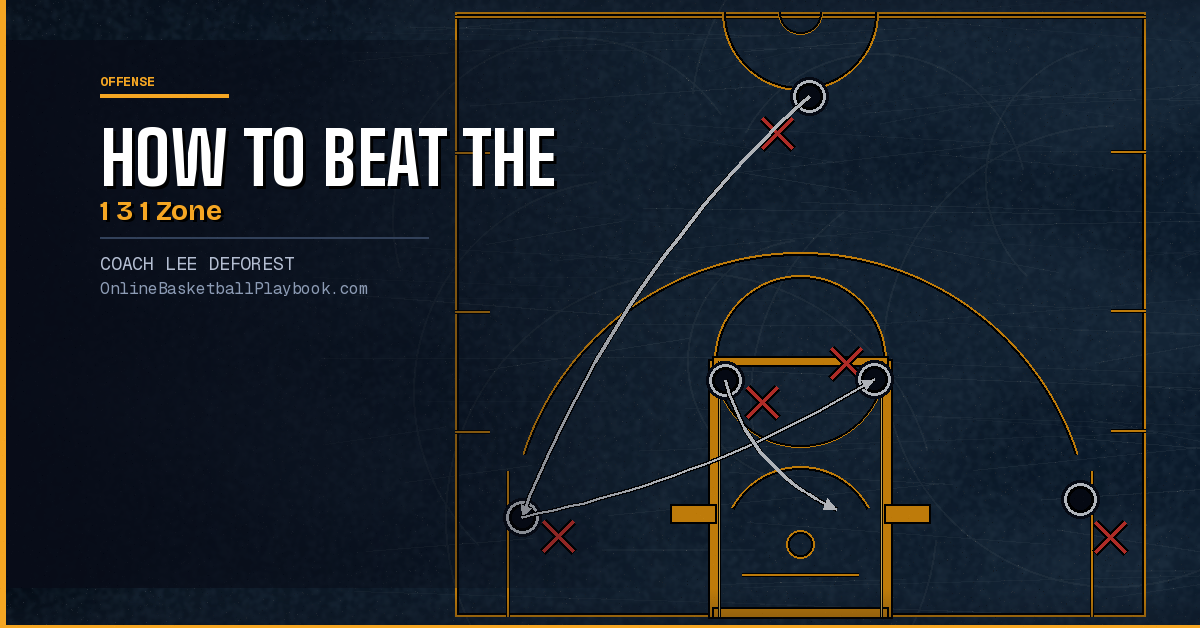
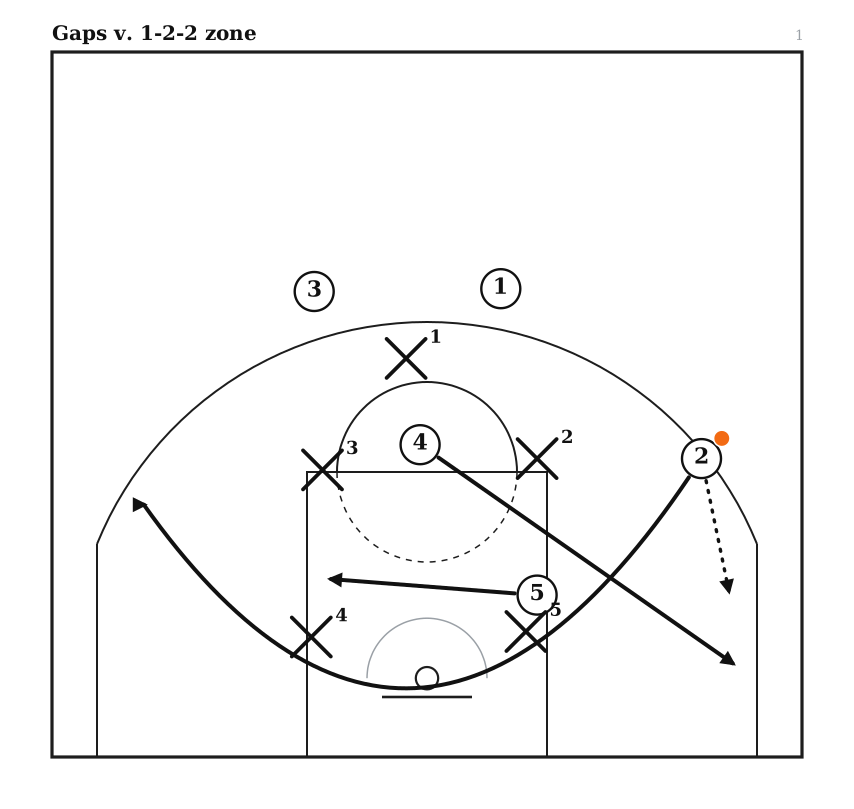
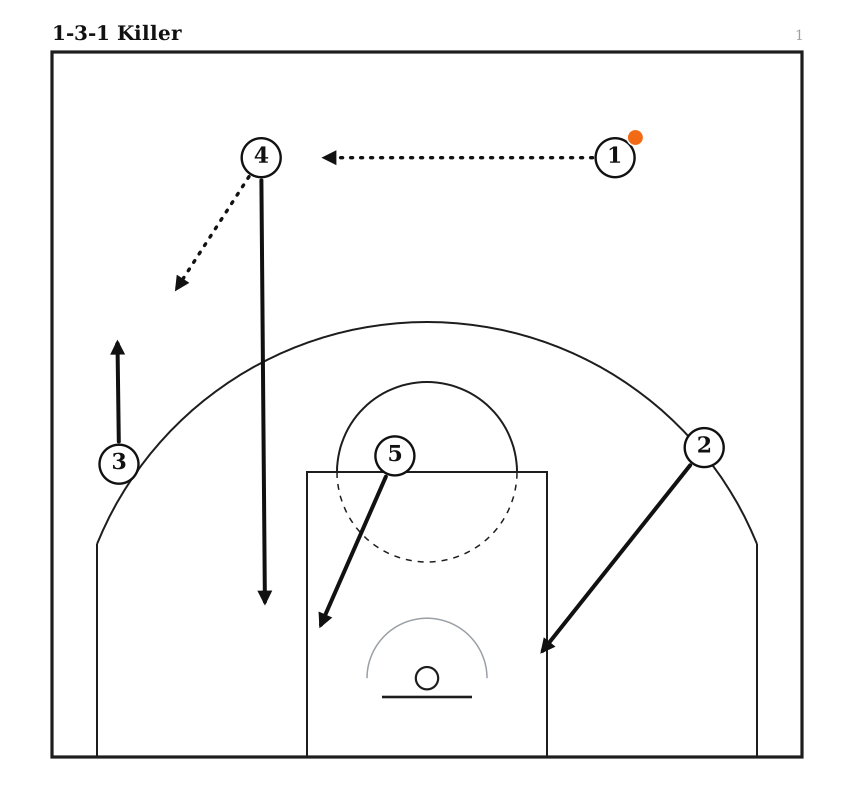
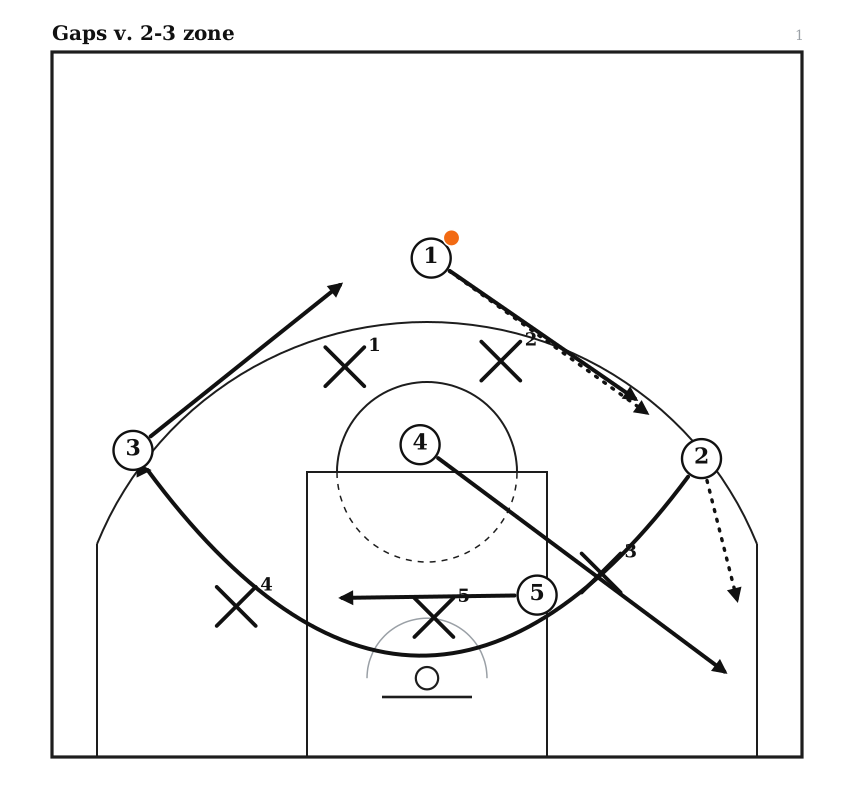
Before any set play runs, players need to align in the gaps between zone defenders. Against a 2-3 zone, that means your two guards set up in the gaps between the top two defenders — not directly in front of them. Against a 1-3-1 or 1-2-2, you align behind the front man to create immediate numerical advantages in the middle.
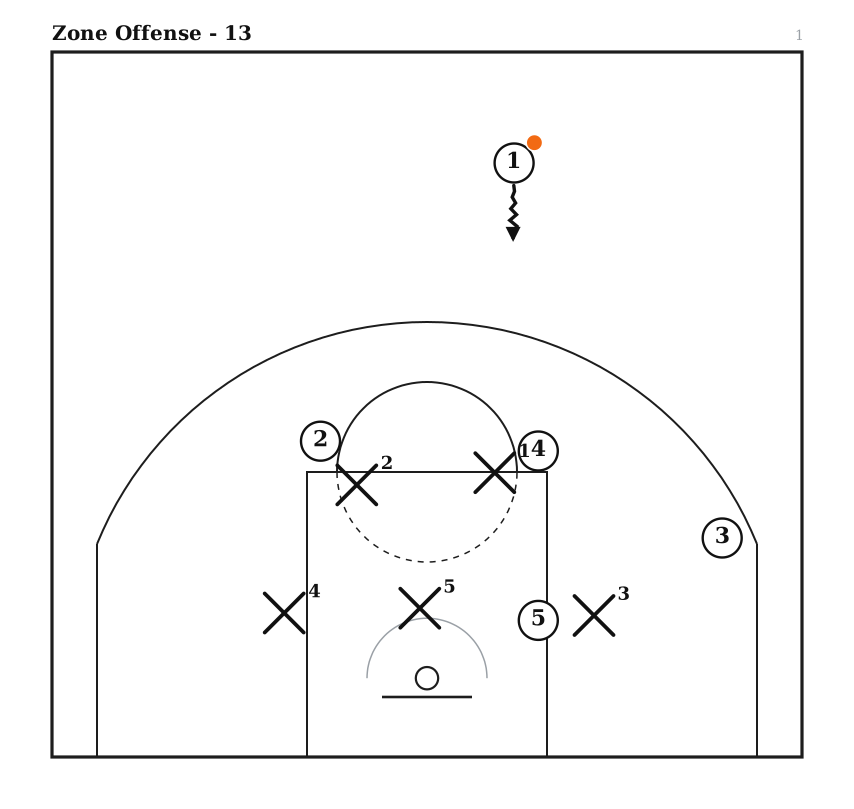
The entry dribble is one of the most undercoached tools in zone offense. A dribble directly at a specific top defender forces that person to commit one direction. The moment they shift, the ball reverses into the space they just vacated. This works at every level because it exploits the zone's fundamental limitation: a defender cannot be in two places at once. The entry dribble weaponizes that limitation on the very first action of the possession.
Seam reads require players to understand where the gaps are before the ball arrives. Players who wait until they catch the ball to figure out what to do have already lost a step on the defense. The pass travels faster than any defender can move, which means reads should happen while the ball is still in the air. Every catcher should know before they receive the ball whether the skip is on, whether the high-post flash is open, or whether the short-corner feed is available.
Gap alignment also affects the skip pass, which is the most dangerous weapon in zone offense. When offensive players are positioned in seams rather than in front of defenders, the skip travel distance is maximized and the defensive rotation time is minimized. A well-aligned zone offense makes the skip an almost automatic open look on the weak side every time the ball goes into an overload situation.
The High Post and Short Corner Are the Backbone
Two spots define zone offense more than any others: the high post (the elbow area near the free-throw line) and the short corner (the area between the lane line extended and the baseline, inside the three-point line). When you occupy both simultaneously against a 2-3 zone, you have forced the bottom defender on the ball side into an impossible read.
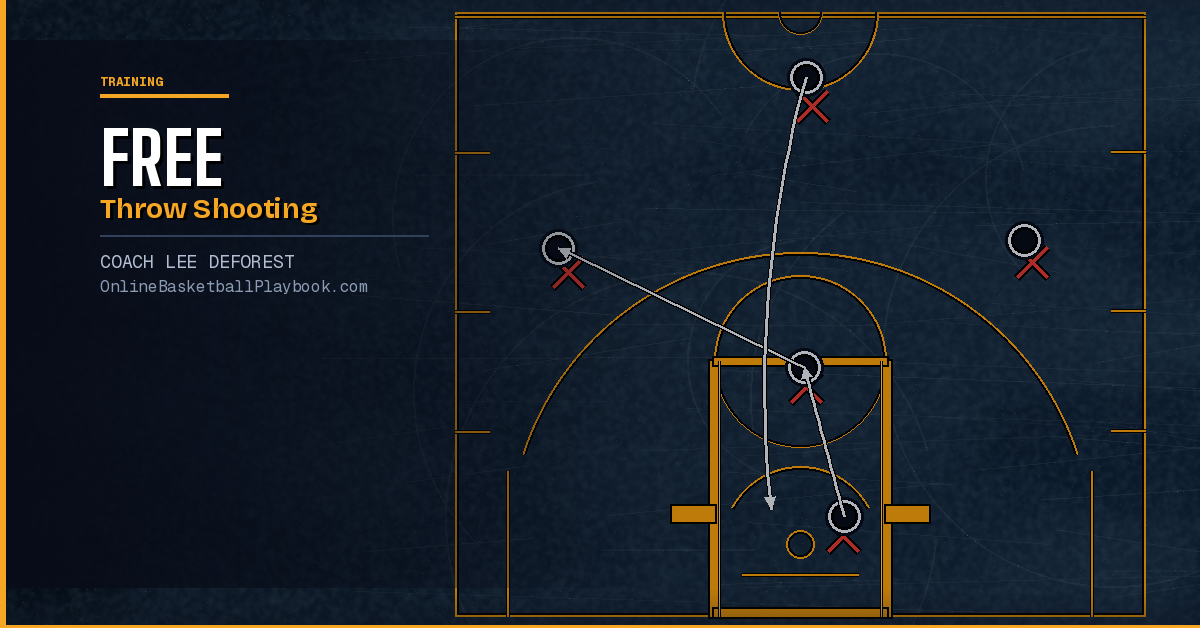
A flash to the high post pins the middle defender and creates a genuine dilemma. If the middle defender steps up to take the flash, the back line of the zone is exposed. If the middle defender holds, the high-post catch is a 15-foot jumper with no contest. Either way, the offense wins. Nearly every effective zone set in the library uses a high-post occupant to open up cutters, short-corner feeds, and skip passes. The high post is not one option among many — it is the center of the attack.
The short corner is the soft spot that most young teams never attack. When the ball reaches the short corner, the bottom defender on that side must guard it. That defender cannot also guard the rim. So the moment the ball hits the short corner, the high-post player or the backside big cuts directly to the basket — and the feed from the short corner to the cutting big is one of the highest-percentage plays in basketball.
"The two spots to teach kids are the short corner and the high post."
— Basketball Vault
Developing your post players for these two roles is essential. A big who can flash to the high post and make the one-pass read — dump to the cutter, skip to the corner, or shoot the mid-range — is worth their weight in possessions. This is also where post play translates directly into zone offense. The footwork and catching skills are the same; only the reads change.
Overload One Side, Then Skip
The overload principle is straightforward: flood one side of the floor with three offensive players against two zone defenders, force the zone to rotate toward the ball, and then skip the ball to the weak side before the defense can recover. The skip pass is the kill shot in zone offense because the zone physically cannot shift four or five defenders across the floor faster than the ball travels.
The key is loading the strong side with real threats — not just bodies. Three offensive players who are credible scorers from their spots force the defense to account for all three. A player camped in a corner who never shoots is easily ignored. A player who has made two corner threes this game demands full attention. This is why shooting form and spot-up accuracy matter so much in zone offense — every player on the floor has to be a shooting threat for the overload to function.
Timing the skip matters as much as the decision to skip. The skip should happen the moment the zone commits to the strong side — when a bottom defender has stepped to the short corner, when a top defender has sagged to help on a high-post catch, when the defense has made its collective movement. Skipping too early, before the zone has moved, gives the defense time to recover. Skipping too late, after they have settled, finds a defense already in a good position. The read window is real and requires repetition to develop.
The skip receiver needs a plan before the ball arrives. The most common skip is to the corner for a three, but the skip to a wing who can immediately attack the scrambling defense with a drive or a second skip is also highly effective. Teaching players to read the defense on the skip catch — shoot immediately, attack the closing defender off the dribble, or make one more pass — is what separates teams that occasionally hit a skip three from teams that regularly generate multiple quality looks per possession out of their overload action.
Screen the Zone and Seal Defenders
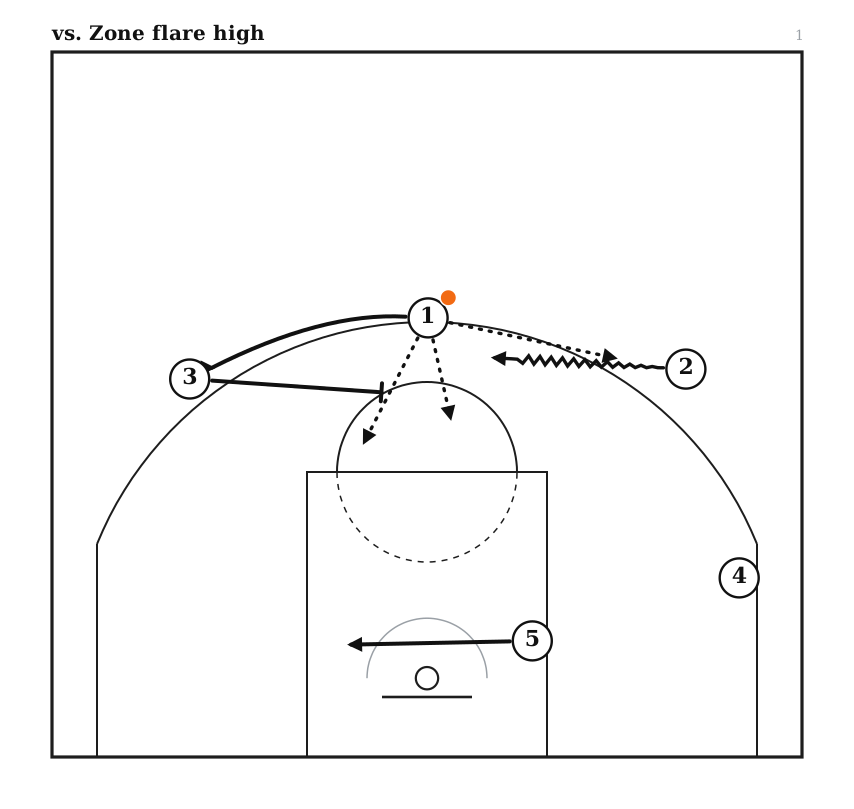
Zone defenders can be screened. This is underused at every level of basketball. The back screen on the outside bottom defender, a pin screen on the middle, a flare screen on the top man — all of these are legal, effective actions that disrupt zone rotations and create open catchers in spots that are normally covered.
After a zone screen, the screener's job is not done. The screener seals the defender they just screened and dives to the rim. This creates duck-in opportunities and high-low feeds that are almost impossible to defend. The bottom of the zone is often one of the weakest spots defensively, and a big who dives after screening in that area regularly generates clean looks at the rim. High-low passing — from the high post down to the sealing big in the lane — is one of the most reliable scoring sequences against a 2-3 zone.
Back screens on the outside defenders free cutters into the middle of the zone. A cutter who enters the lane off a back screen on the bottom man has beaten the structure of the defense — the zone cannot account for someone moving inside from their normal rotation position. This is especially effective when the ball is in the corner or the short corner area and the zone is already loaded to one side.
The discipline required to screen the zone correctly — making contact, holding long enough to actually impede the defender, then sealing and diving — should be built into practice planning deliberately. Teams that run these actions without teaching the technique behind them get sloppy screens that achieve nothing. Teams that spend time on zone-screen technique consistently generate open layups and duck-ins.
Screening the zone is legal and effective, but players need to understand that they are screening an area defender, not a man-checker — identify which defender is responsible for the spot the screener occupies, set the screen directly on that person, and the action works consistently.
Ball Screens and Constant Movement
Ball screens against zone defense have become standard at every level, and for good reason. A ball screen placed at the top of the zone bends the defense in ways that pure dribble penetration cannot. The handler comes off the screen and immediately forces the zone to make a decision: Does the top defender fight through and stay with the handler? Does the next defender over step up, and if so, who covers the diving screener?
The roller or diving big is the primary read off a ball screen versus zone. The top of the zone compresses toward the ball screen, and the lane opens up behind the screen action. A lob to the rolling big, a bounce pass to the diving big in the lane, or a kick to the corner when the defense collapses — these three reads off the ball screen cover every defensive response the zone can give. The ball screen is not a man-to-man action grafted onto zone offense; it is a legitimate zone-attack tool that exploits the zone's collective decision-making.
Movement off the ball is just as critical as any specific action. A rule worth teaching explicitly: move on the flight of the ball. Cutters and flashers should be moving while the pass is still in the air — not waiting for the ball to arrive at its destination before deciding to move. This habit makes the offense impossible to track for zone defenders, who are already responsible for areas rather than individual players. A zone can cover areas when everything is stationary; it struggles enormously when players are flashing, cutting, and relocating constantly.
This constant movement is also what makes the motion offense adapt well against zones. A team already trained to move without the ball, read defenders, and make decisions on the fly has a significant head start when it comes to executing zone-offense principles. The reads are different, but the discipline of purposeful, constant movement transfers directly.
Putting It All Together in Practice
Zone offense principles are not difficult to understand intellectually. The challenge is translating those principles into reliable, pressure-tested habits during a game. That translation happens in practice — specifically in drilling the reads, the alignments, and the sequences until they are automatic.
Start with alignment. Before any live action, have players walk through their gap positioning against a stationary zone. Show them where they need to be against a 2-3 front, a 1-3-1, and a 2-2-1. This takes ten minutes and eliminates the most common zone-offense mistake: lining up directly in front of defenders instead of in the seams.
Then drill the entry dribble and reversal. Two defenders at the top, one offensive player with the ball. The offensive player attacks one defender, the defender commits, the ball reverses. This is a simple two-person read drill that builds the first core habit of zone offense.
Next, add the high post and short corner. A 3-on-3 segment with the ball, the high post, and the short corner versus the bottom two defenders and a middle defender covers the backbone of the attack. Work this segment daily for a week and your team's zone offense will improve dramatically.
Finally, run your zone sets at full speed and keep score of possessions. Teams that practice zone offense competitively — making it a scored segment, tracking quality looks versus forced shots — build the competitive habit of executing under pressure. Passing drills that specifically train the skip pass and the high-low feed belong in this rotation as well, since the ability to make accurate passes under pressure is what turns good reads into actual baskets.
One additional element: your zone offense should include a quick-hitter for when a team drops into zone late in a shot clock or transition situation. Many teams have a good half-court zone set but struggle when the zone shows unexpectedly. A simple three-pass sequence that immediately attacks the high post and the short corner is enough — you do not need a twelve-action set for every situation. Knowing the two or three principles cold allows players to improvise when the zone appears at unexpected moments.
- Align in the gaps — never set up directly in front of zone defenders; find the seams between them before the offense begins.
- Enter with a dribble — attack a specific top defender with your dribble, force a commitment, then reverse into the vacated space.
- Occupy high post and short corner simultaneously — this is the backbone of attacking a 2-3; one defender cannot guard both spots at once.
- Load the strong side, then skip — overload with three real scoring threats, wait for the zone to fully commit, then skip to the weak side for a quality look.
- Screen zone defenders and seal — screeners must make contact on an area defender, then seal and dive immediately after the screen to create duck-ins and high-low feeds.
- Move on the flight of the ball — cutters and flashers move while the pass is still in the air; waiting until the ball arrives gives the defense time to recover.
- Use ball screens at the top — a screen on the zone's front forces a rotation decision; read the roller first, then the corner kick if the defense collapses.
Get free play diagrams, drills, and coaching guides delivered weekly.
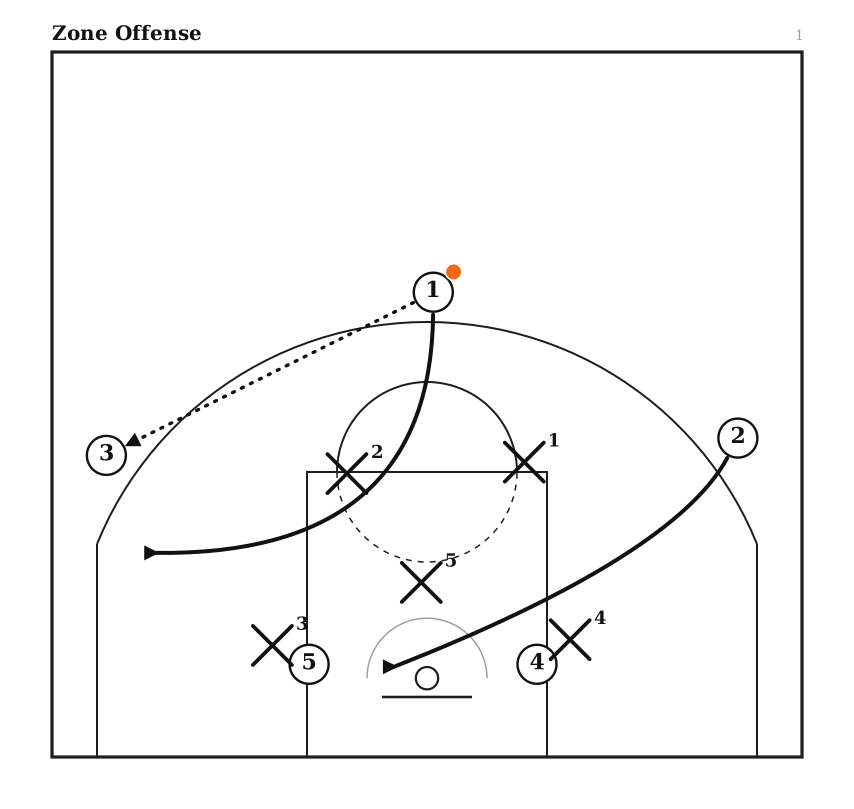
See it drawn up
Related diagrams
Keep Building
Related breakdowns
How to Be a Good Player in Basketball: Tips for Success on the Court
How to Be a Good Player in Basketball: Tips for Success on the Court