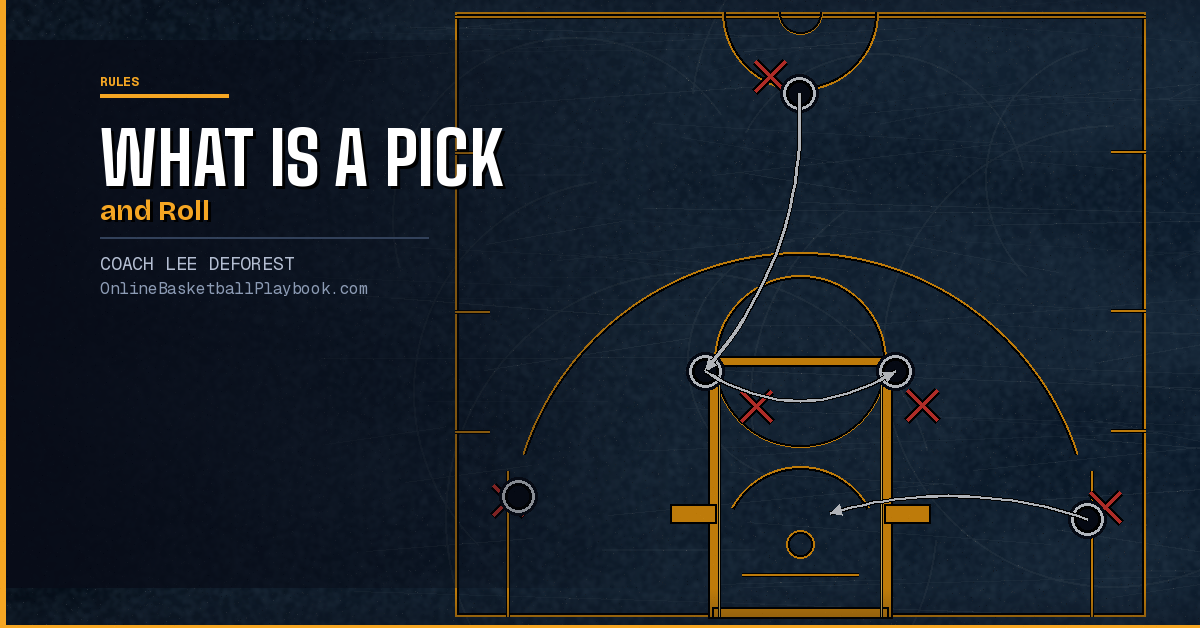

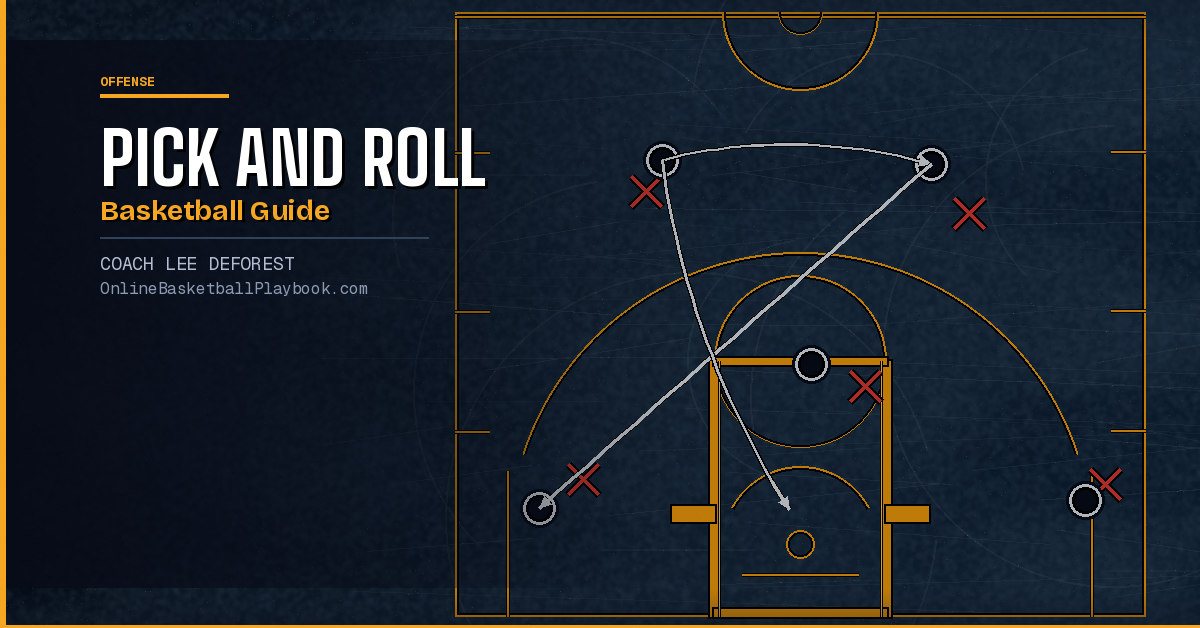
The pick and roll is a two-man play where one player sets a screen on a defender, then cuts toward the basket. It is the most widely used action in basketball at every level, from youth leagues to the NBA.
The Basics: Screen, Read, Roll
At its core, the pick and roll forces a defense to make an impossible choice in less than a second. The play starts when a big man — a center or forward — walks up and plants himself in the path of the ball-handler's defender. That stationary position is the "pick" (also called a screen). If the big sets the screen legally, the ball-handler's defender now has a body in the way. The ball-handler uses that block to get a step of separation, attacks toward the basket, and reads what the defense does next.
The "roll" is what happens after the screen is set. The big man — having done his job as a blocker — spins toward the basket, looking for a pass. At that moment the defense is stretched: one defender is chasing the ball-handler, and a second is trying to contain both the ball-handler and the rolling big. One of those two offensive players will be open. The ball-handler's only job is to make the right read.
That two-second sequence — screen, use it, roll, read — is the entire play. Everything else is detail. Good teams run it hundreds of times a season because it creates a genuine advantage every time it is executed correctly, regardless of the personnel on the floor.
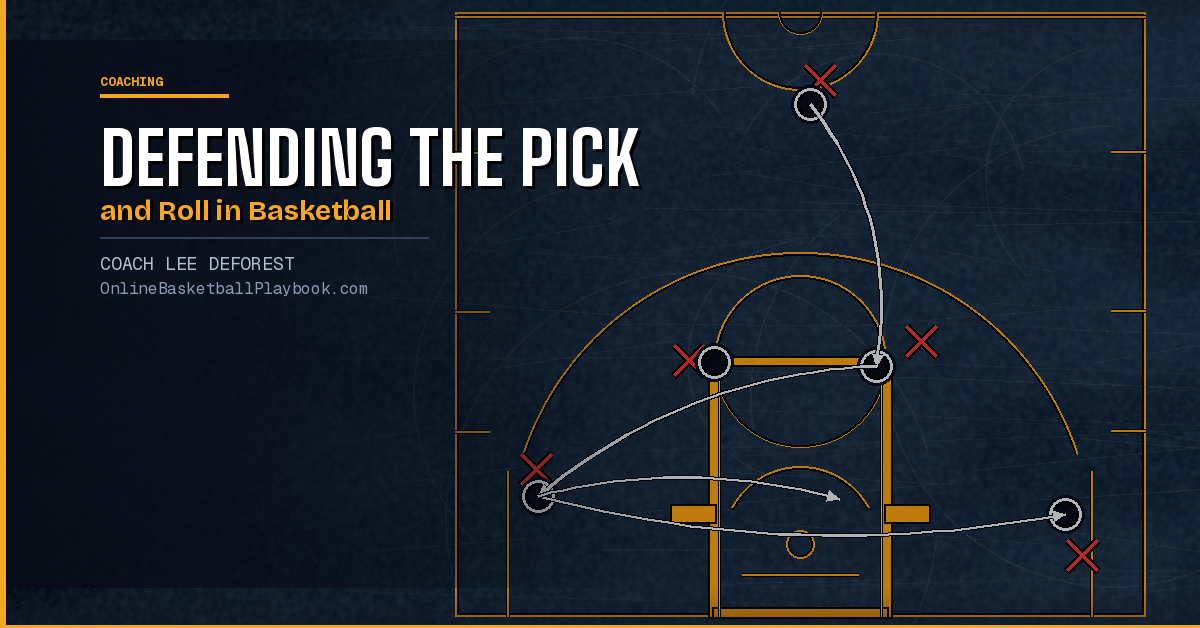
Understanding how to defend the pick and roll is just as important for developing complete players. Offensive players who know what defenders are trying to do will use screens far more effectively.
The Ball-Handler's Job
The ball-handler makes or breaks the pick and roll. Setting a great screen means nothing if the guard dribbles into trouble before the screen is even used. There are three things the ball-handler must do well.
Set Up the Defender First
Before using the screen, the ball-handler needs to take the defender in the opposite direction — one hard dribble away from where the screen is coming. This is called "setting up the screen," and it is the difference between a screener who gets his man and a screener who blocks air. A defender who sees the screen coming will simply step over or around it. A defender who gets taken away first has no time to react.
Read the Coverage
Once the ball-handler turns the corner off the screen, the read begins. Different defensive coverages demand different decisions. If the defending big steps high to cut off the drive (called a "hedge" or "show"), the ball-handler should attack the hedge and dump a pass to the rolling big behind him. If the defending big drops back into the paint, the ball-handler has an open pull-up jumper at the free-throw line. If the defense sends two defenders at the ball-handler (a "blitz" or "trap"), the ball-handler passes immediately to the open man on the perimeter.
This is where basketball IQ separates good players from great ones. The reads are not hard to understand in a classroom. Making them at full speed with a hand in your face — that takes repetition.
Attack Downhill
Hesitation kills the pick and roll. The ball-handler must get downhill — toward the basket — the instant the screen is set. Every half-second of delay allows the defense to recover. The best pick-and-roll guards attack so violently off screens that defenses are forced to make a decision before they are ready. That urgency is what turns a designed play into a real advantage.
The Screener's Job
The big man in the pick and roll is not a prop. He is a co-equal decision-maker whose reads are just as important as the ball-handler's.
Set a Legal, Hard Screen
An illegal screen — moving, no contact allowed, too wide — wastes a possession and kills the play's momentum. The screener must arrive with two feet planted before the defender reaches the screen. Feet should be wider than shoulder-width. Hands in, arms crossed or at the sides. Body square to the path the ball-handler is attacking. When the contact comes, the screener absorbs it rather than initiating — staying still is the difference between a charge and a legal screen.
Roll, Pop, or Slip
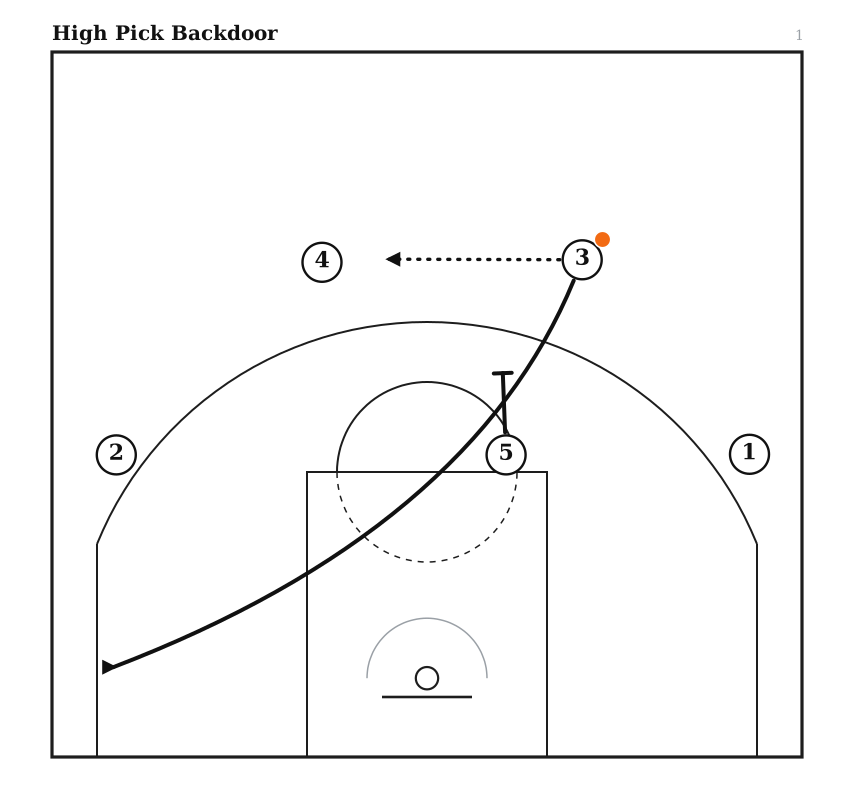
After the screen, the screener reads the defense. Against a high hedge, the best move is often to slip — releasing early, before full contact, and cutting directly to the basket before the coverage is set. Against standard coverage, the screener rolls hard to the rim, sealing his defender behind him and presenting a large target in the paint. In some systems, a shooting big will "pop" instead — stepping back to the three-point line where he can receive a kick-out pass and shoot. Which option fits depends on the player's skills, the defensive coverage, and what the offense needs in that moment.
"High hedge → automatic slip to the basket."
— Basketball Vault
Good screeners develop a feel for their defender's tendencies. A big who is always in the right place after setting the screen becomes one of the most valuable offensive players on the floor, even if he never touches the ball before the pass.
Why the Pick and Roll Is So Hard to Stop
The pick and roll puts the defense in a two-on-two situation that cannot be solved without tradeoffs. Every defensive coverage — hedge, drop, blitz, switch — concedes something. There is no perfect answer.
A hedge or show defense stops the drive but leaves the rolling big open in the middle of the paint. A drop coverage takes away the roll but allows a mid-range pull-up for the ball-handler. A full blitz forces a quick pass but leaves three offensive players against two scrambling defenders on the weak side. A switch eliminates the immediate advantage but creates a mismatch — typically a guard guarding a big, or a big chasing a guard on the perimeter.
Offenses that run the pick and roll well force the defense to commit to one answer — and then attack the weakness that answer creates. Teams that have a ball-handler who can shoot mid-range AND a rolling big who can finish at the rim force defenses to choose which one they will give up. If neither choice is acceptable, the defense has no good option.
This is why the pick and roll has survived decades of defensive evolution. It is not a trick. It is a structural problem for any defense, and it works at every level of the game. If you are building a motion offense, the pick and roll fits naturally as your primary scoring action, because it stretches the defense before the rest of the offense operates.
Common Variations
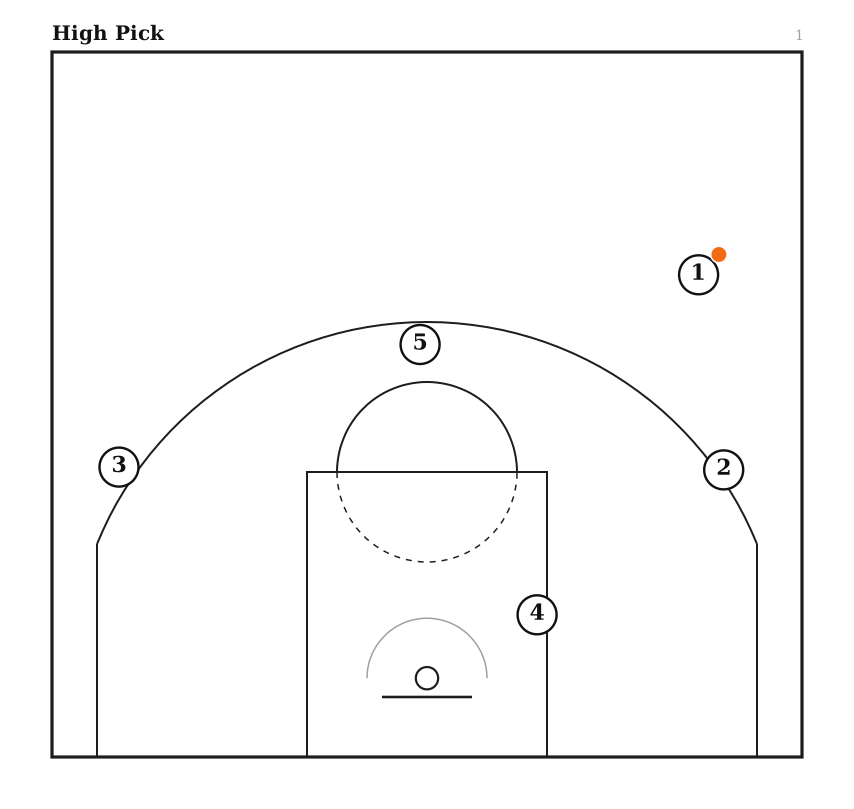
The standard pick and roll — ball-handler with the ball, big setting the screen at the top of the key — is just one version. Offenses at every level run several variations that change the angles, the spacing, and the reads involved.
Pick and Pop
Instead of rolling to the rim, the screener steps back to a shooting spot — usually the three-point line or the elbow. This works best with skilled shooting bigs who punish defenses that want to hedge. When a team has a roll man who threatens the pop, defenses that hedge the ball-handler suddenly have a man wide open behind the screen. The pick and pop is a natural evolution when defenses become too aggressive against the roll.
Side Pick and Roll
The ball-handler brings the ball up the side of the floor — wing or short corner — and the big sets the screen there instead of at the top. This changes the angles for both the ball-handler's drive and the defensive coverage. A side ball screen is particularly effective because the baseline acts as an extra defender, funneling the ball-handler one direction and making it harder for the defense to hedge without fouling.
Drag Screen
A drag screen happens in transition before the defense is set. The big sets a screen at half-court or just past it for the guard bringing the ball up the floor. Because the defense is still running back, there is less time to communicate a coverage. Drag screens are a staple of spread offenses that want to create early advantages before the defense can organize.
The Slip
A screener who senses early that the defense is switching or hedging will "slip" — cut to the basket before making full contact on the screen. The slip turns the pick and roll into a simple pass-and-cut. It is not a designed play so much as a screener's read, and it is one of the most effective counters to aggressive switching defenses.
Teaching the Pick and Roll
Players learn the pick and roll most effectively when it is broken into pieces and built back up — not run as a full play from day one.
Start with the screen. Make sure players understand legal screen technique: feet planted, body still, arms in. Run this without defense until the mechanics are automatic. Then add a passive defender who simply walks through the play. Only after the screening mechanics are clean do you add real defensive pressure.
Next, teach the ball-handler's reads in isolation. Set up three cones to represent the three coverages — hedge, drop, blitz — and have the ball-handler practice the correct response to each. Naming the coverages, recognizing them, and reacting to them needs to happen before you put five players on the floor and run the play at game speed.
For screener reads, repetition is everything. Put the big through roll-pop decisions based on where a single defender stands. He should be able to make that decision in under a second without thinking. When both the ball-handler and the screener are reading simultaneously, you have a functional pick and roll.
Include the pick and roll in your practice planning as a daily two-minute drill rather than a once-a-week set piece. Repetition under time pressure — not lecture — is what builds game-speed reads. Three minutes of pick-and-roll two-on-two every day will do more than a thirty-minute walkthrough on Mondays.
Youth players often run the pick and roll too slowly. Have guards dribble at full speed toward the screen during every rep — the urgency of getting downhill teaches the footwork and decision-making faster than any walkthrough can.
- Set up the screen: ball-handler takes defender away first, one hard dribble in the opposite direction before turning the corner.
- Screen mechanics: feet wider than shoulders, planted before contact, arms in, body still — moving screen is an immediate foul.
- Read the hedge: if the big steps high to show, attack the hedge and dump to the rolling big in the paint.
- Read the drop: if the big drops back, take the open pull-up at the free-throw line — that is the shot the drop gives you.
- Blitz response: get the ball out of the two-on-one immediately — one quick pass creates a four-on-three advantage on the weak side.
- Roll hard: the big must sprint to the rim after setting the screen, sealing his defender and giving the ball-handler a clear target in the paint.
- Screener's slip: if the defense is switching early, release before full contact and cut straight to the basket before the coverage is set.
Get free play diagrams, drills, and coaching guides delivered weekly.
See it drawn up
Related diagrams
Keep Building
Related breakdowns
Advanced Strategies for Defending the Pick and Roll in Basketball
Advanced Strategies for Defending the Pick and Roll in Basketball