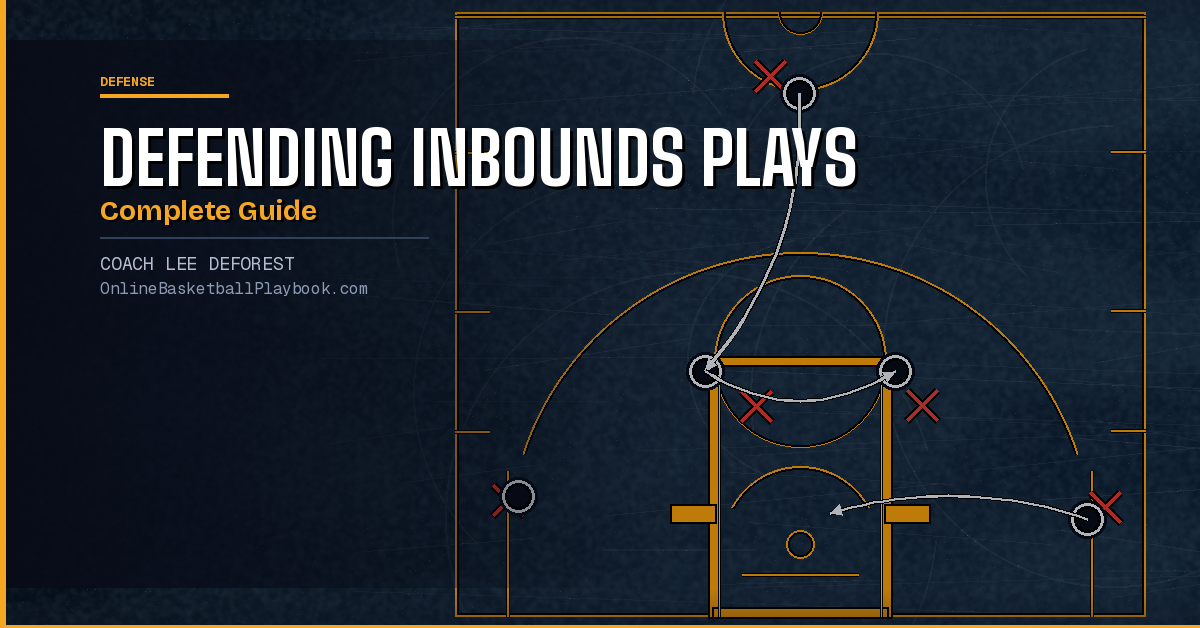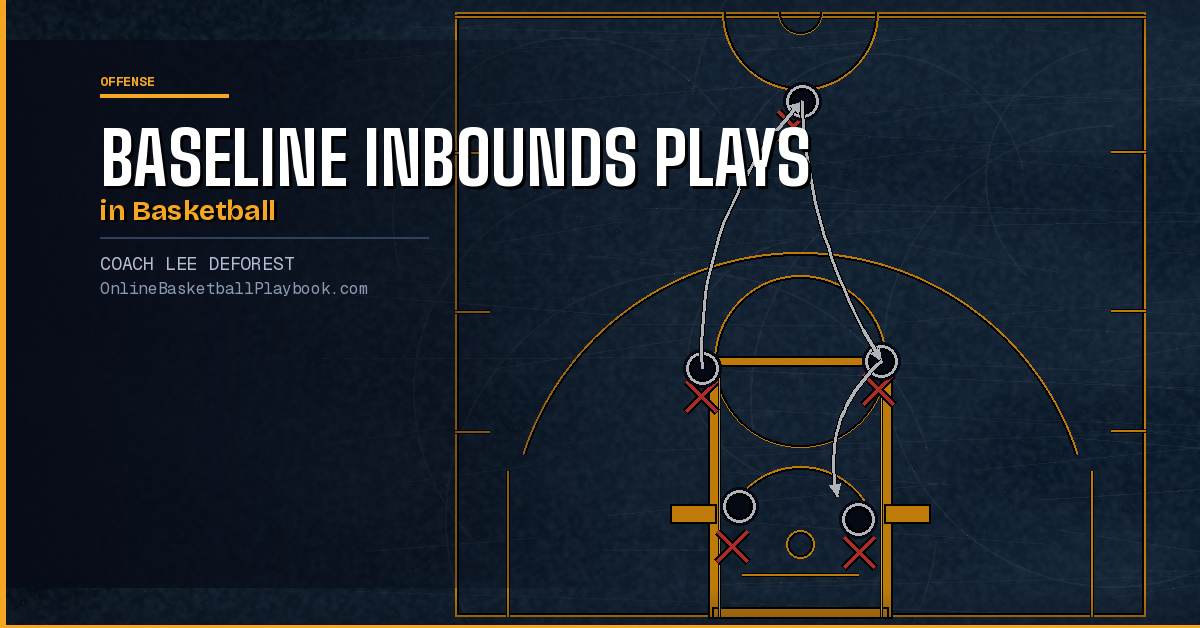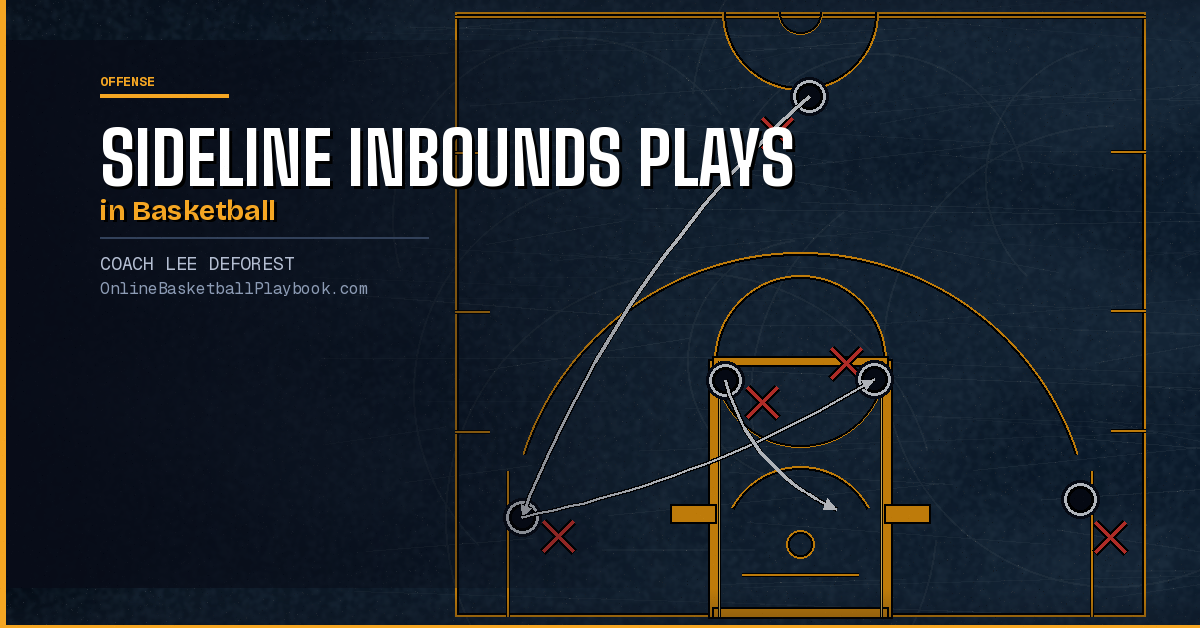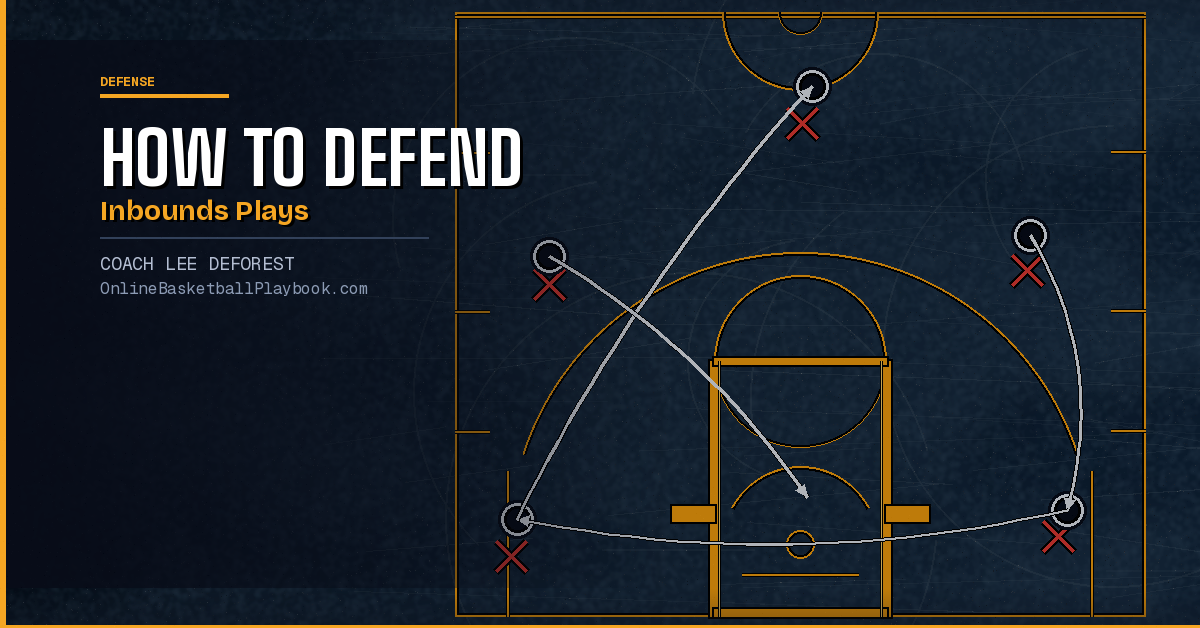

Inbounds plays are free-point opportunities for the offense — and most teams give them up without a fight. This guide covers how to defend baseline and sideline inbounds sets so your team stops the easy basket.
Why Inbounds Defense Matters
A lot of coaches spend hours building a man-to-man defense system, drilling rotations and help principles — then completely abandon that effort when the ball goes out of bounds. The offense gets a dead ball, time to set up a choreographed play, and five seconds to execute it. That is an enormous structural advantage.
Good offensive teams exploit inbounds situations relentlessly. They run stagger screens, back-screens, flare cuts, and decoy actions that look nothing like their regular halfcourt sets. Defenders who have not been coached on inbounds defense stand flat-footed, react to motion rather than anticipating it, and give up layups and open threes.
Defending inbounds plays is not a luxury — it is a critical piece of the defensive system. At every level of basketball, coaches who prepare their teams for baseline out-of-bounds (BLOB) and sideline out-of-bounds (SLOB) situations win more close games than those who do not. The five seconds before the pass comes in are just as important as the five seconds after.
The first step is understanding what the offense is trying to accomplish. Offensive teams want to free a shooter in the corner or wing, create a lob opportunity over the top, or get a mismatch near the basket via a screen. Once your players understand those three objectives, they can defend each one with a clear purpose rather than just scrambling.
Defending Baseline Out-of-Bounds (BLOB)
Baseline out-of-bounds sets are the most dangerous inbounds plays in basketball. The offense has a wide floor, two corners, a restricted lane, and a short distance to the basket. A single miscommunication on defense results in a layup or a corner three — both high-value shots.
Zone Look vs. Man Coverage
Many teams choose to defend BLOBs with a modified zone look rather than straight man-to-man. The reason is simple: screens are harder to fight through when the offense is packed near the baseline. A 2-3 or 1-2-2 zone alignment on a BLOB takes away the screened shot off the bat and forces the inbounder to look for a secondary option deeper in the shot clock.
However, zone coverage on BLOBs creates its own vulnerabilities — particularly on flare screens to the corner and pop actions for the inbounder after the pass. If you use zone principles, you must drill your perimeter defenders to sprint to the corners the instant the ball is inbounded so the corner three is not available. A 2-3 zone defense can be adapted for this purpose, but the wings need to understand their corner responsibility before the ball ever comes in.
Man-to-Man BLOB Defense
In straight man coverage, each defender is responsible for their player from the moment the referee hands the ball to the inbounder. No switching until the ball is in play — switches before the catch create seams at the worst possible moment. Your defenders should be in a closed stance, with their chest facing their man, not the ball. Too many players watch the inbounder and lose track of the cutter. The cutter is the threat. The inbounder has no choice but to make a legal pass.
Deny the first cutter aggressively. On most BLOB sets, the primary option moves first — a shallow cut to the ball or a curl off a screen. If your defender can take that option away cleanly, the inbounder is forced to a secondary or tertiary look, and now the clock is working against the offense. Five seconds goes fast when the primary option is eliminated.
Defending the Back-Screen on BLOBs
The back-screen to a lob is the most common BLOB action at every level. A screener sets a back-screen on a baseline defender, the cutter slips to the dunker spot or above the block, and the inbounder lobs over the top. The counter is communication. The defender being screened must call "screen" so the back-line defender can step up and cut off the lob lane. This requires two defenders working together in less than two seconds — which is exactly why it needs to be practiced, not assumed.
"Own the micro-situations. Jump ball (tipper reverse-pivots wide, tip to a big, immediate hit-ahead for a layup/alley-oop); free-throw-for-offensive-rebound (screen the box-out man, slip behind, cover the long board); BLOB stagger cuts to drag defenders to the corners then a deep dive. Most youth teams concede these for free."
— Basketball Vault
Defending Sideline Out-of-Bounds (SLOB)
Sideline out-of-bounds plays are most dangerous in the frontcourt, particularly near the three-point line or the elbow. These are the situations where offensive teams use ATO (after-timeout) sets to get their best shooter a catch-and-shoot opportunity or to run a ball screen into a pull-up jumper.
Pressure the Inbounder
Unlike BLOB defense, where pressuring the inbounder can leave your team exposed to back-cuts, SLOB defense benefits from putting a hand in the inbounder's face. A contested inbound pass forces the inbounder to look away from his first read, buys time for your defense to set up, and can cause a five-second call if the pass windows are denied aggressively.
The defender on the inbounder should not simply stand flat — he should move along the baseline or sideline, mirroring the inbounder's movement, to reduce passing angles. At the same time, this defender must not over-commit and foul. The goal is disruption, not desperation.
Taking Away the Primary Option
On SLOB sets run after a timeout, the offense has just received a full scouting report on your defense and designed a specific action to beat it. Your job is to take away the primary read. Most ATO SLOB plays are built around a shooter coming off a down-screen or a ball handler catching a hand-off at the elbow. Identify your opponent's best shooter and deny him the catch. If the inbounder cannot deliver the ball to that player within the first two seconds, the play is already off-script.
This kind of preparation — knowing who the opponent wants to get the ball to — is a product of scouting and high basketball IQ from your players. Spend time in film sessions showing your team what SLOB sets they will see from upcoming opponents. Players who can anticipate will always be a step ahead of players who are only reacting.
Switching vs. Fighting Through Screens
On SLOBs with multiple screens, coaches must choose a coverage. Switching eliminates the delay of fighting through the screen but creates potential mismatches — particularly if a small guard ends up on a posting forward. Fighting through screens preserves matchups but requires the trailing defender to be in good enough position to recover before the catch. There is no universally correct answer. The right choice depends on your personnel. What matters most is that your players know the rule before the ball goes out of bounds — make the call in the huddle during the stoppage, not after the inbound pass.
Individual Defensive Keys
Even the best scheme breaks down if individual defenders do not execute the fundamentals. Inbounds defense requires each player to do their job without relying on help from teammates — because the help may not arrive in time.
Stance and Vision
Every defender on an inbounds play should be in a low, active stance. Weight on the balls of the feet. Eyes on the man, not the ball. The ball is going somewhere — your job is to be ready when it gets there. Flat-footed defenders are a step slow on the first cut, and one step is often all the separation a shooter needs.
Peripheral vision is the key skill here. Good inbounds defenders maintain awareness of both their man and the general location of the ball without turning their head. This comes from repetition. Run your shell drill with specific emphasis on maintaining proper vision angles on dead-ball situations, and your players will develop the habit naturally.
No Free Releases
The worst thing a defender can do on an inbounds play is give a free release — letting the offensive player choose his own path to the catch without any resistance. Body position on the cut matters enormously. If a cutter wants to go baseline, force him to the middle. If he wants to curl, take away the curl. Make every cut a compromise.
This principle connects directly to help defense principles — the same concepts that govern your halfcourt defense apply on inbounds plays. No free catches. No free releases. Force the offense to earn everything.
Closing Out After the Catch
When a defender's man catches the inbound pass, the closeout is the next critical moment. Sprint to close the gap, chop steps in the final two feet, hand up, and no reach. A bad closeout on an inbounds catch gives a shooter a rhythm jumper from the spot where the play was designed to get them. High-speed recovery after the catch is what separates good inbounds defenders from average ones.
Inbounds defense is one of the most under-practiced areas in youth basketball. Dedicating even five minutes per practice to BLOB and SLOB defensive coverages will produce measurable results within a few weeks — especially in close games where these situations decide outcomes.
End-of-Game Inbounds Defense
Late-game inbounds defense is its own discipline. The offensive team has a clear objective — score quickly or get to the free-throw line — and they will use their best designed play to accomplish it. The defensive team must be organized, disciplined, and composed under pressure.
Foul or Defend?
The first question in late-game inbounds situations is whether to foul intentionally to stop the clock. This is a game-management decision that depends on score, time remaining, and how many fouls are available. When the decision is to defend, your team needs complete clarity on the coverage — no ambiguity about who is switching, who is fighting through, and what happens if the ball goes to the corner.
No Lay-Ups, No Threes
The guiding principle for end-of-game inbounds defense is simple: no layups and no open threes. A contested mid-range shot is the best outcome for the defense. Everything else — a lob, a driving lane, a catch-and-shoot three — is a failure. Communicate this priority to your players before the ball is inbounded so they understand where to focus their defensive energy.
This is also where your preparation as a coach pays off. If you have scouted the opponent's late-game ATO sets and shown your players what they are likely to run, your defense will be positioned correctly before the action starts rather than reacting to it. Transition defense principles apply here too — know where the dangerous spots are and get there first. For a deeper look at containing fast-break opportunities that can follow an inbounds turnover, review transition defense principles alongside your inbounds preparation.
Defending the Five-Second Clock
One of the most overlooked tools in inbounds defense is the five-second violation. If your defenders can deny every pass option simultaneously, the inbounder runs out of time. This requires coordinated denial from all four defenders — and it works best against teams that have one clear primary option. If you can take away the primary option with a hard denial, the secondary and tertiary options are often less dangerous, and you can afford to be aggressive.
The risk is that one defender breaks too early to help and leaves a cutter open. Discipline is the difference. Every defender must trust that their teammates are holding their assignments while they hold theirs.
How to Build This Into Practice
Inbounds defense does not develop in games — it develops in practice. Teams that are organized and confident in these situations did not figure it out on the fly. They drilled it. Here is how to build inbounds defense into your regular practice structure without sacrificing time on other priorities.
Five-Minute Daily Block
Reserve five minutes at the start of each practice for special situations. Rotate through BLOB defense one day and SLOB defense the next. Use live five-on-five reps with a clear objective: the defense must get a stop or force a five-second call. This makes the drill competitive, creates accountability, and mirrors the game environment. Over the course of a season, your team will accumulate dozens of quality reps without it ever feeling like a significant time investment.
Teaching Through Film
Pull clips of your next opponent's inbounds sets and show them to your team in a brief film session before practice. Players who understand what play is coming will execute the correct defense with more confidence than players who are learning it for the first time live. Keep the film session short and specific — show two or three plays, identify the coverage, and go practice it.
Scenario Drills at End of Practice
End-of-game inbounds scenarios belong at the end of practice, when players are mentally fatigued — because that is when they will encounter them in games. Set up a specific scenario: down two, five seconds left, opponent inbounding under their own basket. Run it three times. Debrief after each rep. This kind of contextual practice builds the composure that shows up when the game is on the line.
Connecting these special situations to your broader basketball practice plan ensures they are not treated as afterthoughts. Put them on the practice schedule with the same intentionality as your transition defense, shell drill, and offensive flow work. The teams that win close games are almost always the teams with better situational preparation — and inbounds defense is one of the clearest examples of that principle.
- Call your BLOB or SLOB coverage in the huddle during the stoppage — players must know the scheme before the referee hands the ball to the inbounder
- Deny the primary cutter aggressively; take five seconds away from the inbounder by eliminating his first read
- On back-screen lob actions, the screened defender calls "screen" so the help defender can cut off the lob lane
- No free releases — use body position to force every cut to a compromise direction rather than the cutter's preferred path
- End-of-game priority: no layups, no open threes; accept a contested mid-range shot as a defensive win
- In switching coverages, make the call before the ball is live — ambiguity mid-play creates the exact seam the offense is looking for
Get free play diagrams, drills, and coaching guides delivered weekly.
Keep Building
Related breakdowns