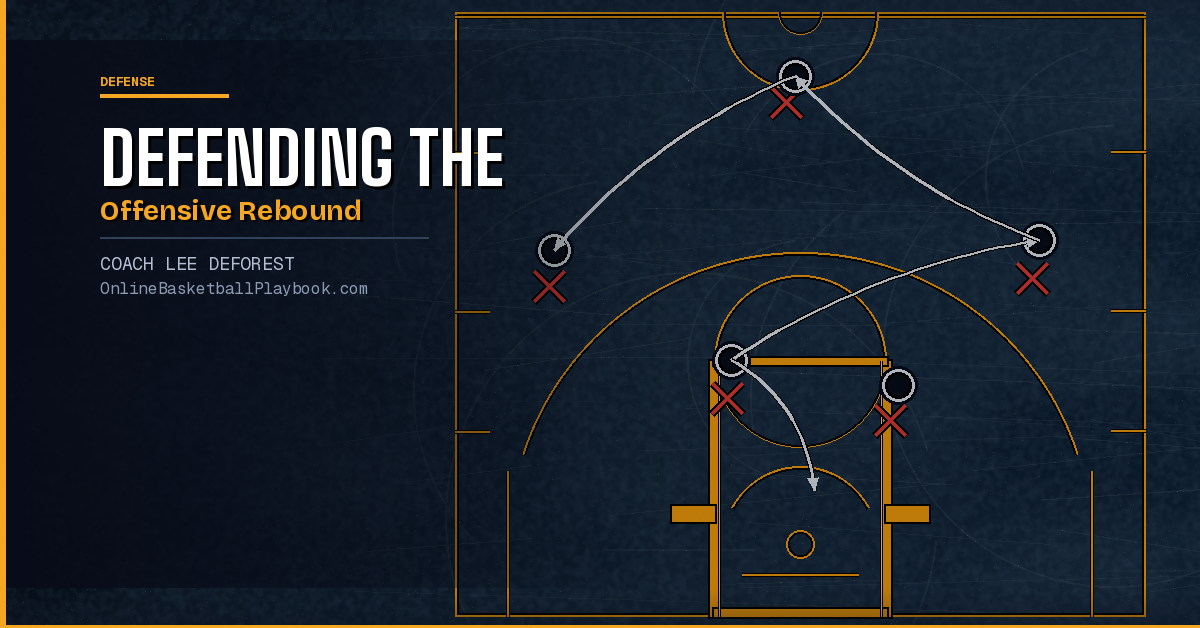

Offensive rebounds are the most preventable source of second-chance points in basketball. Every missed shot is a battle for position that starts before the ball leaves the shooter's hand. Winning that battle is a system, not an accident.
Why Defensive Rebounding Decides Games
Look at any lopsided loss and you will almost always find one statistic: second-chance points. Offensive rebounds extend possessions, shift momentum, and—critically—they reward sloppy defensive rebounding rather than brilliant offensive execution. A team that allows ten offensive rebounds in a game is giving the opponent roughly four to six extra possessions. At the high school level, where average possessions per game hover around sixty, that is a ten percent bonus for the offense without them earning a single stop.
The data at every level of the game tells the same story. Elite defensive rebounding teams consistently allow offensive rebound rates under 20 percent. The national average in college basketball runs between 28 and 32 percent. That gap represents the difference between a program that controls games and one that is always reacting to the other team's energy.
More than any stat, defensive rebounding is a reflection of effort and attention. Players who fail to box out are not always lazy—they are often untrained. They watch the shot, they guess the angle wrong, or they simply do not know their assignment in the team rebounding scheme. Teaching this skill correctly changes the numbers fast. You will see improvement in the first week if you drill it with purpose.
For coaches building a man-to-man defense, defensive rebounding is the final phase of every defensive possession. Your pressure, your rotations, and your closeouts all lead to one moment: the shot goes up. What your five players do in that moment defines whether you actually got the stop.
Box-Out Fundamentals Every Player Must Know
The box-out is not complicated, but it demands timing, physicality, and repetition before it becomes automatic under pressure. Players who learn the footwork correctly can out-rebound opponents who are physically stronger. Position beats athleticism on most rebounds.
The Moment the Shot Goes Up
Every player on the floor must react to one cue: the moment the shooter's elbow begins to extend. That is when box-out assignments kick in. Waiting to see whether the shot goes in costs you half a second—and half a second is all an offensive rebounder needs to get a step on you.
When the shot goes up, your first job is to find your man. Not the ball. Your man. Then step into him, make contact, and secure your position. The sequence is: find — contact — hold. Players who skip directly to watching the ball lose their man and allow the crash.
Footwork: The Reverse Pivot
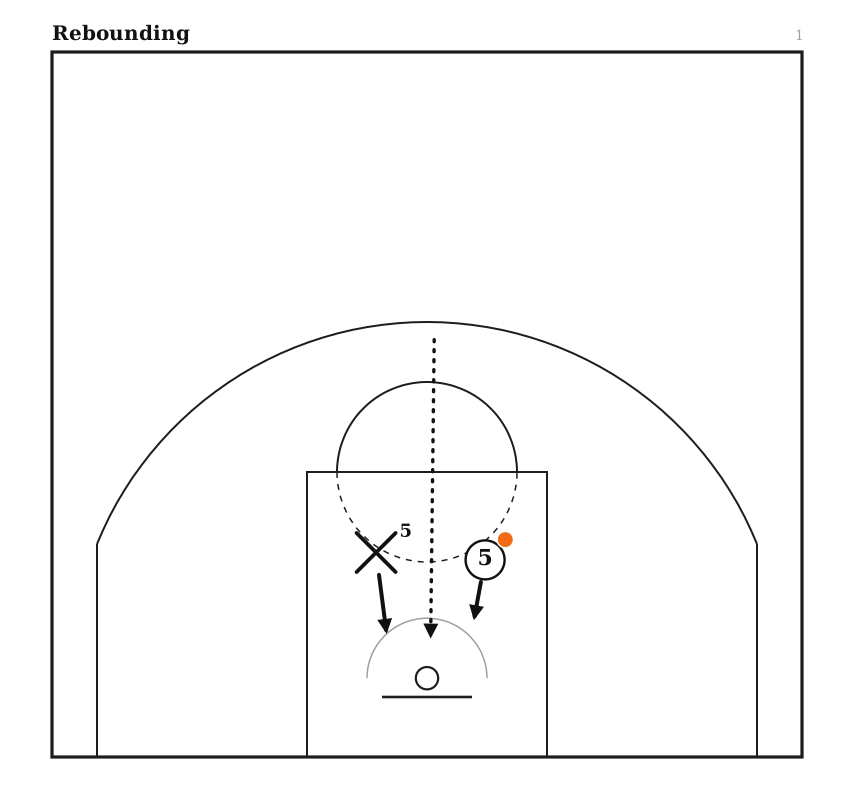
The most reliable technique for boxing out on the perimeter is the reverse pivot. As the shot goes up, pivot on your inside foot and swing your outside foot through to turn and face the basket, landing your backside into your opponent's hip or thigh. Your arms stay wide, elbows out. Your feet are wider than shoulder-width to create a broad base that cannot be undercut.
Do not cross your feet during the pivot. A crossed-foot base collapses the moment the offensive player applies any lateral pressure. Keep feet wide, knees bent, and your center of gravity low. You are not trying to knock anyone over—you are simply claiming territory.
The Contact Rule
Referees allow incidental contact on the box-out. What they penalize is a moving pick or a push. The legal position requires that you initiate contact while moving toward the basket, not laterally chasing a player who has beaten you to a spot. If you are chasing a player sideways, you have already lost the box-out. The correction happens earlier, at the moment of the shot.
Teach players to feel their opponent through their back. Once contact is made, they should sense which direction the offensive player pushes and mirror that pressure. If the offensive rebounder pushes right, the defender drops the right foot and widens. Defenders who hold a static position get spun around. Defenders who react to pressure maintain position.
Hands and the Chin Rule
Once position is secured, hands come up to chin height with elbows wide. This accomplishes two things: it keeps the defender ready to catch the ball cleanly, and it protects against having arms trapped by an offensive rebounder who reaches over the top. Do not let players box out with their arms at their sides—they will get arm-barred and pulled away from position.
Building a Team Defensive Rebounding System
Individual box-out technique means nothing if five players are each doing something different. A team defensive rebounding system assigns responsibility, covers the weak-side crash, and accounts for the outlet pass before the rebound is even secured.
Assigning the Four Box-Out Roles
A simple starting point: the three players nearest the paint own the three box-out positions under the basket, and the two perimeter defenders box out the shooters or crash-zone attackers on their side. In man-to-man defense, the assignment is your man—wherever he goes when the shot goes up, you go with him. That clarity eliminates the decision-making delay that creates open offensive rebound lanes.
In zone defenses like the 2-3 zone, box-out assignments shift to areas rather than individual players. Each zone defender owns a rebounding zone, not a person. The danger is that two offensive players can enter one zone on a crash, and both can get behind one zone defender. Coaches running zone defenses need to drill two-on-one box-out situations specifically, because they occur on almost every missed shot.
The Weak-Side Crash Problem
The single most common source of offensive rebounds is the weak-side crash. A shooter fires from the right wing. The ball kicks left. The weak-side offensive player who stayed wide on the perimeter takes two hard steps to the baseline and beats the help-side defender to the ball because that defender rotated to block a driving lane rather than tracking their box-out.
The solution is a specific assignment rule: when the shot goes up, the weak-side perimeter defender does not help on a drive. Their job is done. Their only job is to find the nearest offensive player on their side and box out. This means the drive-help assignment actually ends at the moment of the shot, not after it. Coaches must teach this rule explicitly or players will keep hedging toward the basket and abandoning the weak-side crasher.
The Long-Rebound Rule
Missed three-pointers produce long rebounds that come off the back of the rim at a wide angle. Most teams box out under the basket but leave the top of the key and the elbows unprotected on deep misses. Assign one perimeter defender—usually the guard who was nearest the three-point line—to be the "long rebound" defender. Their box-out position is not at the paint but at the free-throw line extended, ready to corral the ball that kicks back toward half court.
Defending Teams That Crash Hard
Some offenses are built specifically to attack the offensive rebound. Motion offenses, particularly 5-out motion systems, train all five players to crash the glass on every shot. When you face a team that sends four players to the glass on every miss, your defensive rebounding system will be stressed in ways a standard scheme cannot handle.
Screening the Box-Out
Crash-heavy offenses often use a specific tactic: one offensive player sets a screen on the box-out itself, freeing a teammate to crash the lane unchallenged. The counter is communication. When a defender gets screened on the box-out, a teammate must call "screen!" and rotate to pick up the freed crasher. This is exactly the same help concept used on ball screens—it just happens in the rebounding phase instead of the ballhandling phase.
You cannot teach this help rotation without drilling it. Run situations in practice where one offensive player sets a deliberate box-out screen and the defense must communicate and recover. Ten reps of a live situation teaches this faster than any explanation.
Sending a Rebounder to the Offensive Glass
When you face a team that crashes relentlessly, consider sending one of your own perimeter players to the offensive board on certain possessions. This is not typical defensive advice, but it serves a tactical purpose: the offensive team cannot send four crashers if one of their guards has to stay home and guard your rebounder. You trade a potential defensive rebound chance for a positional concession from the offense. Some coaches use this specifically in end-of-game situations when the opponent has a clear offensive rebound advantage.
Adjusting Ball Screen Defense for Rebound Situations
How you guard ball screens affects who is in position to rebound when a shot goes up. Defenses that switch every screen often leave the biggest defenders out at the three-point line guarding guards—far from the paint when a shot goes up. If your team is getting killed on the offensive glass, audit your pick-and-roll defense first. Switching schemes can create systematic rebounding mismatches that are not obvious until you chart where your bigs are when shots are taken.
"Constrain to coach the diet. Rules force behavior."
— Basketball Vault
Drills to Teach Defensive Rebounding
Defensive rebounding must be drilled in live, contested situations. Players who only practice box-out technique in shell drills—no live ball, no contested catch—develop false confidence. When a real offensive crasher applies pressure, the technique breaks down because it was never trained under resistance.
The Continuous Box-Out Drill
Three offensive players stand at the three-point line. Three defensive players are inside them. A coach shoots the ball from the free-throw line. Defenders must box out and secure the rebound. Offense scores a point each time they get a tip or catch. Defense scores a point each time they secure a clean rebound and outlet. Play to seven. This is a competitive, scored drill—and that scoring structure matters. When there is something at stake, players learn faster.
The 4-on-4 Shell Rebound Drill
Run a standard shell drill and add a live rebounding phase at the end. The offense passes around the perimeter and at a designated signal, a coach fires a shot. All four defensive players must locate and box out their man. The offense earns a point for any second-chance touch. Defense earns a point for every clean possession-ending rebound. Track the score over the course of a ten-minute session and watch how fast players improve when they see the number.
The Superman Box-Out Drill
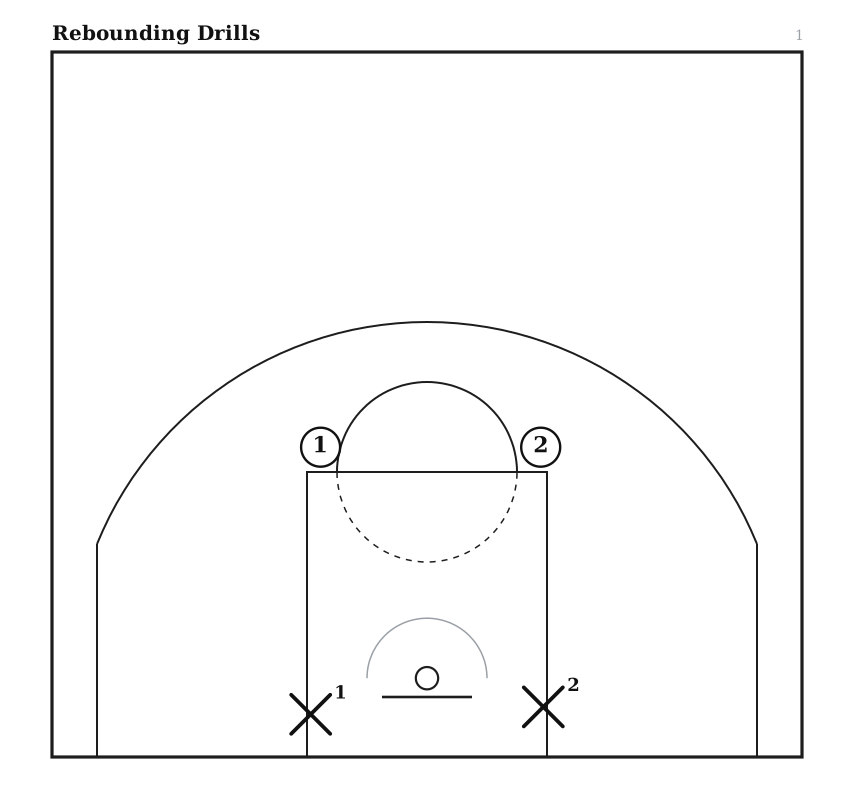
One defender. One offensive player directly behind them. A coach shoots the ball. The defender must find the offensive player, establish contact, and secure the rebound without letting the offensive player touch the ball for three seconds. Then they switch. This is a one-on-one conditioning and technique drill that builds the physical confidence needed to hold position against a charging crasher. It also develops the habit of feeling for the offensive player rather than watching the ball.
Fast-Break Conversion After the Rebound
End every rebounding drill with the outlet pass. Rebounding that does not convert to offense is a habit that keeps your team in the half court. When a defender secures the rebound, they should immediately look to outlet to the nearest guard. If the primary outlet is covered, they look to the secondary. Drilling the outlet pass at game speed inside every rebounding drill builds the transition mentality that turns defensive stops into easy baskets. This directly connects to your fast break system.
Converting the Rebound into Transition Offense
Defensive rebounding is not just about stopping second-chance points—it is the trigger for your best offensive possessions. A team that secures the defensive rebound quickly and outlets immediately before the offense can set up their transition defense will get a numbers advantage on the other end far more often than any designed play can generate.
Outlet Positioning
Guards who understand their role in transition defense know where to be when the shot goes up on the other end. But on their own defensive end, they should be positioned near the sideline at the free-throw line extended the moment a shot is taken. That is the outlet target zone. A defender who secures a rebound and looks up to find a guard wide open at the sideline can outlet immediately and push the pace before the offense recovers.
Guards who are still running back from their defensive assignment when the rebound is secured force the rebounder to hold the ball or dribble, which lets the opposing team get numbers back. Teach guards to read the shot arc during the possession—before the ball even reaches the rim—so they are already moving to their outlet position when the ball comes off.
The Two-Second Rule
Once the rebound is secured, the ball should be out in two seconds or the transition advantage is lost. Every second a player holds the ball on the defensive end allows the opposing team to set up their defense. Drill this timing explicitly. Have a coach count out loud in early-season practices so players develop a visceral sense of urgency. Two seconds feels very short until you have practiced it hundreds of times.
Understanding this transition conversion phase also ties directly into your transition defense on the other end—because what you do after your team scores a basket mirrors exactly what the opponent does after they secure a defensive rebound. Studying both ends teaches players the full picture of how possessions flow.
Most offensive rebounds happen not because the defense failed to box out, but because someone assumed a teammate had the assignment. Establish clear verbal cues—"shot up," "box," "ball"—and drill them until they happen automatically on every possession in practice, not just in rebounding-specific drills.
- React to the shot, not the result. Box out the moment the shooter's elbow extends—do not wait to see if it goes in.
- Find your man first, the ball second. Locate your assignment before you track the flight of the ball.
- Wide base, elbows out, chin-height hands. These three positions protect your space and prepare you to catch cleanly.
- Communicate on box-out screens. Call "screen!" when you get picked off so a teammate can rotate to the freed crasher.
- Weak-side guard: your job changes at the shot. Stop helping on drives and go directly to your box-out assignment.
- Outlet in two seconds. Any longer and the transition advantage disappears—drill this timing in every rebounding session.
- Score the drills. Tracked, competitive rebounding drills build habits that unkept drill work never does.
Get free play diagrams, drills, and coaching guides delivered weekly.
See it drawn up
Related diagrams
Keep Building
Related breakdowns
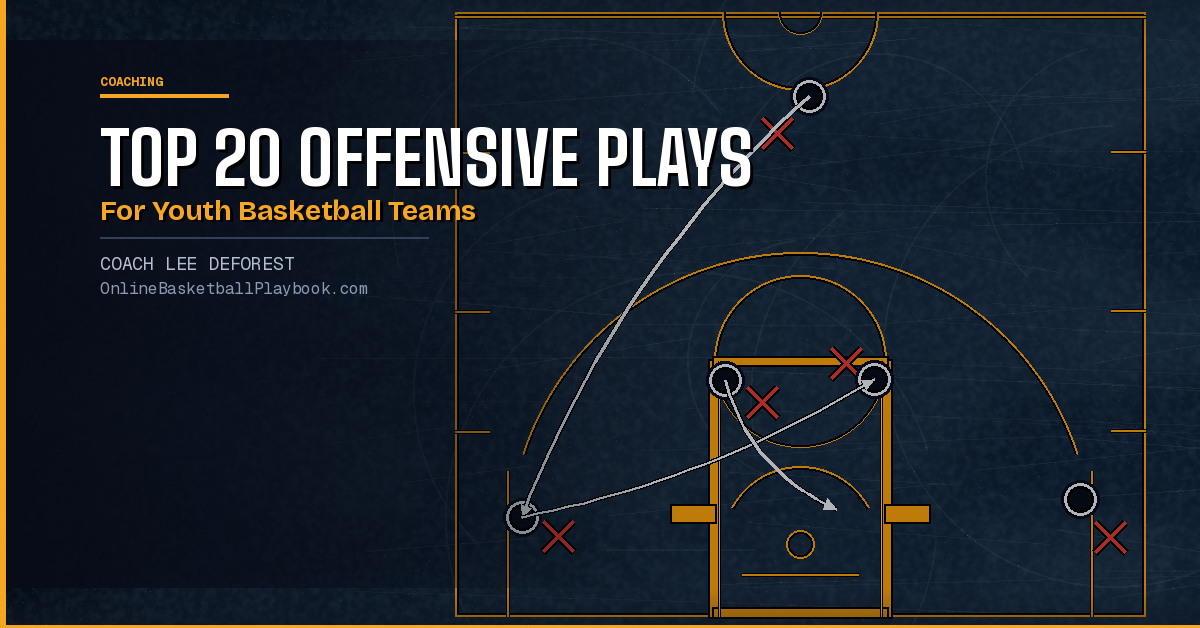
Top 20 Offensive Plays for Youth Basketball Teams
Top 20 Offensive Plays for Youth Basketball Teams
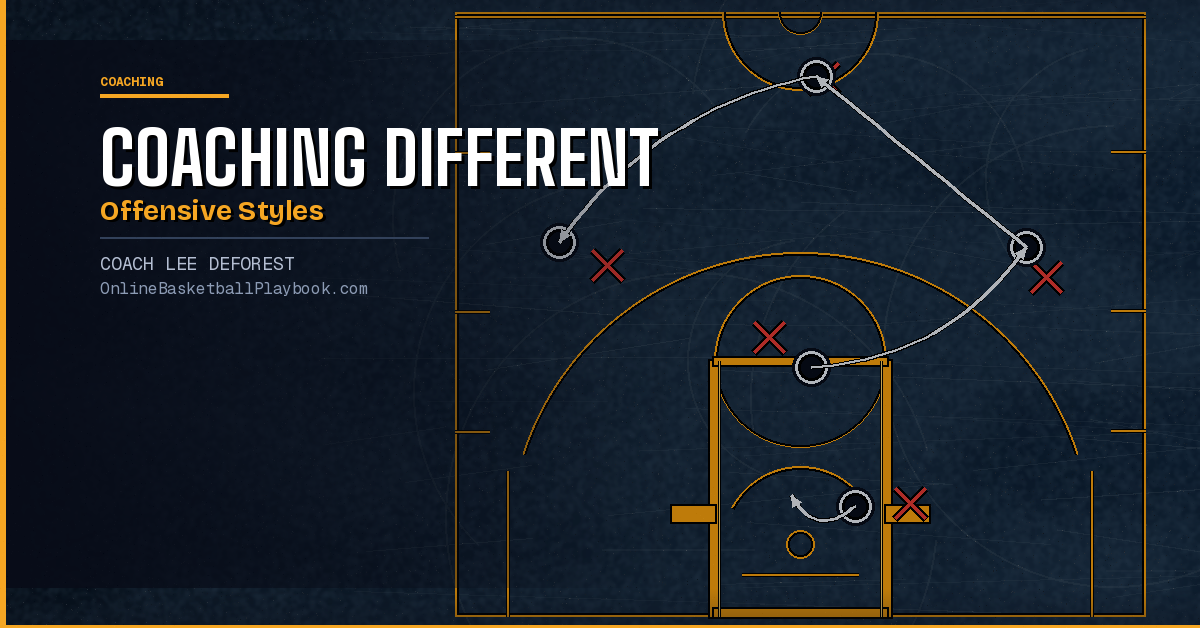
Strategies for Coaching Different Offensive Styles
Strategies for Coaching Different Offensive Styles