
Defensive pressure turns average teams into panicked ones. This guide teaches players and coaches how to stay calm, make quick decisions, and attack pressure with purpose — whether it's a full-court trap or tight on-ball defense.
Why Defensive Pressure Works
Defensive pressure is designed to do one thing: speed up your decision-making until you make a mistake. A coach who dials up a full-court press defense is betting that your players will rush passes, pick up their dribbles early, or panic in the backcourt. Nine times out of ten, pressure wins not because the defense is perfectly set up, but because the offense wasn't prepared to handle the speed.
The mechanics of how pressure creates chaos are worth understanding. When a defender closes out tight on the ball handler, it narrows the passing lanes. When two defenders trap a corner, the ball handler has exactly two seconds to read the floor before a five-second call looms. When a team applies diamond press schemes with denial coverage on both sides, the offense must have practiced their reads or they'll fold. The mental side of pressure is just as real as the physical side. Players who haven't been drilled under game-speed pressure will freeze, and a frozen player is as good as a turnover.
Pressure also feeds on itself. One bad turnover in the backcourt leads to an easy basket, which leads to more press, which leads to more turnovers. Teams that don't have a structured response to pressure often find themselves down double digits before the first timeout. The solution is not simply to "calm down" — that's advice without teeth. The solution is to train specific reads, spacing rules, and footwork patterns so players have automatic responses when pressure comes.
Understanding what the defense wants to take away is the first step. Most pressing defenses want to funnel you toward the sideline, toward the corners, or into a trap at half court. Once your players understand the trap is coming, it stops being a surprise and starts being an opportunity. A well-spaced offense against a full-court press actually has numerical advantages — five defenders can't cover five offensive players across the full court. The key is recognizing those advantages and executing.
Footwork Fundamentals Against Pressure
Footwork is where handling pressure starts. You cannot think your way out of a trap at game speed — your feet have to already know what to do. The most common footwork errors under pressure are picking up the dribble too early, turning your back to the defense, and losing your pivot foot. All three turn potential plays into turnovers.
The first rule is to stay low and keep the dribble alive as long as possible. A player who picks up the dribble in the backcourt against a trap has just made the defense's job easy. Keep the ball moving, use change-of-pace dribbles, and buy time for teammates to get open. Ball handling drills that simulate pressure — two defenders on one dribbler, time limits, confined spaces — build the muscle memory that shows up in games.
The pivot foot is the second critical element. When a ball handler picks up the dribble, their pivot foot becomes the only legal tool left to create passing angles. Coaches should drill post-trap pivoting: catch, stop, pivot toward the middle, locate the open man. The pivot should be a quick, sharp movement — not a slow rotation that gives the defense time to recover and cut off passing lanes.
Footwork for receiving passes under pressure matters just as much. Players catching the ball against pressure should use a jump stop or a two-foot catch to maintain both pivot options. A one-foot catch that commits you to a single pivot can get you trapped immediately. Teaching players to "catch in triple threat" — balanced, low, both feet planted — under pressure situations changes how quickly they can move the ball after receiving it.
Agility work ties directly into pressure handling. The basketball footwork drills that develop lateral quickness — defensive slides, drop steps, crossover footwork — also build the body control needed to maintain balance when a defender is in your face. Balance is the organizing principle. Every rep should return a player to a balanced, eyes-up position. That balance, even against the hardest closeout or the tightest trap, is what allows a composed read and a confident pass or drive.
Reading and Attacking the Trap
The trap is the most aggressive weapon in any pressing defense's arsenal, and it has a specific weakness: when two defenders commit to trapping the ball, three offensive players are guarded by three defenders. That is a matchup your offense can exploit — but only if players know where to look.
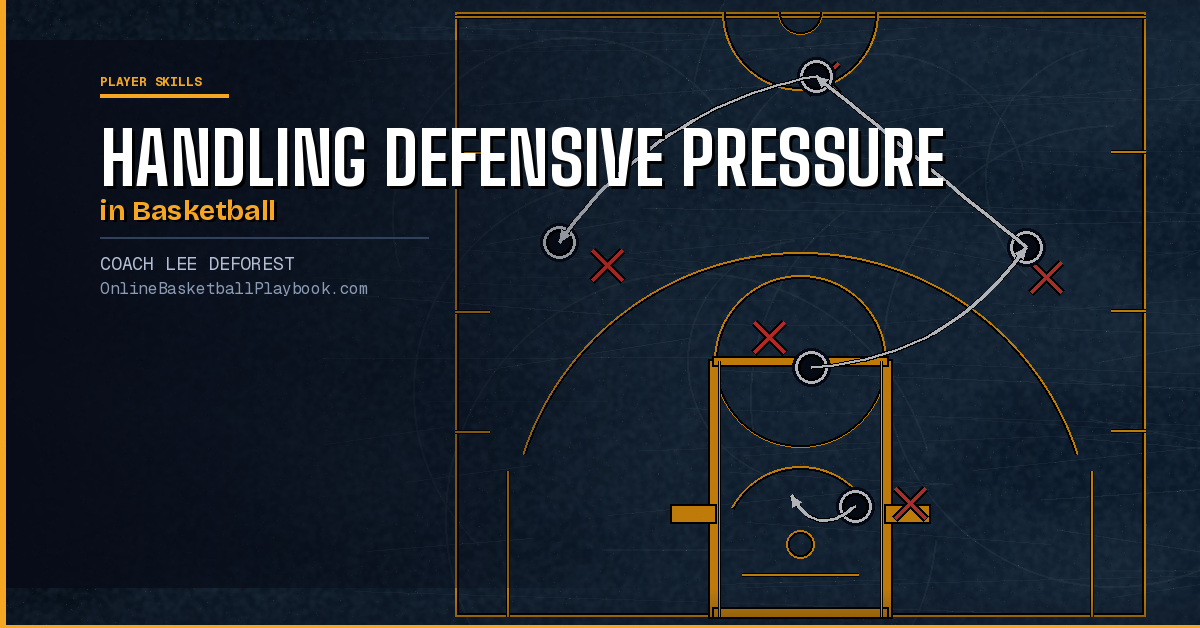
Teach your players to read the trap in layers. The first read is the "outlet" — the nearest teammate who can receive a quick pass to relieve pressure. That player should be within ten feet, positioned so the trapped ball handler can turn and hit them without lobbing the ball over a defender. The second read is the "skip" — a player on the far side of the floor who is left open because both defenders collapsed on the trap. The skip pass is often where the real advantage lives, but it requires the ball handler to keep their vision up and the receiver to be ready to catch and attack immediately.
The third read is the "middle man" — the player stationed at the free-throw line area or the center of the court. Against most pressing schemes, the middle of the floor is a vulnerable spot. A patient ball handler who can get the ball to the middle player breaks the press almost every time. Once the ball hits the middle, the numbers advantage is clear and the offense can push into the frontcourt before the defense recovers.
Attacking the trap also means being willing to dribble out of it. Against a zone-based trap like the 2-3 zone defense adjusted into a press, the seams between defenders are real. A quick hesitation dribble followed by a hard drive through the gap between the trappers is legal and effective. Players need to know this option exists — too many ball handlers assume a trap means the dribble is dead.
"The more you dribble in practice, the less you dribble in the game."
— Basketball Vault
Spacing and Off-Ball Movement
Handling pressure is a five-man job. The ball handler gets the attention, but the other four players determine whether the press breaks down or holds up. Off-ball spacing under pressure is one of the most neglected areas in youth and high school basketball, and it's why so many teams struggle against even a basic half-court trap.
The first rule of off-ball movement against pressure is to stay out of the congested areas. If the ball handler is trapped in the corner, the last thing teammates should do is crash toward the corner to help. That clogs the only passing lanes available. Instead, off-ball players should spread to open areas — the middle of the court, the opposite wing, or the near elbow — and give the ball handler a clear look.
Movement timing matters as much as positioning. Off-ball players who move too early telegraph where they're going, giving the defense time to rotate. Off-ball players who move too late leave the ball handler with no option. The right timing is reading the trap as it forms and making one decisive cut to an open space — not multiple hesitant movements. Decisive cuts against pressure work. Hesitant drifting does not.
Teams running any structured offense — whether a motion offense or a set half-court system — should have built-in rules for press situations. The press break is not just a separate play; it's an extension of your spacing principles. Every player should know their responsibility when the ball is picked up, when it's trapped, and when the trap is beaten. If those rules exist and players have drilled them, the press becomes an opportunity rather than a crisis.
Ball Handling Under Pressure
Ball handling is the physical skill underneath everything else in this article. A player who cannot keep their dribble alive against an aggressive on-ball defender, or who double-dribbles under the stress of a trap, cannot execute any of the reads above. Ball handling under pressure is a trainable skill, and it deserves dedicated practice time separate from regular dribbling drills.
The change-of-pace dribble is the most effective tool against tight on-ball pressure. Defenders key off your speed — when you dribble at one pace for an extended stretch, they time their steal attempts to that rhythm. Breaking rhythm with a sudden slowdown followed by an explosive burst forward gets defenders off balance. The hesitation move (knee up, pause, then attack) works on the same principle: make the defender think you've stopped your drive, then go by them when their weight shifts back.
The crossover and between-the-legs dribble are standard tools, but they need to be practiced at game speed and under fatigue. A two-ball dribbling routine — eyes up, ball in each hand, alternating between straight dribbles and crossovers — builds the ambidextrous handle that makes it hard for defenders to funnel you toward your weak hand. Most defenders can stop a right-hand-dominant player by simply overplaying to the right. A player who can go either direction with equal confidence takes that option off the table.
The body fake is an underused weapon. Rather than a wide crossover that moves the ball away from the body, the body fake keeps the ball in front and uses shoulder movement to shift the defender's weight. This is particularly effective against close-out defenders who are looking to cut off a drive. The fake creates just enough hesitation to open the baseline or the middle of the lane.
Conditioning is the underrated part of ball handling under pressure. Skills that work when you're fresh fall apart when you're tired in the fourth quarter and a team throws a surprise press. Incorporating ball handling into conditioning drills — dribble slides, full-court speed dribbles, two-ball work at the end of practice — builds the ability to make clean decisions when the body is fatigued. A basketball conditioning drills program that integrates skill work prepares players for those exact moments.
The best way to prepare players for defensive pressure is to put them under it every single practice. Designate at least one drill block per session to live pressure reps — two-on-one traps, full-court five-on-five press, or guarded dribble gauntlets — so the game environment never feels foreign.
How to Train Pressure Situations
Understanding concepts is step one. Repetition under competitive conditions is what actually changes how players perform when a press or trap comes in a real game. Your basketball practice plan should include structured pressure reps at least three times per week during the season.
The most effective drill framework uses progressive constraints. Start with a one-on-one dribble pressure drill — defender applies full-court pressure, ball handler must advance the ball past half court without picking up their dribble. Add a time limit and keep score. Then expand to two-on-two, where the ball handler has one outlet option. Then three-on-three with a designated trap zone. By the time you run five-on-five press break, every player has lived through the pressure in smaller doses and knows their read.
Constraint-based training adds another layer. Restrict the ball handler to only their weak hand for a full possession. Require every pass out of the trap to be a skip pass to the far side. Run a possession where no dribble is allowed past the trap — only passing. These constraints force players to develop the reads and spatial awareness that real pressure demands, but in a controlled environment where mistakes are learning opportunities rather than turnovers that cost games.
Film review of pressure situations is worth the time investment at the varsity level. Showing players exactly where the defensive scheme creates a numbers advantage — and where your offense failed to exploit it — accelerates learning more than repetition alone. A fifteen-minute film session before running press break drills gives players a map for what they're about to practice.
For younger players working on their overall development, the fundamentals of staying calm, keeping the dribble alive, and making one decisive read are enough to start. Basketball player development at the youth level should prioritize confidence under pressure over complex scheme recognition. A young player who stays composed and makes a simple outlet pass to a teammate has already done the hard part. The complex reads come later, once the foundation is solid.
Coaches should also track how their team responds to pressure over the course of a season. Count live-ball turnovers per game, note which areas of the court pressure is most successful against your team, and adjust your practice reps accordingly. If your team consistently struggles with sideline traps in the backcourt, run more reps of that exact scenario. Data-driven practice is efficient practice.
- Keep the dribble alive — never pick up the ball early against pressure; stay low and use change-of-pace to buy time for teammates to get open
- Read the trap in layers: first look for the outlet, second look for the skip pass to the far side, third find the middle man at the free-throw line
- Off-ball players must spread away from the trapped area — congesting the ball side eliminates passing lanes and hands the defense an easy stop
- Use the body fake and hesitation dribble to break a defender's rhythm before attacking; don't rely on the same move twice in a possession
- Train pressure situations under fatigue — incorporate dribbling and decision-making into conditioning so skills hold up in fourth-quarter situations
- Assign clear press-break responsibilities so every player knows their role before the ball is even inbounded; ambiguity under pressure becomes turnovers
Get free play diagrams, drills, and coaching guides delivered weekly.
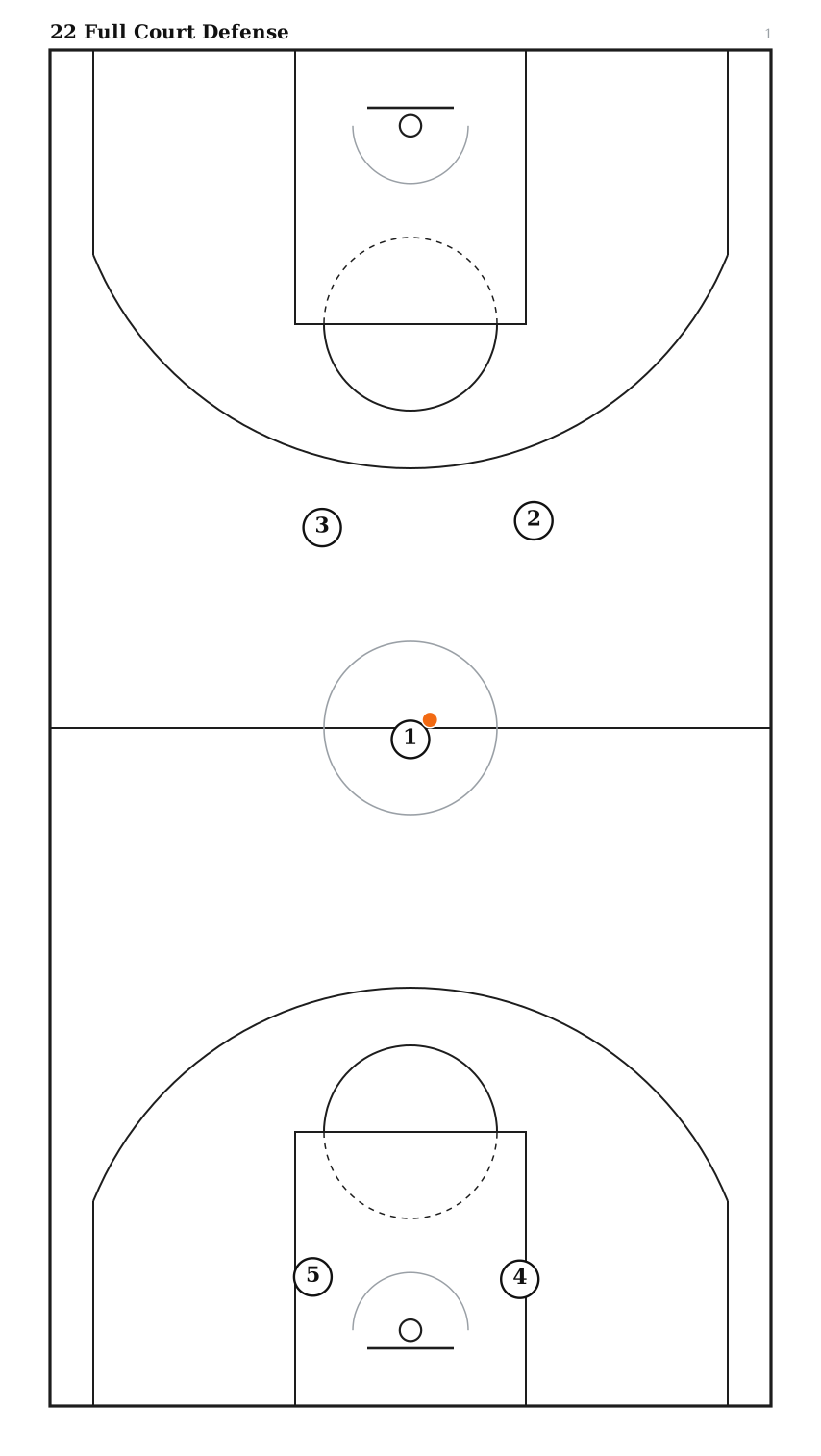
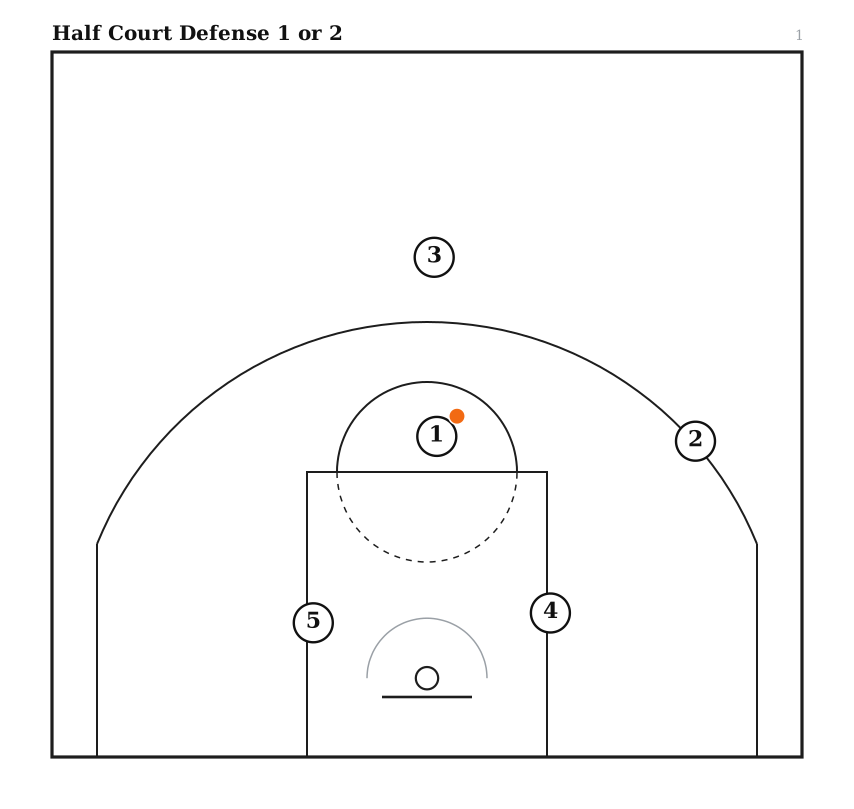
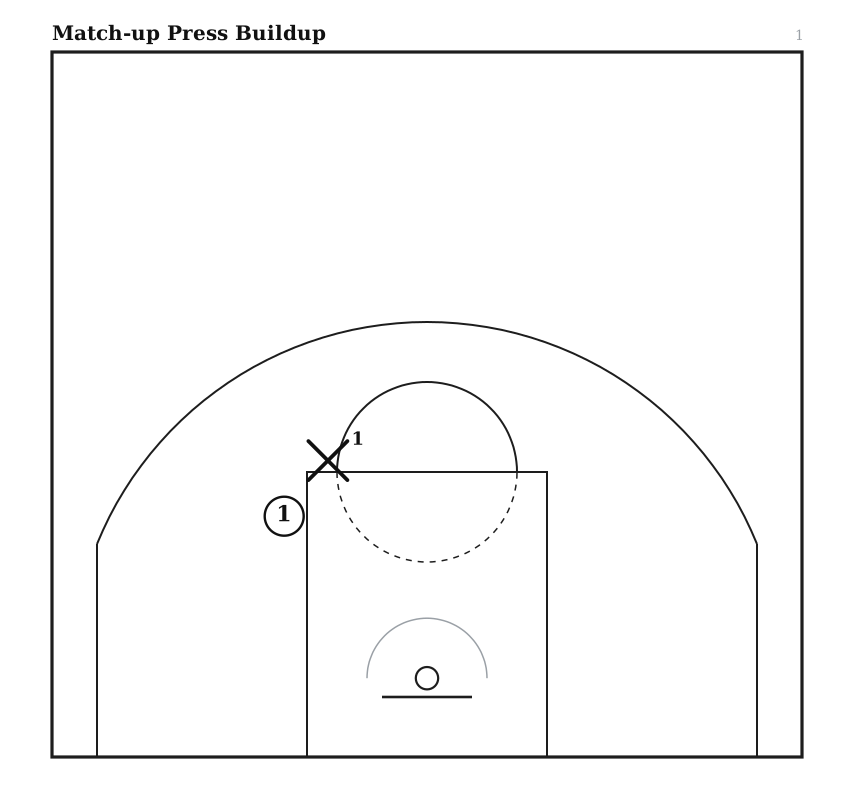
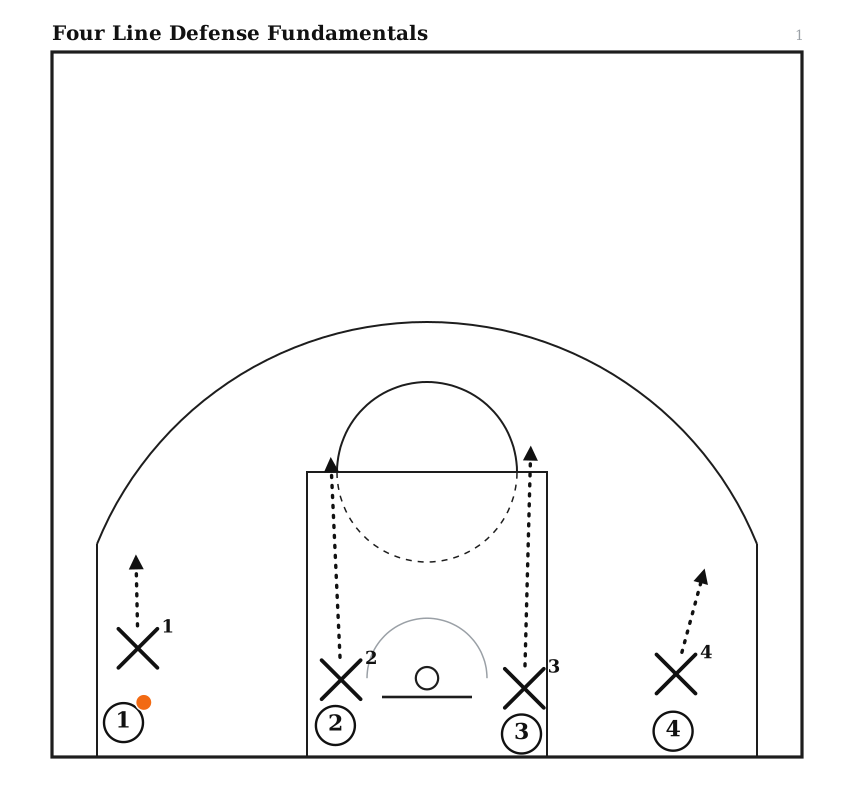
See it drawn up
Related diagrams
Keep Building
Related breakdowns
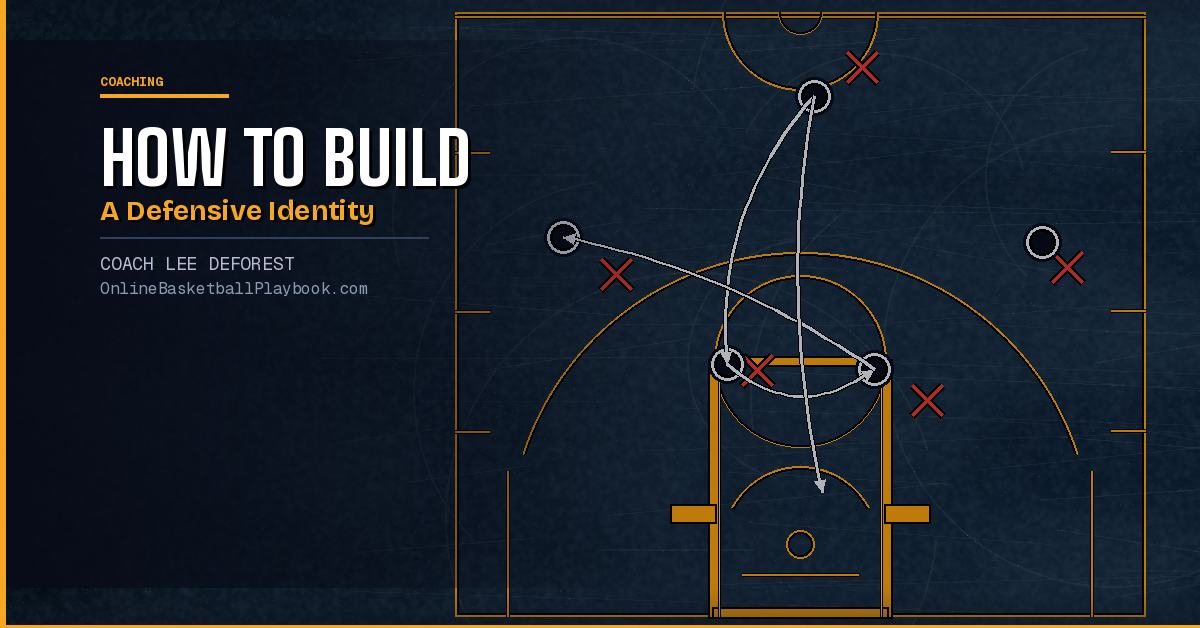
How to Build a Defensive Identity for Your Team
How to Build a Defensive Identity for Your Team