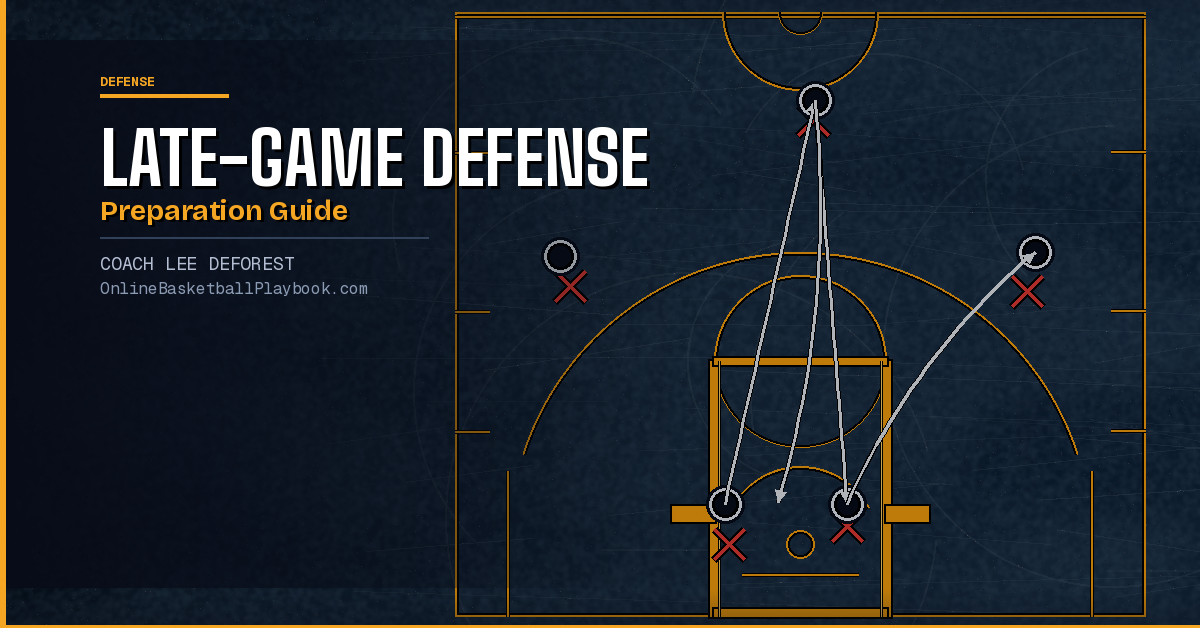

Late-game defense wins or loses championships. When the clock winds down and the margin is thin, every possession demands execution, composure, and clear defensive rules your players already know cold.
Why Late-Game Defense Is Different
Most defensive breakdowns in the final two minutes of a game aren't physical failures — they're mental ones. Players who have executed your defensive system correctly for 36 minutes suddenly second-guess themselves when the moment gets big. They gamble for steals when they shouldn't. They lose their man on a back screen because they're watching the clock. They commit a careless foul on a non-shooting situation and send the trailing team to the free throw line.
Late-game defense demands a different level of attention to detail, and that detail starts with how you train your team during practice. The situations, rules, and responses that players execute in the final two minutes aren't improvised — they're habits built over thousands of repetitions. If you haven't rehearsed defending a down-two scenario with 45 seconds left, don't expect your players to figure it out under pressure.
The best defensive teams treat the last two minutes of a close game as a separate phase of basketball with its own set of principles. They know the foul count. They know which opponent can't make free throws. They know exactly when to extend pressure and when to stay disciplined in their base coverage. That awareness is a product of coaching and preparation, not instinct alone.
Good help defense principles become even more critical late in games, when offensive players are more deliberate, spacings are cleaner, and every drive to the basket is calculated to draw contact. Your players need to know how to protect the paint, contest without fouling, and communicate through every screen and cut.
Building Your Defensive System Before the Final Minutes
You can't separate late-game defense from the defensive system you build all season. Teams that defend well at the end of games defend well from the opening tip — the late-game situations simply reveal whether the habits are real or superficial.
Start by establishing a clear defensive identity. Whether you build around man-to-man principles, zone looks, or a hybrid pressure package, your players need to own that system deeply enough to apply it under stress. Man-to-man defense built on correct footwork, positioning, and communication gives you the most flexibility late in games because you can adjust individual matchups, hide weak defenders, and apply targeted pressure.
The whole-part-whole teaching model applies directly here. Show your players the complete defensive system, break it into drillable segments — one-on-one footwork, two-on-two ball-screen coverage, four-on-four shell — and then reassemble those pieces in five-on-five settings. When you add game-condition constraints like shot clocks, score differentials, and foul counts to those five-on-five sessions, you're building the exact preparation your team needs for the final two minutes.
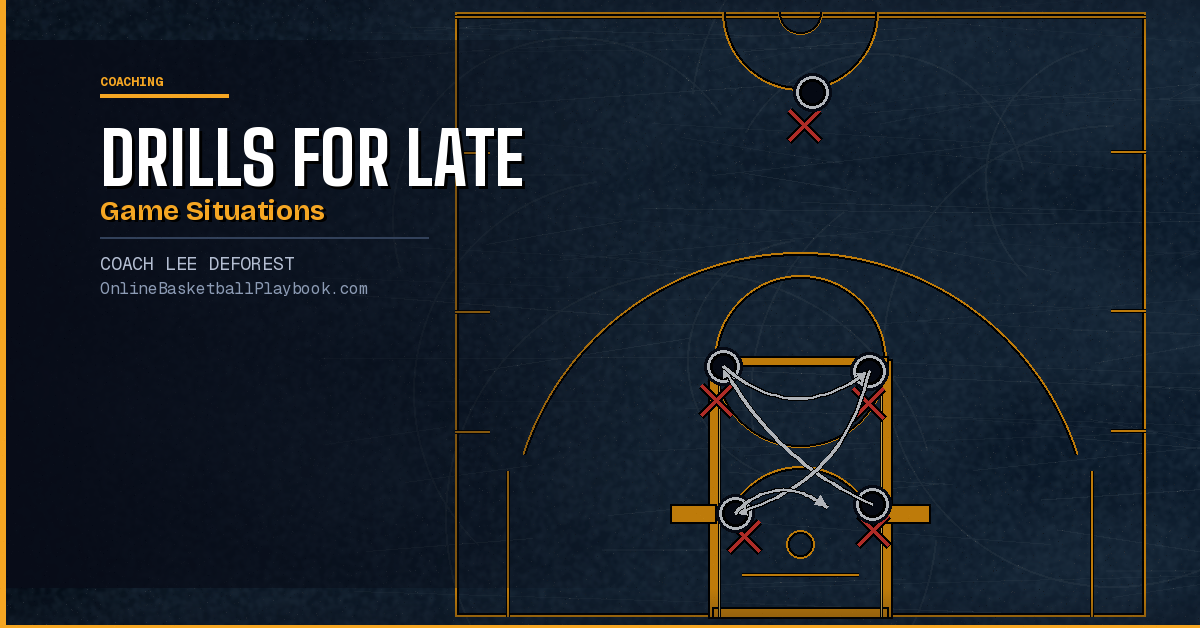
The shell drill is one of the most efficient tools for building this foundation. A well-run shell drill teaches ball-side denial, help positioning, rotation responsibility, and communication — all of the building blocks that hold up when the game is on the line. Run your shell drill with defensive rules that mirror your late-game coverage: no gambling, no reaching, high hands on every contest.
Scouting and preparation specific to your opponent also matter here. Identify their late-game tendencies — who holds the ball in crunch time, who hunts free throws, which players are likely to inbound under pressure. That information should be baked into your game plan and communicated clearly before your team ever takes the floor.
Defending the Lead: Rules, Rotations, and Fouling Decisions
When your team holds a lead in the final minutes, your defensive priority shifts. You are no longer just trying to create stops — you are trying to eliminate easy baskets, control the clock through defensive positioning, and force the trailing team to execute under pressure. Every possession they use without scoring brings you closer to the win.
Establish clear team rules for this phase of the game. Most coaches operate on the principle that no foul is worth committing on a non-shooting player when you hold a lead late. This seems obvious until a player dives for a steal with 90 seconds left, sends the opponent to the line, and gives them cheap points plus the ball back. Train your players to stay disciplined, keep their hands high and away from contact, and trust the system to generate stops without gambling.
Rotation responsibility becomes heightened in late-game coverage. On any drive or post entry, your weakside help needs to arrive on time — not late, not guessing. The principles underlying your rotation scheme (protect the paint, close out under control, trust your teammate to help) are the same principles you've drilled all year. Late-game situations simply demand they be executed perfectly rather than adequately.
The fouling-or-not-fouling question is one of the most mismanaged aspects of late-game defense. If your team leads by three with under 30 seconds and the opponent has possession, the standard rule is clear: do not foul, keep them in front of you, and force a difficult shot. If they hit a three to tie, you go to overtime — but a foul that sends them to the line for two free throws and a possession is often worse. Walk your players through these scenarios explicitly so the decision doesn't become emotional in the moment.
Late-Game Scenarios and How to Defend Them
Every late-game defensive situation has a structure, and your players should understand the rules for each one. Here are the most common scenarios you need to rehearse.
Down One or Two — Must Stop
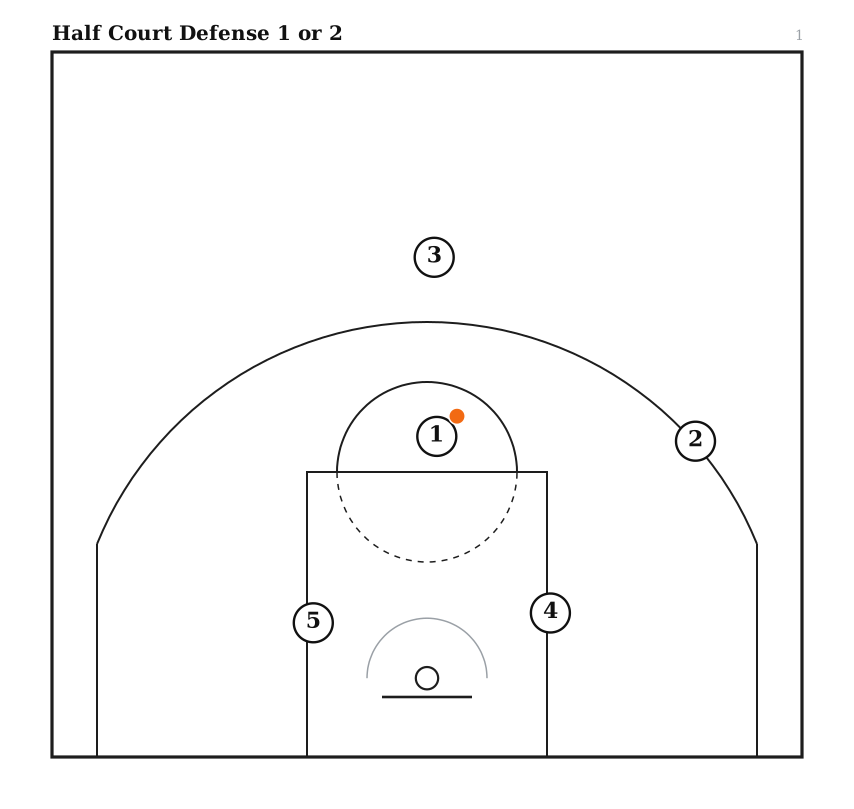
When you trail by one or two and need a stop, your defense has two goals: don't give up an easy basket, and force a miss or turnover quickly enough to get the ball back with time remaining. In this situation, pressure on the ball-handler is justified — you need to force a difficult shot or a turnover. However, gambling for steals on off-ball defenders is still dangerous. Assign ball pressure to your best on-ball defender and keep your other four players in their assigned positions.
Defending Inbounds Plays
Inbounds plays at the end of the game are a specific skill set. Study basketball inbounds plays your opponents run in late-game situations and assign your best individual defenders to their best finishers. Communicate switches clearly — most late-game inbounds goals scored come from miscommunications on baseline screens, not defensive breakdowns by one player acting alone.
Three-Point Lead With Under a Minute
This is the scenario that creates the most confusion. Leading by three with under 60 seconds, many teams don't know whether to foul or play straight defense. The analytics on intentional fouling to prevent a tying three are debated, but at most levels below the NBA, the cleaner approach is to force a tough two, allow the free throw if necessary, and manage the clock. Your players need a clear rule so no one is making that decision independently in the moment.
Pick-and-Roll Coverage in Late-Game Situations
Pick-and-roll actions increase in frequency late in games. Offensive coaches design their late-game sets to put your best on-ball defender in a coverage decision — hedge, drop, switch, or blitz. Your coverage rules for defending the pick and roll should be consistent with what you've practiced all season, modified only if the matchup demands it. Switching creates mismatches; dropping can allow open mid-range shots for good shooters; hedging requires precise rotation from the big who helps. Know your coverage, drill it, and communicate it clearly before the game starts.
Practice Drills That Prepare Players for Late-Game Pressure
There is no substitute for simulating late-game conditions in practice. Your players need to experience the pressure, the time constraints, and the decision-making demands in a low-stakes environment so those habits are automatic when the stakes are real.
The most effective format is a two-minute drill run from specific score and possession scenarios. Set the score to "down two, team A has the ball, 90 seconds left." Run the drill live — offense trying to protect the lead, defense trying to generate a stop and score. Debrief immediately after each possession: what was the assignment, what happened, what should have happened. Repetition with immediate feedback is how late-game habits get built.
Closeout drills are essential preparation for late-game defense, particularly against teams that space the floor and hunt threes in crunch time. Train your players to sprint the first two-thirds of the closeout, decelerate into choppy steps, and contest with high hands — not jumping into the shooter or flying past them. A blown closeout in the final 30 seconds that results in a corner three can erase a four-possession lead.
Free throw defense positioning is another undercoached skill. In the final minute with multiple fouls to give, your players need to know where to stand during opponent free throws to optimize rebounding position while covering potential long rebound outlets. Review your rebounding alignment and practice it under pressure as part of your late-game preparation. Strong rebounding drills that incorporate positioning can be adapted to include late-game free throw scenarios.
Finally, run defensive transition drills that account for the pace of late-game possessions. Trailing teams push pace; your defense needs to get back quickly and organize without allowing runouts. Transition defense principles — sprint back, stop the ball, identify your man — apply with even greater urgency when a layup in the final 20 seconds seals a loss.
"Steal off the ball, not on the ball."
— Basketball Vault
Communication and Composure Under Pressure
The defensive breakdowns most visible in late-game situations — a missed rotation, a blown switch, an unchallenged three — almost always begin with a communication failure. Someone didn't call the screen. Someone didn't confirm the switch. Someone assumed their teammate was there and didn't look.
Communication on defense is a skill, and it must be coached deliberately. In practice, require your players to talk on every rep — call out the screen, confirm help, announce the switch before it happens, not after. Make verbal communication a non-negotiable standard in your drills, especially your closeout and ball-screen coverage work. The habits formed in a quiet gym at 3 p.m. on a Tuesday are the habits that show up when 2,000 fans are screaming in the fourth quarter.
Composure is equally important. Players under late-game pressure tend to speed up — their footwork deteriorates, they stop communicating, they make reactive decisions rather than trained ones. Part of your coaching responsibility is teaching your players to slow down mentally while the game speeds up around them. Controlled breathing, deliberate footwork on closeouts, and verbal cues to teammates are all composure habits that can be trained.
Building the mental side of late-game defense is part of a broader investment in basketball IQ development. Players with high basketball IQ understand the score, the foul situation, the opponent's tendencies, and their own assignment simultaneously — and they execute correctly under pressure because that situational awareness is a trained habit, not a talent. Build it across your entire roster, not just your starters.
Every late-game scenario your team might face — defending a three-point lead, stopping an inbounds play, switching a pick-and-roll with ten seconds left — should be rehearsed in practice with real time pressure before your team ever encounters it in a game. Preparation converts panic into execution.
- Establish clear no-foul rules for specific lead-and-time situations before the game, not during it.
- Drill closeouts daily — sprint two-thirds, chop into the shooter, contest with high hands and no jump unless necessary.
- Run two-minute defensive scenarios in practice with real score and possession conditions to build late-game habits.
- Require verbal communication on every defensive rep — calls must happen before the action, not after the breakdown.
- Assign your best on-ball defender to the opponent's primary ball-handler in crunch time, and build your defensive rotations around protecting that matchup.
- Review free throw defensive positioning and long-rebound coverage as a separate late-game skill set.
- Know your pick-and-roll coverage rules and commit to them — inconsistency in coverage creates confusion and allows skilled opponents to exploit seams.
Get free play diagrams, drills, and coaching guides delivered weekly.
See it drawn up
Related diagrams
Keep Building
Related breakdowns
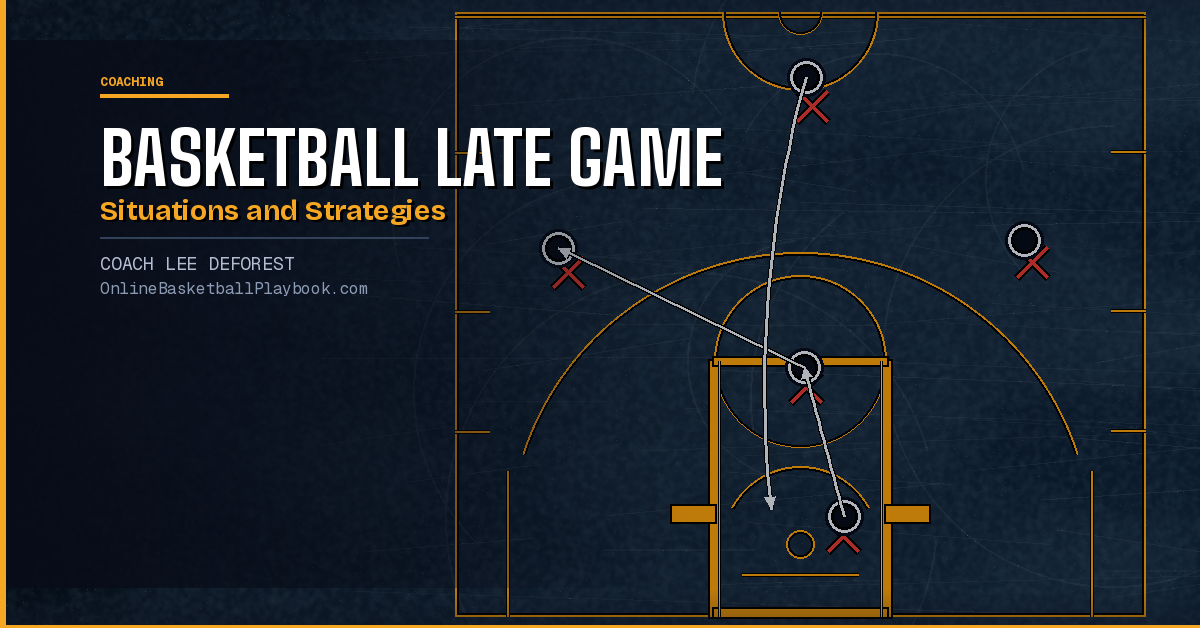
Basketball Late Game Situations and Strategies
Basketball Late Game Situations and Strategies