The 4 out 1 in drive line offense builds the same drive, cut and signal ideas as the layered reaction offense on one landmark, the drive line, marked by the first hash on the lane below the free-throw line. Its 18 phases let a coach choose only the ones his team needs, and as a program offense it can carry over from season to season and bend to each year's personnel.
It is one of the rule-based systems on concept based offense.
The Post in the Drive Line Offense
The post plays one of four ways: he follows the ball, he stays opposite it, or he stays home on one block, left or right. On any drive he must get opposite the ball.
Drives and Cuts
- Drive downhill. Each drive goes downhill and aims to get under the drive line. Once the ball is under it, both corners lift up to that line. After a drive and kick, the driver fills the corner on the side he attacked.
- Cut after every pass. Go to the basket until your head is under the rim, then fill out on the side away from the pass. The cut makes bigger driving gaps. Try to cut in front of the defender, and go behind his head if he jumps to the ball. Off the ball, if your defender sits on the line from you to the ball, backcut automatically.
- Wait to fill. Hold your spot until the cutter has passed under the drive line, then fill, which sets up later phases. Fill in straight lines.
- Drive counter. If the drive stalls above the drive line, the nearest teammate reads it. He can stay put for a pass or backcut, and the post ducks in on a backcut.
Signals with the Dribble
Both the layered version and the drive-line version call actions with the dribble instead of a word, with different triggers.
| Action | Layered version | Drive-line version |
|---|---|---|
| Backcut | A speed dribble east-west at a teammate means he rear cuts | A dribble at any player, staying outside the three-point line, means an automatic backcut. The post can flash to the ball-side elbow or set up in front of the rim. |
| Handoff | A power dribble with the handler's back to his defender starts a handoff and pick and roll | The same dribble-at, with the dribble inside the arc but still above the drive line, driving into the next player's defender for a handoff |
| Reverse | When the drive is shut down, the circle reverses direction | Two reverse dribbles tell the other top player to dip to the drive line and cut toward the handler's spot. That widens the gap, and the handler drives off the cutter's back. With nothing open, the two top players just trade spots. |
| Ball screen | A power dribble lets a post call a pick and roll on the perimeter | Holding the ball between the legs is the post's cue for a flat ball screen, from the top or a wing, and a roll opposite the handler. When the screen comes on the side, the screener sets it with his back side toward the elbow. |
Screens off the Pass
- Flare. After a pass from one top spot to the other, the passer begins his cut and stops short inside the drive line. That stop is the corner player's cue to set a flare screen. That is why the corner player waits to fill.
- Shuffle. After a pass from the top to the wing, the passer stops before the drive line, turns around and screens for the second top player, who reads his defender and curls or pops off the shuffle screen. It works best when the screener is a shooter.
- Pick and pop. A perimeter player passes and follows his pass into a pick and pop, from any spot.
- Roll replace. The same, with the screener rolling to the basket. When the post sees the ball screen coming, he gets his head under the rim so he can replace the roller.
- Cutters screen. After a cut, a player can screen for a perimeter teammate or for the post.
- Post screens cutters. When perimeter cutters come through the lane, the post screens the defenders chasing them and ducks in as his own defender helps.
- Screen in. After a pass and cut, the player filling over screens in for the cutter.
- Post screens a perimeter player in. The post can screen any perimeter player down into the post whenever he likes. That player can keep the post for the rest of the trip or screen for someone else.
The base spacing for this family is on 4 out 1 in offense and its drive rules on 4 out 1 in penetration rules.
Pick the phases that fit your team and drill each one before adding the next.
Drive-Line Answers in the Layered Tables
The drive-line version also has its own answers to a baseline drive and to the cuts after a post feed. They sit beside the other versions in the baseline drive table and the post-feed cut table on layered reaction offense. A breakdown drill for the backdoor cut off a jump stop above the drive line is on drills to teach concept-based basketball.
Questions Coaches Ask
What is the drive line in a 4 out 1 in offense?
A landmark marked by the first hash on the lane below the free-throw line. Each drive goes downhill and aims to get under it, and once the ball is under it, both corners lift up to that line.
Where does the post go on a drive?
He plays one of four ways, following the ball, staying opposite it, or staying home on the left or right block, but on any drive he must get opposite the ball.
How does the post call a ball screen in the drive line offense?
Holding the ball between the legs is his cue for a flat ball screen, from the top or a wing, and a roll opposite the handler.
Get the next coaching guide in your inbox
One email when a new guide or diagram set goes up. Free.
More Concept Based Offense Guides
- Layered Reaction Offense: Every Layer, Drill and Install Step
- Youth Basketball Offense: Seven Concepts Taught in Order
Back to Concept Based Offense and every Offense page.
Keep Building
Related breakdowns
Dribble Drive System: Walberg's Pressure, Pace and Shot Diet
The dribble drive system explained by its owners: why Walberg built it, the press behind it, the shot math, players over plays, depth, sub rules and scored practice.
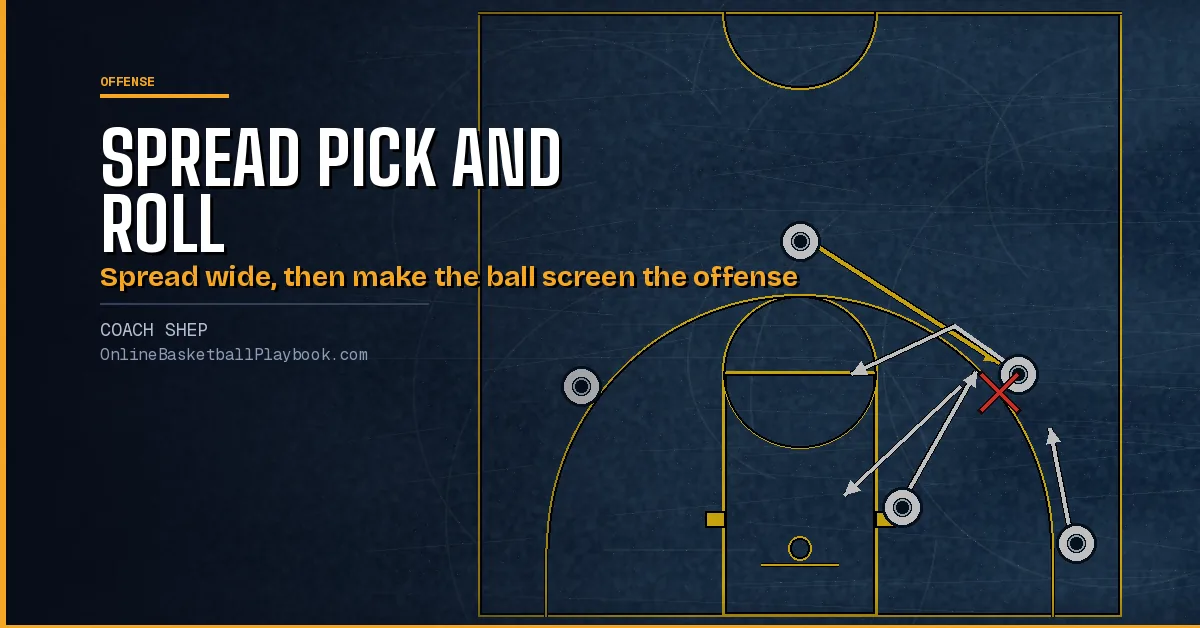
Spread Pick and Roll Offense: Flat Screens, Reads and Counters
Billy Donovan's spread pick and roll offense step by step: the trail pass, the angled wing screen, the second side, the flat screen and the counters.
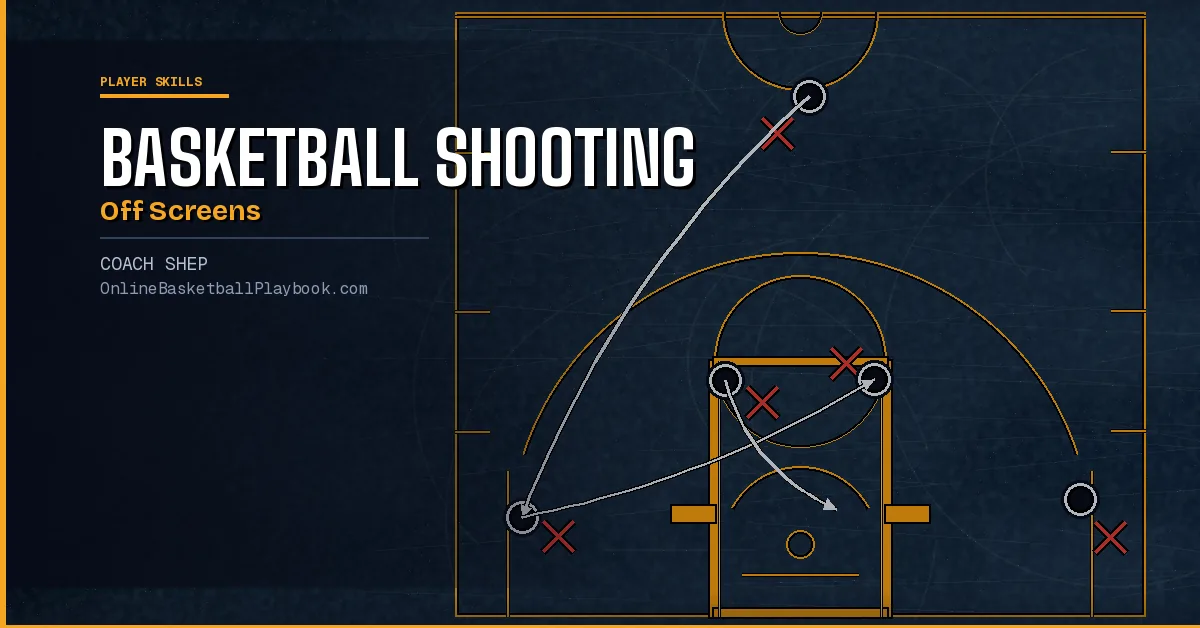
Basketball Shooting Off Screens: Complete Guide
Basketball Shooting Off Screens: Complete Guide