
A scouting report is a fixed set of sections a coach fills in for every opponent, so the report reads the same way every time. Players learn where to look, and the staff does not reinvent the format each week.
A common layout has four parts: an offensive overview, a defensive overview, a personnel overview and a game plan. Each overview lists strengths and weaknesses, sometimes called thumbs up and thumbs down.

Personnel comes first for most coaches, because players guard people, not plays. Keep it short: the best two or three players, where they shoot and which way they drive, and the two weakest players who play.
Then narrow the plan. Defend the opponent's top two or three sets in depth rather than everything. Del Harris says a team can commit to about four or five emphasis points at once. A plan usually holds two base coverages and one adjustment.
The common mistake is a report so long that nobody remembers it. Turn it into practice instead: the scout team runs the opponent's main action so players react instead of recalling a page. Youth teams need one or two keys, like "number 10 only goes right." High school and college teams can carry personnel, sets and a late-game plan.
More Game Prep questions
Free playbook
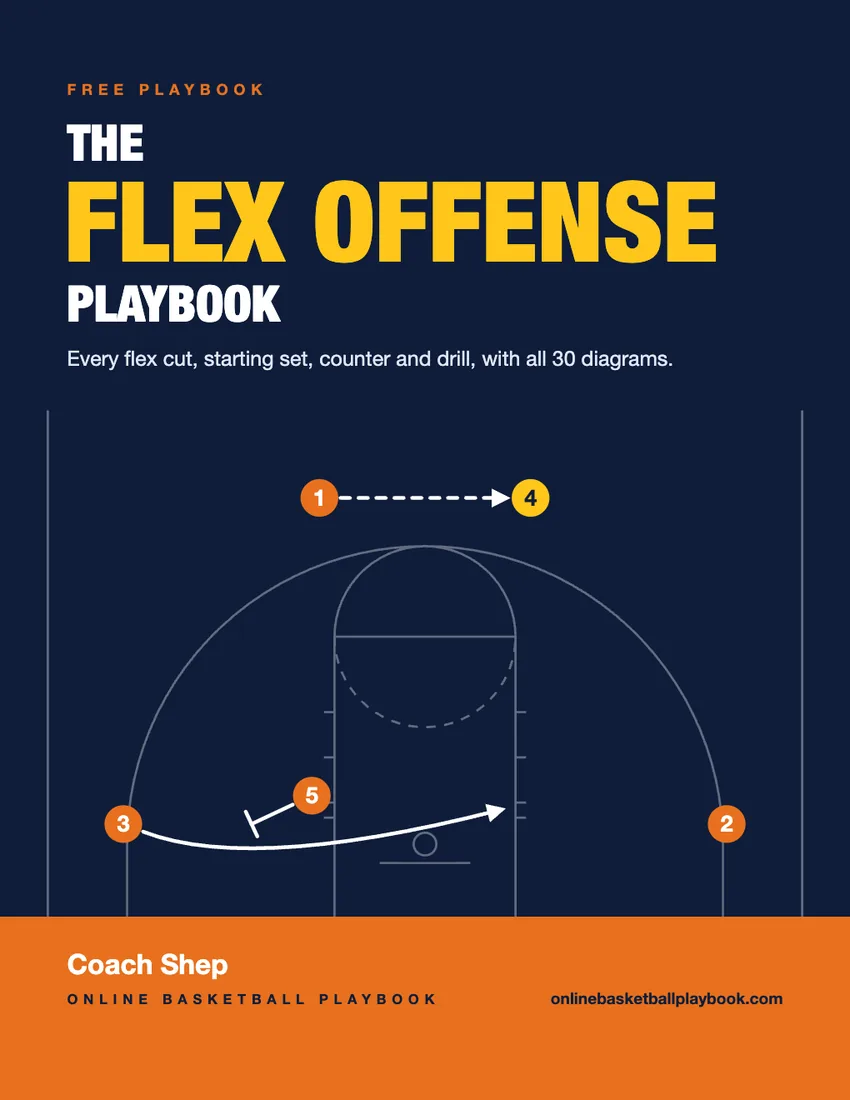
Get the free flex offense playbook
Every flex cut, starting set, counter, special and drill, with all 30 diagrams, in one printable PDF.