
Use one to stop a run, change a defense, set up a late play or advance the ball. Spent early, a timeout is gone when the clock matters most.
Coaches write different lists, and they overlap. Stop a run, because a timeout cools the other team and its crowd and lets your players refocus. Make a big change, like dropping a press that is not working, which is hard to explain on the fly to young players. Draw up a late play, because a set drawn in the huddle has a better chance than one the defense has already seen. Rest a tired star without taking him out. Wake a sluggish team.

Late in the game, the list gets longer: stopping the clock, making a defensive change and making the opposing free throw shooter think about it.
Coaches split on the last shot. Dean Smith usually played on, because his team had practiced it and a timeout lets the defense set too. Other staffs stop the clock, advance to half court and set up. One rule some use is to go with more than 8 seconds left and call timeout below 8.
The common mistake is using timeouts early to argue about a call. Decide your timeout rules before the season. Young teams may need more timeouts to teach. Older teams should save them for the last four minutes.
More In-Game Coaching questions
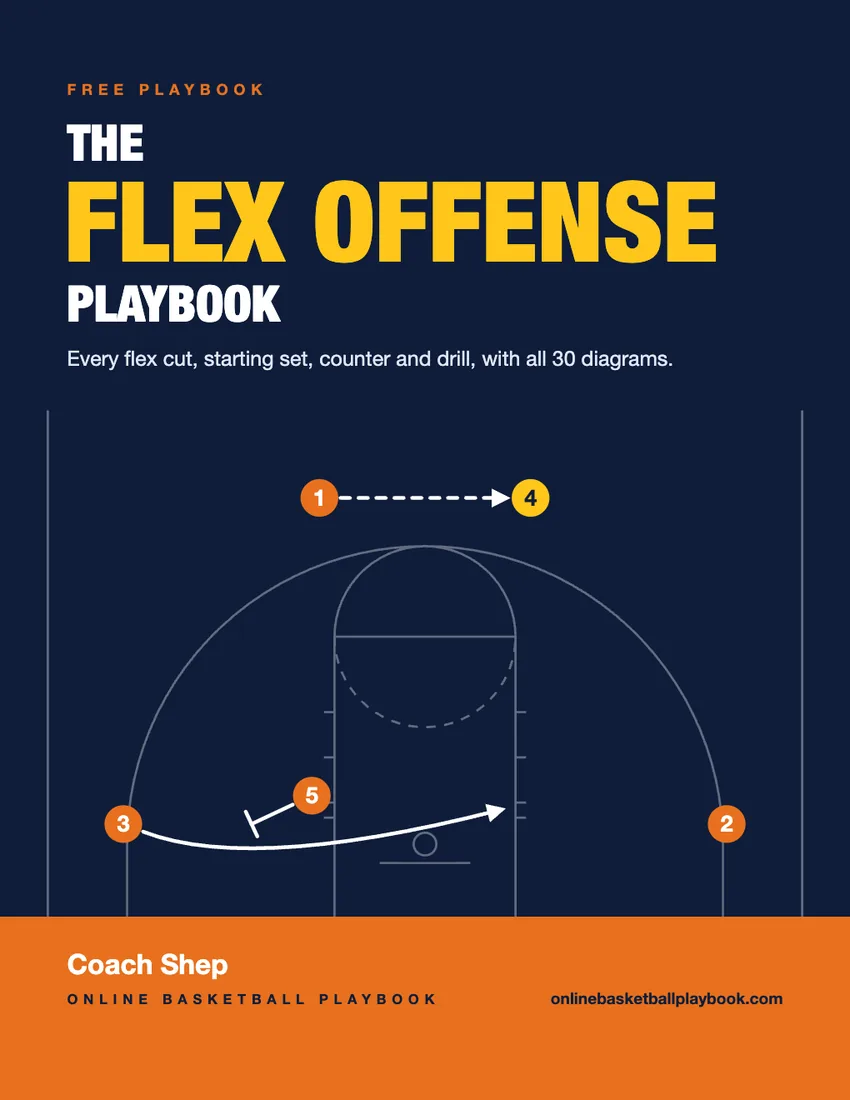
Free playbook
Get the free flex offense playbook
Every flex cut, starting set, counter, special and drill, with all 30 diagrams, in one printable PDF.