
Draw the alignment in the first frame, then one action per frame, starting each frame where the last one ended, and caption every frame. That order is what makes a diagram readable for players.
Frame one is the alignment. Place the five players and put the ball on the one who starts with it. Add defenders only if the play depends on what they do. Nothing moves yet.

Frame two is the first action, often a single pass. In frame three, move the ball and the players to where the last frame's lines finished, then draw the next step. A cut and the fill behind it happen together, so they can share a frame.
The common mistake is cramming the whole play into one picture. Players cannot read eight arrows at once. One action per frame, with a short caption that says what happens, will save you time in practice.
You can do this by hand or online. The site's free play drawer runs in the browser with no login. Pick a formation such as 5-Out, 1-4 High, Horns, Box or Stack, choose half or full court, title and caption each frame, add a frame for each action, and export the play as a PDF. Younger teams need fewer frames. Older teams can handle a full sequence with counters.
More Offense questions
Free playbook
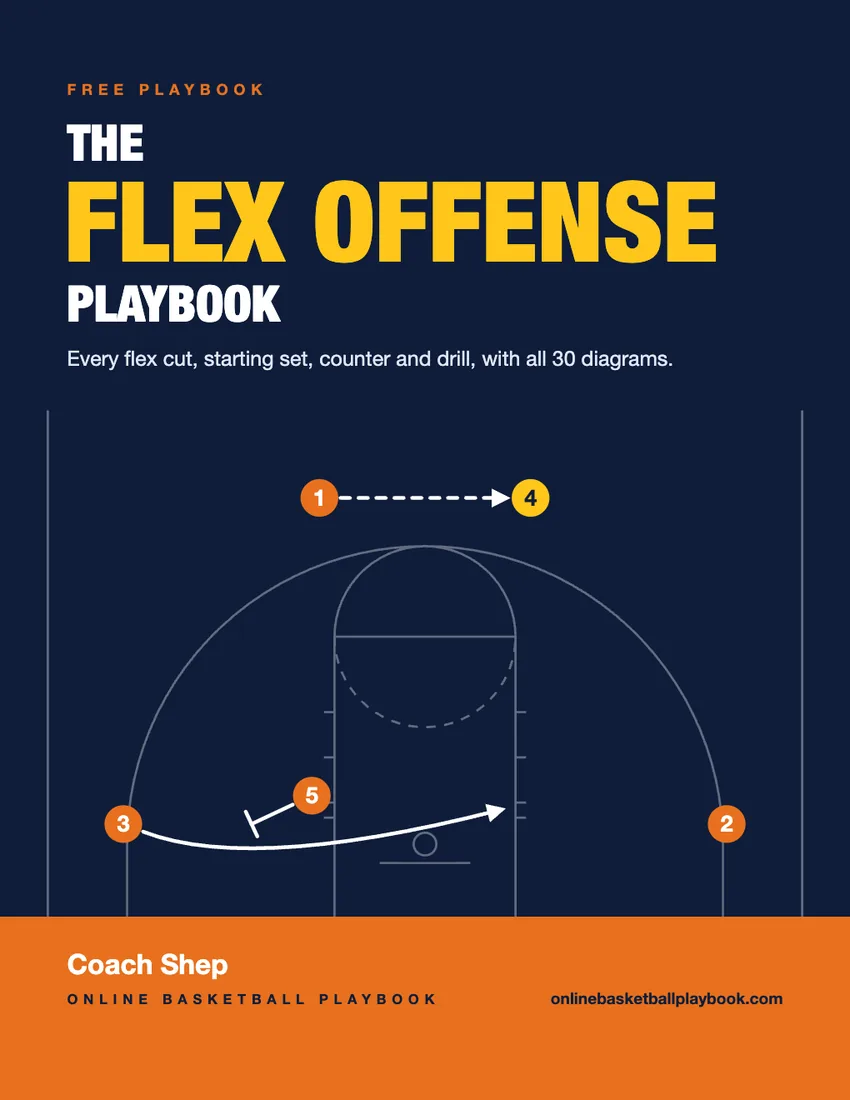
Get the free flex offense playbook
Every flex cut, starting set, counter, special and drill, with all 30 diagrams, in one printable PDF.