
Coaches use three ways: timed runs set apart from skill work, conditioning built into skill drills and scored games that make players run without calling it running.
Timed runs include suicides, 17s, ladder sprints and lane slides with a set time and rest. They are easy to measure, and players know where they stand.

Conditioning inside the drill uses shooting, dribbling and transition drills built so the movement is the conditioning. Defensive footwork can carry it: lane slides across the lane and back for as many trips as possible in 15 seconds, with 30 to 45 seconds of rest. Closeouts, contests and charges can carry the running too.
Scored games are full-court small-sided games with a clock, a score and a winner. Players run hard because they want to win, and they practice basketball while they do it.
The common mistake is conditioning that has nothing to do with basketball, like long jogs. Train in short bursts with real rest. Coaches split on running as punishment after a loss or a mistake. Young players get fit from active practices and games. Older players can add timed runs and tests, especially before the season.
More Practice questions
Free playbook
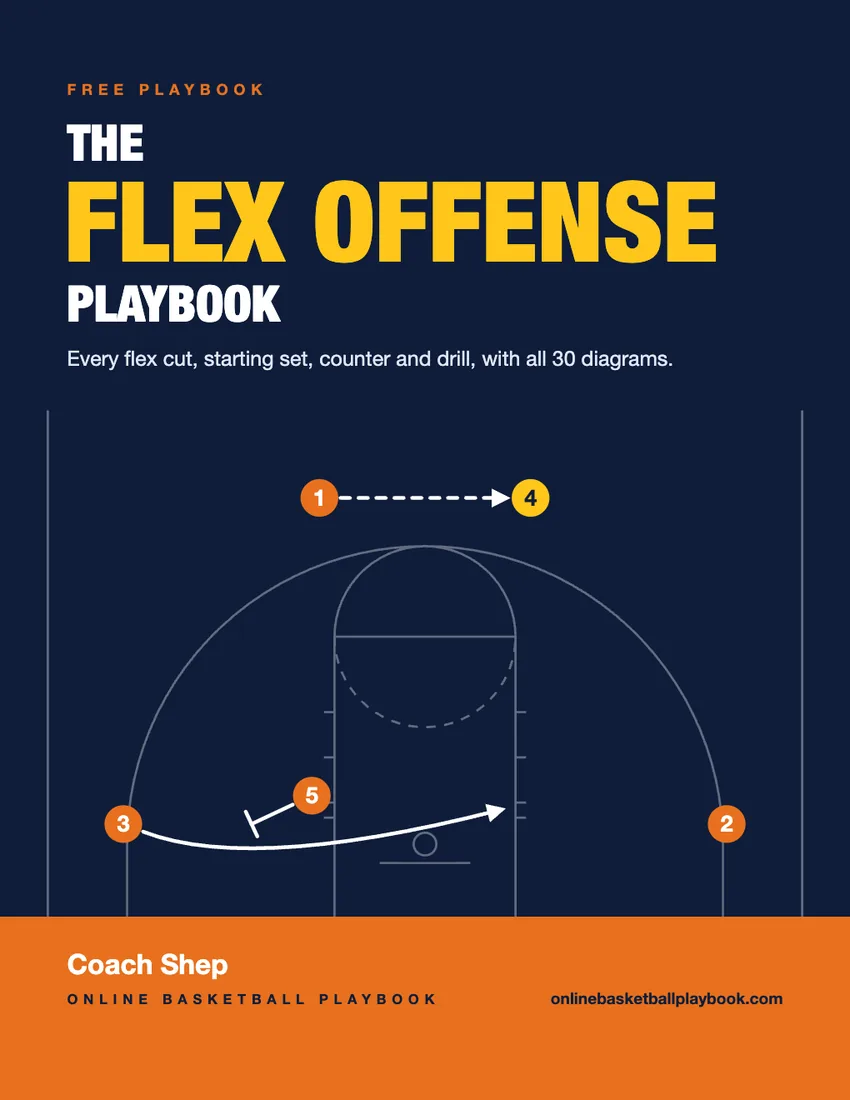
Get the free flex offense playbook
Every flex cut, starting set, counter, special and drill, with all 30 diagrams, in one printable PDF.