
Point to the passer, never yell at a teammate and stand for teammates coming off the floor. Those are Dean Smith's habits, and they still work.
Under Dean Smith, a player who scored pointed to the passer, a thank you in words and gesture. The bench stood and applauded team plays and players coming off the floor. A tired player raised a fist to come out. Small rituals like that carry the culture when the coach is not talking.

Good teammates also share a language. Some teams open every practice with a thought for the day or one focus word. Some break every huddle with the same phrase. The words matter less than using them every day.
Here is an example. A guard drives, draws help and kicks to the corner for a three. The shooter turns and points at the guard on the way back. The bench is on its feet. Nobody had to be told. That is a team habit, built in practice.
The common mistake is thinking being a good teammate means being nice. It means doing your job, covering for a teammate who made a mistake and saying "next play." Young players can learn the point and the stand. Older players can also hold teammates to the standard, in the right tone.
More Team Culture questions
Free playbook
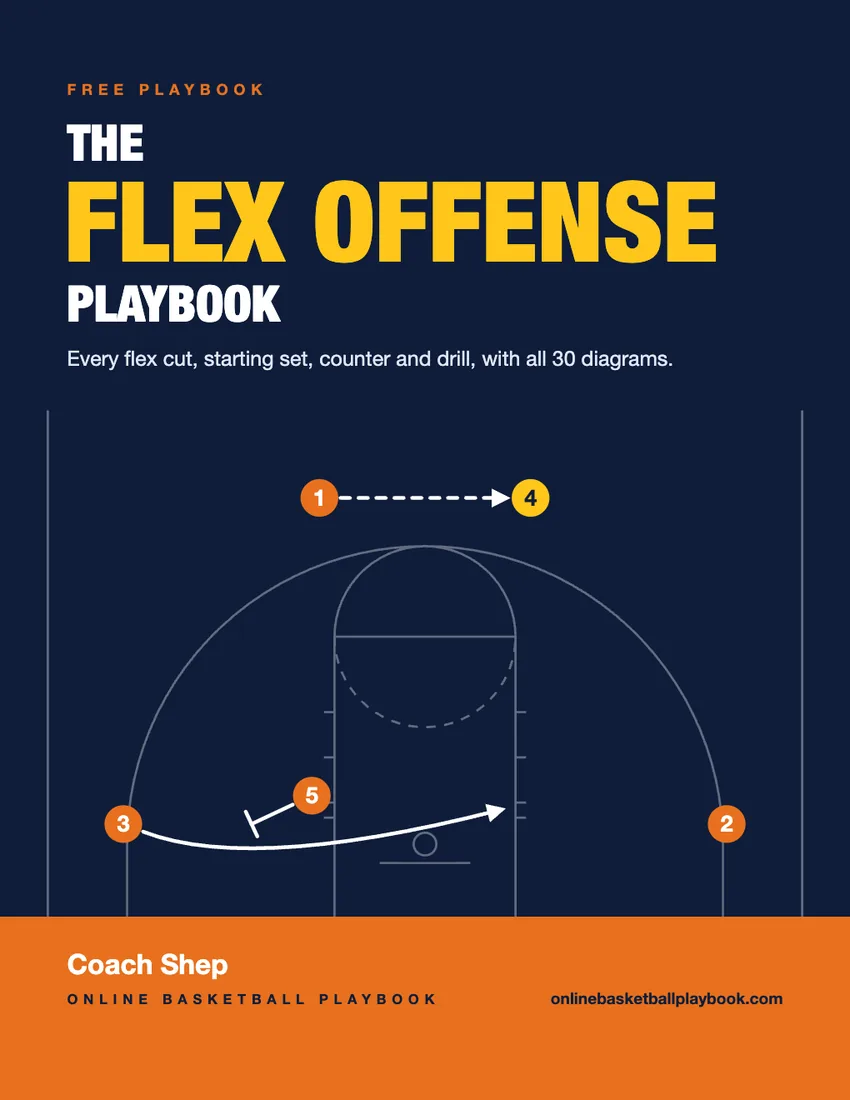
Get the free flex offense playbook
Every flex cut, starting set, counter, special and drill, with all 30 diagrams, in one printable PDF.