
Most tryouts mix skill drills, such as dribbling, shooting and passing, with games such as 3-on-3, 3-on-2 and 5-on-5. Coaches use the drills to see technique and the games to see who can play.
Many coaches say there is no such thing as a tryout drill. They run the same drills they use in practice, and the mix is what matters. A full-court 3-on-2 shows who makes the pass on time, who forces a bad one and who sprints both ways, and it shows conditioning without a sprint. Dribble tag, with every player holding a ball inside half court, shows ball control with the eyes up in a crowd. A 2-on-2 box out after a coach's shot tests rebounding, which is often under-tested.

Coaches split on whether to teach during a tryout. Some only observe, with a few basic concepts to see who picks them up. Some leave team strategy for regular practice. Others coach the players and tell each one what they need him to show.
For players, the key is to compete in every drill, not only the scrimmage. Coaches watch the lines, the sprints back and the huddles too.
At the youth level, tryouts may be short and simple, sometimes one session. High school tryouts usually run several sessions over a few days. College programs rarely hold open tryouts, and walk-on trials vary by school.
More Tryouts questions
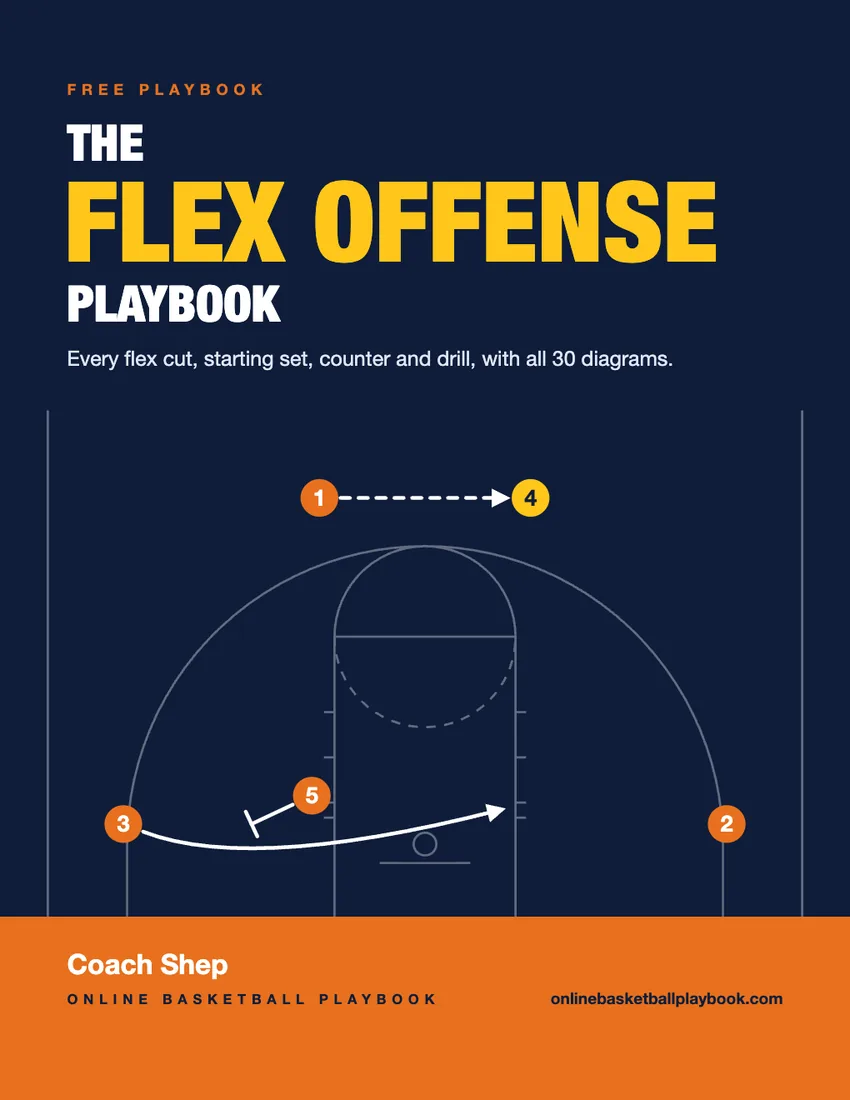
Free playbook
Get the free flex offense playbook
Every flex cut, starting set, counter, special and drill, with all 30 diagrams, in one printable PDF.