
Split the top defender with two guards, then attack the middle and the short corners. The two back defenders cannot guard the short corner, the block and the corner all at once.
The general rule is to line up where the defense is not. A one-guard zone like the 1-2-2 gets a two-guard offense, and a two-guard zone like the 2-3 gets a one-guard offense. Two guards in the slots make the lone top defender pick one.

There are exceptions. A 1-4 high or a 1-3-1 attack keeps one guard on top and uses the alignment behind him instead. Both put a player at the high post, the spot the zone wants to protect.
A few habits work in every alignment. Swing the ball two or three times before attacking, so the zone has to slide. Enter at the short corner. Overload one side, because the back line is outnumbered. Drive the middle seam first. Against a 1-2-2 it pulls the front defenders together and opens the corners.
The common mistake is changing alignments every trip. Pick one, then rep the entry until it is automatic. Young teams can win with the two-guard front and the short corner alone. High school and college teams can add screens on the back line and skip passes.
More Defense questions
Free playbook
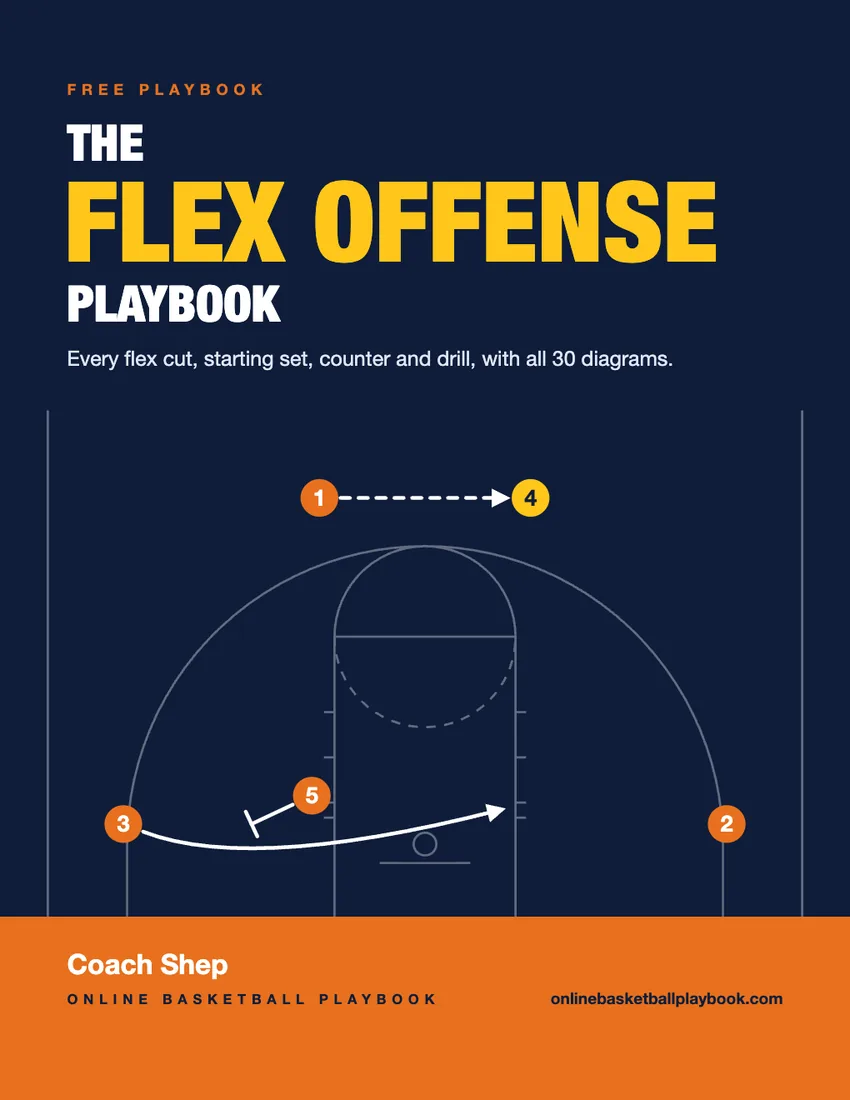
Get the free flex offense playbook
Every flex cut, starting set, counter, special and drill, with all 30 diagrams, in one printable PDF.