
Motion offense runs on rules, not a list of plays. Players cut, screen and fill spots based on how they are guarded, so nobody waits for a call.
It is not random. Every action has a trigger. A player cuts because the defense gave him the cut. A player screens because a teammate needs to get open. The structure lives in the rules and the reads, which is why it is hard to scout. There is no fixed shape for the other team to take away.

Coaches choose it for good reasons. It teaches players to play, because every player reads the defense on every possession. It survives substitutions, since a player who knows the rules can step in and the offense keeps moving. It works against man, zone, matchup and press with the same principles. And any player can fill any spot.
The common mistake is installing every rule at once. Motion taught all at once overwhelms players. Start with spacing, catch ready to attack, and pass and cut to the basket. Add the next rule only when the last one is automatic.
For youth teams, put cones on the spots and play pass and cut. In high school and college, layer in screen away, ball screens and dribble-at handoffs as your players earn them.
More Offense questions
Free playbook
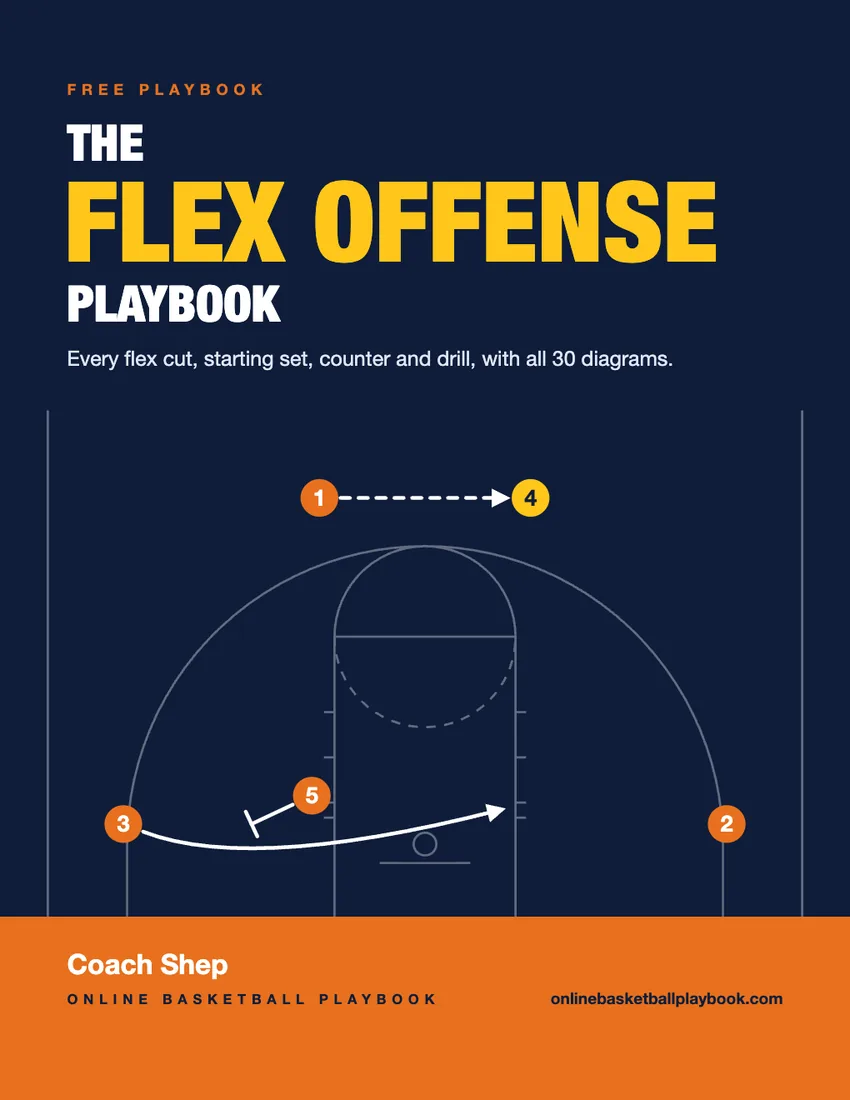
Get the free flex offense playbook
Every flex cut, starting set, counter, special and drill, with all 30 diagrams, in one printable PDF.